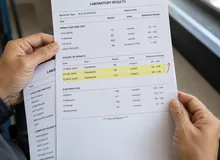
- Select the 25-OHD unit to match the lab report — ng/mL or nmol/L. Switching the unit converts the value automatically (1 ng/mL = 2.496 nmol/L).
- Enter the measured serum 25-hydroxyvitamin D level.
- Optionally enter body weight — used for context only (higher body weight blunts the per-IU rise in 25-OHD; it does not change the tier).
- The result shows the 25-OHD tier, a loading regimen, and a maintenance dose of cholecalciferol, with a recheck interval and target.
- Read the CKD context note below: this tool concerns nutritional vitamin D (cholecalciferol/ergocalciferol), which is distinct from active vitamin D analogs used for secondary hyperparathyroidism.
All computation runs in your browser; no values are stored or transmitted.
When to Use
Use this tool to translate a measured serum 25-hydroxyvitamin D (25-OHD) level into a cholecalciferol loading-and-maintenance plan in adults, following the general-population framework of the Endocrine Society clinical practice guideline. The tiers — deficiency, insufficiency, sufficiency, and possible toxicity — drive whether a loading course is needed, the ongoing maintenance dose, and the recheck interval.
Appropriate population
Adults with a documented 25-OHD level, including patients with CKD in whom KDIGO suggests correcting 25-OHD deficiency and insufficiency as in the general population using nutritional vitamin D. Useful when deciding loading vs maintenance dosing and the follow-up interval after a low result.
When NOT to rely on it
This is not a tool for secondary hyperparathyroidism. Do not use it to dose active vitamin D / analogs (calcitriol, alfacalcidol, paricalcitol), which are titrated against PTH, calcium, and phosphate in advanced CKD-MBD — a different decision driven by CKD-MBD management, not the 25-OHD level. It does not replace measurement of calcium, phosphate, and PTH where indicated, and is not validated for infants, pregnancy-specific targets, granulomatous disease, or malabsorption (which often need higher or specialist dosing).
Pearls & Pitfalls
Load, then maintain — and recheck
For deficiency (<20 ng/mL), a loading course (e.g. cholecalciferol 50,000 IU weekly × 6–8 weeks, or ~6000 IU/day × 8 weeks) repletes stores faster than maintenance dosing alone; follow with 1500–2000 IU/day maintenance and recheck 25-OHD at about 3 months. Target a 25-OHD above 30 ng/mL (30–50 ng/mL is a reasonable optimal band).
Nutritional vs active vitamin D
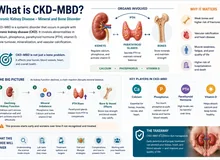
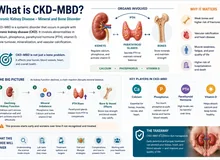
Cholecalciferol (D3) and ergocalciferol (D2) are nutritional vitamin D used to replete 25-OHD. They are not the same as active vitamin D / analogs (calcitriol, alfacalcidol, paricalcitol), which bypass renal 1α-hydroxylation and are used to suppress PTH in advanced CKD. Do not conflate the two: a low 25-OHD calls for nutritional repletion, whereas an elevated PTH in CKD is a CKD-MBD decision.
Pitfalls
(1) Avoid hypercalcemia — monitor calcium and phosphate, especially when active analogs are also in use. (2) A 25-OHD >100 ng/mL signals possible toxicity: hold supplementation and investigate. (3) Body weight is contextual only; obesity blunts the 25-OHD rise per IU and may need higher maintenance, but does not change the tier. (4) Routine screening of healthy adults is de-emphasized by newer (2024) Endocrine Society guidance — test when there is a clinical reason. (5) Confirm product strength and frequency against the label; loading regimens vary by formulation.
Why Use It
A single 25-OHD number does not, by itself, tell a busy clinician whether a loading course is warranted, what maintenance dose to continue, or when to recheck. This tool standardizes that translation against an established framework, and — importantly for nephrology — keeps the nutritional-vitamin-D decision (repleting 25-OHD) clearly separated from the active-vitamin-D decision (suppressing PTH in CKD-MBD), so the two are not conflated at the point of care.
Vitamin D (Cholecalciferol) Dosing Calculator — by 25-OHD Level
Enter the measured serum 25-hydroxyvitamin D level (ng/mL or nmol/L) to see the deficiency / insufficiency / sufficiency tier, the loading regimen, and the maintenance cholecalciferol dose. Body weight is optional and contextual.
⚕ Tiers (25-OHD): deficiency <20 ng/mL (<50 nmol/L) → loading then 1500–2000 IU/day; insufficiency 20–29.9 ng/mL (50–74 nmol/L) → 1000–2000 IU/day; sufficiency ≥30 ng/mL (≥75 nmol/L) → maintenance 600–800 IU/day; possible toxicity >100 ng/mL (>250 nmol/L) → hold. Unit conversion: nmol/L = ng/mL × 2.496. Concerns NUTRITIONAL vitamin D only (cholecalciferol/ergocalciferol), not active analogs. Requires physician confirmation and calcium/phosphate monitoring. Source: Holick MF, et al. Endocrine Society Guideline. J Clin Endocrinol Metab. 2011;96(7):1911–1930.
CKD context — nutritional vs active vitamin D
KDIGO suggests correcting 25-OHD deficiency and insufficiency in CKD as in the general population, using nutritional vitamin D (cholecalciferol or ergocalciferol) — which is what this calculator addresses. This is distinct from active vitamin D / analogs (calcitriol, alfacalcidol, paricalcitol) used to manage secondary hyperparathyroidism (elevated PTH) in advanced CKD; do not conflate the two. Monitor serum calcium and phosphate and avoid hypercalcemia, particularly when active analogs are in use. PTH-driven therapy belongs to CKD-MBD management — refer to that pathway rather than treating an elevated PTH with nutritional vitamin D alone.
Next Steps
Use the result to support — not replace — clinical judgment.
- After a loading course, recheck 25-OHD at about 3 months and target a level above 30 ng/mL (30–50 ng/mL optimal); then continue maintenance.
- Monitor serum calcium and phosphate, and measure PTH where CKD-MBD is a concern; a high PTH is a CKD-MBD decision, not a nutritional-vitamin-D one.
- In suspected toxicity (25-OHD >100 ng/mL or symptomatic hypercalcemia), hold supplementation and investigate the cause.
- For PTH-driven secondary hyperparathyroidism in advanced CKD, manage with the CKD-MBD pathway (active vitamin D analogs / calcimimetics as indicated) and refer to nephrology.
Evidence & References
Tiers & Dosing
| 25-OHD | Tier | Cholecalciferol dosing |
|---|---|---|
| < 20 ng/mL (< 50 nmol/L) | Deficiency | Loading 50,000 IU weekly × 6–8 wk (or ~6000 IU/day × 8 wk), then 1500–2000 IU/day (≥800–1000 IU/day minimum). Target >30 ng/mL. |
| 20–29.9 ng/mL (50–74 nmol/L) | Insufficiency | 1000–2000 IU/day (or 50,000 IU monthly); recheck in ~3 months. |
| ≥ 30 ng/mL (≥ 75 nmol/L) | Sufficiency | Maintenance 600–800 IU/day (≥800 IU/day if >70 yr) or diet/sun; avoid excess. |
| > 100 ng/mL (> 250 nmol/L) | Possible toxicity | Hold supplementation; investigate and monitor calcium. |
Conversion
| Quantity | Conversion |
|---|---|
| ng/mL → nmol/L | nmol/L = ng/mL × 2.496 |
| nmol/L → ng/mL | ng/mL = nmol/L ÷ 2.496 |
Targets and thresholds vary slightly between guidelines and assays. The dosing here follows a general-population (Endocrine Society) framework; KDIGO applies the same approach for correcting 25-OHD in CKD with nutritional vitamin D. This is separate from active-vitamin-D therapy for secondary hyperparathyroidism.
Evidence & References
The Endocrine Society clinical practice guideline (2011) defined the deficiency / insufficiency / sufficiency tiers and the loading-plus-maintenance cholecalciferol regimens used here. KDIGO CKD-MBD guidance recommends correcting 25-OHD in CKD as in the general population using nutritional vitamin D, distinct from active vitamin D for PTH-driven disease. Newer (2024) Endocrine Society guidance de-emphasizes routine 25-OHD screening in healthy adults.
- Holick MF, Binkley NC, Bischoff-Ferrari HA, et al. Evaluation, Treatment, and Prevention of Vitamin D Deficiency: An Endocrine Society Clinical Practice Guideline. J Clin Endocrinol Metab. 2011;96(7):1911–1930.
- Kidney Disease: Improving Global Outcomes (KDIGO) CKD-MBD Update Work Group. KDIGO 2017 Clinical Practice Guideline Update for the Diagnosis, Evaluation, Prevention, and Treatment of CKD-MBD. Kidney Int Suppl. 2017;7(1):1–59.
- Demay MB, Pittas AG, Bikle DD, et al. Vitamin D for the Prevention of Disease: An Endocrine Society Clinical Practice Guideline. J Clin Endocrinol Metab. 2024;109(8):1907–1947.