- Select the ESA type. For epoetin alfa (Eprex, Eposino) and epoetin beta (Recormon), enter the dose in International Units (IU). For darbepoetin alfa (Nesp, Aranesp) and CERA (Mircera), enter the dose in micrograms (µg) — the calculator converts to IU equivalent using the standard factor of 1 µg = 200 IU.
- Enter the dose per administration — the amount given at each injection.
- Select the dosing frequency (e.g., 3× per week for typical HD epoetin dosing).
- Enter the patient's dry weight in kg and the most recent pre-dialysis hemoglobin in g/dL.
- The ERI, weekly IU/kg dose, and responsiveness category update automatically. An ERI >10 triggers an investigation checklist.
All computation runs in your browser; no values are stored or transmitted.
When to Use
Use the ERI calculator at every ESA review in a dialysis or CKD anemia patient — particularly when hemoglobin is not reaching or staying within the target range (100–115 g/L) despite what appears to be an adequate ESA dose. The ERI normalizes the ESA dose for body weight and hemoglobin response, allowing objective comparison across visits and between patients.
Appropriate population
Adults with CKD G3b–G5 on erythropoiesis-stimulating agent therapy, including hemodialysis and peritoneal dialysis patients on any ESA formulation (epoetin alfa, epoetin beta, darbepoetin alfa, or CERA/methoxy-PEG-epoetin beta). Most useful when Hgb is below target despite escalating ESA doses, or when evaluating whether ESA dose escalation is safe and warranted before investigating underlying causes of hyporesponsiveness.
When NOT to escalate ESA based on ERI alone
KDIGO 2024 recommends that ESA dose should NOT be escalated further in a patient with ERI >10 IU/kg/week/g/dL until modifiable causes of hyporesponsiveness have been evaluated and corrected. Escalating ESA in a hyporesponsive patient increases cardiovascular risk (stroke, thrombosis, hypertension) without meaningfully improving hemoglobin. Investigate first, then re-evaluate.
Pearls & Pitfalls
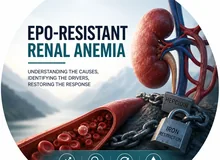
Iron deficiency is the most common reversible cause of high ERI
Before any other workup, check TSAT and ferritin. KDIGO 2024 targets TSAT ≥20% and ferritin 200–500 ng/mL in HD patients. Iron-restricted erythropoiesis (TSAT <20%) dramatically impairs ESA responsiveness — IV iron in a functionally iron-deficient patient often drops the ERI faster than any ESA adjustment.
Systematic investigation checklist for ERI >10
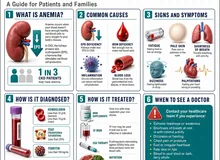
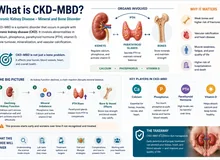
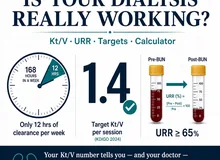
When ERI exceeds 10: (1) Iron — TSAT, ferritin, reticulocyte hemoglobin content. (2) Inflammation — CRP, albumin; active infection or systemic inflammation blunts EPO response via hepcidin. (3) Dialysis adequacy — Kt/V ≥1.2 for HD; inadequate dialysis impairs marrow response. (4) Nutrition — albumin, B12, folate. (5) Secondary hyperparathyroidism — PTH >600 pg/mL causes marrow fibrosis and EPO resistance. (6) Blood loss — check stool guaiac, menstrual history, access blood loss. (7) Anti-EPO antibodies — suspect if Hgb drops suddenly with worsening reticulocytopenia.
Pitfalls
(1) Do not escalate ESA dose in a patient with ERI >10 without investigating — escalation in hyporesponsiveness increases cardiovascular risk without improving hemoglobin. (2) The 1 µg = 200 IU darbepoetin conversion factor is an approximation; it may differ slightly between product labels. (3) Hemoglobin used in ERI should be the pre-dialysis (trough) value for HD patients — post-dialysis values are artificially concentrated. (4) In CERA (monthly dosing), the ERI calculation correctly converts Q4W dosing to a weekly rate; verify the frequency selection carefully.
Why Use It
ERI was developed as a standardized metric to compare ESA requirement across patients and time points, adjusting for both body size (weight) and hemoglobin level. An ERI above 10 IU/kg/week/g/dL is the KDIGO-endorsed threshold for ESA hyporesponsiveness — and patients with high ERI have significantly worse cardiovascular outcomes, independent of the hemoglobin level itself. Multiple large observational studies — including the DOPPS and analyses by Kalantar-Zadeh — have confirmed that high ERI is an independent predictor of all-cause and cardiovascular mortality in dialysis patients. ESA dose escalation in this context confers the risks of high-dose ESA (hypertension, stroke, thrombotic access events) without the benefits.
ESA Resistance Index (ERI) Calculator
Select the ESA type, enter the dose per administration and frequency, patient weight, and current hemoglobin. Results update automatically.
⚕ ERI = (Total weekly ESA dose in IU ÷ weight in kg) ÷ Hgb in g/dL. Epoetin alfa (Eprex, Eposino) and epoetin beta (Recormon) are both IU-based — enter dose directly. Darbepoetin alfa (Nesp, Aranesp) and CERA (Mircera) are entered in µg and converted using 1 µg = 200 IU epoetin equivalent. ERI >10 IU/kg/week/g/dL indicates hyporesponsiveness — investigate before escalating dose. For educational use only — dosing decisions require physician assessment.
Next Steps
Use the result to support — not replace — clinical judgment.
- Interpret the value against the targets shown in the calculator and the Evidence section below, in the context of the full clinical picture.
- Trend serial measurements rather than acting on a single result; confirm abnormal or unexpected values before changing management.
- Apply the relevant KDIGO / specialty-guideline threshold and document the indication.
- Escalate or refer to nephrology when results are out of range, rapidly changing, or discordant with the clinical picture — and discuss the implications with the patient.
Evidence & References
Formula & Equations
| Step | Calculation |
|---|---|
| Convert to IU equivalent | Epoetin alfa/beta: use dose in IU directly. Darbepoetin/CERA: dose (µg) × 200 = IU equivalent |
| Weekly total IU | IU per administration × administrations per week |
| Weekly IU/kg | Weekly total IU ÷ patient dry weight (kg) |
| ERI | Weekly IU/kg ÷ hemoglobin (g/dL) |
ERI Interpretation Bands
| ERI (IU/kg/week/g/dL) | Category | Clinical Implication |
|---|---|---|
| <5 | Low / Excellent Response | Well-responding; ensure iron stores adequate; reduce ESA if Hgb >115 g/L |
| 5–9.99 | Normal Response | Adequate response; maintain current dose; monitor iron stores |
| 10–13.99 | Elevated — Hyporesponsive | KDIGO threshold exceeded — investigate before escalating dose |
| ≥14 | High — Severe Hyporesponsiveness | Highest cardiovascular risk; rule out PRCA; comprehensive workup required |
Evidence & References
The ERI metric was validated in the CKD and dialysis anemia literature, with the threshold of ERI >10 IU/kg/week/g/dL operationalized in large observational cohorts showing a graded relationship between ERI and cardiovascular mortality, independent of hemoglobin. KDIGO 2012 and 2024 guidelines on anemia in CKD incorporate ERI as the recommended metric for detecting and defining ESA hyporesponsiveness, and specifically recommend against ESA dose escalation above this threshold until reversible causes have been excluded.
- Kidney Disease: Improving Global Outcomes (KDIGO) Anemia Work Group. KDIGO Clinical Practice Guideline for Anemia in Chronic Kidney Disease. Kidney Int Suppl. 2012;2(4):279–335.
- KDIGO 2024 Clinical Practice Guideline for the Evaluation and Management of Anemia in Chronic Kidney Disease. Kidney Int. 2024. (Update in progress)
- Kalantar-Zadeh K, McAllister CJ, Lehn RS, et al. Effect of malnutrition-inflammation complex syndrome on EPO hyporesponsiveness in maintenance hemodialysis patients. Am J Kidney Dis. 2003;42(4):761–773.
- Regidor DL, Kopple JD, Kovesdy CP, et al. Associations between changes in hemoglobin and administered erythropoiesis-stimulating agent and survival in hemodialysis patients. J Am Soc Nephrol. 2006;17(4):1181–1191.