- Choose your units (metric, hybrid, or imperial) so the weight and height inputs match what you have.
- Enter weight (use dry weight if on dialysis), height, age, sex, and the patient's CKD stage or dialysis modality, plus activity level and daily urine output.
- Tick any relevant clinical modifiers (diabetes, hyperkalemia, hyperphosphatemia, protein-energy wasting, heavy proteinuria, ketoanalogue use, etc.) — these adjust the targets.
- Optionally set a weight goal and target BMI, and add allergies for the sample meal plan.
- Press Calculate My Daily Targets to generate protein, energy, mineral (potassium, phosphorus, sodium, calcium), fluid, and vitamin targets, a diet-prescription summary, and a prototype 7-day plan. Targets are referenced to ideal/adjusted body weight where appropriate.
All computation runs in your browser; no values are stored or transmitted.
When to Use
Use this tool when writing or reviewing a dietary prescription for a patient across the spectrum of kidney health — from a healthy adult through CKD stages 1–5 and onto hemodialysis or peritoneal dialysis. It applies KDOQI 2020 nutrition recommendations to a specific weight, stage, and clinical profile to produce daily protein, energy, potassium, phosphorus, sodium, and fluid targets in one place, so the prescription matches the stage rather than a generic "renal diet."
Appropriate population
Adults at any kidney stage who need individualized nutrition targets — especially when protein needs change sharply across stages (lower in non-dialysis CKD to slow progression, higher on dialysis to offset losses). Most useful alongside a renal dietitian when setting protein g/kg, energy, and electrolyte and fluid limits.
When NOT to rely on it
These are population-based starting estimates, not a substitute for individualized assessment by a nephrologist and renal dietitian using the patient's actual serum potassium, phosphorus, albumin, urine output, and medications. Restrictive protein prescriptions are dangerous without supervision — protein-energy wasting is common and harmful in CKD. Targets must be set against measured labs and dry weight, and re-checked as status changes.
Pearls & Pitfalls
Protein flips at dialysis
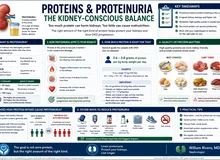
Non-dialysis CKD usually calls for protein restriction (around 0.55–0.6 g/kg/day, or lower with ketoanalogues) to slow progression, but once dialysis starts the target rises to 1.0–1.2 g/kg/day to replace losses. Applying the wrong side of this flip is a common and harmful error.
Energy first, then protein restriction
Adequate energy (25–35 kcal/kg/day) must be secured before restricting protein — without it, dietary and body protein are burned for fuel and wasting accelerates. Reference per-kg targets to ideal or adjusted body weight, not actual weight, in obesity.
Pitfalls
(1) Do not start a restrictive or very-low-protein diet without dietitian supervision and ketoanalogue cover where indicated — protein-energy wasting is dangerous. (2) Potassium and phosphorus limits should track measured serum levels, not be applied blindly. (3) Phosphorus from additives is far more bioavailable than from natural foods — target additives first. (4) Fluid limits must account for residual urine output; over-restriction risks volume depletion.
Why Use It
Nutrition in CKD is stage-specific and frequently gets it backwards in practice: a protein target that is correct for early CKD can worsen wasting on dialysis, while a target appropriate for dialysis can accelerate progression in pre-dialysis CKD. Energy needs, and potassium, phosphorus, sodium, and fluid limits, all shift with stage and modality. Anchoring the prescription to the right weight (ideal or adjusted body weight) and the correct stage-based g/kg target keeps protein and energy in the safe window — enough to prevent wasting without overburdening failing kidneys — and standardizes the electrolyte and fluid advice that drives day-to-day control.
Enter Your Profile
Enter your profile below to calculate your personalized daily nutrient targets. Dietary requirements in CKD change dramatically by stage — what is correct for Stage 2 may be harmful at Stage 4. This calculator applies NKF KDOQI 2020 and KDIGO equations to your specific profile. If you have moderate or high malnutrition risk, your nephrologist or renal dietitian should review these targets before you make any dietary changes. Always confirm targets with your nephrologist and renal dietitian.
Your Nutrition Prescription Calculator
Results are computed locally — no data is stored or transmitted.
| Nutrient | Recommended / Day | Upper Limit | CKD Note |
|---|
| Mineral | Recommended / Day | Upper Limit | CKD Note |
|---|
| Vitamin | Recommended / Day | Upper Limit | CKD Note |
|---|
⚠ Vitamin Cautions Specific to CKD
Clinical Priorities for Your Stage
Next Steps
Use the result to support — not replace — clinical judgment.
- Interpret the value against the targets shown in the calculator and the Evidence section below, in the context of the full clinical picture.
- Trend serial measurements rather than acting on a single result; confirm abnormal or unexpected values before changing management.
- Apply the relevant KDIGO / specialty-guideline threshold and document the indication.
- Escalate or refer to nephrology when results are out of range, rapidly changing, or discordant with the clinical picture — and discuss the implications with the patient.
Evidence & References
Formula & Equations
| Quantity | Basis |
|---|---|
| Energy (kcal/day) | 25–35 kcal/kg/day × weight, adjusted by age and activity (KDOQI 2020) |
| Protein — CKD G3–G5, non-dialysis, no diabetes | 0.55–0.60 g/kg/day (low-protein diet) |
| Protein — CKD G3–G5 with diabetes | 0.6–0.8 g/kg/day |
| Protein — with ketoanalogues (very-low-protein diet) | 0.28–0.43 g/kg/day + keto acid analogues |
| Protein — hemodialysis / peritoneal dialysis | 1.0–1.2 g/kg/day |
| Sodium | < 2.0–2.3 g/day (< 100 mmol/day) |
| Potassium | Individualized to maintain normal serum K⁺ (restrict if hyperkalemic) |
| Phosphorus | Adjust intake to maintain normal serum phosphate (limit additives) |
| Fluid (anuric dialysis) | ≈ urine output + 500–1000 mL/day insensible allowance |
| Ketoanalogue dose | ≈ 1 tablet per 5 kg body weight per day, taken with meals |
Per-kilogram protein and energy targets are applied to ideal or adjusted body weight rather than actual weight in over- or underweight patients. KDOQI 2020 frames protein, energy, sodium, potassium, phosphorus, and micronutrient recommendations by CKD stage, dialysis modality, and diabetes status; the calculator combines these with the entered clinical modifiers.
Evidence & References
Targets follow the KDOQI Clinical Practice Guideline for Nutrition in CKD: 2020 Update, the consensus reference for protein, energy, sodium, potassium, phosphorus, and micronutrient prescriptions across CKD stages and dialysis modalities. Protein recommendations differ by stage, diabetes status, and whether ketoanalogues are used, and energy is set per kilogram of an appropriate reference body weight.
- Ikizler TA, Burrowes JD, Byham-Gray LD, et al. KDOQI Clinical Practice Guideline for Nutrition in CKD: 2020 Update. Am J Kidney Dis. 2020;76(3 Suppl 1):S1–S107.