Use: Labeled indications
- Velphoro is indicated for the control of serum phosphorus levels in adults and pediatric patients 6 years of age and older with chronic kidney disease (CKD) on dialysis.
Full indications and usage US FDA label
1 INDICATIONS AND USAGE Velphoro is indicated for the control of serum phosphorus levels in adults and pediatric patients 6 years of age and older with chronic kidney disease (CKD) on dialysis. Velphoro is a phosphate binder indicated for the control of serum phosphorus levels in adult and pediatric patients 6 years of age and older with chronic kidney disease on dialysis. (1)
Contraindications
4 CONTRAINDICATIONS None. None (4)
US FDA labelDosing: Adult
- Chew or crush Velphoro tablets, do not swallow whole. (2.2)
- Administer orally with meals. (2.2)
- Dosage Information (2.1)
- Recommended Starting Dosage Dosage Adjustments Adults and pediatric patients 12 years of age and older 500 mg three times daily 500 mg per day Pediatric patients 9 to less than 12 years of age 500 mg two times daily 500 mg per day Pediatric patients 6 to less than 9 years of age 250 mg three times daily 250 mg per day Adjust dosage as needed until an acceptable serum phosphorus level is reached, with regular monitoring afterwards. Titrate as often as weekly. (2.1)
2.1 General Dosing Information
2.1 General Dosing Information Table 1 Recommended Starting Oral Dosage and Dosage Adjustments Recommended Starting Oral Dosage Dosage Adjustments Adults and pediatric patients 12 years of age and older 500 mg three times daily 500 mg per day Pediatric patients 9 to less than 12 years of age 500 mg two times daily 500 mg per day Pediatric patients 6 to less than 9 years of age 250 mg three times daily 250 mg per day Administer Velphoro with meals. If the recommended daily dose cannot be divided equally among meals, administer the larger dose with the largest meal of the day.
Monitor serum phosphorus levels and titrate the dose of Velphoro in decrements or increments (as described in Table 1) as needed until an acceptable serum phosphorus level is reached, with regular monitoring afterwards. Titrate as often as weekly. In clinical studies, on average, adult and pediatric patients 12 years of age and older required 1,500 mg to 2,000 mg per day, pediatric patients 9 to less than 12 years of age required 1,500 mg per day, and patients aged 6 to less than 9 years required 1,000 mg per day to control serum phosphorus levels, respectively.
Daily doses as high as 3,000 mg per day have been studied in adult and pediatric patients 9 years of age and older. Daily doses as high as 2,500 mg per day have been studied in pediatric patients 6 to less than 9 years of age.
2.2 Administration
2.2 Administration Velphoro chewable tablets should be chewed or crushed. Do not swallow whole. Velphoro chewable tablets must be administered with meals. If one or more doses of Velphoro are missed, the medication should be resumed with the next food intake.
Dosing: Altered kidney function
No kidney-specific text is available from the US label for this generic yet. Check the Philippine package insert in the products table.
Kidney-specific guidance from renalcarematters.com: in preparation.
Dosing: Pediatric
Pediatric use (US label) US FDA label
8.4 Pediatric Use Velphoro is indicated for the control of serum phosphorus levels in pediatric patients 6 years of age and older with CKD on dialysis. Use of Velphoro for this indication is supported by evidence from an adequate and well-controlled study in adults, with additional pharmacodynamic and safety data in pediatric patients with advanced CKD (an estimated glomerular filtration rate <30 mL/min/1.73 m² or CKD on dialysis) [see Adverse Reactions (6.1) and Clinical Studies (14.3)].
The safety and effectiveness of Velphoro have not been established in pediatric patients younger than 6 years of age. Although the study included six patients 2 to <6 years of age who received Velphoro, based on the available data, it is unclear whether the dosing regimen that was evaluated is effective in reducing serum phosphorus in this age group.
Velphoro has not been studied in pediatric patients below 2 years of age.
Dosing: Older adult
Geriatric use (US label) US FDA label
8.5 Geriatric Use Of the total number of subjects in two active-controlled clinical studies of Velphoro (N=835), 29.7% (n=248) were 65 and over, while 8.7% (n=73) were aged 75 years and over. No overall differences in safety or effectiveness were observed between these subjects and younger subjects.
Administration
2.2 Administration Velphoro chewable tablets should be chewed or crushed. Do not swallow whole. Velphoro chewable tablets must be administered with meals. If one or more doses of Velphoro are missed, the medication should be resumed with the next food intake.
US FDA labelDosage forms
Philippines
- Chewable tablet: 2.5 g
Registered products in the Philippines
1 product registered with the Food and Drug Administration (FDA) Philippines list Sucroferric oxyhydroxide as the generic name. Registration status changes; confirm a product's current status on the FDA portal before relying on it.
| Package insert | |||||||
|---|---|---|---|---|---|---|---|
VelphoroSucroferric oxyhydroxide | 2.5 g Chewable Tablet150 mL-Capacity HDPE Bottle containing 30 Tablets. with Child-Resistant PP Closure (Box of 30 Tablets); 30 Tablets); 400 mL-Capacity HPDE Bottle containing 90 Tablets with Child-Resistant PP Closure (Box of 90 Tablets) | Rx | Corden Pharma Fribourg SASwitzerland | Fresenius Kabi Philippines, Inc.Trader: Vifor Fresenius Medical Care Renal Pharma Ltd. | DR-XY47564 | Mar 25, 2030 |
Source: FDA Philippines product registration database. "Valid until" is the registration validity date listed by the FDA; a past date may mean a renewal is pending. Package insert links point to files published by the FDA.
United States (label)
Dosage forms and strengths (US label) US FDA label
3 DOSAGE FORMS AND STRENGTHS Velphoro is supplied in two strengths: 500 mg and 250 mg. Velphoro 500 mg chewable tablet is a red-brown, round, flat-faced tablet embossed with "PA 500" on one side; each chewable tablet contains 500 mg iron (equivalent to 2,500 mg sucroferric oxyhydroxide). Velphoro 250 mg chewable tablet is a red-brown, round, flat-faced tablet embossed with "PA 250" on one side; each chewable tablet contains 250 mg iron (equivalent to 1,250 mg sucroferric oxyhydroxide). Velphoro chewable tablet 500 mg (3) Velphoro chewable tablet 250 mg (3)
Warnings/Precautions
Warnings and precautions (US label) US FDA label
5 WARNINGS AND PRECAUTIONS Patients with peritonitis during peritoneal dialysis, significant gastric or hepatic disorders, history of recent major gastrointestinal surgery, or with a history of hemochromatosis or other diseases with iron accumulation have not been included in clinical studies with Velphoro. Monitor effect and iron homeostasis in such patients.
(5.1) 5.1 Monitoring in Patients with Gastrointestinal Disorders or Iron Accumulation Disorders Each chewable tablet contains 500 mg or 250 mg iron (equivalent to 2,500 mg or 1,250 mg sucroferric oxyhydroxide) [see Clinical Pharmacology (12.3)]. Patients with peritonitis during peritoneal dialysis, significant gastric or hepatic disorders, following major gastrointestinal (GI) surgery, or with a history of hemochromatosis or other diseases with iron accumulation have not been included in clinical studies with Velphoro.
Monitor effect and iron homeostasis in such patients.
Drug interactions
Drug interactions (US label) US FDA label
7 DRUG INTERACTIONS Table 2 Administration of Velphoro with other oral drugs Drug Dosing recommendations Oral drugs that may be administered concomitantly with Velphoro Calcitriol, Ciprofloxacin, Digoxin, Enalapril, Furosemide, HMG-CoA reductase inhibitors, Hydrochlorothiazide, Losartan, Metoprolol, Nifedipine, Omeprazole, Quinidine, Warfarin No dose separation required Oral drugs that are to be separated from Velphoro Doxycycline, Acetylsalicylic acid, Cephalexin Take at least 1 hour before Velphoro. Levothyroxine Take at least 4 hours before Velphoro.
Oral medications not listed in Table 2 There are no empirical data on avoiding drug interactions between Velphoro and most concomitant oral drugs. For oral medications where a reduction in the bioavailability of that medication would have a clinically significant effect on its safety or efficacy, consider separating the administration of the two drugs.
The necessary separation depends upon the absorption characteristics of the medication concomitantly administered, such as the time to reach peak systemic levels and whether the drug is an immediate-release or an extended-release product. Where possible, consider monitoring for clinical response and/or blood levels of concomitant medications that have a narrow therapeutic range.
Velphoro can be administered concomitantly with oral calcitriol, ciprofloxacin, digoxin, enalapril, furosemide, HMG‑CoA reductase inhibitors, hydrochlorothiazide, losartan, metoprolol, nifedipine, omeprazole, quinidine and warfarin. (7) Take acetylsalicylic acid, cephalexin and doxycycline at least 1 hour before Velphoro.
(7) Take levothyroxine at least 4 hours before Velphoro. (7) For oral medications not listed above where a reduction of bioavailability would be clinically significant consider separation of the timing of administration. Consider monitoring clinical responses or blood levels of the concomitant medication (7)
Adverse reactions
- The most common adverse drug reactions to Velphoro chewable tablets in clinical trials were discolored feces (12%) and diarrhea (6%). (6.1)
- To report SUSPECTED ADVERSE REACTIONS, contact Fresenius Medical Care Renal Therapies Group, LLC at 1-800-323-5188 or FDA at 1-800-FDA-1088 or www.fda.gov/medwatch.
6.1 Clinical Trial Experience Adult Patients
6.1 Clinical Trial Experience Adult Patients Because clinical trials are conducted under widely varying conditions, adverse reaction rates observed in the clinical trials of a drug cannot be directly compared to rates in the clinical trials of another drug and may not reflect the rates observed in practice. The safety data derived from Velphoro clinical trials reflect exposure to Velphoro in 2 active-controlled clinical studies involving a total of 778 adult patients on hemodialysis and 57 adult patients on peritoneal dialysis exposed for up to 55 weeks.
Dosage regimens ranged from 250 mg to 3,000 mg per day. In a parallel design, dose-finding study of Velphoro with a treatment duration of 6 weeks in hemodialysis patients, adverse reactions for Velphoro (N=128) were similar to those reported for the active-control group (sevelamer hydrochloride) (N=26), with the exception of discolored feces (12%) which did not occur in the active-control group.
Diarrhea was reported in 6% of patients treated with Velphoro. In a 55-week, open-label, active-controlled, parallel design, safety and efficacy study involving 968 hemodialysis patients and 86 peritoneal dialysis patients treated with either Velphoro (N=707 including 57 peritoneal dialysis patients) or the active-control (sevelamer carbonate) (N=348 including 29 peritoneal dialysis patients), adverse reactions occurring in more than 5% in the Velphoro group were diarrhea (24%), discolored feces (16%), and nausea (10%).
The majority of diarrhea events in the Velphoro group were mild and transient, occurring soon after initiation of treatment, and resolving with continued treatment. Adverse reactions occurred at similar rates in hemodialysis and peritoneal dialysis patients. The most common adverse reactions (>1%) leading to withdrawal were diarrhea (4%), product taste abnormal (2%), and nausea (2%).
Pediatric Patients In an open-label, randomized study, with a 10-week dose titration period and 24-week safety extension, 60 patients 6 to 18 years of age received at least one dose of Velphoro, including 30 patients (50%) exposed for at least 19 weeks [see Clinical Studies (14.3)]. The safety profile of Velphoro in pediatric patients was similar to that observed in adult patients.
6.2 Postmarketing Experience
6.2 Postmarketing Experience The following adverse reactions have been identified during post-approval use of Velphoro that are not included in other sections of labeling. Because these reactions are reported voluntarily from a population of uncertain size, it is not always possible to reliably estimate their frequency or establish a causal relationship to drug exposure.
Gastrointestinal Disorders: tooth discoloration Skin and Subcutaneous Tissue Disorders: rash
Pregnancy considerations
Pregnancy (US label) US FDA label
8.1 Pregnancy Velphoro is not systemically absorbed following oral administration and maternal use is not expected to result in fetal exposure to the drug. Data Animal Data In pregnant rats given up to 800 mg/kg/day Velphoro by oral gavage from Days 6 to 17 post-mating, no embryo-fetal development toxicity was observed.
This dose corresponds to 16 times the maximum recommended clinical dose. In pregnant rabbits given 50, 100 or 200 mg/kg/day Velphoro by oral gavage, from Days 6 to 19 post-mating, the number of fetuses with incomplete/unossified epiphyses and metacarpals/phalanges was increased at the highest dose (corresponding to 4 times the recommended maximum clinical dose).
Litter parameters were not adversely affected. In pregnant rats given Velphoro at 100, 280, or 800 mg/kg/day by oral gavage from Day 6 post-mating to lactation Day 20, offspring body weight gain was lower at age 5-13 weeks and neuromuscular function was delayed at the dose of 800 mg/kg/day. This dose represented 16 times the maximum recommended clinical dose.
Mechanism of action
12.1 Mechanism of Action In the aqueous environment of the GI tract, phosphate binding takes place by ligand exchange between hydroxyl groups and/or water in sucroferric oxyhydroxide and the phosphate in the diet. The bound phosphate is eliminated with feces. Both serum phosphorus levels and calcium-phosphorus product levels are reduced as a consequence of the reduced dietary phosphate absorption.
US FDA labelPharmacodynamics
Pharmacodynamics (US label) US FDA label
12.2 Pharmacodynamics In vitro studies have demonstrated a robust phosphate binding capacity of Velphoro over the physiologically relevant pH range of the GI tract (1.2-7.5). The phosphate binding capacity of Velphoro peaked at pH 2.5, resulting in 96% of the available phosphate being adsorbed (phosphorus:iron concentration ratio 0.4:1).
Pharmacokinetics
Pharmacokinetics (US label) US FDA label
12.3 Pharmacokinetics The active moiety of Velphoro, polynuclear iron (III)-oxyhydroxide (pn-FeOOH), is practically insoluble in water and therefore not absorbed and not metabolized. Its degradation product, mononuclear iron species, can however be released from the surface of pn-FeOOH and be absorbed. Because of the insolubility and degradation characteristics of Velphoro, no classical pharmacokinetic studies can be carried out.
The sucrose and starch components of Velphoro can be digested to glucose and fructose, and maltose and glucose, respectively. These compounds can be absorbed in the blood. The iron uptake from radiolabeled Velphoro drug substance, 2,000 mg in 1 day, was investigated in 16 chronic kidney disease patients (8 pre-dialysis and 8 hemodialysis patients) and 8 healthy volunteers with low iron stores (serum ferritin <100 mcg/L).
In healthy subjects, the median uptake of radiolabeled iron in the blood was 0.43% on Day 21. In chronic kidney disease patients, the median uptake was much less, 0.04% on Day 21. Drug Interaction Studies In vitro In vitro interactions were studied in aqueous solutions which mimic the physico-chemical conditions of the gastro-intestinal tract with or without the presence of phosphate (400 mg).
The study was conducted at pH 3.0, 5.5 and 8.0 with incubation at 37°C for 6 hours. Interaction with Velphoro was seen with the following drugs: alendronate, doxycycline, acetylsalicylic acid, cephalexin, levothyroxine, and paricalcitol. The following drugs did not show interaction with Velphoro: ciprofloxacin, enalapril, hydrochlorothiazide, metoprolol, nifedipine, and quinidine.
In vivo Five in vivo drug interaction studies (N=40/study) were conducted with losartan, furosemide, digoxin, omeprazole and warfarin in healthy subjects receiving 1,000 mg Velphoro 3 times a day with meals. Velphoro did not alter the systemic exposure as measured by the area under the curve (AUC) of the tested drugs when co-administered with Velphoro or given 2 hours later.
Data from the clinical studies (Study-05A and Study-05B) show that Velphoro does not affect the lipid lowering effects of HMG-CoA reductase inhibitors or the PTH lowering effect of calcitriol.
Formulary and pricing (Philippines)
Check availability
Prices and stock vary by branch; renalcarematters.com does not sell medicines or receive payment from pharmacies.
Related guides & calculators
Guides and calculators on renalcarematters.com for this medicine, for patients and clinicians.
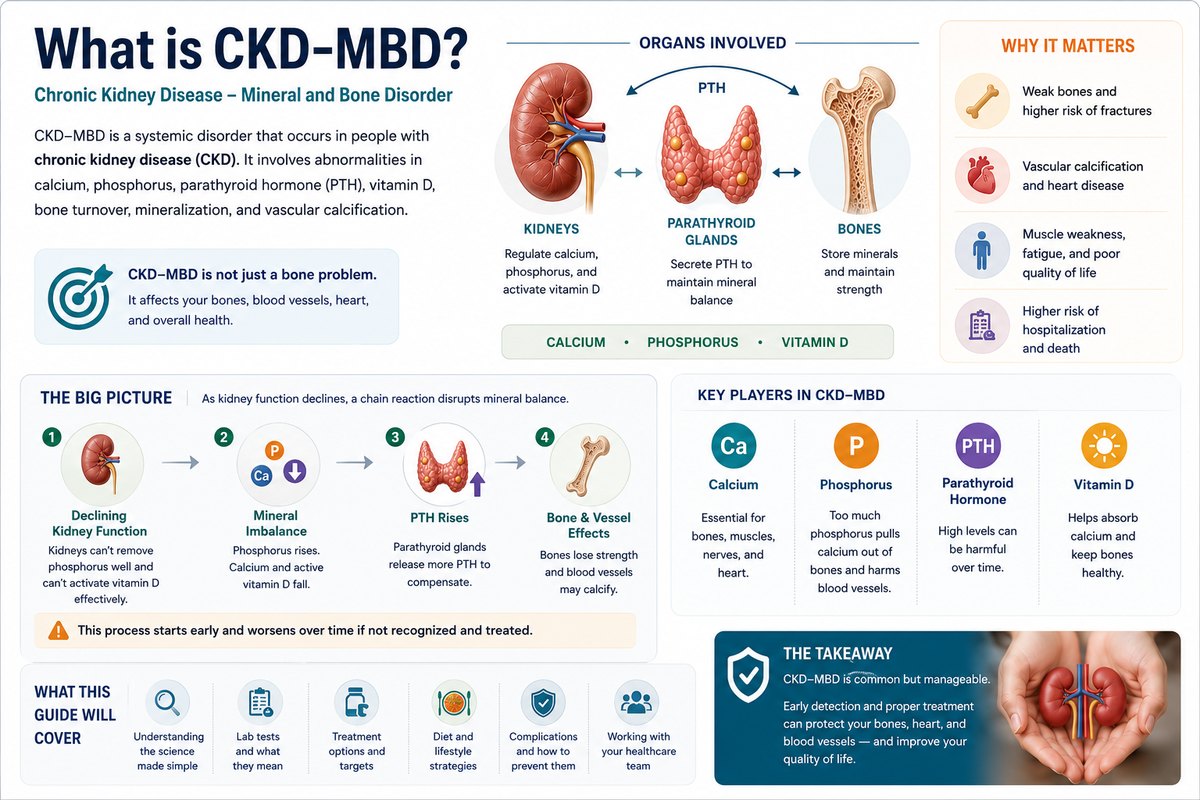 GuideCKD-MBD: Kidney, Bone & HeartCKD-mineral bone disease: how kidney failure disrupts calcium, phosphorus, vitamin D, and PTH — causing bone loss and vessel hardening — with treatment options.
 GuideMeal Prep & Fast Food for CKD PatientsMeal prep and fast food strategies for busy Filipino kidney patients — batch cooking, kidney-safe Jollibee and McDonald's orders, and traffic-light food guides.
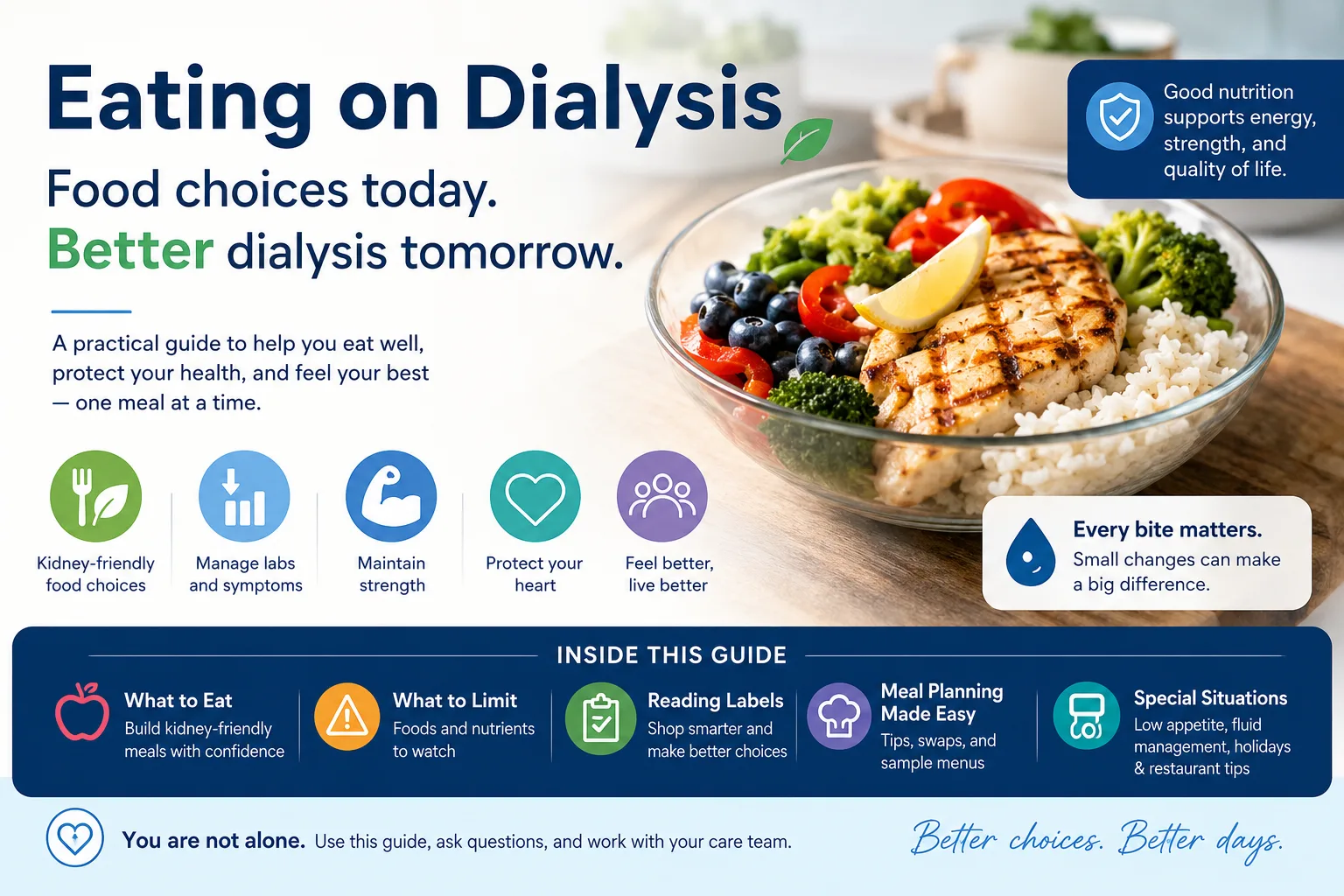 GuideEating on Dialysis: What the Evidence Actually SaysEvidence-based nutrition guide for hemodialysis and peritoneal dialysis patients — protein, phosphorus, potassium, intradialytic eating, and practical Filipino food guidance.
 GuideAlcohol & CKD — How Much Is Too Much?How alcohol affects kidneys with CKD — safe limits, Filipino drink equivalents (SMB, Red Horse, lambanog), drug interactions, and dialysis risks explained.
- CalculatorCKD-MBD Calculator: Ca×P Product, Corrected Calcium & PTH StagingInteractive CKD-MBD calculator — calcium–phosphorus product, albumin-corrected calcium, and KDIGO PTH target staging by CKD stage or dialysis status. With indications, formula, evidence, and references.
- CalculatorPhosphorus Dietary Load Estimator (Filipino foods)Estimate daily dietary phosphorus (mg/day) from common Filipino foods and compare to the CKD target, with a prominent warning about highly-absorbed inorganic/additive phosphorus. With instructions, food database, evidence, and references.
References
- U.S. Food and Drug Administration. Velphoro · Fresenius Medical Care Renal Therapies Group, LLC [US FDA-approved label, version 38, October 26, 2026]. Via DailyMed/openFDA. https://dailymed.nlm.nih.gov/dailymed/drugInfo.cfm?setid=237da26c-f38c-4faa-93ad-735e71c9d0c1
- Food and Drug Administration Philippines. Verification portal (product registrations). https://verification.fda.gov.ph
This page shows official label and registry text only; no renalcarematters.com clinical summary has been approved for it yet.
Last updated: .