Use: Labeled indications
- Renal tubular acidosis (RTA) with calcium stones
- Hypocitraturic calcium oxalate nephrolithiasis of any etiology
- Uric acid lithiasis with or without calcium stones
Full indications and usage US FDA label
1 INDICATIONS AND USAGE Potassium citrate is a citrate salt of potassium indicated for the management of:
- Renal tubular acidosis (RTA) with calcium stones (1.1)
- Hypocitraturic calcium oxalate nephrolithiasis of any etiology (1.2)
- Uric acid lithiasis with or without calcium stones (1.3) 1.1 Renal Tubular Acidosis (RTA) with Calcium Stones Potassium citrate is indicated for the management of renal tubular acidosis [see Clinical Studies (14.1)]. 1.2 Hypocitraturic Calcium Oxalate Nephrolithiasis of any Etiology Potassium citrate is indicated for the management of Hypocitraturic calcium oxalate nephrolithiasis [see Clinical Studies (14.2)]. 1.3 Uric Acid Llithiasis with or without Calcium Stones Potassium citrate is indicated for the management of Uric acid lithiasis with or without calcium stones [see Clinical Studies (14.3)].
Contraindications
- Renal insufficiency with GFR <0.7 mL/kg/min
- Hyperkalemia or predisposing conditions (chronic renal failure, uncontrolled diabetes, acute dehydration, adrenal insufficiency, potassium-sparing drugs)
- Delayed tablet passage (delayed gastric emptying, obstruction, anticholinergics)
- Peptic ulcer disease
- Active urinary tract infection
Contraindications (US label) US FDA label
4 CONTRAINDICATIONS Potassium citrate extended-release tablets are contraindicated:
- In patients with hyperkalemia (or who have conditions predisposing them to hyperkalemia), as a further rise in serum potassium concentration may produce cardiac arrest. Such conditions include: chronic renal failure, uncontrolled diabetes mellitus, acute dehydration, strenuous physical exercise in unconditioned individuals, adrenal insufficiency, extensive tissue breakdown or the administration of a potassium-sparing agent (such as triamterene, spironolactone or amiloride).
- In patients in whom there is cause for arrest or delay in tablet passage through the gastrointestinal tract, such as those suffering from delayed gastric emptying, esophageal compression, intestinal obstruction or stricture, or those taking anticholinergic medication.
- In patients with peptic ulcer disease because of its ulcerogenic potential.
- In patients with active urinary tract infection (with either urea-splitting or other organisms, in association with either calcium or struvite stones). The ability of Potassium citrate extended–release tablets to increase urinary citrate may be attenuated by bacterial enzymatic degradation of citrate. Moreover, the rise in urinary pH resulting from potassium citrate therapy might promote further bacterial growth.
- In patients with renal insufficiency (glomerular filtration rate of less than 0.7 ml/kg/min), because of the danger of soft tissue calcification and increased risk for the development of hyperkalemia.
- Patients with hyperkalemia (or who have conditions predisposing them to hyperkalemia). Such conditions include chronic renal failure, uncontrolled diabetes mellitus, acute dehydration, strenuous physical exercise in unconditioned individuals, adrenal insufficiency, extensive tissue breakdown (4)
- Patients for whom there is cause for arrest or delay in tablet passage through the gastrointestinal tract such as those suffering from delayed gastric emptying, esophageal compression, intestinal obstruction or stricture (4)
- Patients with peptic ulcer disease (4)
- Patients with active urinary tract infection (4)
- Patients with renal insufficiency (glomerular filtration rate of less than 0.7 ml/kg/min) (4)
Dosing: Adult
- Severe hypocitraturia (urinary citrate <150 mg/day): Start 60 mEq/day in 2 or 3 doses with meals
- Mild to moderate hypocitraturia: Start 30 mEq/day in 2 or 3 doses with meals; avoid above 100 mEq/day
- Objective: To restore normal urinary citrate (greater than 320 mg/day and as close to the normal mean of 640 mg/day as possible), and to increase urinary pH to a level of 6.0 to 7.0. • Severe hypocitraturia (urinary citrate < 150 mg/day): therapy should be initiated at 60 mEq per day; a dose of 30 mEq two times per day or 20 mEq three times per day with meals or within 30 minutes after meals or bedtime snack (2.2)
- • Mild to moderate hypocitraturia (urinary citrate >150 mg/day): therapy should be initiated at 30 mEq per day; a dose of 15 mEq two times per day or 10 mEq three times per day with meals or within 30 minutes after meals or bedtime snack (2.3)
2.1 Dosing Instructions
2.1 Dosing Instructions Treatment with extended release potassium citrate should be added to a regimen that limits salt intake (avoidance of foods with high salt content and of added salt at the table) and encourages high fluid intake (urine volume should be at least two litres per day). The objective of treatment with potassium citrate extended-release tablets is to provide potassium citrate in sufficient dosage to restore normal urinary citrate (greater than 320 mg/day and as close to the normal mean of 640 mg/day as possible), and to increase urinary pH to a level of 6.0 or 7.0.
Monitor serum electrolytes (sodium, potassium, chloride and carbon dioxide), serum creatinine and complete blood counts every four months and more frequently in patients with cardiac disease, renal disease or acidosis. Perform electrocardiograms periodically. Treatment should be discontinued if there is hyperkalemia, a significant rise in serum creatinine or a significant fall in blood hematocrit or hemoglobin.
2.2 Severe Hypocitraturia
2.2 Severe Hypocitraturia In patients with severe hypocitraturia (urinary citrate < 150 mg/day), therapy should be initiated at a dosage of 60 mEq /day (30 mEq two times/day or 20 mEq three times/day with meals or within 30 minutes after meals or bedtime snack). Twenty-four hour urinary citrate and/or urinary pH measurements should be used to determine the adequacy of the initial dosage and to evaluate the effectiveness of any dosage change.
In addition, urinary citrate and/or pH should be measured every four months. Doses of potassium citrate extended-release tablets greater than 100 mEq/day have not been studied and should be avoided.
2.3 Mild to Moderate Hypocitraturia
2.3 Mild to Moderate Hypocitraturia In patients with mild to moderate hypocitraturia (urinary citrate > 150 mg/day) therapy should be initiated at 30 mEq/day (15 mEq two times/day or 10 mEq three times/day with meals or within 30 minutes after meals or bedtime snack). Twenty-four hour urinary citrate and/or urinary pH measurements should be used to determine the adequacy of the initial dosage and to evaluate the effectiveness of any dosage change.
Doses of Potassium citrate extended-release tablets greater than 100 mEq/day have not been studied and should be avoided.
Dosing: Altered kidney function
Potassium citrate is a urinary alkalinizer for stone prevention (hypocitraturia, renal tubular acidosis with stones, uric acid stones). Each 1,080 mg tablet supplies 10 mEq of potassium. The US label contraindicates it when GFR is below 0.7 mL/kg/min (about 35 mL/min at 50 kg) and in hyperkalemia and in conditions that predispose to it, including chronic renal failure, and stops it if serum creatinine rises significantly.
Kidney function measure: Label contraindication: GFR <0.7 mL/kg/min (about 35 mL/min at 50 kg, 49 mL/min at 70 kg), and any condition predisposing to hyperkalemia including chronic renal failure.
Show full dosing details
- CrCl ≥60 mL/min
- Severe hypocitraturia: start 60 mEq/day (30 mEq twice daily or 20 mEq three times daily) with meals; mild to moderate: start 30 mEq/day; avoid above 100 mEq/day (label). Check electrolytes, creatinine and blood count every 4 months.
- CrCl 30–59 mL/min
- Contraindicated when GFR is below 0.7 mL/kg/min (multiply by body weight: 50 kg = 35 mL/min; 70 kg = 49 mL/min) (label 4). Above that, use only with specialist input, potassium checks within 1 week of starting and of any dose change, and no potassium-sparing drugs. The label also says to avoid it in chronic renal failure and to stop it if creatinine rises significantly.
- CrCl 15–29 mL/min
- Contraindicated: GFR below 0.7 mL/kg/min, and hyperkalemia or conditions predisposing to it, including chronic renal failure (label 4, 5.1). Potentially fatal hyperkalemia can develop rapidly and silently.
- CrCl <15 mL/min (not on dialysis)
- Contraindicated: GFR below 0.7 mL/kg/min, and hyperkalemia or conditions predisposing to it, including chronic renal failure (label 4, 5.1). Potentially fatal hyperkalemia can develop rapidly and silently.
- Hemodialysis (intermittent)
- Contraindicated in hyperkalemia or conditions predisposing to it, including chronic renal failure; avoid in chronic renal failure (label 4, 5.1). Potentially fatal hyperkalemia can develop rapidly and silently.
- Peritoneal dialysis
- Contraindicated in hyperkalemia or conditions predisposing to it, including chronic renal failure; avoid in chronic renal failure (label 4, 5.1). Potentially fatal hyperkalemia can develop rapidly and silently.
- CRRT
- Contraindicated: acute kidney injury and acute dehydration predispose to hyperkalemia (label).
- Dialyzable? Potassium is removed by dialysis (physiology; label lists hemodialysis and peritoneal dialysis among hyperkalemia treatments).
- Monitoring Serum potassium, sodium, chloride, carbon dioxide, creatinine and complete blood count every 4 months; more often with heart or kidney disease or acidosis. Periodic ECG. Urinary citrate and pH. Stop for hyperkalemia, significant creatinine rise or fall in hemoglobin (label).
Children (kidney dosing)
- eGFR ≥60
- Not approved for children; kidney dosing not applicable.
- eGFR 30–59
- Not approved for children; kidney dosing not applicable.
- eGFR 15–29
- Not approved for children; kidney dosing not applicable.
- eGFR <15 (not on dialysis)
- Not approved for children; kidney dosing not applicable.
- Hemodialysis (intermittent)
- Not approved for children; kidney dosing not applicable.
- Peritoneal dialysis
- Not approved for children; kidney dosing not applicable.
- CRRT
- Not approved for children; kidney dosing not applicable.
Pediatric eGFR: bedside Schwartz equation, 0.413 × height (cm) / serum creatinine (mg/dL). Weight-based doses should not exceed the adult maximum.
renalcarematters.com guidance, reviewed by William Gregory M. Rivero, MD, FPCP, DPSN on November 17, 2026. Sources are listed under References. Use with the product's package insert and the patient's current kidney function.
US label text: Dosage and administration (renal excerpts) US FDA label
Monitor serum electrolytes (sodium, potassium, chloride and carbon dioxide), serum creatinine and complete blood counts every four months and more frequently in patients with cardiac disease, renal disease or acidosis.
Dosing: Pediatric
- Approved ages
- Safety and effectiveness in children not established (label).
- Usual dose
- Not established.
Kidney dosing in children: see Dosing: Altered kidney function.
renalcarematters.com, reviewedPediatric use (US label) US FDA label
8.4 Pediatric Use Safety and effectiveness in children have not been established.
Dosage forms
Philippines
- Extended-release tablet: 1080 mg
- ) extended-release tablet: 1.08 g (10 mEq, 1.08 mg (10 mEq, 1.080 g (10 mEq, 1.080 mg (10 mEQ, 1.620 g (15 mEq, 1080 mg (10 mEq, 1620 mg (Eq. to 15 mEq
- ): 1.080 g (10 mEq
- ) prolonged-release tablet: 1080 mg (10 mEq
- Extended-release: 1.620 g
Registered products in the Philippines
61 products registered with the Food and Drug Administration (FDA) Philippines list Potassium citrate as the generic name. Registration status changes; confirm a product's current status on the FDA portal before relying on it.
All registered products61
| Package insert | |||||||
|---|---|---|---|---|---|---|---|
AcaldinPotassium Citrate | 1080 mg Extended-Release TabletAlu/Alu Blister Pack x 10's (Box of 30's) | RxVAT-exempt | Cooper Pharma LimitedIndia | Medchoice Endocrine Group, Inc.Importer: Ambica International Corporation | DRP-4840-09 | Oct 17, 2028 | |
AcalkaPotassium Citrate | 1080 mg (10 mEq) Prolonged-Release TabletAlu/OPA/PVC Blister Pack x 10's Box 30's; Alu/OPA/PVC Blister Pack x 10's Box 40's; Alu/OPA/PVC Blister Pack x 10's Box 100's | RxVAT-exempt | Ferrer Internacional, S.A.Spain | Importer: Patriot Pharmaceuticals Corporation | DR-XY20542 | Dec 17, 2029 | |
AcitratePotassium Citrate | 1080 mg Extended-Release TabletAlu/Alu Blister Pack x 10's (Box of 30's) | RxVAT-exempt | Cooper Pharma LimitedIndia | Scriptmed, Inc.Importer: Ambica International Corporation | DRP-4840-01 | Oct 17, 2028 | |
Acitrate PlusPotassium citrate | 1.620 g (15 mEq) Extended-Release TabletAlu/Alu Blister Pack x 10's (Box of 30's) | RxVAT-exempt | Cooper Pharma LimitedIndia | Scriptmed, Inc.Importer: Ambica International Corporation | DRP-14484-04 | Sep 12, 2028 | |
AlkacitPotassium Citrate | 1080 mg Extended-Release TabletAlu/White PVC Blister Pack x 10’s (Box of 30's & Box of 100's)) | RxVAT-exempt | Magbro Healthcare Pvt. Ltd.India | Healthlink 211 Pharma, Inc.Importer: Pharmakon Biotec Inc. | DRP-11044-08 | Jan 18, 2027 | |
AlkalinsePotassium Citrate (as Monohydrate) | 1.08g (10 mEq) Extended-Release TabletAlu/Opaque White PVC Blister Pack x 10’s (Box of 30’s) | RxVAT-exempt | San Marino Laboratories CorporationPhilippines | — | DRP-2813 | Jan 29, 2031 | |
AlkasurePotassium Citrate | 1080 mg Extended-Release TabletAlu/White PVC Blister Pack x 10’s (Box of 30’s) | RxVAT-exempt | Magbro Healthcare Pvt. Ltd.India | Alkem Laboratories CorporationImporter: Pharmakon Biotec Inc. | DRP-11044-07 | Jan 18, 2027 | |
AlkatratePotassium Citrate | 1.08 g (10 mEq) Extended-Release TabletAlu/Alu Blister Pack x 10's (Box of 30's) | RxVAT-exempt | Ravian Life Science Pvt. Ltd.India | Euroasia Pharmaceuticals, Inc.Importer: Pharmakon Biotec Inc. | DRP-13985-01 | May 31, 2028 | |
AzentratePotassium Citrate | 1080 mg Extended-Release TabletAlu/White PVC Blister Pack x 10’s (Box of 100’s) | RxVAT-exempt | Magbro Healthcare Pvt. Ltd.India | Kodapharm Med Corp.Importer: Pharmakon Biotec Inc. | DRP-11044-05 | Jan 18, 2027 | |
Aztrate XRPotassium Citrate | 1080 mg Extended-Release TabletAlu/Alu Blister Pack x 10's (Box of 30's) | RxVAT-exempt | Cooper Pharma LimitedIndia | A-Z Market Enterprise Developers Inc.Importer: Ambica International Corporation | DRP-4840-14 | Oct 17, 2028 | |
Aztrate XR PlusPotassium Citrate | 1.620 g (15 mEq) Extended-Release TabletAlu/Alu Blister Pack x 10's (Box of 30's) | RxVAT-exempt | Cooper Pharma LimitedIndia | A-Z Market Enterprise Developers Inc.Importer: Ambica International Corporation | DRP-14484-02 | Sep 12, 2028 | |
CaltaPotassium citrate | 1.620 g (15 mEq) Extended-Release TabletAlu/Alu Blister Pack x 10's (Box of 30's) | RxVAT-exempt | Cooper Pharma LimitedIndia | The Cathay YSS Distributors Co., Inc.Importer: Ambica International Corporation | DRP-14484-03 | Sep 12, 2028 | |
CaltaPotassium Citrate | 1080 mg Extended-Release TabletAlu/Alu Blister Pack x 10's (Box of 30's) | RxVAT-exempt | Cooper Pharma LimitedIndia | The Cathay YSS Distributors Co., Inc.Importer: Ambica International Corporation | DRP-4840-18 | Oct 17, 2028 | |
CitrafluxPotassium Citrate | 1.08 g (10 mEq) Extended-Release TabletAlu/Alu Blister Pack x 10's (Box of 30's) | RxVAT-exempt | Ravian Life Science Pvt. Ltd.India | Rule Med Pharma Corp.Importer: Pharmakon Biotec, Inc. | DRP-13985-02 | May 31, 2028 | |
CitraposPotassium Citrate | 1080 mg Extended-Release TabletAlu/Alu Blister Pack x 10's (Box of 30's) | RxVAT-exempt | Cooper Pharma LimitedIndia | Corbridge Group Phils. Inc.Importer: Ambica International Corporation | DRP-4840-11 | Oct 17, 2028 | |
Citrapos XRPotassium citrate | 1.620 g (15 mEq) Extended-Release TabletAlu/Alu Blister Pack x 10's (Box of 30's) | RxVAT-exempt | Cooper Pharma LimitedIndia | Corbridge Group Phils., Inc.Importer: Ambica International Corporation | DRP-14484-01 | Sep 12, 2028 | |
CytrakonPotassium Citrate | 1080 mg Extended Release TabletAlu/White PVC Blister Pack x 10's (Box of 100's) | RxVAT-exempt | MAGBRO HEALTHCARE PVT. LTD.India | Pharmakon Biotec Inc. | DRP-11044 | Jan 18, 2027 | |
D-lithPotassium Citrate | 1080 mg Extended-Release TabletAlu / White PVC Blister Pack x 10's (Box of 30's & 100's) | RxVAT-exempt | Magbro Healthcare Pvt. Ltd.India | Labmate Pharma Inc.Importer: Pharmakon Biotec Inc. | DRP-11044-15 | Jan 18, 2027 | |
FaracitPotassium Citrate | 1.08g (10 mEq) Extended-Release TabletAlu/Alu Blister Pack X 10'S (Box Of 30'S) | RxVAT-exempt | Ravian Life Science Pvt. Ltd.India | Pharmakon Biotec, Inc. | DRP-13985 | May 31, 2028 | |
GitratePotassium Citrate | 1080 mg Extended-Release TabletAlu/White PVC Blister Pack x 10’s (Box of 100’s) | RxVAT-exempt | Magbro Healthcare Pvt. Ltd.India | Gijun Trading Inc.Importer: Pharmakon Biotec Inc. | DRP-11044-04 | Jan 18, 2027 | |
K-CitrizPotassium Citrate | 1080 mg Extended-Release TabletAlu/White PVC Blister Pack x 10's (Box of 30's and Box of 100's) | RxVAT-exempt | Magbro Healthcare Pvt. Ltd.India | Teramedix Pharma Trading Inc.Importer: Pharmakon Biotec Inc. | DRP-11044-06 | Jan 18, 2027 | |
K-XRPotassium Citrate | 1080 mg Extended-Release TabletAlu/White PVC Blister Pack x 10's (Box of 30's) | RxVAT-exempt | Magbro Healthcare Pvt. Ltd.India | Littman Drug CorporationImporter: Pharmakon Biotec Inc. | DRP-11044-01 | Jan 18, 2027 | |
K-XRPotassium Citrate | 1080 mg Extended-Release TabletAlu/Alu Blister Pack x 10's (Box of 30's) | RxVAT-exempt | Cooper Pharma LimitedIndia | Littman Drug CorporationImporter: Ambica International Corporation | DRP-4840-05 | Oct 17, 2028 | |
KaitratePotassium Citrate | 1080 mg Extended-Release TabletAlu/Alu Blister Pack x 10's (Box of 30's and 90's) | RxVAT-exempt | Cooper Pharma LimitedIndia | Genace Pharma DistributorImporter: Ambica International Corporation | DRP-4840 | Oct 17, 2028 | |
KalcicurePotassium Citrate | 1080 mg Extended-Release TabletAlu/White PVC Blister Pack x 10's (Box of 30's and 100's) | RxVAT-exempt | Magbro Healthcare Pvt. Ltd.India | Teramedix Pharma Trading Inc.Importer: Pharmakon Biotec Inc. | DRP-11044-13 | Jan 18, 2027 | |
Kc-TrolPotassium Citrate (as monohydrate) | 1.08 mg (10 mEq) Extended-Release TabletAlu/Alu Blister Pack x 10’s (Box of 100's) | RxVAT-exempt | Globela Pharma Pvt. Ltd.India | AMB HK ENTERPRISES INC. | DRP-19021 | Oct 19, 2031 | |
KelcitraPotassium Citrate | 1080 mg Extended-Release TabletAlu/White PVC Blister Pack x 10’s (Box of 100’s); Alu/White PVC Blister Pack x 10’s (Box of 30’s) | RxVAT-exempt | Magbro Healthcare Pvt. Ltd.India | Ellebasy Medicale TradingImporter: Pharmakon Biotec Inc. | DRP-11044-03 | Jan 18, 2027 | |
KeltasyPotassium Citrate | 1080 mg Extended-Release TabletAlu/White PVC Blister Pack x 10’s (Box of 30's & Box of 100's) | RxVAT-exempt | Magbro Healthcare Pvt. Ltd.India | Ellebasy Medicale Group Inc.Importer: Pharmakon Biotec Inc. | DRP-11044-11 | Jan 18, 2027 | |
KeltiqoPotassium Citrate | 1080 mg Extended-Release TabletAlu / White PVC Blister Pack x 10’s (Box of 30's and 100's) | RxVAT-exempt | Magbro Healthcare Pvt. Ltd.India | Amediqo Phils., Inc.Importer: Pharmakon Biotec Inc. | DRP-11044-09 | Jan 18, 2027 | |
KycitratePotassium citrate | 1.620 g (15 mEq) Extended-Release TabletAlu/Alu Blister Pack x 10's (Box of 30's) | RxVAT-exempt | Cooper Pharma LimitedIndia | Ambica International Corporation.Importer: Ambica International Corporation | DRP-14484 | Sep 12, 2028 | |
LithrocalPotassium Citrate | 1080 mg Extended-Release TabletAlu/Alu Blister Pack x 10's (Box of 30's) | RxVAT-exempt | Cooper Pharma LimitedIndia | Distribution Solutions Phils., Inc.Importer: Ambica International Corporation | DRP-4840-03 | Oct 17, 2028 | |
MedcitPotassium Citrate (as monohydrate) | 1.080 g (10 mEq) Extended-Release TabletHDPE Plastic Bottle x 30's (Box of 1's) | RxVAT-exempt | Lloyd Laboratories, Inc.Philippines | Trader: Ultramed Pharma, Inc. | DR-XY42469 | Aug 29, 2028 | |
MedcitPotassium Citrate (as monohydrate) | 1.080 g (10 mEq) Extended-Release TabletHDPE Plastic Bottle x 30's (Box of 1's) | RxVAT-exempt | Lloyd Laboratories, Inc.Philippines | Trader: Ultramed Pharma, Inc. | DRP-13375 | Aug 29, 2028 | |
NonePotassium Citrate | 1080 mg Extended-Release TabletAlu/White PVC Blister Pack x 10's (Box of 100's) | RxVAT-exempt | Magbro Healthcare Pvt. Ltd.India | Reta DrugImporter: Pharmakon Biotec Inc. | DRP-11044-14 | Jan 18, 2027 | |
NonePotassium Citrate | 1080 mg Extended-Release TabletAlu/Alu Blister Pack x 10's (Box of 30's) | RxVAT-exempt | Cooper Pharma LimitedIndia | Diafarm Inc.Importer: Ambica International Corporation | DRP-4840-02 | Oct 17, 2028 | |
NonePotassium Citrate | 1080 mg Extended-Release TabletAlu/Alu Blister Pack x 10's (Box of 30's) | RxVAT-exempt | Cooper Pharma LimitedIndia | Ritemed Phils., Inc.Importer: Ambica International Corporation | DRP-4840-10 | Oct 17, 2028 | |
NonePotassium Citrate | 1080 mg Extended-Release TabletAlu/Alu Blister Pack x 10's (Box of 30's) | RxVAT-exempt | Cooper Pharma LimitedIndia | TGP Pharma, Inc.Importer: Ambica International Corporation | DRP-4840-12 | Oct 17, 2028 | |
NonePotassium Citrate | 1080 mg Extended-Release TabletAlu/Alu Blister Pack x 10's (Box of 30's) | RxVAT-exempt | Cooper Pharma LimitedIndia | Actimed, Inc.Importer: Ambica International Corporation | DRP-4840-13 | Oct 17, 2028 | |
NostonPotassium Citrate | 1.080 g (10 mEq) Extended-Release TabletAlu/Alu Blister Pack x 10's (Box of 30's) | RxVAT-exempt | Nucare Labs LLPIndia | ECE Pharmaceuticals, Inc.Importer: Biophil Medical Equipment and Supplies Trading | DRP-15965 | Oct 4, 2029 | |
NostonPotassium Citrate | 1.620 g Extended-ReleaseAlu/Alu Blister Pack x 10's (Box of 30's) | RxVAT-exempt | Nucare Labs LLPIndia | ECE Pharmaceuticals, Inc.Importer: Biophil Medical Equipment and Supplies Trading | DRP-15846 | Sep 20, 2029 | |
PhroletsPotassium Citrate | 1080 mg Extended-Release TabletAlu/Alu Blister Pack x 10's (Box of 30's) | RxVAT-exempt | Cooper Pharma LimitedIndia | Guimhealth Pharmaceutical Distributor and DrugstoreImporter: Ambica International Corporation | DRP-4840-15 | Oct 17, 2028 | |
PocitPotassium Citrate (as monohydrate) | 1.08g (10 mEq) Extended-Release TabletAlu/Opaque White PVC Blister Pack x 10's (Box of 30's) | RxVAT-exempt | San Marino Laboratories CorporationCavite | Healthlink211 Pharma, Inc. | DRP-2813-03 | Jan 29, 2031 | |
PoratePotassium Citrate | 1.080 g (10 mEq) Extended Release TabletAlu/Alu Blister Pack x 10's (Box of 30's) | RxVAT-exempt | Flourish PharmaIndia | Speed Med Pharmaceuticals, Inc.Importer: Biophil Medical Equipment and Supplies Trading | DRP-16714 | Jul 1, 2030 | |
PoscifixPotassium Citrate | 1080 mg Extended-Release TabletAlu/Alu Blister Pack x 10's (Box of 30's) | RxVAT-exempt | Cooper Pharma LimitedIndia | Ambicare Pharmaceuticals Inc.Importer: Ambica International Corporation | DRP-4840-06 | Oct 17, 2028 | |
PoscitcurePotassium Citrate | 1080 mg Extended-Release TabletAlu/Alu Blister Pack x 10's (Box of 30's) | RxVAT-exempt | Cooper Pharma LimitedIndia | AGB Pharmaceutical Trading and Consultancy CorporationImporter: Ambica International Corporation | DRP-4840-04 | Oct 17, 2028 | |
PositatePotassium Citrate | 1080 mg Extended-Release TabletAlu/Alu Blister Pack x 10's (Box of 30's) | RxVAT-exempt | Cooper Pharma LimitedIndia | Macropharma CorporationImporter: Ambica International Corporation | DRP-4840-07 | Oct 17, 2028 | |
ProxytratePotassium citrate | 1.620 g (15 mEq) Extended-Release TabletAlu/Alu Blister Pack x 10’s (Box of 30’s) | RxVAT-exempt | Cooper Pharma LimitedIndia | TGP Pharma Inc.Importer: Ambica International Corporation | DRP-14484-05 | Sep 12, 2028 | |
RexcitratePotassium Citrate | 1080 mg Extended-Release TabletAlu/White PVC Blister Pack x 10’s (Box of 100’s) | RxVAT-exempt | Magbro Healthcare Pvt. Ltd.India | Rexmed Pharmaceutical SalesImporter: Pharmakon Biotec Inc. | DRP-11044-02 | Jan 18, 2027 | |
Saphreta-GE1080Potassium Citrate | 1.080 g (10 mEq) Extended-Release TabletAlu/Alu Blister Pack x 10's (Box of 30's and 100's) | RxVAT-exempt | Genom Biotech Pvt. Ltd.India | Nelpa Lifesciences, Inc. | DRP-18948 | Oct 6, 2031 | |
SaphtratePotassium Citrate | 1.620 g (15 mEq) Extended-Release TabletAlu/Alu Blister Pack x 10's (Box of 30's) | RxVAT-exempt | Genom Biotech Pvt. Ltd.India | Nelpa Lifesciences, Inc. | DRP-17401 | Dec 19, 2030 | |
SaphtratePotassium citrate | Extended-Release Tablet 1.080 g (10 mEq)Alu/Alu Blister Pack x 10's (Box of 30's) | RxVAT-exempt | Sapphire Lifesciences Pvt. Ltd.India | Nelpa Lifesciences, Inc. | DRP-10252 | Aug 23, 2036 | |
SETHRATEPotassium Citrate | 1.620 g (15 mEq) Extended-Release TabletAlu/Alu Blister Pack x 10’s (Box of 30’s) | RxVAT-exempt | Genom Biotech Pvt. Ltd.India | 777 RED PHARMA INC.Importer: Nelpa Lifesciences, Inc. | DRP-17401-01 | Dec 19, 2030 | |
TascitPotassium Citrate (as Monohydrate) | 1080 mg (10 mEq) Extended-Release TabletFlex Foil Strip x 6's (Box of 30's); Flex Foil Strip x 4's (Box of 100's) | RxVAT-exempt | Amherst Laboratories, Inc.Philippines | Trader: Unilab, Inc. | DRP-9783 | Dec 8, 2029 | |
Tascit BIDPotassium Citrate | 1620 mg (Eq. to 15 mEq) Extended Release TabletAlu Strip Foil x 4's (Box of 100's) | RxVAT-exempt | Amherst Laboratories, Inc.Philippines | Trader: UNILAB, Inc. | DR-XY44622 | Jun 8, 2031 | |
TasiumatePotassium Citrate | 1080 mg Extended-Release TabletAlu/Alu Blister Pack x 10's (Box of 30's and 90's) | RxVAT-exempt | Cooper Pharma LimitedIndia | One Pharma Marketing Inc.Importer: Ambica International Corporation | DRP-4840-17 | Oct 17, 2028 | |
TechtratePotassium Citrate | 1080 mg Extended-Release TabletAlu/White PVC Blister Pack x 10’s (Box of 30's & Box of 100's) | RxVAT-exempt | Magbro Healthcare Pvt. Ltd.India | One Technodrug Life Sciences Inc.Importer: Pharmakon Biotec Inc. | DRP-11044-10 | Jan 18, 2027 | |
UrecitPotassium Citrate | 1080 mg Extended-Release TabletAlu/Alu Blister Pack x 10's (Box of 30's) | RxVAT-exempt | Cooper Pharma LimitedIndia | Metrophil Drug and Chemical TradingImporter: Ambica International Corporation | DRP-4840-08 | Oct 17, 2028 | |
UrineedPotassium Citrate | 1080 mg Extended-Release TabletAlu/White PVC Blister Pack x 10’s (Box of 30's and 100's) | RxVAT-exempt | Magbro Healthcare Pvt. Ltd.India | Biocare Lifesciences, Inc.Importer: Pharmakon Biotec Inc. | DRP-11044-12 | Jan 18, 2027 | |
(no brand name)Potassium Citrate | 1.080 mg (10 mEQ) Extended-Release TabletAlu/Alu Foil Strip x 4's (Box of 4's; 12's'; 16's; 32's; 40's; and 64's, and physician's sample Box of 4's) | RxVAT-exempt | Eskayef Pharmaceuticals LimitedIndia | AAA Pharma, Inc. | DR-XY49578 | Nov 14, 2030 | |
(no brand name)Potassium Citrate | 1.08g (10mEq) Extended -Release TabletOff-White HDPE Bottle Sealed with Violet Plastic Cap x 15's, 30's, 60's and 90's (Box of 15's, 30's, 60's and 90's) (Physician Sample: Box of 5's) | RxVAT-exempt | Eskayef Pharmaceuticals LimitedBangladesh | ECE Pharmaceuticals, Inc.Importer: AAA Pharma, Inc. | DR-XY48514 | Dec 1, 2027 | |
(no brand name)Potassium Citrate | 1080 mg (10 mEq) Extended Release TabletAlu/Alu Blister Pack x 10's (Box of 20's) | RxVAT-exempt | Eskayef Pharmaceuticals LimitedBangladesh | Firmlink Pharma Phils. Co. | DR-XY48582 | Jan 25, 2028 |
Source: FDA Philippines product registration database. "Valid until" is the registration validity date listed by the FDA; a past date may mean a renewal is pending. Package insert links point to files published by the FDA.
United States (label)
Dosage forms and strengths (US label) US FDA label
3 DOSAGE FORMS AND STRENGTHS • 5 mEq tablets are uncoated, pale yellow colored, round shaped, bi-convex, debossed with 'S406'on one side and plain on the other side. • 10 mEq tablets are uncoated, pale yellow colored, caplet shaped, bi-convex, debossed with 'S407'on one side and plain on the other side • 15 mEq tablets are uncoated, pale yellow colored, caplet shaped, bi-convex, debossed with 'S408'on one side and plain on the other side. Tablets: 5 mEq, 10 mEq and 15 mEq (3)
Warnings/Precautions
- • Hyperkalemia: In patients with impaired mechanisms for excreting potassium, potassium citrate administration can produce hyperkalemia and cardiac arrest. Potentially fatal hyperkalemia can develop rapidly and be asymptomatic. The use of potassium citrate in patients with chronic renal failure, or any other condition which impairs potassium excretion such as severe myocardial damage or heart failure, should be avoided (5.1)
- • Gastrointestinal lesions: if there is severe vomiting, abdominal pain or gastrointestinal bleeding, potassium citrate should be discontinued immediately and the possibility of bowel perforation or obstruction investigated (5.2)
5.1 Hyperkalemia
5.1 Hyperkalemia In patients with impaired mechanisms for excreting potassium, potassium citrate administration can produce hyperkalemia and cardiac arrest. Potentially fatal hyperkalemia can develop rapidly and be asymptomatic. The use of potassium citrate in patients with chronic renal failure, or any other condition which impairs potassium excretion such as severe myocardial damage or heart failure, should be avoided.
Closely monitor for signs of hyperkalemia with periodic blood tests and ECGs.
5.2 Gastrointestinal Lesions
5.2 Gastrointestinal Lesions Solid dosage forms of potassium chlorides have produced stenotic and/or ulcerative lesions of the small bowel and deaths. These lesions are caused by a high local concentration of potassium ions in the region of the dissolving tablets, which injured the bowel. In addition, perhaps because wax-matrix preparations are not enteric-coated and release some of their potassium content in the stomach, there have been reports of upper gastrointestinal bleeding associated with these products.
The frequency of gastrointestinal lesions with wax-matrix potassium chloride products is estimated at one per 100,000 patient-years. Experience with potassium citrate is limited, but a similar frequency of gastrointestinal lesions should be anticipated. If there is severe vomiting, abdominal pain or gastrointestinal bleeding, potassium citrate should be discontinued immediately and the possibility of bowel perforation or obstruction investigated.
Drug interactions
| Drug or class | Severity | Effect | What to do |
|---|---|---|---|
| Potassium-sparing diuretics (spironolactone, triamterene, amiloride) | Avoid | Severe hyperkalemia (label). | Avoid. |
| ACE inhibitors, ARBs, NSAIDs | Adjust or monitor | Hyperkalemia (label). | Monitor potassium. |
| Anticholinergics and other drugs slowing gut transit | Avoid | More gastrointestinal irritation (label). | Avoid (contraindicated with anticholinergics). |
Severity scale (renalcarematters.com): Avoid: do not combine; Adjust or monitor: change the dose or monitor closely; Minor: usually no action.
renalcarematters.com, reviewed- The following drug interactions may occur with potassium citrate: • Potassium-sparing diuretics: concomitant administration should be avoided since the simultaneous administration of these agents can produce severe hyperkalemia (7.1)
- • Drugs that slow gastrointestinal transit time: These agents (such as anticholinergics) can be expected to increase the gastrointestinal irritation produced by potassium salts (7.2)
- • Renin-angiotensin-aldosterone inhibitors: Monitor for hyperkalemia (7.3)
- • Nonsteroidal Anti-inflammatory drugs (NSAIDs) monitor for hyperkalemia (7.4)
7.1 Potential Effects of Potassium
7.1 Potential Effects of Potassium Citrate on Other Drugs Potassium-sparing Diuretics: Concomitant administration of potassium citrate and a potassium-sparing diuretic (such as triamterene, spironolactone or amiloride) should be avoided since the simultaneous administration of these agents can produce severe hyperkalemia.
7.2 Potential Effects of Other Drugs on Potassium
7.2 Potential Effects of Other Drugs on Potassium Citrate Drugs that slow gastrointestinal transit time: These agents (such as anticholinergics) can be expected to increase the gastrointestinal irritation produced by potassium salts.
7.3 Renin-Angiotensin-Aldosterone System Inhibitors
7.3 Renin-Angiotensin-Aldosterone System Inhibitors Drugs that inhibit the renin-angiotensin-aldosterone system (RAAS) including angiotensin converting enzyme (ACE) inhibitors, angiotensin receptor blockers (ARBs), spironolactone, eplerenone, or aliskiren produce potassium retention by inhibiting aldosterone production. Closely monitor potassium in patients receiving concomitant RAAS therapy.
7.4 Nonsteroidal Anti-Inflammatory Drugs (NSAIDs)
7.4 Nonsteroidal Anti-Inflammatory Drugs (NSAIDs) NSAIDs may produce potassium retention by reducing renal synthesis of prostagladin E and impairing the renin-angiotensin system. Closely monitor potassium in patients on concomitant NSAIDs.
Adverse reactions
Common
- Abdominal discomfort, nausea, vomiting, diarrhea
Serious
- Hyperkalemia, cardiac arrest
- Gastrointestinal ulceration, bleeding, obstruction
Adverse reactions (US label) US FDA label
6 ADVERSE REACTIONS Some patients may develop minor gastrointestinal complaints such as abdominal discomfort, vomiting, diarrhea, loose bowel movements or nausea. These may be alleviated by taking the dose with meals or snacks or by reducing the dosage (6.1) To report SUSPECTED ADVERSE REACTIONS, contact Strides Pharma Inc. at 1-877-244-9825 or FDA at 1-800-FDA-1088 or www.fda.gov/medwatch 6.1 Postmarketing Experience Some patients may develop minor gastrointestinal complaints during potassium citrate therapy, such as abdominal discomfort, vomiting, diarrhea, loose bowel movements or nausea.
These symptoms are due to the irritation of the gastrointestinal tract, and may be alleviated by taking the dose with meals or snacks, or by reducing the dosage. Patients may find intact matrices in their feces.
Monitoring parameters
- Serum potassium, sodium, chloride, carbon dioxide, creatinine and complete blood count every 4 months; more often with heart or kidney disease or acidosis. Periodic ECG. Urinary citrate and pH. Stop for hyperkalemia, significant creatinine rise or fall in hemoglobin (label). Kidney
- Potassium, creatinine, electrolytes, blood count every 4 months
- ECG periodically
Pregnancy considerations
Pregnancy (US label) US FDA label
8.1 Pregnancy Animal reproduction studies have not been conducted. It is also not known whether potassium citrate can cause fetal harm when administered to a pregnant woman or can affect reproduction capacity. Potassium citrate should be given to a pregnant woman only if clearly needed.
Breastfeeding considerations
Lactation (US label) US FDA label
8.3 Nursing Mothers The normal potassium ion content of human milk is about 13 mEq/L. It is not known if potassium citrate has an effect on this content. Potassium citrate should be given to a woman who is breastfeeding only if clearly needed.
Mechanism of action
12.1 Mechanism of Action When potassium citrate is given orally, the metabolism of absorbed citrate produces an alkaline load. The induced alkaline load in turn increases urinary pH and raises urinary citrate by augmenting citrate clearance without measurably altering ultrafilterable serum citrate. Thus, potassium citrate therapy appears to increase urinary citrate principally by modifying the renal handling of citrate, rather than by increasing the filtered load of citrate.
The increased filtered load of citrate may play some role, however, as in small comparisons of oral citrate and oral bicarbonate, citrate had a greater effect on urinary citrate. In addition to raising urinary pH and citrate, potassium citrate increases urinary potassium by approximately the amount contained in the medication.
In some patients, potassium citrate causes a transient reduction in urinary calcium. The changes induced by potassium citrate produce urine that is less conducive to the crystallization of stone-forming salts (calcium oxalate, calcium phosphate and uric acid). Increased citrate in the urine, by complexing with calcium, decreases calcium ion activity and thus the saturation of calcium oxalate.
Citrate also inhibits the spontaneous nucleation of calcium oxalate and calcium phosphate (brushite). The increase in urinary pH also decreases calcium ion activity by increasing calcium complexation to dissociated anions. The rise in urinary pH also increases the ionization of uric acid to the more soluble urate ion. Potassium citrate therapy does not alter the urinary saturation of calcium phosphate, since the effect of increased citrate complexation of calcium is opposed by the rise in pH-dependent dissociation of phosphate.
Calcium phosphate stones are more stable in alkaline urine. In the setting of normal renal function, the rise in urinary citrate following a single dose begins by the first hour and lasts for 12 hours. With multiple doses the rise in citrate excretion reaches its peak by the third day and averts the normally wide circadian fluctuation in urinary citrate, thus maintaining urinary citrate at a higher, more constant level throughout the day.
When the treatment is withdrawn, urinary citrate begins to decline toward the pre-treatment level on the first day. The rise in citrate excretion is directly dependent on the potassium citrate dosage. Following long-term treatment, potassium citrate at a dosage of 60 mEq/day raises urinary citrate by approximately 400 mg/day and increases urinary pH by approximately 0.7 units.
In patients with severe renal tubular acidosis or chronic diarrheal syndrome where urinary citrate may be very low (<100 mg/day), potassium citrate may be relatively ineffective in raising urinary citrate. A higher dose of potassium citrate may therefore be required to produce a satisfactory citraturic response. In patients with renal tubular acidosis in whom urinary pH may be high, potassium citrate produces a relatively small rise in urinary pH.
US FDA labelPharmacokinetics
Key PK parameters
| Onset | Urinary citrate rises within 1 hour; lasts about 12 hours |
|---|---|
| Metabolism (CYP, transporters) | Citrate metabolized to bicarbonate |
| Renal excretion kidney | Potassium excreted by the kidney |
| Dialyzability kidney | Potassium removed by dialysis |
The induced alkaline load in turn increases urinary pH and raises urinary citrate by augmenting citrate clearance without measurably altering ultrafilterable serum citrate.
Thus, potassium citrate therapy appears to increase urinary citrate principally by modifying the renal handling of citrate, rather than by increasing the filtered load of citrate.
The increased filtered load of citrate may play some role, however, as in small comparisons of oral citrate and oral bicarbonate, citrate had a greater effect on urinary citrate.
In addition to raising urinary pH and citrate, potassium citrate increases urinary potassium by approximately the amount contained in the medication.
In some patients, potassium citrate causes a transient reduction in urinary calcium.
Pharmacokinetics (US label) US FDA label
12 CLINICAL PHARMACOLOGY 12.1 Mechanism of Action When potassium citrate is given orally, the metabolism of absorbed citrate produces an alkaline load. The induced alkaline load in turn increases urinary pH and raises urinary citrate by augmenting citrate clearance without measurably altering ultrafilterable serum citrate.
Thus, potassium citrate therapy appears to increase urinary citrate principally by modifying the renal handling of citrate, rather than by increasing the filtered load of citrate. The increased filtered load of citrate may play some role, however, as in small comparisons of oral citrate and oral bicarbonate, citrate had a greater effect on urinary citrate.
In addition to raising urinary pH and citrate, potassium citrate increases urinary potassium by approximately the amount contained in the medication. In some patients, potassium citrate causes a transient reduction in urinary calcium. The changes induced by potassium citrate produce urine that is less conducive to the crystallization of stone-forming salts (calcium oxalate, calcium phosphate and uric acid).
Increased citrate in the urine, by complexing with calcium, decreases calcium ion activity and thus the saturation of calcium oxalate. Citrate also inhibits the spontaneous nucleation of calcium oxalate and calcium phosphate (brushite). The increase in urinary pH also decreases calcium ion activity by increasing calcium complexation to dissociated anions.
The rise in urinary pH also increases the ionization of uric acid to the more soluble urate ion. Potassium citrate therapy does not alter the urinary saturation of calcium phosphate, since the effect of increased citrate complexation of calcium is opposed by the rise in pH-dependent dissociation of phosphate. Calcium phosphate stones are more stable in alkaline urine.
In the setting of normal renal function, the rise in urinary citrate following a single dose begins by the first hour and lasts for 12 hours. With multiple doses the rise in citrate excretion reaches its peak by the third day and averts the normally wide circadian fluctuation in urinary citrate, thus maintaining urinary citrate at a higher, more constant level throughout the day.
When the treatment is withdrawn, urinary citrate begins to decline toward the pre-treatment level on the first day. The rise in citrate excretion is directly dependent on the potassium citrate dosage. Following long-term treatment, potassium citrate at a dosage of 60 mEq/day raises urinary citrate by approximately 400 mg/day and increases urinary pH by approximately 0.7 units.
In patients with severe renal tubular acidosis or chronic diarrheal syndrome where urinary citrate may be very low (<100 mg/day), potassium citrate may be relatively ineffective in raising urinary citrate. A higher dose of potassium citrate may therefore be required to produce a satisfactory citraturic response. In patients with renal tubular acidosis in whom urinary pH may be high, potassium citrate produces a relatively small rise in urinary pH.
Formulary and pricing (Philippines)
Government price references
| Preparation | Price (PHP) | Unit | Type |
|---|---|---|---|
| Potassium Citrate 10 mEq Tablet | ₱4.71–₱11.00Reference ₱6.80 | per tablet | DPRI procurement range |
Range = lowest-highest procurement price (highest usable only in GIDA areas); reference_price = 2021 DPRI ceiling (median)
These are government procurement and reimbursement references, not retail prices. Sources:
- DOH Drug Price Reference Index (DPRI) 2021, 9th edition (as of September 17, 2021); https://caro.doh.gov.ph/wp-content/uploads/2021/09/2021DPRI-as-of-9-17-2021.pdf, as of September 17, 2021
Formulary and coverage
| Philippine National Formulary | Listed as Potassium (as citrate) |
| PNF listing | Oral: 1080 mg (10 mEq) tablet |
| PNF listing | Oral: 1620 mg (15 mEq) extended release (ER) tablet) |
| PhilHealth GAMOT | No |
Sources:
- PNF Essential Medicines List, 8th ed. (as of November 2, 2022), DOH; https://www.philhealth.gov.ph/partners/providers/pdf/PNF-EML_11022022.pdf, as of November 2, 2022
Check availability
Prices and stock vary by branch; renalcarematters.com does not sell medicines or receive payment from pharmacies.
Related guides & calculators
Guides and calculators on renalcarematters.com for this medicine, for patients and clinicians.
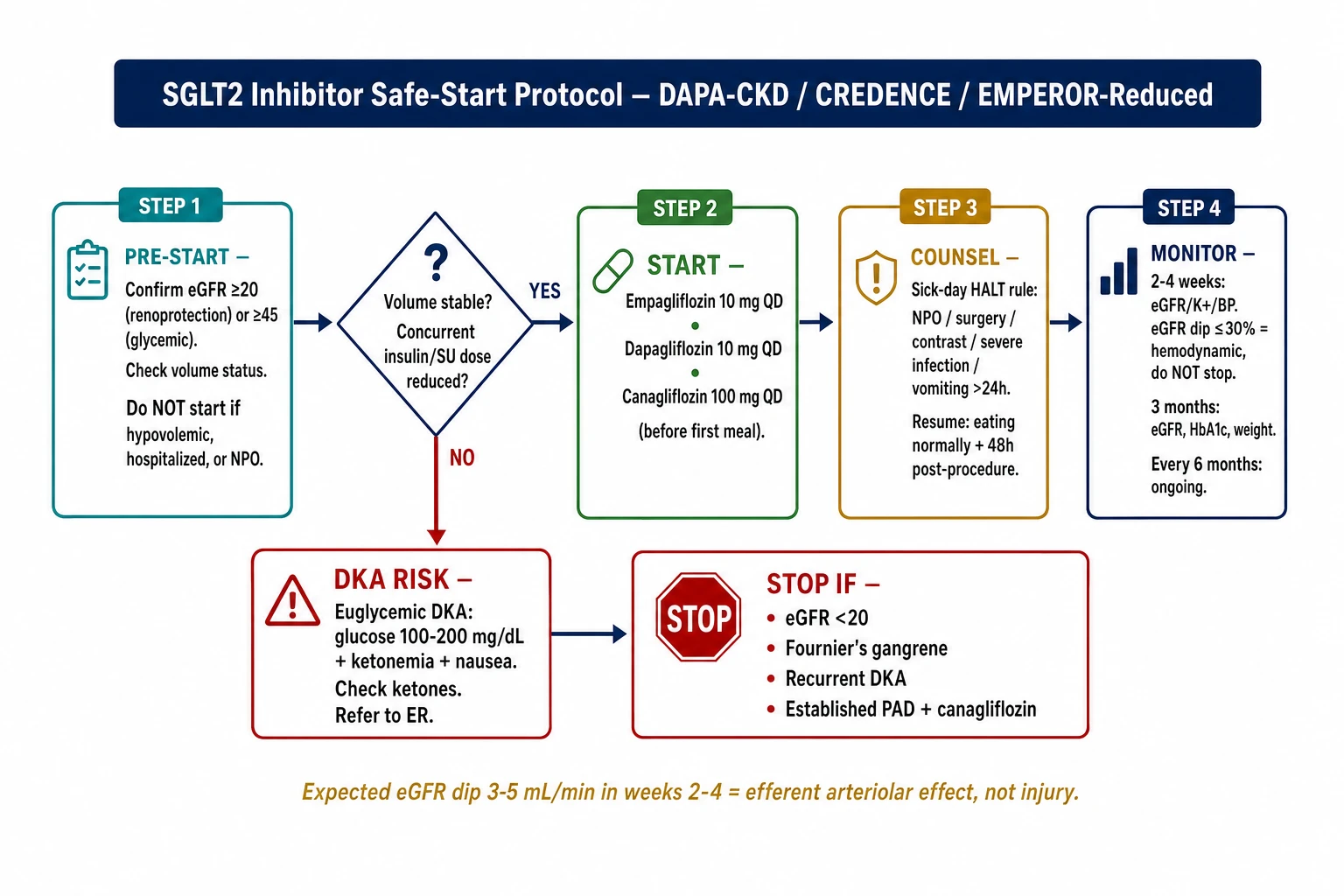 GuideThe CKD Prescriber's PlaybookClinician-focused operational guide: exactly how to start, titrate, and adjust SGLT2 inhibitors, ACEi/ARB, GLP-1 agonists, diuretics, phosphate binders, and ESAs in CKD and nephrology practice. KDIGO 2024 aligned.
- CalculatorCreatinine Clearance — Cockcroft-Gault (drug dosing)Estimate creatinine clearance for drug dosing with the Cockcroft-Gault equation using age, sex, weight, and serum creatinine, with ideal/adjusted body-weight options. With indications, formula, evidence, and references.
References
- U.S. Food and Drug Administration. POTASSIUM CITRATE EXTENDED RELEASE · Strides Pharma Inc. [US FDA-approved label, version 10, July 1, 2025]. Via DailyMed/openFDA. https://dailymed.nlm.nih.gov/dailymed/drugInfo.cfm?setid=5f38b02c-703c-4fc2-b833-654e41bd617f
- Food and Drug Administration Philippines. Verification portal (product registrations). https://verification.fda.gov.ph
- PNF Essential Medicines List, 8th ed. (as of November 2, 2022), DOH; https://www.philhealth.gov.ph/partners/providers/pdf/PNF-EML_11022022.pdf
- DOH Drug Price Reference Index (DPRI) 2021, 9th edition (as of September 17, 2021); https://caro.doh.gov.ph/wp-content/uploads/2021/09/2021DPRI-as-of-9-17-2021.pdf
- Strides Pharma Inc. (2025). Potassium citrate extended-release tablets [Prescribing information; US FDA-approved label, ANDA206813, set ID 5f38b02c-703c-4fc2-b833-654e41bd617f, version effective July 1, 2025]. DailyMed, U.S. National Library of Medicine. https://dailymed.nlm.nih.gov/dailymed/drugInfo.cfm?setid=5f38b02c-703c-4fc2-b833-654e41bd617f
renalcarematters.com content: Kidney and pediatric dosing: reviewed by William Gregory M. Rivero, MD, FPCP, DPSN on November 17, 2026. Dosing, interaction, adverse-effect and monitoring summary: reviewed by William Gregory M. Rivero, MD, FPCP, DPSN on November 17, 2026.
Last updated: .