Use: Labeled indications
- Klor-Con is indicated for the treatment and prophylaxis of hypokalemia with or without metabolic alkalosis, in patients for whom dietary management with potassium-rich foods or diuretic dose reduction is insufficient.
Full indications and usage US FDA label
1 INDICATIONS AND USAGE Klor-Con is indicated for the treatment and prophylaxis of hypokalemia with or without metabolic alkalosis, in patients for whom dietary management with potassium-rich foods or diuretic dose reduction is insufficient. KLOR-CON is a potassium salt, indicated for the treatment and prophylaxis of hypokalemia with or without metabolic alkalosis in patients for whom dietary management with potassium-rich foods or diuretic dose reduction is insufficient. (1)
Contraindications
- Concomitant triamterene or amiloride
Contraindications (US label) US FDA label
4 CONTRAINDICATIONS Potassium chloride is contraindicated in patients on triamterene and amiloride. Concomitant use with triamterene and amiloride (4)
Dosing: Adult
- Hypokalemia treatment: 40 to 100 mEq/day in divided doses; no more than 40 mEq per dose; with meals
- Hypokalemia prevention: About 20 mEq/day
- IV concentrate (2 mEq/mL): Must be diluted before use; never IV push. Rate and concentration per the IV product label; in kidney impairment use the low end with ECG monitoring as needed.
- Monitor serum potassium and adjust dosages accordingly. (2.1)
- If serum potassium is less than 2.5 mEq/L, use intravenous potassium instead of oral supplementation. (2.1)
- Take with meals and with a glass of water or other liquid. Swallow tablets whole without crushing, chewing or sucking. (2.1)
- Treatment of hypokalemia: Doses range from 40 to 100 mEq/day in divided doses. Limit doses to 40 mEq per dose. (2.2)
- Prevention of hypokalemia: Typical dose is 20 mEq per day. (2.2)
2.1 Administration and Monitoring
2.1 Administration and Monitoring If serum potassium concentration is less than 2.5 mEq/L, use intravenous potassium instead of oral supplementation. Monitoring Monitor serum potassium and adjust dosages accordingly. Monitor serum potassium periodically during maintenance therapy to ensure potassium remains in desired range.
The treatment of potassium depletion, particularly in the presence of cardiac disease, renal disease, or acidosis, requires careful attention to acid-base balance, volume status, electrolytes, including magnesium, sodium, chloride, phosphate, and calcium, electrocardiograms, and the clinical status of the patient. Correct volume status, acid-base balance, and electrolyte deficits as appropriate.
Administration Take Klor-Con with meals and with a glass of water or other liquid. Do not take Klor-Con on an empty stomach because of its potential for gastric irritation [see Warnings and Precautions (5.1)]. Swallow tablets whole without crushing, chewing or sucking.
2.2 Dosing
2.2 Dosing Dosage must be adjusted to the individual needs of each patient. Dosages greater than 40 mEq per day should be divided such that no more than 40 mEq is given in a single dose. Treatment of Hypokalemia: Typical dose range is 40 to 100 mEq per day. Maintenance or Prophylaxis: Typical dose range is 20 mEq per day.
Dosing: Altered kidney function
Potassium chloride treats or prevents hypokalemia. The kidneys excrete potassium, so kidney impairment sharply raises the risk of hyperkalemia. The US label (oral extended-release tablets) starts patients with kidney impairment at the low end of the dose range and asks for frequent potassium checks; it is contraindicated with triamterene or amiloride. IV concentrate (2 mEq/mL) must be diluted before use; never give by IV push or undiluted (fatal arrhythmia and cardiac arrest reported). In kidney impairment potassium is retained: use the low end of the infusion rate in the IV product label, with ECG monitoring as needed, and recheck potassium after each replacement. Concentration and rate limits: see the IV product label.
Kidney function measure: Label uses 'renal impairment' without a number; dose is titrated to serum potassium.
Show full dosing details
- CrCl ≥60 mL/min
- Hypokalemia treatment: 40 to 100 mEq/day in divided doses, no more than 40 mEq per dose; prevention: about 20 mEq/day. Use IV potassium if serum potassium is below 2.5 mEq/L (label).
- CrCl 30–59 mL/min
- Reduced potassium excretion and a much higher risk of hyperkalemia: start at the low end of the dose range, especially with RAAS inhibitors or NSAIDs; monitor serum potassium frequently and kidney function periodically (label 8.7). IV concentrate: must be diluted; never IV push (see IV label).
- CrCl 15–29 mL/min
- Reduced potassium excretion and a much higher risk of hyperkalemia: start at the low end of the dose range, especially with RAAS inhibitors or NSAIDs; monitor serum potassium frequently and kidney function periodically (label 8.7). IV concentrate: must be diluted; never IV push (see IV label).
- CrCl <15 mL/min (not on dialysis)
- Reduced potassium excretion and a much higher risk of hyperkalemia: start at the low end of the dose range, especially with RAAS inhibitors or NSAIDs; monitor serum potassium frequently and kidney function periodically (label 8.7). Specialist input. IV concentrate: must be diluted; never IV push (see IV label).
- Hemodialysis (intermittent)
- No dialysis dose in label; potassium removal depends on the dialysate. Give only for documented hypokalemia, start low and check potassium frequently (label 8.7); specialist input. IV concentrate (2 mEq/mL) must be diluted before use; never give by IV push or undiluted (fatal arrhythmia and cardiac arrest reported). In kidney impairment potassium is retained: use the low end of the infusion rate in the IV product label, with ECG monitoring as needed, and recheck potassium after each replacement. Concentration and rate limits: see the IV product label.
- Peritoneal dialysis
- No PD dose in label. PD patients can become hypokalemic; replace by measured potassium, starting low (label 8.7); specialist input. Hypokalemia is a modifiable risk factor for PD peritonitis (ISPD 2022).
- CRRT
- No data in label; replacement guided by frequent potassium levels and CRRT fluid potassium. Specialist input.
- Dialyzable? Potassium is removed by hemodialysis and peritoneal dialysis (label lists dialysis among hyperkalemia treatments).
- Monitoring Serum potassium frequently in kidney impairment and periodically on maintenance; kidney function; magnesium, acid-base status and ECG in cardiac or kidney disease (label 2.1, 8.7).
Children (kidney dosing)
- eGFR ≥60
- Not approved for children; kidney dosing not applicable.
- eGFR 30–59
- Not approved for children; kidney dosing not applicable.
- eGFR 15–29
- Not approved for children; kidney dosing not applicable.
- eGFR <15 (not on dialysis)
- Not approved for children; kidney dosing not applicable.
- Hemodialysis (intermittent)
- Not approved for children; kidney dosing not applicable.
- Peritoneal dialysis
- Not approved for children; kidney dosing not applicable.
- CRRT
- Not approved for children; kidney dosing not applicable.
Pediatric eGFR: bedside Schwartz equation, 0.413 × height (cm) / serum creatinine (mg/dL). Weight-based doses should not exceed the adult maximum.
renalcarematters.com guidance, reviewed by William Gregory M. Rivero, MD, FPCP, DPSN on November 17, 2026. Sources are listed under References. Use with the product's package insert and the patient's current kidney function.
US label text: Renal impairment US FDA label
8.7 Renal Impairment Patients with renal impairment have reduced urinary excretion of potassium and are at substantially increased risk of hyperkalemia. Patients with impaired renal function, particularly if the patient is on RAAS inhibitors or NSAIDs, should usually be started at the low end of the dosing range because of the potential for development of hyperkalemia [see Drug Interactions (7.2, 7.3)]. The serum potassium level should be monitored frequently. Renal function should be assessed periodically.
Dosing: Pediatric
- Approved ages
- Safety and effectiveness in children not established (oral extended-release tablets; label).
- Usual dose
- Not established in this label.
Kidney dosing in children: see Dosing: Altered kidney function.
renalcarematters.com, reviewedPediatric use (US label) US FDA label
8.4 Pediatric Use Safety and effectiveness in the pediatric population have not been established.
Dosing: Older adult
Geriatric use (US label) US FDA label
8.5 Geriatric Use Clinical studies of Klor-Con extended-release did not include sufficient numbers of subjects aged 65 and over to determine whether they respond differently from younger subjects. Other reported clinical experience has not identified differences in responses between the elderly and younger patients. In general, dose selection for an elderly patient should be cautious, usually starting at the low end of the dosing range, reflecting the greater frequency of decreased hepatic, renal or cardiac function, and of concomitant disease or other drug therapy.
This drug is known to be substantially excreted by the kidney, and the risk of toxic reactions to this drug may be greater in patients with impaired renal function. Because elderly patients are more likely to have decreased renal function, care should be taken in dose selection, and it may be useful to monitor renal function.
Administration
2.1 Administration and Monitoring If serum potassium concentration is less than 2.5 mEq/L, use intravenous potassium instead of oral supplementation. Monitoring Monitor serum potassium and adjust dosages accordingly. Monitor serum potassium periodically during maintenance therapy to ensure potassium remains in desired range. The treatment of potassium depletion, particularly in the presence of cardiac disease, renal disease, or acidosis, requires careful attention to acid-base balance, volume status, electrolytes, including magnesium, sodium, chloride, phosphate, and calcium, electrocardiograms, and the clinical status of the patient. Correct volume status, acid-base balance, and electrolyte deficits as appropriate. Administration Take Klor-Con with meals and with a glass of water or other liquid. Do not take Klor-Con on an empty stomach because of its potential for gastric irritation [see Warnings and Precautions (5.1) ] . Swallow tablets whole without crushing, chewing or sucking.
US FDA labelDosage forms
Philippines
- Extended-release tablet: 600 mg, 750 mg
- Solution for injection: 2 mEq/mL, 40 mEq/20 mL
- Sustained-release tablet: 750 mg
- ) solution for injection: 2 mEq/mL (149.1 mg/mL, 40 mEq/20 mL (2 mEq/mL, 150 mg/mL (2 mEq/mL, 150 mg/mL (40 mEq
- Solution for intravenous infusion: 2 mEq/mL
- Tablet: 600 mg
- ) concentrated solution for injection: 100 mg/mL (1.34 meq/mL, 150 mg/mL (2 mEq/mL
- Film-coated tablet: 600 mg
- ) concentrate solution for injection: 100 mg/mL (1.34 mEq/mL
- Extended-release capsule: 250 mg
and 1 more forms; see the products table.
Registered products in the Philippines
44 products registered with the Food and Drug Administration (FDA) Philippines list Potassium chloride as the generic name. Registration status changes; confirm a product's current status on the FDA portal before relying on it.
All registered products44
| Package insert | |||||||
|---|---|---|---|---|---|---|---|
AelytePotassium Chloride | 2 mEq/ml Solution for Injection (IV Infusion)Clear glass ampoule in plastic tray x 20 ml (Box of 20’s) | Rx | Hebei Tiancheng Pharmaceutical Co., LtdChina | Dynasty PharmaceuticalsImporter: Philrx Pharma Inc. | DRP-12787-01 | Oct 7, 2027 | |
Aelyte-600Potassium Chloride | 600 mg Extended-Release TabletAlu/Alu foil strip x 10’s (Box of 100’s) | Rx | Globela Pharma Private LimitedIndia | Dynasty PharmaceuticalsImporter: Amb Hk Enterprises Inc. | DRP-12143-01 | Jun 20, 2027 | |
Aelyte-600Potassium Chloride | 600 mg Film-Coated TabletAlu / Alu Blister Pack x 10’s (Box of 100’s) | Rx | Reyoung Pharmaceutical Co., LtdChina | Dynasty PharmaceuticalsImporter: Philrx Pharma Inc. | DRP-14560-01 | Oct 13, 2028 | |
AtroposPotassium Chloride | 750 mg Extended-Release TabletAlu/Alu foil strip x 10’s (Box of 30’s) | Rx | Globela Pharma Private LimitedIndia | Kaufmann Pharma Inc.Importer: AMB HK Enterprises Inc. | DRP-12142-02 | Jun 20, 2027 | |
Cardiolyte KPotassium Chloride | 250 mg Extended Release CapsuleAluminum Foil Strip x 10's Box of 100's and 200's | Rx | Interphil Laboratories, Inc.Philippines | — | DRP-4643 | Sep 2, 2028 | |
CitrinePotassium Chloride | 750 mg Sustained Release TabletAmber Glass Bottle Sealed with White HDPE Cap x 50's and 100's (Box of 50's and 100's) | Rx | Reyoung Pharmaceutical Co., Ltd.China | FSPC Pharmaceuticals, Inc. | DRP-14555 | Oct 12, 2028 | |
Cloridex 600Potassium Chloride | 600 mg TabletAluminum Foil Strip Pack x 10’s (Box of 30’s and 100's) | Rx | Genom Biotech Pvt. Ltd.India | 777 Red Pharma Inc.Importer: Nelpa Lifesciences, Inc. | DRP-17278-01 | Nov 6, 2030 | |
ClorsiumPotassium Chloride | 600 mg Film-Coated TabletAlu/Alu Blister Pack x 10's (Box of 100's) | Rx | Reyoung Pharmaceutical Co., Ltd.China | FSPC Pharmaceuticals, Inc | DRP-14560 | Oct 13, 2028 | |
DYNA-KPotassium Chloride | 2 mEq/mL Solution for Intravenous InfusionUSP Type I Clear Colorless Glass Ampoule x 20mL (Box of 5's & 10's) | Rx | Furen Pharmaceutical Group Co., Ltd.China | DYNASTY PHARMACEUTICALSImporter: AGLOBAL CARE, INC. | DRP-7161-01 | Feb 12, 2029 | |
ElectabPotassium Chloride | 600 mg Extended-Release TabletsAlu/Alu foil strip x 10's (Box of 30's and 100's) | Rx | Globela Pharma Pvt. Ltd.India | AMB HK Enterprises Inc. | DRP-12143 | Jun 20, 2027 | |
ElectabPotassium Chloride | 750 mg Extended-Release TabletsAlu/Alu foil strip x 10's (Box of 30's and 100's) | Rx | Globela Pharma Pvt. Ltd.India | AMB HK Enterprises Inc. | DRP-12142 | Jun 20, 2027 | |
K-AIDPotassium Chloride | 600 mg Extended-Release TabletAlu/Alu foil strip x 10’s (Box of 30’s and 100’s) | Rx | Globela Pharma Private LimitedIndia | Meedpharma Medical Supplies & Equipment DistributorImporter: Amb Hk Enterprises Inc. | DRP-12143-02 | Jun 20, 2027 | |
K-Aid 750Potassium Chloride | 750 mg Extended-Release TabletAlu/Alu foil strip x 10’s (Box of 30's and 100's) | Rx | Globela Pharma Pvt. Ltd.India | Meed Pharma Medical Supplies and Equipment DistributorImporter: AMB HK Enterprises Inc. | DRP-12142-08 | Jun 20, 2027 | |
K-ChlorPotassium Chloride | 750 mg Sustained-Release TabletAmber Glass Bottle x 50's (Box of 1's) | Rx | Lloyd Laboratories, Inc.Philippines | Trader: Ultramed Pharma, Inc. | DRP-7063 | Jun 23, 2030 | |
K-LytePotassium Chloride | 600 mg TabletAluminum Strip Foil x 10's (Box of 30's, 60's and 100's) | Rx | The ACME Laboratories LimitedBangladesh | STADA Philippines Inc.Importer: Euro Generics International Phils., Inc. | DRP-6387 | Aug 15, 2029 | |
Kalemsaph-INF2Potassium Chloride | 40 mEq/20mL (2mEq/mL) Solution for InjectionLDPE plastic vial (with grey butyl rubber closure) x 20 mL (box of 20's) | Rx | Althea Pharma Pvt. Ltd.India | Nelpa Lifesciences, Inc.Trader: Sapphire Lifesciences Pvt. Ltd. | DRP-14097 | Jun 20, 2028 | |
KaligenPotassium Chloride | 750 mg Sustained-Release TabletAmber Glass Bottle x 50's (Box of 1's) | Rx | Lloyd Laboratories, Inc.Philippines | Trader: Innogen Pharmaceuticals, Inc. | DRP-7047 | Apr 28, 2030 | |
KalimexPotassium Chloride | 2 mEq/mL Solution for Intravenous InfusionUSP Type I Clear Colorless Glass Ampoule x 20mL (Box of 5's and 10's) | Rx | Furen Pharmaceutical Group Co., Ltd.China | Bellus Life Solutions, Inc.Importer: Aglobal Care, Inc. | DRP-7161-04 | Feb 12, 2029 | |
Kalium DurulesPotassium Chloride | 750 mg Sustained-Release TabletAmber Glass Bottle x 100's (Box of 1's); Amber Glass Bottle x 20's (Box of 1's) | Rx | Interphil Laboratories, Inc.Philippines | — | DR-9941 | Jul 30, 2029 | |
KaliusaphridePotassium Chloride | 600 mg TabletAluminum foil strip x 10's (Box of 100's) | Rx | Sapphire Lifesciences Pvt. Ltd.India | Nelpa Lifesciences, Inc. | DRP-10425 | Oct 29, 2031 | |
KaliusaphridePotassium Chloride | 750 mg Sustained-Release TabletAluminum foil strip x 10's (Box of 30's & 100's) | Rx | Genom Biotech Pvt. Ltd.India | Ollen Pharma Trading Inc. | DRP-19094 | Oct 27, 2031 | |
Kaliusaphride- InfPotassium Chloride | 2 mEq/mL Solution for Injection (IV Infusion)Type I Clear Colorless Glass Ampoule in PVC Tray x 20 mL (Box of 10's) | Rx | Kilitch Drugs (India) Ltd.India | Nelpa Lifesciences, Inc. | DRP-11490 | Mar 17, 2027 | |
KalixirPotassium Chloride | 150 mg/mL (15% w/v) Solution for IV InfusionLDPE Ampoule x 10 mL (Box of 5’s in one tray) | Rx | Amanta Healthcare Ltd.India | Ambica International CorporationTrader: Rainbow Life Sciences Pvt. Ltd. | DRP-18727 | Aug 27, 2031 | |
KalsolPotassium Chloride | 2 mEq/mL Solution for Injection (IV Infusion)Type I Clear Colorless Glass Ampoule in Plastic Tray x 10 mL and 20 mL (Box of 20's) | Rx | Hebei Tiancheng Pharmaceutical Co., Ltd.China | AMB HK Enterprises Inc. | DRP-18100 | May 5, 2031 | |
KaltrolPotassium Chloride | 100 mg/mL (1.34 mEq/mL) Concentrate Solution for Injection (I.V. Infusion)LDPE Ampoule x 10 mL & 20 mL (Box of 6's) | Rx | Zhejiang Tianrui Pharmaceutical Co., Ltd.China | Global Pharmatrade | DR-XY42843 | Oct 18, 2028 | |
KaltrolPotassium Chloride | 150 mg/mL (2 mEq/mL) Concentrated Solution for Injection (IV)LDPE Plastic Ampoule x 10 mL and 20 mL | Rx | Zhejiang Tianrui Pharmaceutical Co., Ltd.China | Global Pharmatrade | DR-XY42200 | Jul 10, 2028 | |
KalyxPotassium Chloride | 2 mEq/mL Solution for Intravenous InfusionUSP Type I Clear Colorless Glass Ampoule x 20 mL (Box of 5's & 10's) | Rx | FUREN PHARMACEUTICAL GROUP CO., LTD.China | GREENCORE PHARMA INC.Importer: AGLOBAL CARE, INC. | DRP-7161-03 | Feb 12, 2029 | |
Klyte 750Potassium Chloride | 750 mg Extended-Release TabletAlu/ Alu Foil Strip x 10's (Box of 30’s and 100’s) | Rx | Globela Pharma Private LimitedIndia | MeedPharma Medical Supplies & Equipment DistributorImporter: AMB HK Enterprises Inc. | DRP-12142-03 | Jun 20, 2027 | |
KtabsrPotassium Chloride | 750 mg Extended-Release TabletAlu-PVC Clear Blister x 10's | Rx | Centaur Pharmaceutical Pvt. Ltd.India | DéGa International Pharma Corp. | DR-XY46013 | Feb 8, 2029 | |
NonePotassium Chloride | 14.9% Solution for IV InfusionPlastic Polyampoule x 10 mL, Plastic Polyampoule x 20 mL Box of 20's | Rx | B. Braun Medical Industries Sdn. Bhd.Malaysia | Importer: B. Braun Medical Supplies, Incorporated | DR-XY14900 | Feb 9, 2030 | |
NonePotassium Chloride | 150 mg/mL (40 mEq) Solution for Injection (I.V.)Type I Colorless Glass Ampoule x 20 mL (Box of 100's) | Rx | Atlantic Laboratories Corporation Ltd.Thailand | Phil Pharmawealth, Inc. | DR-XY28145 | Dec 10, 2027 | |
NonePotassium Chloride | 150mg/mL (2 mEq/mL) Solution for Injection (IV Infusion)Transparent Form Fill and Seal (FFS) LDPE ampoule x 10mL Box of 50's | Rx | Amanta Healthcare Ltd.India | Endure Medical, Inc. | DR-XY40946 | Jun 25, 2027 | |
NonePotassium Chloride | 2 mEq/mL (149.1 mg/mL) Solution for Injection (IV Infusion)Glass clear vial with gray rubber stopper and plain aluminum seal x 20 mL (Box of 10's) | Rx | EL Laboratories, Inc.Philippines | Trader: Elin Pharmaceuticals, Inc. | DR-XY19963 | May 21, 2030 | |
NonePotassium Chloride | 2 mEq/mL Solution for Injection (I.V.)Low Density Polyethylene Plastic Vial with rubber stopper x 20 mL (Box of 20's) | Rx | Euro-Med Laboratories Phil., Inc.Philippines | — | DR-XY19929 | May 25, 2030 | |
NonePotassium Chloride | 40 mEq/20 mL Solution for Injection (I.V.)Clear glass vial with rubber stopper and aluminum flip off x 20 mL Box of 50’s | Rx | Hizon Laboratories, Inc.Philippines | — | DR-XY2873 | Oct 14, 2027 | |
NonePotassium Chloride | 750 mg Extended-Release TabletAlu/Alu foil strip x 10’s (Box of 30’s and 100’s) | Rx | Globela Pharma Private LimitedIndia | STADA Philippines Inc.Importer: AMB HK Enterprises Inc. | DRP-12142-04 | Jun 20, 2027 | |
NonePotassium Chloride | 750 mg Extended-Release TabletAlu/Alu Foil Strip x 10’s (Box of 30’s and 100’s) | Rx | Globela Pharma Private LimitedIndia | STADA Philippines, Inc.Importer: AMB HK Enterprises, Inc. | DRP-12142-06 | Jun 20, 2027 | |
NonePotassium Chloride | 750mg Extended-Release TabletAlu/ Alu foil strip x 10's (Box of 30's and 100's) | Rx | Globela Pharma Pvt. LtdIndia | STADA Philippines Inc.Importer: AMB HK Enterprises Inc. | DRP-12142-05 | Jun 20, 2027 | |
PoklorPotassium Chloride | 750 mg Extended-Release TabletAlu/Alu foil strip x 10’s (Box of 30’s) | Rx | Globela Pharma Pvt. Ltd.India | The Cathay YSS Distributors Co., Inc.Importer: AMB HK Enterprises Inc. | DRP-12142-01 | Jun 20, 2027 | |
Saphclopo-GE600Potassium Chloride | 600 mg TabletAluminum Foil Strip Pack x 10's (Box of 30's and 100's) | Rx | Genom Biotech Pvt. Ltd.India | Nelpa Lifesciences, Inc | DRP-17278 | Nov 6, 2030 | |
SitiklorPotassium Chloride | 100 mg/mL (1.34 meq/mL) Concentrated Solution for Injection (I.V.)USP Type I Clear Glass Ampoule x 10 mL (Box of 5's in Plastic Tray) | Rx | CSPC Ouyi Pharmaceutical Co., Ltd.China | Sahar International Trading, Inc. | DR-XY42989 | Nov 13, 2028 | |
SitiklorPotassium Chloride | 150 mg/mL (2 meq/mL) Concentrated Solution for Injection (I.V.)USP Type I Clear Glass Ampoule x 10 mL in plastic tray Box of 5's | Rx | CSPC Ouyi Pharmaceutical Co., Ltd.China | Sahar International Trading, Inc. | DR-XY42906 | Nov 6, 2028 | |
SylvitePotassium Chloride | 2 mEq/mL Solution for Intravenous InfusionUSP Type I Clear Colorless Glass Ampoule x 20mL (Box of 5's & 10's) | Rx | Furen Pharmaceutical Group Co., Ltd.China | Aglobal Care, Inc. | DRP-7161 | Feb 12, 2029 | |
(no brand name)Potassium Chloride | 2 mEq/mL Solution for Injection (IV Infusion)Clear glass vial with grey bromobutyl rubber stopper, aluminum flip-off seal and blue PP cap in plastic tray x 10 mL and 20 mL (Box of 20's) | Rx | Hebei Tiancheng Pharmaceutical Co., Ltd.China | PhilRx Pharma Inc. | DRP-12787 | Oct 7, 2027 |
Source: FDA Philippines product registration database. "Valid until" is the registration validity date listed by the FDA; a past date may mean a renewal is pending. Package insert links point to files published by the FDA.
United States (label)
Dosage forms and strengths (US label) US FDA label
3 DOSAGE FORMS AND STRENGTHS Klor-Con extended-release tablets are supplied as: 600 mg (8 mEq) are film-coated, round light blue tablets debossed with "KC 8". 750 mg (10 mEq) are film-coated, round yellow tablets debossed with "KC 10". Tablets: 600 mg (8 mEq) and 750 mg (10 mEq) (3)
Warnings/Precautions
Warnings and precautions (US label) US FDA label
5 WARNINGS AND PRECAUTIONS Gastrointestinal Irritation: Take with meals. (5.1) 5.1 Gastrointestinal Adverse Reactions Solid oral dosage forms of potassium chloride can produce ulcerative and/or stenotic lesions of the gastrointestinal tract, particularly if the drug maintains contact with the gastrointestinal mucosa for prolonged periods.
Consider the use of liquid potassium in patients with dysphagia, swallowing disorders, or severe gastrointestinal motility disorders. If severe vomiting, abdominal pain, distention, or gastrointestinal bleeding occurs, discontinue Klor-Con extended-release tablets and consider possibility of ulceration, obstruction or perforation.
Klor-Con extended-release tablets should not be taken on an empty stomach because of its potential for gastric irritation [see Dosage and Administration (2.1)].
Drug interactions
| Drug or class | Severity | Effect | What to do |
|---|---|---|---|
| Triamterene, amiloride | Avoid | Severe hyperkalemia (label). | Contraindicated. |
| ACE inhibitors, ARBs, spironolactone, eplerenone, aliskiren | Adjust or monitor | Hyperkalemia (label). | Monitor potassium closely. |
| NSAIDs | Adjust or monitor | Hyperkalemia (label). | Monitor potassium. |
Severity scale (renalcarematters.com): Avoid: do not combine; Adjust or monitor: change the dose or monitor closely; Minor: usually no action.
renalcarematters.com, reviewed- Triamterene and amiloride: Concomitant use is contraindicated (7.1)
- Renin-angiotensin-aldosterone inhibitors: Monitor for hyperkalemia (7.2)
- Nonsteroidal anti-inflammatory drugs: Monitor for hyperkalemia (7.3)
7.1 Triamterene
7.1 Triamterene or amiloride Use with triamterene or amiloride can produce severe hyperkalemia. Concomitant use is contraindicated [see Contraindications (4)].
7.2 Renin-angiotensin-aldosterone Inhibitors
7.2 Renin-angiotensin-aldosterone Inhibitors Drugs that inhibit the renin-angiotensin-aldosterone system (RAAS) including angiotensin converting enzyme (ACE) inhibitors, angiotensin receptor blockers (ARBs), spironolactone, eplerenone, or aliskiren produce potassium retention by inhibiting aldosterone production. Closely monitor potassium in patients on concomitant RAAS inhibitors.
7.3 Nonsteroidal Anti-inflammatory Drugs (NSAIDs)
7.3 Nonsteroidal Anti-inflammatory Drugs (NSAIDs) NSAIDs may produce potassium retention by reducing renal synthesis of prostaglandin E and impairing the renin-angiotensin system. Closely monitor potassium in patients on concomitant NSAIDs.
Adverse reactions
Common
- Nausea, vomiting, flatulence, abdominal pain, diarrhea
Serious
- Hyperkalemia (can cause cardiac arrest)
- Gastrointestinal ulceration, stricture, bleeding, perforation (solid forms)
Adverse reactions (US label) US FDA label
6 ADVERSE REACTIONS The following adverse reactions have been identified with use of oral potassium salts. Because these reactions are reported voluntarily from a population of uncertain size, it is not always possible to reliably estimate their frequency or establish a causal relationship to drug exposure. The most common adverse reactions to oral potassium salts are nausea, vomiting, flatulence, abdominal pain/discomfort, and diarrhea.
There have been reports hyperkalemia and of upper and lower gastrointestinal condition including obstruction, bleeding, ulceration, perforation. Skin rash has been reported rarely. The most common adverse reactions are nausea, vomiting, flatulence, abdominal pain/discomfort and diarrhea. (6) To report SUSPECTED ADVERSE REACTIONS, contact Upsher-Smith Laboratories, LLC at 1-855-899-9180 or FDA at 1-800-FDA-1088 or www.fda.gov/medwatch
Monitoring parameters
- Serum potassium frequently in kidney impairment and periodically on maintenance; kidney function; magnesium, acid-base status and ECG in cardiac or kidney disease (label 2.1, 8.7). Kidney
- Serum potassium
- Kidney function
- ECG if cardiac disease
Pregnancy considerations
Pregnancy (US label) US FDA label
8.1 Pregnancy Risk Summary There are no human data related to use of Klor-Con during pregnancy, and animal reproduction studies have not been conducted. Potassium supplementation that does not lead to hyperkalemia is not expected to cause fetal harm. The background risk for major birth defects and miscarriage in the indicated population is unknown.
All pregnancies have a background risk of birth defect, loss, or other adverse outcomes. In the U.S. general population, the estimated background risk of major birth defects and miscarriage in clinically recognized pregnancies is 2% to 4% and 15% to 20%, respectively.
Mechanism of action
12.1 Mechanism of Action The potassium ion is the principal intracellular cation of most body tissues. Potassium ions participate in a number of essential physiological processes including the maintenance of intracellular tonicity, the transmission of nerve impulses, the contraction of cardiac, skeletal and smooth muscle and the maintenance of normal renal function.
The intracellular concentration of potassium is approximately 150 mEq to 160 mEq per liter. The normal adult plasma concentration is 3.5 mEq to 5 mEq per liter. An active ion transport system maintains this gradient across the plasma membrane. Potassium is a normal dietary constituent and under steady state conditions the amount of potassium absorbed from the gastrointestinal tract is equal to the amount excreted in the urine.
The usual dietary intake of potassium is 50 to 100 mEq per day.
US FDA labelPharmacokinetics
Key PK parameters
| Bioavailability | Similar to potassium solution (extended release) |
|---|---|
| Renal excretion kidney | Potassium excreted mainly by the kidney |
| Dialyzability kidney | Potassium removed by dialysis |
The wax matrix is not absorbed and is excreted in the feces; in some instances the empty matrices may be noticeable in the stool.
The extended-release properties of Klor-Con extended-release are demonstrated by the finding that a significant increase in time is required for renal excretion of the first 50% of the Klor-Con extended-release dose as compared to the solution.
Increased urinary potassium excretion is first observed 1 hour after administration of Klor-Con extended-release, reaches a peak at approximately 4 hours, and extends up to 8 hours.
Pharmacokinetics (US label) US FDA label
12.3 Pharmacokinetics The potassium chloride in Klor-Con extended-release is completely absorbed before it leaves the small intestine. The wax matrix is not absorbed and is excreted in the feces; in some instances the empty matrices may be noticeable in the stool. When the bioavailability of the potassium ion from the Klor-Con extended-release is compared to that of a true solution the extent of absorption is similar.
The extended-release properties of Klor-Con extended-release are demonstrated by the finding that a significant increase in time is required for renal excretion of the first 50% of the Klor-Con extended-release dose as compared to the solution. Increased urinary potassium excretion is first observed 1 hour after administration of Klor-Con extended-release, reaches a peak at approximately 4 hours, and extends up to 8 hours.
Mean daily steady-state plasma levels of potassium following daily administration of Klor-Con extended-release tablets cannot be distinguished from those following administration of potassium chloride solution or from control plasma levels of potassium ion. Specific Populations Cirrhotics Based on published literature, the baseline corrected serum concentrations of potassium measured over 3 hours after administration in cirrhotic subjects who received an oral potassium load rose to approximately twice that of normal subjects who received the same load.
Formulary and pricing (Philippines)
Government price references
| Preparation | Price (PHP) | Unit | Type |
|---|---|---|---|
| Potassium Chloride 2 mEq/mL, 20 mL Vial | ₱19.70–₱48.00Reference ₱23.00 | per vial | DPRI procurement range |
| Potassium Chloride 600 mg Tablet | ₱10.00–₱18.00Reference ₱10.00 | per tablet | DPRI procurement range |
| Potassium Chloride 750 mg durules (equiv. to approximately 10 mEq) Tablet | ₱7.30–₱23.00Reference ₱12.00 | per tablet | DPRI procurement range |
Range = lowest-highest procurement price (highest usable only in GIDA areas); reference_price = 2021 DPRI ceiling (median)
These are government procurement and reimbursement references, not retail prices. Sources:
- DOH Drug Price Reference Index (DPRI) 2021, 9th edition (as of September 17, 2021); https://caro.doh.gov.ph/wp-content/uploads/2021/09/2021DPRI-as-of-9-17-2021.pdf, as of September 17, 2021
Formulary and coverage
| Philippine National Formulary | Listed as Potassium Chloride |
| PNF listing | Oral: 600 mg tablet |
| PNF listing | Oral: 750 mg durules (as chloride) equiv. to Approximately 10 mEq potassium |
| PNF listing | Inj.: 1 mmol/mL syrup, 30 mL and and 60 mL(as chloride) |
| PNF listing | Inj.: 2 mEq/mL, 2 mL and 5 mL ampul (IV infusion) |
| PNF listing | Inj.: 2 mEq/mL, 10 mL and 20 mL vial (IV infusion) |
| PhilHealth GAMOT | No |
Sources:
- PNF Essential Medicines List, 8th ed. (as of November 2, 2022), DOH; https://www.philhealth.gov.ph/partners/providers/pdf/PNF-EML_11022022.pdf, as of November 2, 2022
Check availability
Prices and stock vary by branch; renalcarematters.com does not sell medicines or receive payment from pharmacies.
Related guides & calculators
Guides and calculators on renalcarematters.com for this medicine, for patients and clinicians.
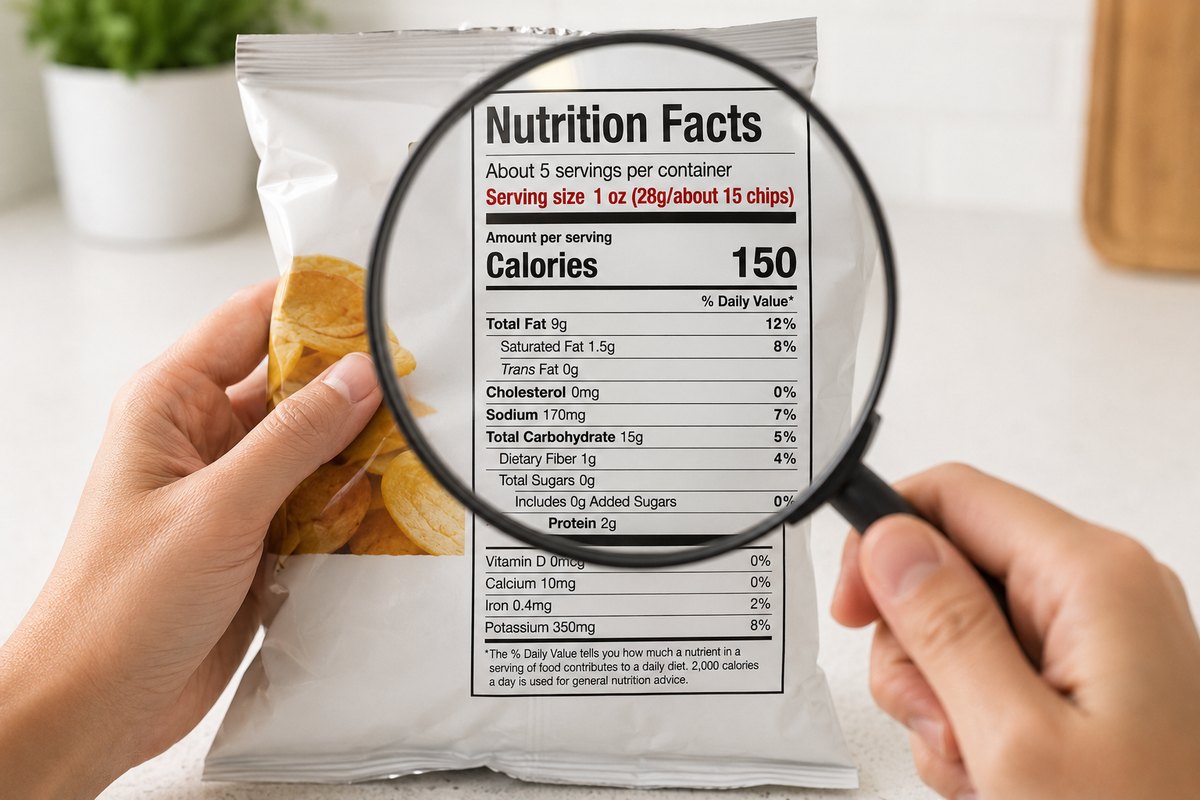 GuideReading Nutrition Labels with CKDHow to read food labels for kidney disease — spotting hidden phosphorus, potassium, and sodium in Filipino supermarket products and understanding ingredient lists.
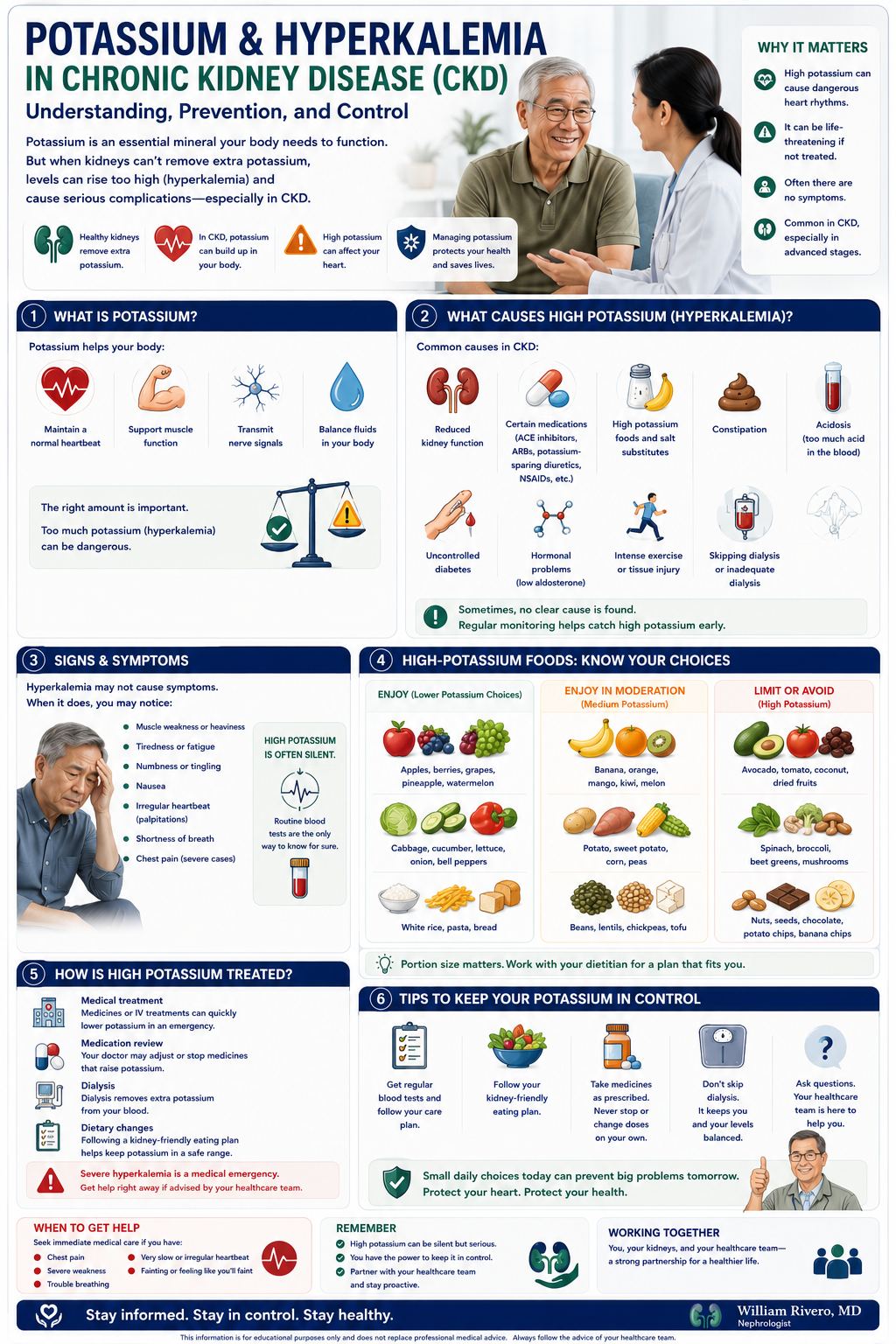 GuidePotassium & Hyperkalemia in CKDPotassium and hyperkalemia in kidney disease — why potassium rises, dangerous levels, emergency treatment, low-potassium Filipino foods, and potassium binders.
 GuideSodium & Salt Reduction — Your Most Powerful Daily Choice for CKDSalt reduction guide for Filipino kidney patients — sodium targets, hidden salt in Filipino foods, practical swaps, soy sauce alternatives, and a daily intake calculator.
- CalculatorElectrolyte Repletion — Potassium, Magnesium, PhosphateEstimate replacement doses for hypokalemia, hypomagnesemia, and hypophosphatemia using common rules of thumb. Choose the electrolyte, enter the level, and get an estimated repletion dose plus a route/monitoring note — with a strong CKD cave
- CalculatorCreatinine Clearance — Cockcroft-Gault (drug dosing)Estimate creatinine clearance for drug dosing with the Cockcroft-Gault equation using age, sex, weight, and serum creatinine, with ideal/adjusted body-weight options. With indications, formula, evidence, and references.
References
- U.S. Food and Drug Administration. KLOR-CON · Upsher-Smith Laboratories, LLC [US FDA-approved label, version 6, July 14, 2025]. Via DailyMed/openFDA. https://dailymed.nlm.nih.gov/dailymed/drugInfo.cfm?setid=1ff53330-065c-4213-9c0c-ac498621d09d
- Food and Drug Administration Philippines. Verification portal (product registrations). https://verification.fda.gov.ph
- PNF Essential Medicines List, 8th ed. (as of November 2, 2022), DOH; https://www.philhealth.gov.ph/partners/providers/pdf/PNF-EML_11022022.pdf
- DOH Drug Price Reference Index (DPRI) 2021, 9th edition (as of September 17, 2021); https://caro.doh.gov.ph/wp-content/uploads/2021/09/2021DPRI-as-of-9-17-2021.pdf
- Upsher-Smith Laboratories, LLC. (2025). KLOR-CON (potassium chloride) extended-release tablets [Prescribing information; US FDA-approved label, NDA019123, set ID 1ff53330-065c-4213-9c0c-ac498621d09d, version effective July 14, 2025]. DailyMed, U.S. National Library of Medicine. https://dailymed.nlm.nih.gov/dailymed/drugInfo.cfm?setid=1ff53330-065c-4213-9c0c-ac498621d09d
- Baxter Healthcare Company. (2019). Potassium chloride in sodium chloride injection [Prescribing information; US FDA-approved label, NDA017648, set ID becc7410-0a25-49f5-b0c3-240078479dc8, version effective January 11, 2019]. DailyMed, U.S. National Library of Medicine. https://dailymed.nlm.nih.gov/dailymed/drugInfo.cfm?setid=becc7410-0a25-49f5-b0c3-240078479dc8
- Fresenius Kabi USA, LLC. (n.d.). Potassium chloride for injection concentrate, USP, 2 mEq/mL [Prescribing information; US FDA labeling, NDC 63323-965, 63323-967]. Dosage and administration; Warnings. https://www.medthority.com/fda/p/potassium-chloride/potassium-chloride-potassium-chloride-2-meqml-fresenius-kabi-usa-llc
- Li, P. K.-T., Chow, K. M., Cho, Y., Fan, S., Figueiredo, A. E., Harris, T., Kanjanabuch, T., Kim, Y.-L., Madero, M., Malyszko, J., Mehrotra, R., Okpechi, I. G., Perl, J., Piraino, B., Runnegar, N., Teitelbaum, I., Wong, J. K.-W., Yu, X., & Johnson, D. W. (2022). ISPD peritonitis guideline recommendations: 2022 update on prevention and treatment. Peritoneal Dialysis International, 42(2), 110–153. https://doi.org/10.1177/08968608221080586
renalcarematters.com content: Kidney and pediatric dosing: reviewed by William Gregory M. Rivero, MD, FPCP, DPSN on November 17, 2026. Dosing, interaction, adverse-effect and monitoring summary: reviewed by William Gregory M. Rivero, MD, FPCP, DPSN on November 17, 2026.
Last updated: .