Drug Database · Clinicians

Med Scheduler

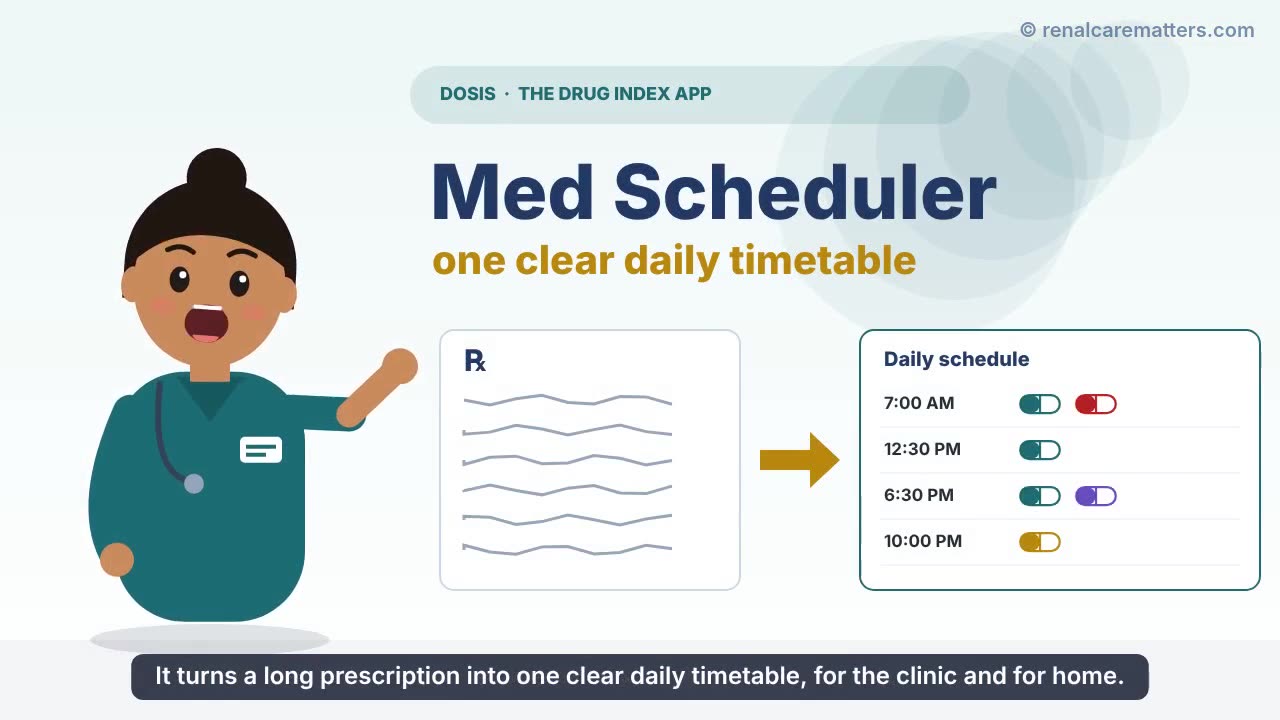
Set the patient's day (meals, bedtime, dialysis), add the medicines, and get a timetable for dialysis and non-dialysis days that respects food rules and dose spacing. Print a simple sheet for the patient.

Last updated:
How the Med Scheduler worksCartoon explainer · 1 min 18 s
Read the transcript

Meet the Med Scheduler, in Dosis. It turns a long prescription into one clear daily timetable, for the clinic and for home. Start with the patient's day: when they wake, eat and sleep. For hemodialysis, pick the dialysis days and the session times. Then add the medicines. Search them one by one, or paste the whole prescription, and the scheduler reads how often each one is taken. Each dose is placed by rules: meal and time-of-day rules from the drug label, spacing between medicines that block each other, and the fewest dose times possible. Dialysis days get their own timetable. Doses that fall during the session move to after it, and blood pressure medicines can wait until dialysis is done. Every placement shows why: the label, the evidence, or a practice default. If a rule cannot be met, like levothyroxine four hours away from a phosphate binder, it says so at the top. When the schedule looks right, copy it into the prescription remarks, print a tick-box sheet for the patient, and check the pill count for the month. The sample prescriptions are fictional, so always review the schedule before you give it to a patient. You will find it in Dosis, the Drug Index.

1. The patient's day

Dialysis

2. Medicines

Paste a prescription
Try a sample prescription:

How the schedule is built

Meal and time-of-day rules come from each medicine's US label (shown with each placement). Dose spacing, such as levothyroxine 4 hours from phosphate binders, comes from the reviewed interaction lists. Medicines dosed after dialysis follow the reviewed kidney dosing. The scheduler meets every rule it can with the fewest dose times and lists any rule it cannot meet. Medicines with no label timing rule are placed at standard times and can be moved with the timing menu. A few placements follow local practice and are tagged Practice default: statins at bedtime, and blood-pressure medicines at one fixed time every day when the hold toggle is on. Placements tagged Evidence cite the study behind them: oral iron in the morning on an empty stomach, and calcium with meals as a phosphate binder or between meals as a calcium supplement. The sample prescriptions are fictional. Review the schedule before giving it to the patient.