Use: Labeled indications
- Postherpetic neuralgia in adults
- Adjunctive therapy in the treatment of partial onset seizures, with and without secondary generalization, in adults and pediatric patients 3 years and older with epilepsy
Full indications and usage US FDA label
1 INDICATIONS AND USAGE NEURONTIN ® is indicated for: • Management of postherpetic neuralgia in adults • Adjunctive therapy in the treatment of partial onset seizures, with and without secondary generalization, in adults and pediatric patients 3 years and older with epilepsy NEURONTIN is indicated for: • Postherpetic neuralgia in adults (1) • Adjunctive therapy in the treatment of partial onset seizures, with and without secondary generalization, in adults and pediatric patients 3 years and older with epilepsy (1)
Contraindications
- Hypersensitivity to gabapentin or its ingredients
Contraindications (US label) US FDA label
4 CONTRAINDICATIONS NEURONTIN is contraindicated in patients who have demonstrated hypersensitivity to the drug or its ingredients. Known hypersensitivity to gabapentin or its ingredients (4)
Dosing: Adult
- Postherpetic neuralgia: 300 mg day 1, 600 mg/day day 2, 900 mg/day day 3; titrate up to 1800 mg/day in 3 doses
- Partial-onset seizures (12 years and older): 300 mg 3 times daily; may titrate to 600 mg 3 times daily
- • Postherpetic Neuralgia (2.1)
- o Dose can be titrated up as needed to a dose of 1800 mg/day o Day 1: Single 300 mg dose o Day 2: 600 mg/day (i.e., 300 mg two times a day) o Day 3: 900 mg/day (i.e., 300 mg three times a day) • Epilepsy with Partial Onset Seizures (2.2)
- o Patients 12 years of age and older: starting dose is 300 mg three times daily; may be titrated up to 600 mg three times daily o Patients 3 to 11 years of age: starting dose range is 10 to 15 mg/kg/day, given in three divided doses; recommended dose in patients 3 to 4 years of age is 40 mg/kg/day, given in three divided doses; the recommended dose in patients 5 to 11 years of age is 25 to 35 mg/kg/day, given in three divided doses. The recommended dose is reached by upward titration over a period of approximately 3 days • Dose should be adjusted in patients with reduced renal function (2.3, 2.4)
2.1 Dosage for Postherpetic Neuralgia
2.1 Dosage for Postherpetic Neuralgia In adults with postherpetic neuralgia, NEURONTIN may be initiated on Day 1 as a single 300 mg dose, on Day 2 as 600 mg/day (300 mg two times a day), and on Day 3 as 900 mg/day (300 mg three times a day). The dose can subsequently be titrated up as needed for pain relief to a dose of 1800 mg/day (600 mg three times a day).
In clinical studies, efficacy was demonstrated over a range of doses from 1800 mg/day to 3600 mg/day with comparable effects across the dose range; however, in these clinical studies, the additional benefit of using doses greater than 1800 mg/day was not demonstrated.
2.2 Dosage for Epilepsy with Partial Onset Seizures Patients 12 Years of Age and Above
2.2 Dosage for Epilepsy with Partial Onset Seizures Patients 12 Years of Age and Above The starting dose is 300 mg three times a day. The recommended maintenance dose of NEURONTIN is 300 mg to 600 mg three times a day. Dosages up to 2400 mg/day have been administered in long-term clinical studies. Doses of 3600 mg/day have also been administered to a small number of patients for a relatively short duration.
Administer NEURONTIN three times a day using 300 mg or 400 mg capsules, or 600 mg or 800 mg tablets. The maximum time between doses should not exceed 12 hours. Pediatric Patients Age 3 to 11 Years The starting dose range is 10 mg/kg/day to 15 mg/kg/day, given in three divided doses, and the recommended maintenance dose reached by upward titration over a period of approximately 3 days.
The recommended maintenance dose of NEURONTIN in patients 3 to 4 years of age is 40 mg/kg/day, given in three divided doses. The recommended maintenance dose of NEURONTIN in patients 5 to 11 years of age is 25 mg/kg/day to 35 mg/kg/day, given in three divided doses. NEURONTIN may be administered as the oral solution, capsule, or tablet, or using combinations of these formulations.
Dosages up to 50 mg/kg/day have been administered in a long-term clinical study. The maximum time interval between doses should not exceed 12 hours.
2.3 Dosage Adjustment in Patients with Renal Impairment
2.3 Dosage Adjustment in Patients with Renal Impairment Dosage adjustment in patients 12 years of age and older with renal impairment or undergoing hemodialysis is recommended, as follows (see dosing recommendations above for effective doses in each indication): TABLE 1. NEURONTIN Dosage Based on Renal Function TID = Three times a day; BID = Two times a day; QD = Single daily dose Renal Function Creatinine Clearance (mL/min) Total Daily Dose Range (mg/day) Dose Regimen (mg) ≥ 60 900 to 3600 300 TID 400 TID 600 TID 800 TID 1200 TID >30 to 59 400 to 1400 200 BID 300 BID 400 BID 500 BID 700 BID >15 to 29 200 to 700 200 QD 300 QD 400 QD 500 QD 700 QD 15 For patients with creatinine clearance <15 mL/min, reduce daily dose in proportion to creatinine clearance (e.g., patients with a creatinine clearance of 7.5 mL/min should receive one-half the daily dose that patients with a creatinine clearance of 15 mL/min receive). 100 to 300 100 QD 125 QD 150 QD 200 QD 300 QD Post-Hemodialysis Supplemental Dose (mg) Patients on hemodialysis should receive maintenance doses based on estimates of creatinine clearance as indicated in the upper portion of the table and a supplemental post-hemodialysis dose administered after each 4 hours of hemodialysis as indicated in the lower portion of the table.
Hemodialysis 125 150 200 250 350 Creatinine clearance (CLCr) is difficult to measure in outpatients. In patients with stable renal function, creatinine clearance can be reasonably well estimated using the equation of Cockcroft and Gault: The use of NEURONTIN in patients less than 12 years of age with compromised renal function has not been studied. the equation of Cockcroft and Gault
2.4 Dosage in Elderly
2.4 Dosage in Elderly Because elderly patients are more likely to have decreased renal function, care should be taken in dose selection, and dose should be adjusted based on creatinine clearance values in these patients.
2.5 Administration Information
2.5 Administration Information Administer NEURONTIN orally with or without food. NEURONTIN capsules should be swallowed whole with water. Inform patients that, should they divide the scored 600 mg or 800 mg NEURONTIN tablet in order to administer a half-tablet, they should take the unused half-tablet as the next dose. Half-tablets not used within 28 days of dividing the scored tablet should be discarded.
If the NEURONTIN dose is reduced, discontinued, or substituted with an alternative medication, this should be done gradually over a minimum of 1 week (a longer period may be needed at the discretion of the prescriber).
Dosing: Altered kidney function
Gabapentin is cleared almost entirely by the kidneys, and its half-life lengthens from about 6.5 hours to 52 hours as kidney function falls. The US label gives total daily doses by creatinine clearance (CrCl) for patients 12 years and older, plus a supplemental dose after each hemodialysis session.
Kidney function measure: Label uses creatinine clearance (CrCl, mL/min; Cockcroft–Gault).
Show full dosing details
- CrCl ≥60 mL/min
- 900–3600 mg/day (epilepsy); postherpetic neuralgia maximum 1800 mg/day, in 3 divided doses (label).
- CrCl 30–59 mL/min
- 400 to 1400 mg/day in 2 divided doses (label: CrCl >30 to 59). Start low (≤300 mg/day in older adults) and titrate (Muanda 2022).
- CrCl 15–29 mL/min
- 200 to 700 mg/day as a single daily dose (label: CrCl >15 to 29). Start low (≤300 mg/day in older adults) and titrate (Muanda 2022).
- CrCl <15 mL/min (not on dialysis)
- At CrCl 15: 100 to 300 mg/day once daily. Below 15, reduce in proportion to CrCl (for example, CrCl 7.5 gets half the CrCl-15 dose) (label). Use the lowest effective dose (often 100–300 mg after each HD session); altered mental status and falls rise even at ≤300 mg/day in HD patients (Ishida 2018).
- Hemodialysis (intermittent)
- Maintenance dose by estimated CrCl, plus a supplemental dose after each 4 hours of hemodialysis: 125, 150, 200, 250 or 350 mg, matched to the maintenance regimen of 100, 125, 150, 200 or 300 mg once daily (label). Use the lowest effective dose (often 100–300 mg after each HD session); altered mental status and falls rise even at ≤300 mg/day in HD patients (Ishida 2018).
- Peritoneal dialysis
- Not studied in peritoneal dialysis (no label data). Clinical extrapolation: the CrCl <15 regimen is a cautious starting point, with specialist input and close watch for sedation.
- CRRT
- No data in label. Insufficient data: specialist input.
- Dialyzable? Yes: in anuric adults, half-life about 132 hours off dialysis falls to about 3.8 hours during dialysis (label).
- Monitoring Sedation, dizziness, ataxia, confusion and respiratory depression (higher risk with opioids and in kidney impairment).
Children (kidney dosing)
Show full dosing details
- eGFR ≥60
- Ages 12 and older: use the adult CrCl table. Under 12: not studied with kidney impairment (label); specialist input.
- eGFR 30–59
- Ages 12 and older: adult CrCl table (CrCl >30 to 59: 400 to 1400 mg/day in 2 doses). Under 12: not studied; specialist input.
- eGFR 15–29
- Ages 12 and older: adult CrCl table (200 to 700 mg/day once daily). Under 12: not studied; specialist input.
- eGFR <15 (not on dialysis)
- Ages 12 and older: adult CrCl table. Under 12: not studied; specialist input.
- Hemodialysis (intermittent)
- Ages 12 and older: adult post-dialysis supplemental dosing (label). Under 12: not studied.
- Peritoneal dialysis
- No data. Specialist input.
- CRRT
- No data. Specialist input.
Pediatric eGFR: bedside Schwartz equation, 0.413 × height (cm) / serum creatinine (mg/dL). Weight-based doses should not exceed the adult maximum.
renalcarematters.com guidance, reviewed by William Gregory M. Rivero, MD, FPCP, DPSN on November 17, 2026. Sources are listed under References. Use with the product's package insert and the patient's current kidney function.
US label text: Renal impairment US FDA label
2.3 Dosage Adjustment in Patients with Renal Impairment Dosage adjustment in patients 12 years of age and older with renal impairment or undergoing hemodialysis is recommended, as follows (see dosing recommendations above for effective doses in each indication): TABLE 1. NEURONTIN Dosage Based on Renal Function TID = Three times a day; BID = Two times a day; QD = Single daily dose Renal Function Creatinine Clearance (mL/min) Total Daily Dose Range (mg/day) Dose Regimen (mg) ≥ 60 900 to 3600 300 TID 400 TID 600 TID 800 TID 1200 TID >30 to 59 400 to 1400 200 BID 300 BID 400 BID 500 BID 700 BID >15 to 29 200 to 700 200 QD 300 QD 400 QD 500 QD 700 QD 15 For patients with creatinine clearance <15 mL/min, reduce daily dose in proportion to creatinine clearance (e.g., patients with a creatinine clearance of 7.5 mL/min should receive one-half the daily dose that patients with a creatinine clearance of 15 mL/min receive). 100 to 300 100 QD 125 QD 150 QD 200 QD 300 QD Post-Hemodialysis Supplemental Dose (mg) Patients on hemodialysis should receive maintenance doses based on estimates of creatinine clearance as indicated in the upper portion of the table and a supplemental post-hemodialysis dose administered after each 4 hours of hemodialysis as indicated in the lower portion of the table.
Hemodialysis 125 150 200 250 350 Creatinine clearance (CLCr) is difficult to measure in outpatients. In patients with stable renal function, creatinine clearance can be reasonably well estimated using the equation of Cockcroft and Gault: The use of NEURONTIN in patients less than 12 years of age with compromised renal function has not been studied. the equation of Cockcroft and Gault
8.6 Renal Impairment Dosage adjustment in adult patients with compromised renal function is necessary [see Dosage and Administration (2.3) and Clinical Pharmacology (12.3)]. Pediatric patients with renal insufficiency have not been studied. Dosage adjustment in patients undergoing hemodialysis is necessary [see Dosage and Administration (2.3) and Clinical Pharmacology (12.3)].
Patients with Renal Impairment Subjects (N=60) with renal impairment (mean creatinine clearance ranging from 13-114 mL/min) were administered single 400 mg oral doses of gabapentin. The mean gabapentin half-life ranged from about 6.5 hours (patients with creatinine clearance >60 mL/min) to 52 hours (creatinine clearance <30 mL/min) and gabapentin renal clearance from about 90 mL/min (>60 mL/min group) to about 10 mL/min (<30 mL/min). Mean plasma clearance (CL/F) decreased from approximately 190 mL/min to 20 mL/min [see Dosage and Administration (2.3) and Use in Specific Populations (8.6)].
Dosing: Pediatric
- Approved ages
- Adjunctive therapy for partial-onset seizures: 3 years and older. Postherpetic neuralgia: not established in children (label).
- Usual dose
- Ages 3 to 11: start 10 to 15 mg/kg/day in 3 divided doses, titrate over about 3 days; maintenance 40 mg/kg/day (ages 3 to 4) or 25 to 35 mg/kg/day (ages 5 to 11), in 3 divided doses. Ages 12 and older: adult dosing (300 to 600 mg three times daily).
- Maximum dose
- Up to 50 mg/kg/day was given in a long-term study (label); do not exceed the adult maximum of 3600 mg/day.
- Neonates
- Neonates: not established (under 3 years).
The label's kidney table is written for patients 12 years and older and uses CrCl (Cockcroft–Gault), not bedside Schwartz eGFR.
Kidney dosing in children: see Dosing: Altered kidney function.
renalcarematters.com, reviewedPediatric use (US label) US FDA label
8.4 Pediatric Use Safety and effectiveness of NEURONTIN in the management of postherpetic neuralgia in pediatric patients have not been established. Safety and effectiveness as adjunctive therapy in the treatment of partial seizures in pediatric patients below the age of 3 years has not been established [see Clinical Studies (14.2)].
Dosing: Older adult
Geriatric use (US label) US FDA label
8.5 Geriatric Use The total number of patients treated with NEURONTIN in controlled clinical trials in patients with postherpetic neuralgia was 336, of which 102 (30%) were 65 to 74 years of age, and 168 (50%) were 75 years of age and older. There was a larger treatment effect in patients 75 years of age and older compared to younger patients who received the same dosage.
Since gabapentin is almost exclusively eliminated by renal excretion, the larger treatment effect observed in patients ≥75 years may be a consequence of increased gabapentin exposure for a given dose that results from an age-related decrease in renal function. However, other factors cannot be excluded. The types and incidence of adverse reactions were similar across age groups except for peripheral edema and ataxia, which tended to increase in incidence with age.
Clinical studies of NEURONTIN in epilepsy did not include sufficient numbers of subjects aged 65 and over to determine whether they responded differently from younger subjects. Other reported clinical experience has not identified differences in responses between the elderly and younger patients. In general, dose selection for an elderly patient should be cautious, usually starting at the low end of the dosing range, reflecting the greater frequency of decreased hepatic, renal, or cardiac function, and of concomitant disease or other drug therapy.
This drug is known to be substantially excreted by the kidney, and the risk of toxic reactions to this drug may be greater in patients with impaired renal function. Because elderly patients are more likely to have decreased renal function, care should be taken in dose selection, and dose should be adjusted based on creatinine clearance values in these patients [see Dosage and Administration (2.4), Adverse Reactions (6), and Clinical Pharmacology (12.3)].
Administration
2.5 Administration Information Administer NEURONTIN orally with or without food. NEURONTIN capsules should be swallowed whole with water. Inform patients that, should they divide the scored 600 mg or 800 mg NEURONTIN tablet in order to administer a half-tablet, they should take the unused half-tablet as the next dose. Half-tablets not used within 28 days of dividing the scored tablet should be discarded. If the NEURONTIN dose is reduced, discontinued, or substituted with an alternative medication, this should be done gradually over a minimum of 1 week (a longer period may be needed at the discretion of the prescriber).
US FDA labelDosage forms
Philippines
- Capsule: 100 mg, 300 mg, 400 mg
- Film-coated tablet: 300 mg, 600 mg
- Tablet: 600 mg
Registered products in the Philippines
76 products registered with the Food and Drug Administration (FDA) Philippines list Gabapentin as the generic name. Registration status changes; confirm a product's current status on the FDA portal before relying on it.
All registered products76
| Package insert | |||||||
|---|---|---|---|---|---|---|---|
CalmpentGabapentin | 100 mg CapsuleBlister Pack x 10's (Box of 100's) | Rx | Lloyd Laboratories, Inc.Philippines | — | DR-XY33813 | Sep 18, 2027 | |
CalmpentGabapentin | 300 mg CapsuleBlister Pack x 10's (Box of 100's) | Rx | Lloyd Laboratories, Inc.Philippines | — | DR-XY33811 | Sep 18, 2027 | |
EpivenGabapentin | 300 mg CapsuleAlu/PVC Blister Pack of 10's Box of 30 capsules | Rx | PT Novell Pharmaceutical LaboratoriesIndonesia | Prosweal Healthcare Inc. | DR-XY43438 | May 20, 2029 | |
FitfreeGabapentin | 100 mg CapsuleAlu/PVDC Blister Pack x 10's (Box of 10's) | Rx | Maple Pharmaceuticals (Pvt.) Ltd.Pakistan | Ambica International Corporation | DRP-4257 | Feb 26, 2028 | |
FitfreeGabapentin | 300 mg CapsuleAlu/PVDC Blister Pack x 10's (Box of 10's and 100's) | Rx | Maple Pharmaceuticals (Pvt.) Ltd.Pakistan | Ambica International Corporation | DRP-4256 | Feb 26, 2028 | |
Gaba-P300Gabapentin | 300 mg CapsuleAlu/Alu blister pack x 10's (Box of 30's) | Rx | The Madras PharmaceuticalsIndia | Aglobal Care, Inc. | DRP-13549 | Mar 9, 2028 | |
GabafastGabapentin | 300 mg CapsuleAlu/PVC/PVDC Blister Pack x 10's (Box of 100's) | Rx | Kusum Healthcare Pvt. Ltd.India | Kusum Healthcare Private Limited Branch Office | DR-XY48791 | Jun 30, 2028 | |
GabaknockGabapentin | 100 mg CapsuleAlu/Alu Blister Pack x 10's (Box of 100's) | Rx | Stallion Laboratories Pvt. Ltd.India | Ambica International Corporation | DRP-13524 | Mar 6, 2028 | |
GabaknockGabapentin | 300 mg CapsuleAlu/Alu Blister Pack x 10's (Box of 100's) | Rx | Stallion Laboratories Pvt. Ltd.India | Ambica International Corporation | DRP-13906 | May 16, 2028 | |
GabaleptGabapentin | 300 mg CapsuleAlu/Alu Blister Pack x 10's (Box of 30's) | Rx | Micro Labs LimitedIndia | Brown & Burk Philippines, Inc. | DRP-8360 | Oct 17, 2029 | |
Gabalion-100Gabapentin | 100 mg CapsuleAlu/Alu Blister Pack of 10's (Box of 10's and 100's) | Rx | Stallion Laboratories Pvt. Ltd.India | Ambica International Corporation | DRP-4791 | Oct 4, 2028 | |
Gabalion-300Gabapentin | 300 mg CapsuleAlu/Alu Blister Pack x 10's Box of 100's | Rx | Stallion Laboratories Pvt. Ltd.India | Ambica International Corporation | DRP-2858 | Mar 28, 2029 | |
GabamexGabapentin | 100mg CapsuleAlu/Clear PVC Blister Pack x 20's (Box of 100's) | Rx | Drugmaker's Laboratories, Inc.Philippines | — | DRP-10093 | Sep 3, 2031 | |
GabapexGabapentin | 100 mg CapsuleAlu/Alu Blister Pack of 10's (Box of 10's) | Rx | Stallion Laboratories Pvt. Ltd.India | Medchoice CNS Pharma CorporationImporter: Ambica International Corporation | DRP-4791-01 | Oct 4, 2028 | |
GabapexGabapentin | 300 mg CapsuleAlu/Alu Blister Pack x 10's (Box of 100's) | Rx | Stallion Laboratories Pvt. Ltd.India | Medchoice CNS Pharma CorporationImporter: Ambica International Corporation | DRP-2858-02 | Mar 28, 2029 | |
Gabarance-300Gabapentin | 300 mg CapsuleAlu/Alu Blister Pack x 10's (Box of 30's) | Rx | Stallion Laboratories Pvt. Ltd.India | Diafarm Inc.Trader: Endurance Healthcare Pvt. Ltd. | DRP-5612 | Oct 21, 2029 | |
GabaredGabapentin | 100 mg CapsuleAlu/Alu Blister Pack x 10’s (Box of 100's) | Rx | Genom Biotech Pvt. Ltd.India | Roymed PharmaceuticalImporter: Nelpa Lifesciences, Inc. | DRP-13894-01 | Sep 9, 2030 | |
GabarexGabapentin | 300 mg Film Coated TabletAlu/Alu Blister Pack x 10's (Box of 30's) | Rx | Globela Pharma Private LimitedIndia | AMB HK Enterprises Inc. | DRP-13843 | Apr 28, 2028 | |
GabarxGabapentin | 100mg CapsulePVC-Aclar/Alu blister pack x 10's (Box of 3 blister packs x 10 tablets) | Rx | Fredun Pharmaceuticals LimitedIndia | Amb Hk Enterprises Inc.Importer: AMB HK Enterprises Inc. | DRP-13328 | Jan 27, 2028 | |
Gabasaph-300Gabapentin | 300 mg CapsuleAlu/Alu Blister pack of 10's (Box of 30's & Box of 100's) | Rx | Genom Biotech Pvt. Ltd.India | Ollen Pharma Traiding Inc., | DRP-11788 | Sep 19, 2030 | |
Gabasaph-B300Gabapentin | 300 mg capsuleAlu/Alu Blister Pack x 10's (Box of 100's) | Rx | Belco PharmaIndia | Ollen Pharma Trading Inc. | DRP-17487 | Jan 12, 2031 | |
GabatinGabapentin | 100 mg CapsuleBlister Pack x 10's (Box of 30's and 100's) | Rx | Lloyd Laboratories, Inc.Philippines | Trader: Innogen Pharmaceuticals, Inc. | DRP-6983 | Oct 3, 2027 | |
GabatinGabapentin | 300 mg CapsuleBlister Pack x 10's Box of 30's | Rx | Lloyd Laboratories, Inc.Philippines | Trader: Innogen Pharmaceuticals, Inc. | DRP-6977 | Oct 3, 2027 | |
Gabavex 100Gabapentin | 100 mg CapsuleAlu/Alu Blister Pack x 10’s (Box of 100’s) | Rx | West-Coast Pharmaceutical Works Ltd.India | VE Pharma Inc.Trader: Vexxa Lifesciences Pvt. Ltd | DR-XY44660 | Jun 16, 2030 | |
Gabavex 300Gabapentin | 300 mg CapsuleAlu/Alu Blister Pack x 10’s Box of 100’s | Rx | West Coast Pharmaceutical Works. LtdIndia | VE PHARMA INC.Trader: Vexxa Lifesciences Pvt. Ltd | DRP-7016 | Sep 17, 2029 | |
Gabavex-100Gabapentin | 100 mg CapsuleAlu/Alu Blister Pack x 10's (Box of 100's) | Rx | Stallion Laboratories Pvt. Ltd.India | VE Pharma Inc.Importer: Ambica International Corporation | DRP-13524-01 | Mar 6, 2028 | |
Gabavex-300Gabapentin | 300 mg CapsuleAlu/Alu Blister Pack x 10's (Box of 30's) | Rx | Stallion Laboratories Pvt. Ltd.India | VE Pharma Inc.Importer: Ambica International Corporation | DRP-13906-01 | May 16, 2028 | |
GabixGabapentin | 100 mg CapsuleBlister Pack x 10's Box of 10's Blister Pack x 1's (Box of 1's) [Physician's Sample] | Rx | Getz Pharma (Pvt.) Ltd.Pakistan | Importer: Getz Pharma (Phils.), Inc. | DR-XY34011 | Oct 11, 2028 | |
GabixGabapentin | 300 mg CapsuleBlister Pack x 1's (Box of 1's) [Physician's Sample] | Rx | Getz Pharma (Pvt.) Ltd.Pakistan | Importer: Getz Pharma (Phils.), Inc. | DR-XY34012 | Oct 11, 2028 | |
GapaxinGabapentin | 100 mg CapsuleBlister Pack x 10's (Box of 100's) | Rx | Lloyd Laboratories, Inc.Philippines | Medirich Pharma Distribution Corp.Trader: Euro-Health Care Exponents, Inc. | DR-XY33814 | Sep 18, 2027 | |
Gapenak 300Gabapentin | 300 mg CapsuleAlu/clear PVC/PVDC blister pack x 10's (Box of 30's) | Rx | Hetero Labs Limited (Unit V)India | Camber Pharmaceuticals, Inc. | DRP-15037 | Mar 25, 2029 | |
Gapenak 400Gabapentin | 400 mg CapsuleAlu/clear PVC/PVDC blister pack x 10's (Box of 30's) | Rx | Hetero Labs Limited (Unit V)India | Camber Pharmaceuticals, Inc. | DRP-15036 | Mar 25, 2029 | |
GavativeGabapentin | 100 mg Capsule | Rx | Innovative HealthcareIndia | Biophil Medical Equipment and Supplies Trading | DRP-17594 | Feb 6, 2031 | |
GavativeGabapentin | 300 mg CapsuleAlu/Alu Blister Pack x 10's (Box of 30's and 100's) | Rx | Innovative HealthcareIndia | Biophil Medical Equipment and Supplies Trading | DRP-17593 | Feb 6, 2031 | |
GobapenGabapentin | 300 mg Film-Coated TabletAlu/Alu Blister Pack x 10's (Box of 30's) | Rx | Globela Pharma Private LimitedIndia | Applied Pharmaceutical Distribution Inc.Importer: AMB HK Enterprises Inc. | DRP-13843-01 | Apr 28, 2028 | |
Muzzapen-300Gabapentin | 300 mg CapsuleAlu/Alu Blister Pack x 10's (Box of 30's and 100's) | Rx | Zest PharmaIndia | Sahar International Trading Inc.Trader: NGB LABORATORIES PVT. LTD., | DR-XY42591 | Sep 13, 2028 | |
Muzzapen-400Gabapentin | 400 mg CapsuleAlu/Alu Blister Pack x 10's (Box of 30's and 100's) | Rx | Zest PharmaIndia | Sahar International Trading Inc. | DR-XY43643 | Aug 18, 2029 | |
Nervpentin-100Gabapentin | 100 mg CapsuleAlu/Alu Blister Pack of 10's (Box of 100's) | Rx | Stallion Laboratories Pvt. Ltd.India | RYB Pharma Distribution CorporationImporter: Ambica International Corporation | DRP-4791-02 | Oct 4, 2028 | |
NeuranGabapentin | 300 mg CapsuleAlu/PVC Blister Pack x 10's (Box of 100's) | Rx | Hovid BerhadMalaysia | Hovid Inc. | DR-XY45661 | Nov 22, 2031 | |
NeurontinGabapentin | 100 mg CapsuleAlu/PVC/PVDC Blister Pack x 10’s (Box of 100’s) | Rx | Pfizer Pharmaceuticals LLCPuerto Rico | Importer: Viatris, Inc. | DRP-1993 | Nov 3, 2028 | |
NeurontinGabapentin | 300 mg CapsuleAlu/PVC/PVDC Blister Pack x 10’s (Box of 100’s) | Rx | Pfizer Pharmaceuticals LLCPuerto Rico | Importer: VIATRIS, INC. | DRP-1967 | Nov 3, 2028 | |
NeurontinGabapentin | 400 mg CapsuleAlu/PVC/PVDC Blister Pack x 10’s (Box of 100’s) | Rx | Pfizer Pharmaceuticals LLCPuerto Rico | Importer: VIATRIS, INC. | DRP-1988 | Nov 3, 2028 | |
NeurontinGabapentin | 600 mg TabletAlu-PVC/ PE/ PVDC Blister Pack x 10's (Box of 100's) | Rx | Viatris Pharmaceuticals LLCUnited States (USA) | Viatris, Inc. | DRP-3447 | Aug 17, 2031 | |
NeuroxinGabapentin | 100mg CapsuleAlu/PVC/Aclar Blister Pack x 10's (Box of 30's) | Rx | Fredun Pharmaceuticals LimitedIndia | AMB HK Enterprises Inc. | DRP-12806 | Oct 17, 2027 | |
NoneGabapentin | 100 mg CapsuleAlu/ PVC/ Aclar Blister Pack x 10's (Box of 30’s) | Rx | Fredun Pharmaceuticals LimitedIndia | Qualifirst Health Inc.Importer: AMB HK Enterprises Inc. | DRP-12806-01 | Oct 17, 2027 | |
NoneGabapentin | 100 mg CapsuleAlu/Alu Blister Pack x 10's (Box of 100's) | Rx | Stallion Laboratories Pvt. Ltd.India | PharmaVital Corp.Importer: Ambica International Corporation | DRP-13524-02 | Mar 6, 2028 | |
NoneGabapentin | 100 mg CapsuleAlu/Alu Blister Pack of 10's (Box of 10's) | Rx | Stallion Laboratories Pvt. Ltd.India | Actimed, Inc.Importer: Ambica International Corporation | DRP-4791-03 | Oct 4, 2028 | |
NoneGabapentin | 100 mg CapsuleAlu/Alu Blister Pack of 10's (Box of 10's) | Rx | Stallion Laboratories Pvt. Ltd.India | TGP Pharma Inc.Importer: Ambica International Corporation | DRP-4791-05 | Oct 4, 2028 | |
NoneGabapentin | 100 mg CapsuleAlu/Clear PVDC Blister Pack x 10's (Box of 100's) | Rx | Hizon Laboratories, Inc.Philippines | — | DRP-6228 | Sep 24, 2029 | |
NoneGabapentin | 300 mg CapsuleAlu/PVC Blister Pack x 10’s (Box of 30’s) | Rx | Sun Pharmaceutical Industries LimitedIndia | Sun Pharma Philippines, Inc. | DRP-1094 | Oct 10, 2028 | |
NoneGabapentin | 300 mg CapsuleAlu/PVC Blister Pack x 10's (Box of 30's) | Rx | Sun Pharmaceutical Industries LimitedIndia | Ritemed Phils., Inc.Importer: Sun Pharma Philippines, Inc. | DRP-1094-01 | Oct 19, 2028 | |
NoneGabapentin | 300 mg CapsuleAlu/Alu Blister Pack X 10's (Box of 30's and 100's) | Rx | Saga Lifesciences LimitedIndia | Qualifirst Health Inc.Importer: Medinova Pharmaceutical Inc. | DRP-11459-03 | Mar 15, 2027 | |
NONEGabapentin | 300 mg CapsuleAlu/Alu Blister Pack x 10's (Box of 100's) | Rx | Stallion Laboratories Pvt. Ltd.India | PharmaVital Corp.Importer: Ambica International Corporation | DRP-13906-02 | Mar 16, 2028 | |
NoneGabapentin | 300 mg CapsuleAlu/Alu Blister Pack x 10's (Box of 100’s) | Rx | Stallion Laboratories Pvt. Ltd.India | Actimed, Inc.Importer: Ambica International Corporation | DRP-2858-04 | Mar 28, 2029 | |
NoneGabapentin | 300 mg CapsuleAlu/Clear PVDC Blister Pack x 10’s Box of 100’s | Rx | Hizon Laboratories, Inc.Philippines | — | DRP-6782 | Sep 24, 2029 | |
NoneGabapentin | 300 mg CapsuleAlu/Clear PVDC Blister Pack x 10's Box of 100's | Rx | Hizon Laboratories, Inc.Philippines | Actimed, Inc. | DRP-6782-01 | Sep 24, 2029 | |
NoneGabapentin | 400 mg CapsuleAlu/PVC Blister Pack x 10’s (Box of 30’s) | Rx | Sun Pharmaceutical Industries LimitedIndia | Sun Pharma Philippines, Inc. | DRP-1076 | Oct 10, 2028 | |
NovapentinGabapentin | 600 mg Film Coated TabletAlu/Alu Blister Pack x 10's (Box of 3 blister packs x 10 Tablets) | Rx | Saga Lifesciences LimitedIndia | Medinova Pharmaceutical Inc. | DRP-13582 | Mar 14, 2028 | |
Nuropin 300Gabapentin | 300 mg CapsuleAlu/Alu Blister Pack x 10's (Box of 100's) | Rx | Stallion Laboratories Pvt. Ltd.India | Corbridge Group Phils., Inc.Importer: Ambica International Corporation | DRP-2858-03 | Mar 28, 2029 | |
Nuropin-100Gabapentin | 100 mg CapsuleAlu/Alu Blister Pack x 10's (Box of 10's and 100's) | Rx | Stallion Laboratories Pvt. Ltd.India | Corbridge Group Phils., Inc.Importer: Ambica International Corporation | DRP-4791-04 | Oct 4, 2028 | |
Onegaba 100Gabapentin | 100 mg CapsuleAlu/Alu Blister Pack x l0's (Box of 30's) | Rx | Aurobindo Pharma LimitedIndia | Medethix, Inc | DRP-10082 | May 19, 2027 | |
Onegaba 300Gabapentin | 300mg CapsuleAlu/Alu Blister Pack x 10's (Box of 30's) | Rx | Aurobindo Pharma LimitedIndia | Corbridge Group Phils., Inc.Importer: Medethix, Inc. | DRP-10083 | May 19, 2027 | |
Onegaba 400Gabapentin | 400mg CapsuleAlu/Alu Blister Pack x 10's (Box of 30's) | Rx | Aurobindo Pharma LimitedIndia | Medethix, Inc | DRP-10084 | May 19, 2027 | |
Pentinova-300Gabapentin | 300mg CapsuleAlu/alu Blister Pack x 10's (Box of 3 blister packs x 10 capsules) | Rx | Saga LaboratoriesIndia | Medinova Pharmaceutical Inc. | DRP-11459 | Mar 15, 2027 | |
ReininGabapentin | 100 mg CapsuleFoil strip x 10's (Box of 100's) | Rx | Amherst Laboratories, Inc.Philippines | Trader: UNILAB, Inc. | DR-XY33141 | Nov 16, 2027 | |
ReininGabapentin | 300 mg CapsuleFoil strip x 4's (Box of 100's) | Rx | Amherst Laboratories, Inc.Philippines | Trader: UNILAB, Inc. | DR-XY32652 | Nov 16, 2027 | |
ReininGabapentin | 600 mg TabletAlu/Alu Blister Strip x 6's (Box of 30's) | Rx | Amherst Laboratories, Inc.Philippines | Trader: UNILAB, Inc. | DR-XY38026 | Jun 21, 2037 | |
RetapentinGabapentin | 300 mg CapsuleAlu/Alu Blister Pack x 10's (Box of 30's; Box of 100's) | Rx | Saga Lifesciences LimitedIndia | Reta DrugImporter: Medinova Pharmaceutical Inc. | DRP-11459-02 | Mar 15, 2027 | |
SaphbapentinGabapentin | 100 mg CapsuleAlu/Alu Blister Pack x 10's (Box of 100's) | Rx | Genom Biotech Pvt. Ltd.India | Nelpa Lifesciences Inc. | DRP-13894 | Sep 9, 2030 | |
Saphbapentin-G100Gabapentin | 100 mg CapsuleAlu/Alu Blister Pack x 10's (Box of 100's) | Rx | Global Pharma Healthcare Private LimitedIndia | Nelpa Lifesciences, Inc. | DRP-17253 | Oct 24, 2030 | |
SupragabGabapentin | 300mg CapsuleAlu/Alu Blister Pack x 10's (Box of 100's) | Rx | Stallion Laboratories Pvt. Ltd.India | Beracah Pharma Phils., Inc.Importer: Ambica International Corporation | DRP-2858-01 | Mar 28, 2029 | |
TranquilyteGabapentin | 300 mg CapsuleAlu/Alu Blister Pack x 10's (Box of 30's; Box of 100's) | Rx | Saga Lifesciences LimitedIndia | GA2 Pharmaceutical IncImporter: Medinova Pharmaceutical Inc. | DRP-11459-01 | Mar 15, 2027 | |
Unogaba 400Gabapentin | 400 mg CapsuleAlu-Clear PVC Coated PVDC Blister Pack x 10's (Box of 3 blister packs x 10 capsules) | Rx | Steril-Gene Life Sciences (P) LimitedIndia | Saifen Drugs Philippines Inc. | DR-XY48821 | Jul 27, 2028 | |
Unogaba 400Gabapentin | 400 mg CapsuleAlu-Clear PVC Coated PVDC Blister Pack x 10's (Box of 3 blister packs x 10 capsules) | Rx | Sterile-Gene Life Sciences (P) LimitedIndia | Saifen Drugs Philippines Inc. | DRP-15162 | Jul 27, 2028 | |
(no brand name)Gabapentin | 100 mg CapsuleAlu/Clear PVC/PVDC Blister Pack x 10's (Box of 30's) | Rx | Hetero Labs Limited (Unit V)India | Camber Pharmaceuticals, Inc. | DRP-15426 | Jul 10, 2029 | |
(no brand name)Gabapentin | 300 mg CapsuleAlu/PVC Blister Pack x 10's (Box of 10's) | Rx | Korea United Pharm, Int'l JSCVietnam | United Douglas Pharm Philippines Inc. | DR-XY47508 | Dec 2, 2026 |
Source: FDA Philippines product registration database. "Valid until" is the registration validity date listed by the FDA; a past date may mean a renewal is pending. Package insert links point to files published by the FDA.
United States (label)
Dosage forms and strengths (US label) US FDA label
3 DOSAGE FORMS AND STRENGTHS Capsules
- 100 mg: white hard gelatin capsules printed with “VLE” on the body and “Neurontin/100 mg” on the cap
- 300 mg: yellow hard gelatin capsules printed with “VLE” on the body and “Neurontin/300 mg” on the cap
- 400 mg: orange hard gelatin capsules printed with “VLE” on the body and “Neurontin/400 mg” on the cap Tablets
- 600 mg: white elliptical film-coated scored tablets debossed with “NT” and “16” on one side
- 800 mg: white elliptical film-coated scored tablets debossed with “NT” and “26” on one side Oral solution
- 250 mg per 5 mL (50 mg per mL), clear colorless to slightly yellow solution
- Capsules: 100 mg, 300 mg, and 400 mg (3)
- Tablets: 600 mg, and 800 mg (3)
- Oral Solution: 250 mg/5mL (3)
Warnings/Precautions
- • Drug Reaction with Eosinophilia and Systemic Symptoms (Multiorgan hypersensitivity): Discontinue if alternative etiology is not established (5.1)
- • Anaphylaxis and Angioedema: Discontinue and evaluate patient immediately (5.2)
- • Driving Impairment; Somnolence/Sedation and Dizziness: Warn patients not to drive until they have gained sufficient experience to assess whether their ability to drive or operate heavy machinery will be impaired (5.3, 5.4)
- • Suicidal Behavior and Ideation: Monitor for suicidal thoughts/behavior (5.5)
- • Abrupt or rapid discontinuation may increase the risk for seizures. Withdrawal symptoms, or suicidal behavior and ideation have been observed after discontinuation (5.6)
- • Respiratory Depression: May occur with NEURONTIN when used with concomitant central nervous system (CNS) depressants, including opioids, or in the setting of underlying respiratory impairment. Monitor patients and adjust dosage as appropriate (5.8)
- • Neuropsychiatric Adverse Reactions in Children 3 to 12 Years of Age: Monitor for such events (5.9)
5.1 Drug Reaction with Eosinophilia and Systemic Symptoms (DRESS)
5.1 Drug Reaction with Eosinophilia and Systemic Symptoms (DRESS)/Multiorgan Hypersensitivity Drug Reaction with Eosinophilia and Systemic Symptoms (DRESS), also known as multiorgan hypersensitivity, has occurred with NEURONTIN. Some of these reactions have been fatal or life-threatening. DRESS typically, although not exclusively, presents with fever, rash, and/or lymphadenopathy, in association with other organ system involvement, such as hepatitis, nephritis, hematological abnormalities, myocarditis, or myositis sometimes resembling an acute viral infection.
Eosinophilia is often present. This disorder is variable in its expression, and other organ systems not noted here may be involved. It is important to note that early manifestations of hypersensitivity, such as fever or lymphadenopathy, may be present even though rash is not evident. If such signs or symptoms are present, the patient should be evaluated immediately.
NEURONTIN should be discontinued if an alternative etiology for the signs or symptoms cannot be established.
5.2 Anaphylaxis and Angioedema
5.2 Anaphylaxis and Angioedema NEURONTIN can cause anaphylaxis and angioedema after the first dose or at any time during treatment. Signs and symptoms in reported cases have included difficulty breathing, swelling of the lips, throat, and tongue, and hypotension requiring emergency treatment. Patients should be instructed to discontinue NEURONTIN and seek immediate medical care should they experience signs or symptoms of anaphylaxis or angioedema.
5.3 Effects on Driving and Operating Heavy Machinery
5.3 Effects on Driving and Operating Heavy Machinery Patients taking NEURONTIN should not drive until they have gained sufficient experience to assess whether NEURONTIN impairs their ability to drive. Driving performance studies conducted with a prodrug of gabapentin (gabapentin enacarbil tablet, extended-release) indicate that gabapentin may cause significant driving impairment.
Prescribers and patients should be aware that patients’ ability to assess their own driving competence, as well as their ability to assess the degree of somnolence caused by NEURONTIN, can be imperfect. The duration of driving impairment after starting therapy with NEURONTIN is unknown. Whether the impairment is related to somnolence [see Warnings and Precautions (5.4)] or other effects of NEURONTIN is unknown.
Moreover, because NEURONTIN causes somnolence and dizziness [see Warnings and Precautions (5.4)], patients should be advised not to operate complex machinery until they have gained sufficient experience on NEURONTIN to assess whether NEURONTIN impairs their ability to perform such tasks.
5.4 Somnolence/Sedation and Dizziness
5.4 Somnolence/Sedation and Dizziness During the controlled epilepsy trials in patients older than 12 years of age receiving doses of NEURONTIN up to 1800 mg daily, somnolence, dizziness, and ataxia were reported at a greater rate in patients receiving NEURONTIN compared to placebo: i.e., 19% in drug versus 9% in placebo for somnolence, 17% in drug versus 7% in placebo for dizziness, and 13% in drug versus 6% in placebo for ataxia. In these trials somnolence, ataxia and fatigue were common adverse reactions leading to discontinuation of NEURONTIN in patients older than 12 years of age, with 1.2%, 0.8% and 0.6% discontinuing for these events, respectively.
During the controlled trials in patients with post-herpetic neuralgia, somnolence, and dizziness were reported at a greater rate compared to placebo in patients receiving NEURONTIN, in dosages up to 3600 mg per day: i.e., 21% in NEURONTIN-treated patients versus 5% in placebo-treated patients for somnolence and 28% in NEURONTIN-treated patients versus 8% in placebo-treated patients for dizziness. Dizziness and somnolence were among the most common adverse reactions leading to discontinuation of NEURONTIN.
Patients should be carefully observed for signs of central nervous system (CNS) depression, such as somnolence and sedation, when NEURONTIN is used with other drugs with sedative properties because of potential synergy. In addition, patients who require concomitant treatment with morphine may experience increases in gabapentin concentrations and may require dose adjustment [see Drug Interactions (7.1)].
5.5 Suicidal Behavior and Ideation
5.5 Suicidal Behavior and Ideation Antiepileptic drugs (AEDs), including NEURONTIN, increase the risk of suicidal thoughts or behavior in patients taking these drugs for any indication. Suicidal behavior and ideation have also been reported in patients after discontinuation of NEURONTIN [see Warnings and Precautions (5.6)].
Patients treated with any AED for any indication should be monitored for the emergence or worsening of depression, suicidal thoughts or behavior, and/or any unusual changes in mood or behavior. Pooled analyses of 199 placebo-controlled clinical trials (mono- and adjunctive therapy) of 11 different AEDs showed that patients randomized to one of the AEDs had approximately twice the risk (adjusted Relative Risk 1.8, 95% CI:1.2, 2.7) of suicidal thinking or behavior compared to patients randomized to placebo.
In these trials, which had a median treatment duration of 12 weeks, the estimated incidence rate of suicidal behavior or ideation among 27,863 AED-treated patients was 0.43%, compared to 0.24% among 16,029 placebo-treated patients, representing an increase of approximately one case of suicidal thinking or behavior for every 530 patients treated. There were four suicides in drug-treated patients in the trials and none in placebo-treated patients, but the number is too small to allow any conclusion about drug effect on suicide.
The increased risk of suicidal thoughts or behavior with AEDs was observed as early as one week after starting drug treatment with AEDs and persisted for the duration of treatment assessed. Because most trials included in the analysis did not extend beyond 24 weeks, the risk of suicidal thoughts or behavior beyond 24 weeks could not be assessed.
The risk of suicidal thoughts or behavior was generally consistent among drugs in the data analyzed. The finding of increased risk with AEDs of varying mechanisms of action and across a range of indications suggests that the risk applies to all AEDs used for any indication. The risk did not vary substantially by age (5-100 years) in the clinical trials analyzed.
Table 2 shows absolute and relative risk by indication for all evaluated AEDs. TABLE 2. Risk by Indication for Antiepileptic Drugs in the Pooled Analysis Indication Placebo Patients with Events Per 1,000 Patients Drug Patients with Events Per 1,000 Patients Relative Risk: Incidence of Events in Drug Patients/Incidence in Placebo Patients Risk Difference: Additional Drug Patients with Events Per 1,000 Patients Epilepsy 1.0 3.4 3.5 2.4 Psychiatric 5.7 8.5 1.5 2.9 Other 1.0 1.8 1.9 0.9 Total 2.4 4.3 1.8 1.9 The relative risk for suicidal thoughts or behavior was higher in clinical trials for epilepsy than in clinical trials for psychiatric or other conditions, but the absolute risk differences were similar for the epilepsy and psychiatric indications.
Anyone considering prescribing NEURONTIN or any other AED must balance the risk of suicidal thoughts or behavior with the risk of untreated illness. Epilepsy and many other illnesses for which AEDs are prescribed are themselves associated with morbidity and mortality and an increased risk of suicidal thoughts and behavior.
Should suicidal thoughts and behavior emerge during treatment, the prescriber needs to consider whether the emergence of these symptoms in any given patient may be related to the illness being treated. Patients, their caregivers, and families should be informed that AEDs increase the risk of suicidal thoughts and behavior and should be advised of the need to be alert for the emergence or worsening of the signs and symptoms of depression, any unusual changes in mood or behavior, or the emergence of suicidal thoughts, behavior, or thoughts about self-harm.
Behaviors of concern should be reported immediately to healthcare providers.
5.6 Increased Risk of Seizures and Other Adverse Reactions with Abrupt or Rapid…
5.6 Increased Risk of Seizures and Other Adverse Reactions with Abrupt or Rapid Discontinuation Antiepileptic drugs should not be abruptly discontinued because of the possibility of increasing seizure frequency. When NEURONTIN is being discontinued, the dose should be tapered over at least a one-week period. After discontinuation of short-term and long-term treatment with gabapentin, withdrawal symptoms have been observed in some patients [see Adverse Reactions (6.2) and Drug Abuse and Dependence (9.3)].
Suicidal behavior and ideation have also been reported in patients after discontinuation of NEURONTIN [see Warnings and Precautions (5.5)].
5.7 Status Epilepticus
5.7 Status Epilepticus In the placebo-controlled epilepsy studies in patients >12 years of age, the incidence of status epilepticus in patients receiving NEURONTIN was 0.6% (3 of 543) versus 0.5% in patients receiving placebo (2 of 378). Among the 2074 patients >12 years of age treated with NEURONTIN across all epilepsy studies (controlled and uncontrolled), 31 (1.5%) had status epilepticus.
Of these, 14 patients had no prior history of status epilepticus either before treatment or while on other medications. Because adequate historical data are not available, it is impossible to say whether or not treatment with NEURONTIN is associated with a higher or lower rate of status epilepticus than would be expected to occur in a similar population not treated with NEURONTIN.
5.8 Respiratory Depression
5.8 Respiratory Depression There is evidence from case reports, human studies, and animal studies associating gabapentin with serious, life-threatening, or fatal respiratory depression when coadministered with CNS depressants, including opioids, or in the setting of underlying respiratory impairment. When the decision is made to co-prescribe NEURONTIN with another CNS depressant, particularly an opioid, or to prescribe NEURONTIN to patients with underlying respiratory impairment, monitor patients for symptoms of respiratory depression and sedation, and consider initiating NEURONTIN at a low dose.
The management of respiratory depression may include close observation, supportive measures, and reduction or withdrawal of CNS depressants (including NEURONTIN).
5.9 Neuropsychiatric Adverse Reactions (Pediatric Patients 3 to 12 Years of Age)
5.9 Neuropsychiatric Adverse Reactions (Pediatric Patients 3 to 12 Years of Age) Gabapentin use in pediatric patients with epilepsy 3 to 12 years of age is associated with the occurrence of CNS related adverse reactions. The most significant of these can be classified into the following categories: 1) emotional lability (primarily behavioral problems), 2) hostility, including aggressive behaviors, 3) thought disorder, including concentration problems and change in school performance, and 4) hyperkinesia (primarily restlessness and hyperactivity).
Among the gabapentin-treated patients, most of the reactions were mild to moderate in intensity. In controlled clinical epilepsy trials in pediatric patients 3 to 12 years of age, the incidence of these adverse reactions was: emotional lability 6% (gabapentin-treated patients) versus 1.3% (placebo-treated patients); hostility 5.2% versus 1.3%; hyperkinesia 4.7% versus 2.9%; and thought disorder 1.7% versus 0%.
One of these reactions, a report of hostility, was considered serious. Discontinuation of gabapentin treatment occurred in 1.3% of patients reporting emotional lability and hyperkinesia and 0.9% of gabapentin-treated patients reporting hostility and thought disorder. One placebo-treated patient (0.4%) withdrew due to emotional lability.
5.10 Tumorigenic Potential
5.10 Tumorigenic Potential In an oral carcinogenicity study, gabapentin increased the incidence of pancreatic acinar cell tumors in rats [see Nonclinical Toxicology (13.1)]. The clinical significance of this finding is unknown. Clinical experience during gabapentin’s premarketing development provides no direct means to assess its potential for inducing tumors in humans.
In clinical studies in adjunctive therapy in epilepsy comprising 2,085 patient-years of exposure in patients >12 years of age, new tumors were reported in 10 patients (2 breast, 3 brain, 2 lung, 1 adrenal, 1 non-Hodgkin’s lymphoma, 1 endometrial carcinoma in situ), and preexisting tumors worsened in 11 patients (9 brain, 1 breast, 1 prostate) during or up to 2 years following discontinuation of NEURONTIN. Without knowledge of the background incidence and recurrence in a similar population not treated with NEURONTIN, it is impossible to know whether the incidence seen in this cohort is or is not affected by treatment.
Drug interactions
| Drug or class | Severity | Effect | What to do |
|---|---|---|---|
| Opioids and other CNS depressants (benzodiazepines, alcohol) | Adjust or monitor | Respiratory depression and sedation, sometimes fatal; morphine raises gabapentin levels. | Watch for somnolence, sedation and respiratory depression; gabapentin dose may need adjustment. |
| Aluminum/magnesium hydroxide antacids | Minor | About 20% lower gabapentin bioavailability. | Take gabapentin at least 2 hours after the antacid. |
| Urine protein dipstick | Minor | False positives with Ames N-Multistix SG. | Use the sulfosalicylic acid method. |
Severity scale (renalcarematters.com): Avoid: do not combine; Adjust or monitor: change the dose or monitor closely; Minor: usually no action.
renalcarematters.com, reviewedConcentrations increased by morphine; may need dose adjustment (5.4, 7.1)
7.1 Opioids
7.1 Opioids Respiratory depression and sedation, sometimes resulting in death, have been reported following coadministration of gabapentin with opioids (e.g., morphine, hydrocodone, oxycodone, buprenorphine) [see Warnings and Precautions (5.8)]. Hydrocodone Coadministration of NEURONTIN with hydrocodone decreases hydrocodone exposure [see Clinical Pharmacology (12.3)].
The potential for alteration in hydrocodone exposure and effect should be considered when NEURONTIN is started or discontinued in a patient taking hydrocodone. Morphine When gabapentin is administered with morphine, patients should be observed for signs of CNS depression, such as somnolence, sedation and respiratory depression [see Clinical Pharmacology (12.3)].
7.2 Other Antiepileptic Drugs
7.2 Other Antiepileptic Drugs Gabapentin is not appreciably metabolized nor does it interfere with the metabolism of commonly coadministered antiepileptic drugs [see Clinical Pharmacology (12.3)].
7.3 Maalox
7.3 Maalox ® (aluminum hydroxide, magnesium hydroxide) The mean bioavailability of gabapentin was reduced by about 20% with concomitant use of an antacid (Maalox ®) containing magnesium and aluminum hydroxides. It is recommended that gabapentin be taken at least 2 hours following Maalox administration [see Clinical Pharmacology (12.3)].
7.4 Drug/Laboratory Test Interactions
7.4 Drug/Laboratory Test Interactions Because false positive readings were reported with the Ames N-Multistix SG ® dipstick test for urinary protein when gabapentin was added to other antiepileptic drugs, the more specific sulfosalicylic acid precipitation procedure is recommended to determine the presence of urine protein. Drug Interactions
- In Vitro Studies In vitro studies were conducted to investigate the potential of gabapentin to inhibit the major cytochrome P450 enzymes (CYP1A2, CYP2A6, CYP2C9, CYP2C19, CYP2D6, CYP2E1, and CYP3A4) that mediate drug and xenobiotic metabolism using isoform selective marker substrates and human liver microsomal preparations. Only at the highest concentration tested (171 mcg/mL; 1 mM) was a slight degree of inhibition (14% to 30%) of isoform CYP2A6 observed. No inhibition of any of the other isoforms tested was observed at gabapentin concentrations up to 171 mcg/mL (approximately 15 times the C max at 3600 mg/day).
- In Vivo Studies The drug interaction data described in this section were obtained from studies involving healthy adults and adult patients with epilepsy. Phenytoin In a single (400 mg) and multiple dose (400 mg three times a day) study of NEURONTIN in epileptic patients (N=8) maintained on phenytoin monotherapy for at least 2 months, gabapentin had no effect on the steady-state trough plasma concentrations of phenytoin and phenytoin had no effect on gabapentin pharmacokinetics. Carbamazepine Steady-state trough plasma carbamazepine and carbamazepine 10, 11 epoxide concentrations were not affected by concomitant gabapentin (400 mg three times a day; N=12) administration. Likewise, gabapentin pharmacokinetics were unaltered by carbamazepine administration. Valproic Acid The mean steady-state trough serum valproic acid concentrations prior to and during concomitant gabapentin administration (400 mg three times a day; N=17) were not different and neither were gabapentin pharmacokinetic parameters affected by valproic acid. Phenobarbital Estimates of steady-state pharmacokinetic parameters for phenobarbital or gabapentin (300 mg three times a day; N=12) are identical whether the drugs are administered alone or together. Naproxen Coadministration (N=18) of naproxen sodium capsules (250 mg) with NEURONTIN (125 mg) appears to increase the amount of gabapentin absorbed by 12% to 15%. Gabapentin had no effect on naproxen pharmacokinetic parameters. These doses are lower than the therapeutic doses for both drugs. The magnitude of interaction within the recommended dose ranges of either drug is not known. Hydrocodone Coadministration of NEURONTIN (125 to 500 mg; N=48) decreases hydrocodone (10 mg; N=50) C max and AUC values in a dose-dependent manner relative to administration of hydrocodone alone; C max and AUC values are 3% to 4% lower, respectively, after administration of 125 mg NEURONTIN and 21% to 22% lower, respectively, after administration of 500 mg NEURONTIN. The mechanism for this interaction is unknown. Hydrocodone increases gabapentin AUC values by 14%. The magnitude of interaction at other doses is not known. Morphine A literature article reported that when a 60 mg controlled-release morphine capsule was administered 2 hours prior to a 600 mg NEURONTIN capsule (N=12), mean gabapentin AUC increased by 44% compared to gabapentin administered without morphine. Morphine pharmacokinetic parameter values were not affected by administration of NEURONTIN 2 hours after morphine. The magnitude of interaction at other doses is not known. Cimetidine In the presence of cimetidine at 300 mg four times a day (N=12), the mean apparent oral clearance of gabapentin fell by 14% and creatinine clearance fell by 10%. Thus, cimetidine appeared to alter the renal excretion of both gabapentin and creatinine, an endogenous marker of renal function. This decrease in excretion of gabapentin by cimetidine is not expected to be of clinical importance. The effect of gabapentin on cimetidine was not evaluated. Oral Contraceptive Based on AUC and half-life, multiple-dose pharmacokinetic profiles of norethindrone and ethinyl estradiol following administration of tablets containing 2.5 mg of norethindrone acetate and 50 mcg of ethinyl estradiol were similar with and without coadministration of gabapentin (400 mg three times a day; N=13). The C max of norethindrone was 13% higher when it was coadministered with gabapentin; this interaction is not expected to be of clinical importance. Antacid (Maalox ®) (aluminum hydroxide, magnesium hydroxide) Antacid (Maalox ®) containing magnesium and aluminum hydroxides reduced the mean bioavailability of gabapentin (N=16) by about 20%. This decrease in bioavailability was about 10% when gabapentin was administered 2 hours after Maalox. Probenecid Probenecid is a blocker of renal tubular secretion. Gabapentin pharmacokinetic parameters without and with probenecid were comparable. This indicates that gabapentin does not undergo renal tubular secretion by the pathway that is blocked by probenecid.
Metabolism and transporters (CYP, P-gp, OATP; US label) US FDA label
Drug Interactions • In Vitro Studies In vitro studies were conducted to investigate the potential of gabapentin to inhibit the major cytochrome P450 enzymes (CYP1A2, CYP2A6, CYP2C9, CYP2C19, CYP2D6, CYP2E1, and CYP3A4) that mediate drug and xenobiotic metabolism using isoform selective marker substrates and human liver microsomal preparations.
Only at the highest concentration tested (171 mcg/mL; 1 mM) was a slight degree of inhibition (14% to 30%) of isoform CYP2A6 observed.
Adverse reactions
Common
- Postherpetic neuralgia: dizziness, somnolence, peripheral edema (≥8% and at least twice placebo)
- Epilepsy, over 12 years: somnolence, dizziness, ataxia, fatigue, nystagmus
Serious
- DRESS/multiorgan hypersensitivity
- Anaphylaxis and angioedema
- Respiratory depression
- Suicidal behavior and ideation
- Seizures or status epilepticus after abrupt withdrawal
- Neuropsychiatric reactions in children 3 to 12 years
- The following serious adverse reactions are discussed in greater detail in other sections: • Drug Reaction with Eosinophilia and Systemic Symptoms (DRESS)/Multiorgan Hypersensitivity [see Warnings and Precautions (5.1)] • Anaphylaxis and Angioedema [see Warnings and Precautions (5.2)] • Somnolence/Sedation and Dizziness [see Warnings and Precautions (5.4)] • Suicidal Behavior and Ideation [see Warnings and Precautions (5.5)] • Increased Risk of Seizures and Other Adverse Reactions with Abrupt or Rapid Discontinuation [see Warnings and Precautions (5.6)] • Status Epilepticus [see Warnings and Precautions (5.7)] • Respiratory Depression [see Warnings and Precautions (5.8)] • Neuropsychiatric Adverse Reactions (Pediatric Patients 3 to 12 Years of Age) [see Warnings and Precautions (5.9)] Most common adverse reactions (incidence ≥8% and at least twice that for placebo) were: • Postherpetic neuralgia: Dizziness, somnolence, and peripheral edema (6.1)
- • Epilepsy in patients >12 years of age: Somnolence, dizziness, ataxia, fatigue, and nystagmus (6.1)
- • Epilepsy in patients 3 to 12 years of age: Viral infection, fever, nausea and/or vomiting, somnolence, and hostility (6.1)
- To report SUSPECTED ADVERSE REACTIONS, contact Viatris at 1-877-446-3679 (1-877-4-INFO-RX) or FDA at 1-800-FDA-1088 or www.fda.gov/medwatch.
6.1 Clinical Trials Experience
6.1 Clinical Trials Experience Because clinical trials are conducted under widely varying conditions, adverse reaction rates observed in the clinical trials of a drug cannot be directly compared to rates in the clinical trials of another drug and may not reflect the rates observed in practice. Postherpetic Neuralgia The most common adverse reactions associated with the use of NEURONTIN in adults, not seen at an equivalent frequency among placebo-treated patients, were dizziness, somnolence, and peripheral edema.
In the 2 controlled trials in postherpetic neuralgia, 16% of the 336 patients who received NEURONTIN and 9% of the 227 patients who received placebo discontinued treatment because of an adverse reaction. The adverse reactions that most frequently led to withdrawal in NEURONTIN-treated patients were dizziness, somnolence, and nausea.
Table 3 lists adverse reactions that occurred in at least 1% of NEURONTIN-treated patients with postherpetic neuralgia participating in placebo-controlled trials and that were numerically more frequent in the NEURONTIN group than in the placebo group. TABLE 3. Adverse Reactions in Pooled Placebo-Controlled Trials in Postherpetic Neuralgia NEURONTIN N=336 % Placebo N=227 % Body as a Whole Asthenia 6 5 Infection 5 4 Accidental injury 3 1 Digestive System Diarrhea 6 3 Dry mouth 5 1 Constipation 4 2 Nausea 4 3 Vomiting 3 2 Metabolic and Nutritional Disorders Peripheral edema 8 2 Weight gain 2 0 Hyperglycemia 1 0 Nervous System Dizziness 28 8 Somnolence 21 5 Ataxia 3 0 Abnormal thinking 3 0 Abnormal gait 2 0 Incoordination 2 0 Respiratory System Pharyngitis 1 0 Special Senses Amblyopia Reported as blurred vision 3 1 Conjunctivitis 1 0 Diplopia 1 0 Otitis media 1 0 Other reactions in more than 1% of patients but equally or more frequent in the placebo group included pain, tremor, neuralgia, back pain, dyspepsia, dyspnea, and flu syndrome.
There were no clinically important differences between men and women in the types and incidence of adverse reactions. Because there were few patients whose race was reported as other than white, there are insufficient data to support a statement regarding the distribution of adverse reactions by race. Epilepsy with Partial Onset Seizures (Adjunctive Therapy) The most common adverse reactions with NEURONTIN in combination with other antiepileptic drugs in patients >12 years of age, not seen at an equivalent frequency among placebo-treated patients, were somnolence, dizziness, ataxia, fatigue, and nystagmus.
The most common adverse reactions with NEURONTIN in combination with other antiepileptic drugs in pediatric patients 3 to 12 years of age, not seen at an equal frequency among placebo-treated patients, were viral infection, fever, nausea and/or vomiting, somnolence, and hostility [see Warnings and Precautions (5.9)]. Approximately 7% of the 2074 patients >12 years of age and approximately 7% of the 449 pediatric patients 3 to 12 years of age who received NEURONTIN in premarketing clinical trials discontinued treatment because of an adverse reaction.
The adverse reactions most commonly associated with withdrawal in patients >12 years of age were somnolence (1.2%), ataxia (0.8%), fatigue (0.6%), nausea and/or vomiting (0.6%), and dizziness (0.6%). The adverse reactions most commonly associated with withdrawal in pediatric patients were emotional lability (1.6%), hostility (1.3%), and hyperkinesia (1.1%).
Table 4 lists adverse reactions that occurred in at least 1% of NEURONTIN-treated patients >12 years of age with epilepsy participating in placebo-controlled trials and were numerically more common in the NEURONTIN group. In these studies, either NEURONTIN or placebo was added to the patient’s current antiepileptic drug therapy.
TABLE 4. Adverse Reactions in Pooled Placebo-Controlled Add-On Trials in Epilepsy Patients >12 Years of Age NEURONTIN Plus background antiepileptic drug therapy N=543 % Placebo N=378 % Body as a Whole Fatigue 11 5 Increased weight 3 2 Back pain 2 1 Peripheral edema 2 1 Cardiovascular Vasodilatation 1 0 Digestive System Dyspepsia 2 1 Dry mouth or throat 2 1 Constipation 2 1 Dental abnormalities 2 0 Nervous System Somnolence 19 9 Dizziness 17 7 Ataxia 13 6 Nystagmus 8 4 Tremor 7 3 Dysarthria 2 1 Amnesia 2 0 Depression 2 1 Abnormal thinking 2 1 Abnormal coordination 1 0 Respiratory System Pharyngitis 3 2 Coughing 2 1 Skin and Appendages Abrasion 1 0 Urogenital System Impotence 2 1 Special Senses Diplopia 6 2 Amblyopia Amblyopia was often described as blurred vision. 4 1 Among the adverse reactions occurring at an incidence of at least 10% in NEURONTIN-treated patients, somnolence and ataxia appeared to exhibit a positive dose-response relationship.
The overall incidence of adverse reactions and the types of adverse reactions seen were similar among men and women treated with NEURONTIN. The incidence of adverse reactions increased slightly with increasing age in patients treated with either NEURONTIN or placebo. Because only 3% of patients (28/921) in placebo-controlled studies were identified as nonwhite (black or other), there are insufficient data to support a statement regarding the distribution of adverse reactions by race.
Table 5 lists adverse reactions that occurred in at least 2% of NEURONTIN-treated patients, age 3 to 12 years of age with epilepsy participating in placebo-controlled trials, and which were numerically more common in the NEURONTIN group. TABLE 5. Adverse Reactions in a Placebo-Controlled Add-On Trial in Pediatric Epilepsy Patients Age 3 to 12 Years NEURONTIN Plus background antiepileptic drug therapy N=119 % Placebo N=128 % Body as a Whole Viral infection 11 3 Fever 10 3 Increased weight 3 1 Fatigue 3 2 Digestive System Nausea and/or vomiting 8 7 Nervous System Somnolence 8 5 Hostility 8 2 Emotional lability 4 2 Dizziness 3 2 Hyperkinesia 3 1 Respiratory System Bronchitis 3 1 Respiratory infection 3 1 Other reactions in more than 2% of pediatric patients 3 to 12 years of age but equally or more frequent in the placebo group included: pharyngitis, upper respiratory infection, headache, rhinitis, convulsions, diarrhea, anorexia, coughing, and otitis media.
6.2 Postmarketing Experience
6.2 Postmarketing Experience The following adverse reactions have been identified during postmarketing use of NEURONTIN. Because these reactions are reported voluntarily from a population of uncertain size, it is not always possible to reliably estimate their frequency or establish a causal relationship to drug exposure.
Hepatobiliary Disorders: jaundice Investigations: elevated creatine kinase, elevated liver function tests Metabolism and Nutrition Disorders: hyponatremia Musculoskeletal and Connective Tissue Disorder: rhabdomyolysis Nervous System Disorders: movement disorder Psychiatric Disorders: agitation Reproductive System and Breast Disorders: breast enlargement, changes in libido, ejaculation disorders and anorgasmia Skin and Subcutaneous Tissue Disorders: angioedema [see Warnings and Precautions (5.2)], bullous pemphigoid, erythema multiforme, Stevens-Johnson syndrome. There are postmarketing reports of life-threatening or fatal respiratory depression in patients taking NEURONTIN with opioids or other CNS depressants, or in the setting of underlying respiratory impairment [see Warnings and Precautions (5.8)].
There are postmarketing reports of withdrawal symptoms after discontinuation of gabapentin. Reported adverse reactions include, but are not limited to, seizures, depression, suicidal ideation and behavior, agitation, confusion, disorientation, psychotic symptoms, anxiety, insomnia, nausea, pain, sweating, tremor, headache, dizziness, and malaise [see Warnings and Precautions (5.6)].
Adverse reaction frequency tables (US label) US FDA label
| NEURONTINN=336% | PlaceboN=227% | |
| Body as a Whole | ||
| Asthenia | 6 | 5 |
| Infection | 5 | 4 |
| Accidental injury | 3 | 1 |
| Digestive System | ||
| Diarrhea | 6 | 3 |
| Dry mouth | 5 | 1 |
| Constipation | 4 | 2 |
| Nausea | 4 | 3 |
| Vomiting | 3 | 2 |
| Metabolic and Nutritional Disorders | ||
| Peripheral edema | 8 | 2 |
| Weight gain | 2 | 0 |
| Hyperglycemia | 1 | 0 |
| Nervous System | ||
| Dizziness | 28 | 8 |
| Somnolence | 21 | 5 |
| Ataxia | 3 | 0 |
| Abnormal thinking | 3 | 0 |
| Abnormal gait | 2 | 0 |
| Incoordination | 2 | 0 |
| Respiratory System | ||
| Pharyngitis | 1 | 0 |
| Special Senses | ||
| AmblyopiaReported as blurred vision | 3 | 1 |
| Conjunctivitis | 1 | 0 |
| Diplopia | 1 | 0 |
| Otitis media | 1 | 0 |
| NEURONTINPlus background antiepileptic drug therapyN=543% | PlaceboN=378% | |
| Body as a Whole | ||
| Fatigue | 11 | 5 |
| Increased weight | 3 | 2 |
| Back pain | 2 | 1 |
| Peripheral edema | 2 | 1 |
| Cardiovascular | ||
| Vasodilatation | 1 | 0 |
| Digestive System | ||
| Dyspepsia | 2 | 1 |
| Dry mouth or throat | 2 | 1 |
| Constipation | 2 | 1 |
| Dental abnormalities | 2 | 0 |
| Nervous System | ||
| Somnolence | 19 | 9 |
| Dizziness | 17 | 7 |
| Ataxia | 13 | 6 |
| Nystagmus | 8 | 4 |
| Tremor | 7 | 3 |
| Dysarthria | 2 | 1 |
| Amnesia | 2 | 0 |
| Depression | 2 | 1 |
| Abnormal thinking | 2 | 1 |
| Abnormal coordination | 1 | 0 |
| Respiratory System | ||
| Pharyngitis | 3 | 2 |
| Coughing | 2 | 1 |
| Skin and Appendages | ||
| Abrasion | 1 | 0 |
| Urogenital System | ||
| Impotence | 2 | 1 |
| Special Senses | ||
| Diplopia | 6 | 2 |
| AmblyopiaAmblyopia was often described as blurred vision. | 4 | 1 |
| NEURONTINPlus background antiepileptic drug therapyN=119% | PlaceboN=128% | |
| Body as a Whole | ||
| Viral infection | 11 | 3 |
| Fever | 10 | 3 |
| Increased weight | 3 | 1 |
| Fatigue | 3 | 2 |
| Digestive System | ||
| Nausea and/or vomiting | 8 | 7 |
| Nervous System | ||
| Somnolence | 8 | 5 |
| Hostility | 8 | 2 |
| Emotional lability | 4 | 2 |
| Dizziness | 3 | 2 |
| Hyperkinesia | 3 | 1 |
| Respiratory System | ||
| Bronchitis | 3 | 1 |
| Respiratory infection | 3 | 1 |
Monitoring parameters
- Sedation, dizziness, ataxia, confusion and respiratory depression (higher risk with opioids and in kidney impairment). Kidney
- Creatinine clearance for dosing
- Sedation, dizziness and respiratory status, especially with opioids or kidney impairment
- Mood changes and suicidal thoughts
Pregnancy considerations
Pregnancy (US label) US FDA label
8.1 Pregnancy Pregnancy Exposure Registry There is a pregnancy exposure registry that monitors pregnancy outcomes in women exposed to antiepileptic drugs (AEDs), such as NEURONTIN, during pregnancy. Encourage women who are taking NEURONTIN during pregnancy to enroll in the North American Antiepileptic Drug (NAAED) Pregnancy Registry by calling the toll-free number 1-888-233-2334 or visiting http://www.aedpregnancyregistry.org/.
Risk Summary The totality of available data from published prospective and retrospective cohort studies pertaining to gabapentin use during pregnancy has not indicated an increased risk of major birth defects or miscarriage. There are important methodological limitations hindering interpretation of these studies [see Data].
In nonclinical studies in mice, rats, and rabbits, gabapentin was developmentally toxic (increased fetal skeletal and visceral abnormalities, and increased embryofetal mortality) when administered to pregnant animals at doses similar to or lower than those used clinically [see Data]. Postmarketing data suggest that extended gabapentin use with opioids close to delivery may increase the risk of neonatal withdrawal versus opioids alone [see Clinical Considerations].
Although there is at least one report of neonatal withdrawal syndrome in an infant exposed to gabapentin alone during pregnancy, there are no comparative epidemiologic studies evaluating this association. Therefore, whether exposure to gabapentin alone late in pregnancy may cause withdrawal signs and symptoms is not known.
The background risk of major birth defects and miscarriage for the indicated population is unknown. All pregnancies have a background risk of birth defect, loss, or other adverse outcomes. In the U.S. general population, the estimated background risk of major birth defects and miscarriage in clinically recognized pregnancies is 2 to 4% and 15 to 20%, respectively.
Clinical Considerations Fetal/Neonatal Adverse Reactions Neonatal withdrawal syndrome has been reported in newborns exposed to gabapentin in utero for an extended period of time when also exposed to opioids close to delivery. Neonatal withdrawal signs and symptoms reported have included tachypnea, vomiting, diarrhea, hypertonia, irritability, sneezing, poor feeding, hyperactivity, abnormal sleep pattern, and tremor.
Reported signs and symptoms that may also be related to withdrawal include tongue thrusting, wandering eye movements while awake, back arching, and continuous extremity movements. Observe neonates exposed to NEURONTIN and opioids for signs and symptoms of neonatal withdrawal and manage accordingly. Data Human Data An observational study based on routinely collected data from administrative and medical registers in Denmark, Finland, Norway, and Sweden, compared the prevalence of major congenital malformations in approximately 1,500 pregnancies exposed to gabapentin monotherapy in the first trimester to pregnancies unexposed to antiepileptics (n=2,995,816) and pregnancies exposed to lamotrigine monotherapy in the first trimester (n=7,582).
The adjusted prevalence ratios in a pooled analysis were 1.00 (95% CI: 0.80-1.24) compared to pregnancies unexposed to antiepileptics and 1.29 (95% CI: 1.00-1.67) compared to pregnancies exposed to lamotrigine monotherapy in the first trimester. Data from another observational study in the US based on Medicaid data, which compared the risk for major congenital malformations in more than 4,600 pregnancies exposed to gabapentin during the first trimester to unexposed pregnancies (n=1,753,865), estimated an adjusted relative risk of 1.07 (95% CI: 0.94-1.21).
Data from a cohort study of over 200,000 Medicaid-eligible pregnancies with prescription opioid exposure in the last 45 days of pregnancy found that the risk of neonatal drug withdrawal was greater in pregnancies with combined exposure to gabapentin and opioids compared to pregnancies with exposure to opioids alone. The data from these observational studies should be interpreted with caution due to the potential for exposure misclassification, outcome misclassification, and residual confounding, including by underlying disease.
Animal Data When pregnant mice received oral doses of gabapentin (500, 1000, or 3000 mg/kg/day) during the period of organogenesis, embryofetal toxicity (increased incidences of skeletal variations) was observed at the two highest doses. The no-effect dose for embryofetal developmental toxicity in mice (500 mg/kg/day) is less than the maximum recommended human dose (MRHD) of 3600 mg on a body surface area (mg/m 2) basis.
In studies in which rats received oral doses of gabapentin (500 to 2000 mg/kg/day) during pregnancy, adverse effect on offspring development (increased incidences of hydroureter and/or hydronephrosis) were observed at all doses. The lowest dose tested is similar to the MRHD on a mg/m 2 basis. When pregnant rabbits were treated with gabapentin during the period of organogenesis, an increase in embryofetal mortality was observed at all doses tested (60, 300, or 1500 mg/kg).
The lowest dose tested is less than the MRHD on a mg/m 2 basis. In a published study, gabapentin (400 mg/kg/day) was administered by intraperitoneal injection to neonatal mice during the first postnatal week, a period of synaptogenesis in rodents (corresponding to the last trimester of pregnancy in humans). Gabapentin caused a marked decrease in neuronal synapse formation in brains of intact mice and abnormal neuronal synapse formation in a mouse model of synaptic repair.
Gabapentin has been shown in vitro to interfere with activity of the α2δ subunit of voltage-activated calcium channels, a receptor involved in neuronal synaptogenesis. The clinical significance of these findings is unknown.
Mechanism of action
12.1 Mechanism of Action The precise mechanisms by which gabapentin produces its analgesic and antiepileptic actions are unknown. Gabapentin is structurally related to the neurotransmitter gamma-aminobutyric acid (GABA) but has no effect on GABA binding, uptake, or degradation. In vitro studies have shown that gabapentin binds with high-affinity to the α2δ subunit of voltage-activated calcium channels; however, the relationship of this binding to the therapeutic effects of gabapentin is unknown.
US FDA labelPharmacokinetics
Key PK parameters
| Bioavailability | About 60% at 900 mg/day, falling to 27% at 4800 mg/day (not dose proportional) |
|---|---|
| Time to peak | 2 to 3 hours |
| Half-life | 5 to 7 hours |
| Half-life in kidney failure (ESKD) kidney | About 52 hours at CrCl <30 mL/min; about 132 hours in anuric adults on non-dialysis days (label) |
| Volume of distribution | 58 ± 6 L |
| Protein binding | Less than 3% |
| Metabolism (CYP, transporters) | Not appreciably metabolized |
| Active metabolites | None |
| Renal excretion kidney | Renal excretion as unchanged drug (primary route) |
| Dialyzability kidney | Yes: half-life falls to about 3.8 hours during hemodialysis (label). |
Elimination Gabapentin is eliminated from the systemic circulation by renal excretion as unchanged drug.
Gabapentin elimination half-life is 5 to 7 hours and is unaltered by dose or following multiple dosing.
Gabapentin elimination rate constant, plasma clearance, and renal clearance are directly proportional to creatinine clearance.
Renal clearance (CLr) and CLr adjusted for body surface area also declined with age; however, the decline in the renal clearance of gabapentin with age can largely be explained by the decline in renal function.
Because gabapentin is primarily renally excreted and there are no important racial differences in creatinine clearance, pharmacokinetic differences due to race are not expected.
Pharmacokinetics (US label) US FDA label
12.3 Pharmacokinetics All pharmacological actions following gabapentin administration are due to the activity of the parent compound; gabapentin is not appreciably metabolized in humans. Oral Bioavailability Gabapentin bioavailability is not dose proportional; i.e., as dose is increased, bioavailability decreases. Bioavailability of gabapentin is approximately 60%, 47%, 34%, 33%, and 27% following 900, 1200, 2400, 3600, and 4800 mg/day given in 3 divided doses, respectively.
Food has only a slight effect on the rate and extent of absorption of gabapentin (14% increase in AUC and C max). Distribution Less than 3% of gabapentin circulates bound to plasma protein. The apparent volume of distribution of gabapentin after 150 mg intravenous administration is 58±6 L (mean ±SD). In patients with epilepsy, steady-state predose (C min) concentrations of gabapentin in cerebrospinal fluid were approximately 20% of the corresponding plasma concentrations.
Elimination Gabapentin is eliminated from the systemic circulation by renal excretion as unchanged drug. Gabapentin is not appreciably metabolized in humans. Gabapentin elimination half-life is 5 to 7 hours and is unaltered by dose or following multiple dosing. Gabapentin elimination rate constant, plasma clearance, and renal clearance are directly proportional to creatinine clearance.
In elderly patients, and in patients with impaired renal function, gabapentin plasma clearance is reduced. Gabapentin can be removed from plasma by hemodialysis. Specific Populations Age The effect of age was studied in subjects 20-80 years of age. Apparent oral clearance (CL/F) of gabapentin decreased as age increased, from about 225 mL/min in those under 30 years of age to about 125 mL/min in those over 70 years of age.
Renal clearance (CLr) and CLr adjusted for body surface area also declined with age; however, the decline in the renal clearance of gabapentin with age can largely be explained by the decline in renal function. [see Dosage and Administration (2.4) and Use in Specific Populations (8.5)]. Gender Although no formal study has been conducted to compare the pharmacokinetics of gabapentin in men and women, it appears that the pharmacokinetic parameters for males and females are similar and there are no significant gender differences.
Race Pharmacokinetic differences due to race have not been studied. Because gabapentin is primarily renally excreted and there are no important racial differences in creatinine clearance, pharmacokinetic differences due to race are not expected. Pediatric Gabapentin pharmacokinetics were determined in 48 pediatric subjects between the ages of 1 month and 12 years following a dose of approximately 10 mg/kg.
Peak plasma concentrations were similar across the entire age group and occurred 2 to 3 hours postdose. In general, pediatric subjects between 1 month and <5 years of age achieved approximately 30% lower exposure (AUC) than that observed in those 5 years of age and older. Accordingly, oral clearance normalized per body weight was higher in the younger children.
Apparent oral clearance of gabapentin was directly proportional to creatinine clearance. Gabapentin elimination half-life averaged 4.7 hours and was similar across the age groups studied. A population pharmacokinetic analysis was performed in 253 pediatric subjects between 1 month and 13 years of age. Patients received 10 to 65 mg/kg/day given three times a day.
Apparent oral clearance (CL/F) was directly proportional to creatinine clearance and this relationship was similar following a single dose and at steady-state. Higher oral clearance values were observed in children <5 years of age compared to those observed in children 5 years of age and older, when normalized per body weight.
The clearance was highly variable in infants <1 year of age. The normalized CL/F values observed in pediatric patients 5 years of age and older were consistent with values observed in adults after a single dose. The oral volume of distribution normalized per body weight was constant across the age range. These pharmacokinetic data indicate that the effective daily dose in pediatric patients with epilepsy ages 3 and 4 years should be 40 mg/kg/day to achieve average plasma concentrations similar to those achieved in patients 5 years of age and older receiving gabapentin at 30 mg/kg/day [see Dosage and Administration (2.2)].
Adult Patients with Renal Impairment Subjects (N=60) with renal impairment (mean creatinine clearance ranging from 13-114 mL/min) were administered single 400 mg oral doses of gabapentin. The mean gabapentin half-life ranged from about 6.5 hours (patients with creatinine clearance >60 mL/min) to 52 hours (creatinine clearance <30 mL/min) and gabapentin renal clearance from about 90 mL/min (>60 mL/min group) to about 10 mL/min (<30 mL/min).
Mean plasma clearance (CL/F) decreased from approximately 190 mL/min to 20 mL/min [see Dosage and Administration (2.3) and Use in Specific Populations (8.6)]. Pediatric patients with renal insufficiency have not been studied. Hemodialysis In a study in anuric adult subjects (N=11), the apparent elimination half-life of gabapentin on nondialysis days was about 132 hours; during dialysis the apparent half-life of gabapentin was reduced to 3.8 hours.
Hemodialysis thus has a significant effect on gabapentin elimination in anuric subjects [see Dosage and Administration (2.3) and Use in Specific Populations (8.6)]. Hepatic Disease Because gabapentin is not metabolized, no study was performed in patients with hepatic impairment. Drug Interactions
- In Vitro Studies In vitro studies were conducted to investigate the potential of gabapentin to inhibit the major cytochrome P450 enzymes (CYP1A2, CYP2A6, CYP2C9, CYP2C19, CYP2D6, CYP2E1, and CYP3A4) that mediate drug and xenobiotic metabolism using isoform selective marker substrates and human liver microsomal preparations. Only at the highest concentration tested (171 mcg/mL; 1 mM) was a slight degree of inhibition (14% to 30%) of isoform CYP2A6 observed. No inhibition of any of the other isoforms tested was observed at gabapentin concentrations up to 171 mcg/mL (approximately 15 times the C max at 3600 mg/day).
- In Vivo Studies The drug interaction data described in this section were obtained from studies involving healthy adults and adult patients with epilepsy. Phenytoin In a single (400 mg) and multiple dose (400 mg three times a day) study of NEURONTIN in epileptic patients (N=8) maintained on phenytoin monotherapy for at least 2 months, gabapentin had no effect on the steady-state trough plasma concentrations of phenytoin and phenytoin had no effect on gabapentin pharmacokinetics. Carbamazepine Steady-state trough plasma carbamazepine and carbamazepine 10, 11 epoxide concentrations were not affected by concomitant gabapentin (400 mg three times a day; N=12) administration. Likewise, gabapentin pharmacokinetics were unaltered by carbamazepine administration. Valproic Acid The mean steady-state trough serum valproic acid concentrations prior to and during concomitant gabapentin administration (400 mg three times a day; N=17) were not different and neither were gabapentin pharmacokinetic parameters affected by valproic acid. Phenobarbital Estimates of steady-state pharmacokinetic parameters for phenobarbital or gabapentin (300 mg three times a day; N=12) are identical whether the drugs are administered alone or together. Naproxen Coadministration (N=18) of naproxen sodium capsules (250 mg) with NEURONTIN (125 mg) appears to increase the amount of gabapentin absorbed by 12% to 15%. Gabapentin had no effect on naproxen pharmacokinetic parameters. These doses are lower than the therapeutic doses for both drugs. The magnitude of interaction within the recommended dose ranges of either drug is not known. Hydrocodone Coadministration of NEURONTIN (125 to 500 mg; N=48) decreases hydrocodone (10 mg; N=50) C max and AUC values in a dose-dependent manner relative to administration of hydrocodone alone; C max and AUC values are 3% to 4% lower, respectively, after administration of 125 mg NEURONTIN and 21% to 22% lower, respectively, after administration of 500 mg NEURONTIN. The mechanism for this interaction is unknown. Hydrocodone increases gabapentin AUC values by 14%. The magnitude of interaction at other doses is not known. Morphine A literature article reported that when a 60 mg controlled-release morphine capsule was administered 2 hours prior to a 600 mg NEURONTIN capsule (N=12), mean gabapentin AUC increased by 44% compared to gabapentin administered without morphine. Morphine pharmacokinetic parameter values were not affected by administration of NEURONTIN 2 hours after morphine. The magnitude of interaction at other doses is not known. Cimetidine In the presence of cimetidine at 300 mg four times a day (N=12), the mean apparent oral clearance of gabapentin fell by 14% and creatinine clearance fell by 10%. Thus, cimetidine appeared to alter the renal excretion of both gabapentin and creatinine, an endogenous marker of renal function. This decrease in excretion of gabapentin by cimetidine is not expected to be of clinical importance. The effect of gabapentin on cimetidine was not evaluated. Oral Contraceptive Based on AUC and half-life, multiple-dose pharmacokinetic profiles of norethindrone and ethinyl estradiol following administration of tablets containing 2.5 mg of norethindrone acetate and 50 mcg of ethinyl estradiol were similar with and without coadministration of gabapentin (400 mg three times a day; N=13). The C max of norethindrone was 13% higher when it was coadministered with gabapentin; this interaction is not expected to be of clinical importance. Antacid (Maalox ®) (aluminum hydroxide, magnesium hydroxide) Antacid (Maalox ®) containing magnesium and aluminum hydroxides reduced the mean bioavailability of gabapentin (N=16) by about 20%. This decrease in bioavailability was about 10% when gabapentin was administered 2 hours after Maalox. Probenecid Probenecid is a blocker of renal tubular secretion. Gabapentin pharmacokinetic parameters without and with probenecid were comparable. This indicates that gabapentin does not undergo renal tubular secretion by the pathway that is blocked by probenecid.
Formulary and pricing (Philippines)
Government price references
| Preparation | Price (PHP) | Unit | Type |
|---|---|---|---|
| Gabapentin 100 mg Capsule | ₱4.00–₱25.00Reference ₱5.60 | per capsule | DPRI procurement range |
| Gabapentin 300 mg Capsule | ₱5.20–₱15.00Reference ₱6.25 | per capsule | DPRI procurement range |
| 100 mg capsule | ₱25.75 | per capsule | PhilHealth GAMOT fixed fee |
| 300 mg capsule | ₱32.50 | per capsule | PhilHealth GAMOT fixed fee |
PhilHealth GAMOT fixed fee paid to the accredited GAMOT pharmacy per unit dispensed Range = lowest-highest procurement price (highest usable only in GIDA areas); reference_price = 2021 DPRI ceiling (median)
These are government procurement and reimbursement references, not retail prices. Sources:
- DOH Drug Price Reference Index (DPRI) 2021, 9th edition (as of September 17, 2021); https://caro.doh.gov.ph/wp-content/uploads/2021/09/2021DPRI-as-of-9-17-2021.pdf, as of September 17, 2021
- PhilHealth Circular No. 2026-0018, Annex A.2 GAMOT Fixed Fee Schedule (249 preparations; fees otherwise unchanged from PC2025-0013); https://www.philhealth.gov.ph/circulars/2026/PC-2026-0018.pdf, as of October 13, 2026
Formulary and coverage
| Philippine National Formulary | Listed as Gabapentin |
| PNF listing | Oral: 100 mg and 300 mg capsule |
| PhilHealth GAMOT | Yes (listed since July 28, 2025) |
Sources:
- PNF Essential Medicines List, 8th ed. (as of November 2, 2022), DOH; https://www.philhealth.gov.ph/partners/providers/pdf/PNF-EML_11022022.pdf, as of November 2, 2022
- PhilHealth Circular No. 2026-0018, Expanding Access to Outpatient First-line Anti-TB Drugs through PhilHealth GAMOT, Annex A.i GAMOT List (81 molecules); https://www.philhealth.gov.ph/circulars/2026/PC-2026-0018.pdf
Check availability
Prices and stock vary by branch; renalcarematters.com does not sell medicines or receive payment from pharmacies.
Related guides & calculators
Guides and calculators on renalcarematters.com for this medicine, for patients and clinicians.
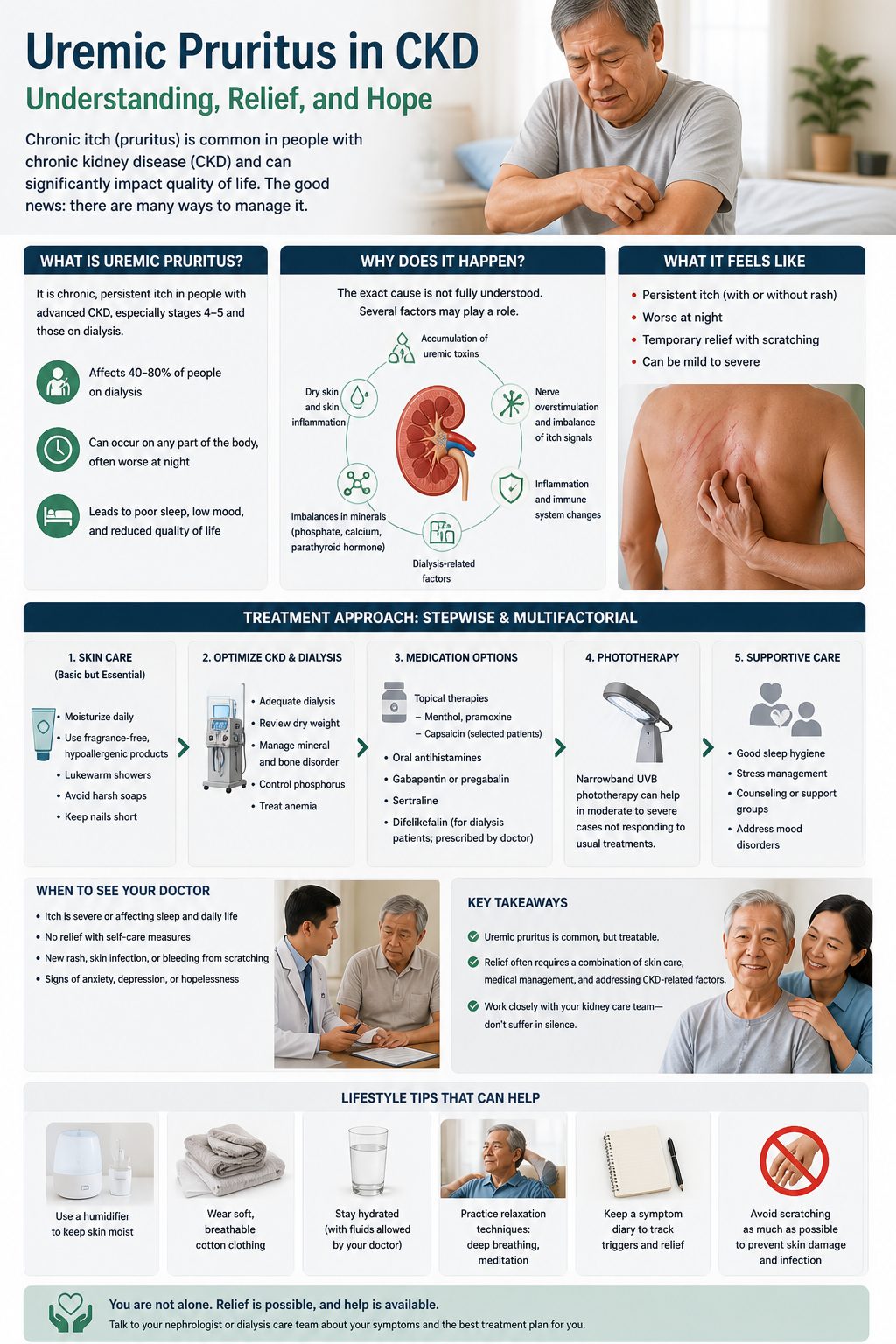 GuideHurt Without Harm: A Guide to Safe Pain Relief in Kidney DiseaseUremic itching in dialysis patients — causes, treatment options including difelikefalin, antihistamines, skin care, and improving sleep and quality of life in the Philippines.
 GuideThe CKD Prescriber's PlaybookClinician-focused operational guide: exactly how to start, titrate, and adjust SGLT2 inhibitors, ACEi/ARB, GLP-1 agonists, diuretics, phosphate binders, and ESAs in CKD and nephrology practice. KDIGO 2024 aligned.
 GuideEpilepsy & Seizures in Kidney DiseaseSeizure risk in CKD, uremic encephalopathy, anti-epileptic drug dose adjustments for eGFR, and dialysis removal of AEDs — a dual-mode guide for patients and clinicians in the Philippines.
 GuideThe Kidney–Brain Axis: Thinking, Memory, and Kidney DiseaseWhy thinking and memory can change in chronic kidney disease and dialysis, when confusion is an emergency, which medicines and reversible causes to review, how dialysis blood-pressure swings affect the brain, and what hemodiafiltration, exe
- CalculatorRenal Dosing: Nerve Pain & Gout Medicines — Dose Adjustment by CrClLook up renally-adjusted doses for gabapentin, pregabalin, allopurinol, tramadol, and colchicine by Cockcroft–Gault creatinine clearance. Built-in CrCl calculator plus auditable, label/guideline-referenced dose bands with avoid/reduce/stand
- CalculatorCreatinine Clearance — Cockcroft-Gault (drug dosing)Estimate creatinine clearance for drug dosing with the Cockcroft-Gault equation using age, sex, weight, and serum creatinine, with ideal/adjusted body-weight options. With indications, formula, evidence, and references.
References
- U.S. Food and Drug Administration. Neurontin · Viatris Specialty LLC [US FDA-approved label, version 48, May 12, 2026]. Via DailyMed/openFDA. https://dailymed.nlm.nih.gov/dailymed/drugInfo.cfm?setid=97935fd9-1d4a-43b6-a5d9-de994591187b
- Food and Drug Administration Philippines. Verification portal (product registrations). https://verification.fda.gov.ph
- PNF Essential Medicines List, 8th ed. (as of November 2, 2022), DOH; https://www.philhealth.gov.ph/partners/providers/pdf/PNF-EML_11022022.pdf
- PhilHealth Circular No. 2026-0018, Expanding Access to Outpatient First-line Anti-TB Drugs through PhilHealth GAMOT, Annex A.i GAMOT List (81 molecules); https://www.philhealth.gov.ph/circulars/2026/PC-2026-0018.pdf
- PhilHealth Circular No. 2026-0018, Annex A.2 GAMOT Fixed Fee Schedule (249 preparations; fees otherwise unchanged from PC2025-0013); https://www.philhealth.gov.ph/circulars/2026/PC-2026-0018.pdf
- DOH Drug Price Reference Index (DPRI) 2021, 9th edition (as of September 17, 2021); https://caro.doh.gov.ph/wp-content/uploads/2021/09/2021DPRI-as-of-9-17-2021.pdf
- Viatris Specialty LLC. (2026). Neurontin (gabapentin) [Prescribing information; US FDA-approved label, NDA020235, set ID 97935fd9-1d4a-43b6-a5d9-de994591187b, version effective May 12, 2026]. DailyMed, U.S. National Library of Medicine. https://dailymed.nlm.nih.gov/dailymed/drugInfo.cfm?setid=97935fd9-1d4a-43b6-a5d9-de994591187b
- Ishida, J. H., McCulloch, C. E., Steinman, M. A., Grimes, B. A., & Johansen, K. L. (2018). Gabapentin and pregabalin use and association with adverse outcomes among hemodialysis patients. Journal of the American Society of Nephrology, 29(7), 1970–1978. https://doi.org/10.1681/ASN.2018010096
- Muanda, F. T., Weir, M. A., Ahmadi, F., Sontrop, J. M., Cowan, A., Fleet, J. L., Blake, P. G., & Garg, A. X. (2022). Higher-dose gabapentinoids and the risk of adverse events in older adults with CKD: A population-based cohort study. American Journal of Kidney Diseases, 80(1), 98–107.e1. https://doi.org/10.1053/j.ajkd.2021.11.007
- Schwartz, G. J., Muñoz, A., Schneider, M. F., Mak, R. H., Kaskel, F., Warady, B. A., & Furth, S. L. (2009). New equations to estimate GFR in children with CKD. Journal of the American Society of Nephrology, 20(3), 629–637. https://doi.org/10.1681/ASN.2008030287
renalcarematters.com content: Kidney and pediatric dosing: reviewed by William Gregory M. Rivero, MD, FPCP, DPSN on November 17, 2026. Dosing, interaction, adverse-effect and monitoring summary: reviewed by William Gregory M. Rivero, MD, FPCP, DPSN on November 16, 2026.
Last updated: .