Use: Labeled indications
- INDICATIONS AND USAGE To reduce the development of drug-resistant bacteria and maintain effectiveness of doxycycline capsules and other antibacterial drugs, doxycycline capsules should be used only to treat or prevent…
Full indications and usage US FDA label
INDICATIONS AND USAGE To reduce the development of drug-resistant bacteria and maintain effectiveness of doxycycline capsules and other antibacterial drugs, doxycycline capsules should be used only to treat or prevent infections that are proven or strongly suspected to be caused by susceptible bacteria. When culture and susceptibility information are available, they should be considered in selecting or modifying antibacterial therapy.
In the absence of such data, local epidemiology and susceptibility patterns may contribute to the empiric selection of therapy. Doxycycline is indicated for the treatment of the following infections: Rocky mountain spotted fever, typhus fever and the typhus group, Q fever, rickettsialpox, and tick fevers caused by Rickettsiae.
Respiratory tract infections caused by Mycoplasma pneumoniae. Lymphogranuloma venereum caused by Chlamydia trachomatis. Psittacosis (ornithosis) caused by Chlamydophila psittaci. Trachoma caused by Chlamydia trachomatis, although the infectious agent is not always eliminated as judged by immunofluorescence. Inclusion conjunctivitis caused by Chlamydia trachomatis.
Uncomplicated urethral, endocervical or rectal infections in adults caused by Chlamydia trachomatis. Nongonococcal urethritis caused by Ureaplasma urealyticum. Relapsing fever due to Borrelia recurrentis. Doxycycline is also indicated for the treatment of infections caused by the following gram-negative microorganisms: Chancroid caused by Haemophilus ducreyi.
Plague due to Yersinia pestis. Tularemia due to Francisella tularensis. Cholera caused by Vibrio cholerae. Campylobacter fetus infections caused by Campylobacter fetus. Brucellosis due to Brucella species (in conjunction with streptomycin). Bartonellosis due to Bartonella bacilliformis. Granuloma inguinale caused by Klebsiella granulomatis.
Because many strains of the following groups of microorganisms have been shown to be resistant to doxycycline, culture and susceptibility testing are recommended. Doxycycline is indicated for treatment of infections caused by the following gram-negative microorganisms, when bacteriologic testing indicates appropriate susceptibility to the drug: Escherichia coli Enterobacter aerogenes Shigella species Acinetobacter species Respiratory tract infections caused by Haemophilus influenzae.
Respiratory tract and urinary tract infections caused by Klebsiella species. Doxycycline is indicated for treatment of infections caused by the following gram-positive microorganisms when bacteriologic testing indicates appropriate susceptibility to the drug: Upper respiratory infections caused by Streptococcus pneumoniae.
Anthrax due to Bacillus anthracis, including inhalational anthrax (post-exposure): to reduce the incidence or progression of disease following exposure to aerosolized Bacillus anthracis. When penicillin is contraindicated, doxycycline is an alternative drug in the treatment of the following infections: Uncomplicated gonorrhea caused by Neisseria gonorrhoeae.
Syphilis caused by Treponema pallidum. Yaws caused by Treponema pallidum subspecies pertenue. Listeriosis due to Listeria monocytogenes. Vincent’s infection caused by Fusobacterium fusiforme. Actinomycosis caused by Actinomyces israelii. Infections caused by Clostridium species. In acute intestinal amebiasis, doxycycline may be a useful adjunct to amebicides.
In severe acne, doxycycline may be useful adjunctive therapy.
Contraindications
- Hypersensitivity to any tetracycline
Contraindications (US label) US FDA label
CONTRAINDICATIONS This drug is contraindicated in persons who have shown hypersensitivity to any of the tetracyclines.
Dosing: Adult
- Adults (usual): 200 mg on day 1 (100 mg every 12 hours), then 100 mg daily
- More severe infections (for example chronic urinary tract infection): 100 mg every 12 hours
Dosage and administration (US label) US FDA label
DOSAGE AND ADMINISTRATION THE USUAL DOSAGE AND FREQUENCY OF ADMINISTRATION OF DOXYCYCLINE DIFFERS FROM THAT OF THE OTHER TETRACYCLINES. EXCEEDING THE RECOMMENDED DOSAGE MAY RESULT IN AN INCREASED INCIDENCE OF SIDE EFFECTS. Adults: The usual dose of oral doxycycline is 200 mg on the first day of treatment (administered 100 mg every 12 hours or 50 mg every 6 hours) followed by a maintenance dose of 100 mg/day.
The maintenance dose may be administered as a single dose or as 50 mg every 12 hours. In the management of more severe infections (particularly chronic infections of the urinary tract), 100 mg every 12 hours is recommended. Pediatric Patients: For all pediatric patients weighing less than 45 kg with severe or life-threatening infections (e.g. anthrax, Rocky Mountain spotted fever), the recommended dosage is 2.2 mg/kg of body weight administered every 12 hours.
Children weighing 45 kg or more should receive the adult dose (see WARNINGS and PRECAUTIONS). For pediatric patients with less severe disease (greater than 8 years of age and weighing less than 45 kg), the recommended dosage schedule is 4.4 mg per kg of body weight divided into two doses on the first day of treatment, followed by a maintenance dose of 2.2 mg per kg of body weight (given as a single daily dose or divided into twice daily doses).
For pediatric patients weighing over 45 kg, the usual adult dose should be used. The therapeutic antibacterial serum activity will usually persist for 24 hours following recommended dosage. When used in streptococcal infections, therapy should be continued for 10 days. Administration of adequate amounts of fluid along with capsule and tablet forms of drugs in the tetracycline class is recommended to wash down the drugs and reduce the risk of esophageal irritation and ulceration (see ADVERSE REACTIONS).
If gastric irritation occurs, it is recommended that doxycycline be given with food or milk. The absorption of doxycycline is not markedly influenced by simultaneous ingestion of food or milk. Studies to date have indicated that administration of doxycycline at the usual recommended doses does not lead to excessive accumulation of doxycycline in patients with renal impairment.
Uncomplicated gonococcal infections in adults (except anorectal infections in men): 100 mg, by mouth, twice a day for 7 days. As an alternate single visit dose, administer 300 mg stat followed in one hour by a second 300 mg dose. Acute epididymo-orchitis caused by N. gonorrhoeae: 100 mg, by mouth, twice a day for at least 10 days.
Primary and secondary syphilis: 300 mg a day in divided doses for at least 10 days. Uncomplicated urethral, endocervical, or rectal infection in adults caused by Chlamydia trachomatis: 100 mg, by mouth, twice a day for at least 7 days. Nongonococcal urethritis caused by C. trachomatis and U. urealyticum: 100 mg, by mouth, twice a day for at least 7 days.
Acute epididymo-orchitis caused by C. trachomatis: 100 mg, by mouth, twice a day for at least 10 days. Inhalational anthrax (post-exposure): ADULTS: 100 mg of doxycycline, by mouth, twice a day for 60 days. CHILDREN: weighing less than 45 kg 2.2 mg/kg of body weight, by mouth, twice a day for 60 days. Children weighing 45 kg or more should receive the adult dose.
Dosing: Altered kidney function
Unlike other tetracyclines, doxycycline needs no dose change in kidney impairment: its half-life is similar in normal and severely reduced kidney function, because elimination shifts away from the kidney. Hemodialysis does not change its half-life.
Kidney function measure: Label PK uses CrCl (mL/min); no dose bands.
Show full dosing details
- CrCl ≥60 mL/min
- No dose change: usual doses do not accumulate excessively in kidney impairment, and the half-life (18 to 22 hours) is similar in normal and severely impaired kidney function (label).
- CrCl 30–59 mL/min
- No dose change: usual doses do not accumulate excessively in kidney impairment, and the half-life (18 to 22 hours) is similar in normal and severely impaired kidney function (label).
- CrCl 15–29 mL/min
- No dose change: usual doses do not accumulate excessively in kidney impairment, and the half-life (18 to 22 hours) is similar in normal and severely impaired kidney function (label).
- CrCl <15 mL/min (not on dialysis)
- No dose change: usual doses do not accumulate excessively in kidney impairment, and the half-life (18 to 22 hours) is similar in normal and severely impaired kidney function (label).
- Hemodialysis (intermittent)
- No dose change; hemodialysis does not alter the half-life (label).
- Peritoneal dialysis
- No dose change; dialysis does not alter the half-life (label).
- CRRT
- Not in label; the cited CRRT review (Li 2020) gives no regimen for this drug. Specialist input.
- Dialyzable? No: dialysis does not alter serum half-life (label).
- Monitoring Photosensitivity; intracranial hypertension symptoms (headache, vision); BUN rise is reported with tetracyclines but not with doxycycline in kidney impairment (label).
Children (kidney dosing)
Show full dosing details
- eGFR ≥60
- No pediatric kidney dosing in label; adult label needs no change.
- eGFR 30–59
- No pediatric kidney dosing in label; adult label needs no change.
- eGFR 15–29
- No pediatric kidney dosing in label; adult label needs no change.
- eGFR <15 (not on dialysis)
- No pediatric kidney dosing in label; adult label needs no change.
- Hemodialysis (intermittent)
- No pediatric dialysis data. Specialist input.
- Peritoneal dialysis
- No pediatric dialysis data. Specialist input.
- CRRT
- No pediatric CRRT data in the cited sources. Specialist input.
Pediatric eGFR: bedside Schwartz equation, 0.413 × height (cm) / serum creatinine (mg/dL). Weight-based doses should not exceed the adult maximum.
renalcarematters.com guidance, reviewed by William Gregory M. Rivero, MD, FPCP, DPSN on November 17, 2026. Sources are listed under References. Use with the product's package insert and the patient's current kidney function.
US label text: Dosage and administration (renal excerpts) US FDA label
Studies to date have indicated that administration of doxycycline at the usual recommended doses does not lead to excessive accumulation of doxycycline in patients with renal impairment.
Dosing: Pediatric
- Approved ages
- Children; avoid during tooth development (under 8 years) except for severe or life-threatening infections such as anthrax or Rocky Mountain spotted fever (label warnings).
- Usual dose
- Under 45 kg, severe or life-threatening infections: 2.2 mg/kg every 12 hours. Over 8 years and under 45 kg, less severe disease: 4.4 mg/kg divided into 2 doses on day 1, then 2.2 mg/kg daily (once or divided). 45 kg or more: adult dose (label).
- Maximum dose
- Adult dose (label).
Kidney dosing in children: see Dosing: Altered kidney function.
renalcarematters.com, reviewedDosage forms
Philippines
- Capsule: 100 mg
Registered products in the Philippines
37 products registered with the Food and Drug Administration (FDA) Philippines list Doxycycline as the generic name (including products registered under a variant spelling). Registration status changes; confirm a product's current status on the FDA portal before relying on it.
Also registered under: Doxycyline (as Hyclate) (2 products). Products registered under these spellings are included in the table and marked.
All registered products37
| Package insert | |||||||
|---|---|---|---|---|---|---|---|
AvadoxDoxycycline (as hyclate) | 100 mg CapsuleAlu / Clear PVC Blister Pack X 10's (Box of 100's) | Rx | Scheele Laboratories Phils., Inc.Philippines | Avantmed International Pharma, Inc. | DRP-2401-03 | Apr 1, 2031 | |
BidoxDoxycycline (as hyclate) | 100 mg CapsuleBlister pack x 10’s (Box of 100’s) | Rx | Flamingo Pharmaceuticals Ltd.India | Hexagon Pharmaceuticals | DR-XY27907 | Oct 4, 2027 | |
BidoxDoxycycline (as hyclate) | 100 mg CapsuleBlister pack x 10’s (Box of 100’s) | Rx | Flamingo Pharmaceuticals Ltd.India | Hexagon Pharmaceuticals | DRP-17131 | Oct 4, 2027 | |
ChlamadoxDoxycycline (as hyclate) | 100 mg CapsuleAlu/PVC Blister Pack x 10’s Box of 100’s | Rx | San Marino Laboratories CorporationPhilippines | — | DRP-7363 | Sep 29, 2027 | |
DiadoxDoxycycline (as hyclate) | 100mg CapsuleAlu/PVC Amber colored Blister Pack x 10's (Box of 100's) | Rx | Diamond Laboratories Inc.Philippines | N/A | DRP-17795 | Mar 11, 2031 | |
DothixDoxycycline (as hyclate) | 100 mg capsuleAlu/Clear PVC Blister Pack x 10's (Box of 100's) | Rx | Medico Remedies LimitedIndia | I.E. Medica, Inc. | DRP-7712 | Mar 5, 2031 | |
Dox-ZDoxycycline (as hyclate) | 100 mg CapsuleBlister Pack x 10's (Box of 100's) | Rx | LLOYD LABORATORIES, INC.Philippines | Healthcare Essential, Inc.Trader: Foramen Products Corporation | DRP-1973-01 | Feb 2, 2029 | |
DoxalinDoxycycline (as hyclate) | Capsule 100 mgAlu/Clear PVC Blister Pack x 10's (Box of 100's) | Rx | Scheele Laboratories Phils. Inc.Philippines | — | DRP-2401 | Mar 16, 2031 | |
DoxiconDoxycycline (as Hydrochloride) | 100 mg CapsuleAlu/PVC Blister Pack x 10's (Box of 50's) | Rx | Ashford Pharmaceutical Laboratories, Inc.Philippines | Trader: Vendiz Pharmaceuticals Inc. | DRP-11256 | Jul 15, 2029 | |
DoxilDoxycycline (as hyclate) | 100 mg CapsuleAlu/Clear PVDC Blister Pack | Rx | Lloyd Laboratories, Inc.Philippines | Randril Internation Co., Inc.Trader: Totalcare Pharma Inc. | DR-XY43244 | Feb 26, 2029 | |
DoximedDoxycycline (as hyclate) | 100mg CapsuleBlister Pack x 10's Box of 100's | Rx | LLOYD LABORATORIES, INC.Philippines | Medbridge, Inc.Trader: Foramen Products Corporation | DRP-1973-03 | Feb 2, 2029 | |
DoxinDoxycycline (as hyclate) | 100 mg capsuleAluminum Foil Strip Pack x 10's (Box of 50's) | Rx | Amherst Laboratories, Inc.Philippines | Trader: Biofemme, Inc. | DR-X1308 | May 24, 2027 | |
DoxinexDoxycycline (as Hydrochloride) | 100mg CapsuleClear PVC/Aluminum Foil Blister Pack x 10's (Box of 100's) | Rx | Drugmaker's Laboratories Inc.Philippines | Phil Pharmawealth Inc. | DRP-460-03 | Feb 7, 2032 | |
DoxipureDoxycycline (As Hyclate) | 100 mg CapsuleAlu/Clear Pvc Blister Pack X 10'S (Box of 100's) | Rx | Jiangxi Xierkangtai Pharmaceutical Co. Ltd.China | PhilRx Pharma Inc. | DRP-18649 | Aug 12, 2031 | |
DoxtralinDoxycycline (as hyclate) | 100 mg CapsuleAlu/PVC Blister Pack x 10's (Box of 50's) | Rx | Lloyd Laboratories, Inc.Philippines | Trader: Zeutica, Inc. | DR-XY35067 | Oct 24, 2028 | |
DoxychemDoxycycline (as hyclate) | 100 mg CapsuleAlu/PVC Clear Blister Pack x 10's (Box of 100's) | Rx | J.M. Tolmann Laboratories Inc.Philippines | ChemEx Logistics and Trading Inc.Trader: Westfield Pharmaceuticals, Inc. | DRP-9988-01 | Aug 13, 2027 | |
DoxyclenDoxycycline (as hyclate) | 100 mg CapsuleBlister Pack x 10's (Box of 100's) | Rx | Lloyd Laboratories, Inc.Philippines | Nurturemed Pharma Inc.Trader: Foramen Products Corporation | DRP-1973-04 | Feb 2, 2029 | |
DoxycleneDoxycycline (as hyclate) | 100 mg CapsuleBlister Pack x 10's (Box of 100's) | Rx | Lloyd Laboratories, Inc.Philippines | Trianon International Inc.Trader: Foramen Products Corporation | DRP-1973-05 | Feb 2, 2029 | |
DoxyclineDoxycycline (as hyclate) | 100 mg CapsuleAlu/PVC Blister Pack x 10's Box of 100's; Alu/PVC Blister Pack x 14's Box of 14's (Treatment pack for DOH) | Rx | Bal Pharma LimitedIndia | Endure Medical, Inc.Importer: Singapore Genebio, Inc. | DR-XY45501 | Jul 11, 2031 | |
DoxykamDoxycycline (as hyclate) | 100 mg CapsuleAlu/Clear PVC Blister Pack x 10’s (Box of 100’s) | Rx | XL Laboratories Pvt. Ltd.India | Ambica International Corporation | DRP-2857 | Mar 25, 2038 | |
DoxylinDoxycycline (as hyclate) | 100 mg CapsuleBlister Pack x 10's (Box of 100's) | Rx | Lloyd Laboratories, Inc.Philippines | Trader: Vamsler Phils. Incorporated | DR-XY26748 | Dec 6, 2030 | |
100 mg CapsuleAlu/PVC Blister Pack x 10's (Box of 30's and 100's) | Rx | Belco PharmaIndia | Ollen Pharma Trading Inc. | DRP-17554 | Feb 13, 2031 | ||
DoxyperlDoxycycline (As hyclate) | 100 mg CapsuleAlu/Clear PVC Blister Pack x 10’s (Box of 100's) | Rx | Jiangxi Xierkangtai Pharmaceutical Co., Ltd.China | AMB HK Enterprises Inc. | DRP-6107 | Mar 16, 2031 | |
DoxysaphDoxycycline (as hyclate) | 100 mg CapsuleAlu/PVC Blister Pack x 10's (Box of 100's) | Rx | Genom Biotech Pvt. Ltd.India | Nelpa Lifesciences, Inc. | DRP-8297 | Jan 13, 2031 | |
DynadoxyDoxycycline (as hyclate) | 100mg CapsuleAlu PVC Blister Pack x 10's (Box of 10 Blister packs x 10 Capsules) | Rx | Swiss Pharmaceutical Co., Ltd. (Xinshi Plant)Taiwan | Crisdy-Na Drug Corporation | DR-XY48426 | Nov 3, 2027 | |
KodoxyDoxycycline (as hyclate) | 100 mg CapsuleAlu/PVC blister pack x 10's (box of 100's) | Rx | Kopran LimitedIndia | Triple Tact Import & Export Corp. | DRP-11435 | Mar 14, 2027 | |
LeptoclinDoxycycline (as hyclate) | 100 mg capsuleAlu/Clear PVC Blister Pack x 10's (Box of 100's) | Rx | Medico Remedies LimitedIndia | Vitalife Pharma & Medical Supply IncImporter: I.E. Medica, Inc. | DRP-7712-01 | Mar 5, 2031 | |
LeptoxyDoxycycline (as hyclate) | 100 mg CapsuleAlu/PVC Blister Pack x 10's (Box of 100's) | Rx | Kopran LimitedIndia | Guimhealth Pharmaceutical Distributor and DrugstoreImporter: Triple Tact Import & Export Corp. | DRP-11435-01 | Mar 14, 2027 | |
MedoxDoxycycline (as hyclate) | 100mg CapsuleBlister Pack x 10's Box of 100's | Rx | LLOYD LABORATORIES, INC.Philippines | Medirich Pharma Distribution Corp.Trader: Foramen Products Corporation | DRP-1973 | Feb 2, 2029 | |
MydoxyDoxycycline (as hyclate) | 100mg Capsule. Alu/PVC Blister Pack x 10's (Box of 100's) | Rx | New Myrex Laboratories, Inc.Philippines | — | DRP-1845 | Jun 6, 2028 | |
NoneDoxycycline (as hyclate) | 100 mg CapsuleBlister Pack x 10’s (Box of 100’s) | Rx | Flamingo Pharmaceuticals Ltd.India | Qualifirst Health Inc.Importer: Hexagon Pharmaceuticals | DRP-17131-01 | Oct 4, 2027 | |
NoneDoxycycline (as hyclate) | 100 mg CapsuleAlu/PVC Clear Blister Pack x 10's (Box of 100's) | Rx | J.M. Tolmann Laboratories, Inc.Philippines | Watsons Personal Care Stores (Philippines), Inc.Trader: Westfield Pharmaceuticals, Inc. | DRP-9988 | Aug 13, 2027 | |
NoneDoxycycline (as hyclate) | 100mg CapsuleAlu/PVC Blister Pack x 10's (Box of 100's) | Rx | New Myrex Laboratories, Inc.Philippines | TGP Pharma, Inc. | DRP-1845-01 | Jun 6, 2028 | |
PidclinDoxycycline (as Hydrochloride) | 100 mg CapsuleClear PVC/Aluminum Foil Blister Pack x 10's (Box of 100's) | Rx | Drugmaker's Laboratories Inc.Philippines | — | DRP-460 | Mar 20, 2031 | |
100 mg CapsuleAlu/Clear PVC Blister Pack x 10's (Box of 100's) | Rx | Hovid BerhadMalaysia | Hovid Inc. | DR-XY42665 | Sep 20, 2028 | ||
UnbrandedDoxycycline (as Hyclate) (FOR DOH Complete Treatment Pack) | 100 mg CapsuleAlu/Clear PVC Blister Pack x 10's + 4's (Box of 14's) | Rx | Lloyd Laboratories, Inc.Philippines | Trader: Vamsler Phils. Incorporated | DR-XY42254 (FOR DOH ONLY) | Jul 23, 2029 | |
UnbrandedDoxycycline (as hyclate) | 100 mg CapsuleAlu/clear PVC Blister Pack x 10's (Box of 100's) | Rx | Scheele Laboratories Phils., Inc.Philippines | Ritemed Phils., Inc. | DRP-2401-04 | Jul 31, 2031 |
Source: FDA Philippines product registration database. "Valid until" is the registration validity date listed by the FDA; a past date may mean a renewal is pending. Package insert links point to files published by the FDA.
Warnings/Precautions
Warnings and precautions (US label) US FDA label
WARNINGS The use of drugs of the tetracycline class, including doxycycline, during tooth development (last half of pregnancy, infancy and childhood to the age of 8 years) may cause permanent discoloration of the teeth (yellow-gray-brown). This adverse reaction is more common during long-term use of the drugs, but it has been observed following repeated short-term courses.
Enamel hypoplasia has also been reported. Use of doxycycline in pediatric patients 8 years of age or less only when the potential benefits are expected to outweigh the risks in severe or life-threatening conditions (e.g. anthrax, Rocky Mountain spotted fever), particularly when there are no alternative therapies. Clostridium difficile associated diarrhea (CDAD) has been reported with use of nearly all antibacterial agents, including doxycycline capsules, and may range in severity from mild diarrhea to fatal colitis.
Treatment with antibacterial agents alters the normal flora of the colon leading to overgrowth of C. difficile. C. difficile produces toxins A and B which contribute to the development of CDAD. Hypertoxin producing strains of C. difficile cause increased morbidity and mortality, as these infections can be refractory to antimicrobial therapy and may require colectomy.
CDAD must be considered in all patients who present with diarrhea following antibiotic use. Careful medical history is necessary since CDAD has been reported to occur over two months after the administration of antibacterial agents. If CDAD is suspected or confirmed, ongoing antibiotic use not directed against C. difficile may need to be discontinued.
Appropriate fluid and electrolyte management, protein supplementation, antibiotic treatment of C. difficile, and surgical evaluation should be instituted as clinically indicated. Intracranial hypertension (IH, pseudotumor cerebri) has been associated with the use of tetracyclines including doxycycline capsules. Clinical manifestations of IH include headache, blurred vision, diplopia, and vision loss; papilledema can be found on fundoscopy.
Women of childbearing age who are overweight or have a history of IH are at greater risk for developing tetracycline associated IH. Concomitant use of isotretinoin and doxycycline capsules should be avoided because isotretinoin is also known to cause pseudotumor cerebri. Although IH typically resolves after discontinuation of treatment, the possibility for permanent visual loss exists.
If visual disturbance occurs during treatment, prompt ophthalmologic evaluation is warranted. Since intracranial pressure can remain elevated for weeks after drug cessation patients should be monitored until they stabilize. All tetracyclines form a stable calcium complex in any bone-forming tissue. A decrease in the fibula growth rate has been observed in prematures given oral tetracycline in doses of 25 mg/kg every six hours.
This reaction was shown to be reversible when the drug was discontinued.Results of animal studies indicate that tetracyclines cross the placenta, are found in fetal tissues, and can have toxic effects on the developing fetus (often related to retardation of skeletal development). Evidence of embryo toxicity has been noted in animals treated early in pregnancy.
If any tetracycline is used during pregnancy or if the patient becomes pregnant while taking these drugs, the patient should be apprised of the potential hazard to the fetus. The antianabolic action of the tetracyclines may cause an increase in BUN. Studies to date indicate that this does not occur with the use of doxycycline in patients with impaired renal function.
Photosensitivity manifested by an exaggerated sunburn reaction has been observed in some individuals taking tetracyclines. Patients apt to be exposed to direct sunlight or ultraviolet light should be advised that this reaction can occur with tetracycline drugs, and treatment should be discontinued at the first evidence of skin erythema.
Fixed drug eruptions have occurred with doxycycline and have been associated with worsening severity upon subsequent administrations, including generalized bullous fixed drug eruption (see ADVERSE REACTIONS). If severe skin reactions occur, discontinue doxycycline capsules immediately and institute appropriate therapy.
Drug interactions
| Drug or class | Severity | Effect | What to do |
|---|---|---|---|
| Antacids containing aluminum, calcium or magnesium; bismuth subsalicylate; iron preparations | Adjust or monitor | Impaired doxycycline absorption (label 7.3). | Do not take at the same time; the label gives no spacing interval. |
| Oral anticoagulants (warfarin) | Adjust or monitor | Tetracyclines can depress plasma prothrombin activity (label 7.1). | The anticoagulant dose may need to be lowered; monitor INR. |
| Penicillins | Avoid | Bacteriostatic drugs may interfere with the bactericidal action of penicillin (label 7.2). | Avoid the combination (label: advisable to avoid). |
| Barbiturates, carbamazepine, phenytoin | Adjust or monitor | Shorter doxycycline half-life (label 7.5). | Expect lower doxycycline levels; monitor response. |
| Oral contraceptives | Adjust or monitor | May be less effective (label 7.4). | Counsel the patient. |
Severity scale (renalcarematters.com): Avoid: do not combine; Adjust or monitor: change the dose or monitor closely; Minor: usually no action.
renalcarematters.com, reviewedAdverse reactions
Common
- Anorexia, nausea, vomiting, diarrhea
- Rash, photosensitivity
Serious
- Permanent tooth discoloration in children under 8
- Intracranial hypertension
- Severe skin reactions; anaphylaxis
- Clostridioides difficile-associated diarrhea
Adverse reactions (US label) US FDA label
ADVERSE REACTIONS Due to oral doxycycline’s virtually complete absorption, side effects to the lower bowel, particularly diarrhea, have been infrequent. The following adverse reactions have been observed in patients receiving tetracyclines. Gastrointestinal: Anorexia, nausea, vomiting, diarrhea, glossitis, dysphagia, enterocolitis, and inflammatory lesions (with monilial overgrowth) in the anogenital region, and pancreatitis.
Hepatotoxicity has been reported. These reactions have been caused by both the oral and parenteral administration of tetracyclines. Rare instances of esophagitis and esophageal ulcerations have been reported in patients receiving capsule and tablet forms of drugs in the tetracycline class. Most of these patients took medications immediately before going to bed (see DOSAGE AND ADMINISTRATION).
Skin: Maculopapular and erythematous rashes, Stevens-Johnson syndrome, toxic epidermal necrolysis, erythema multiforme, and fixed drug eruption have been reported. Exfoliative dermatitis has been reported but is uncommon. Photosensitivity is discussed above (see WARNINGS). Renal Toxicity: Rise in BUN has been reported and is apparently dose related (see WARNINGS).
Hypersensitivity Reactions: Urticaria, angioneurotic edema, anaphylaxis, anaphylactoid purpura, serum sickness, pericarditis, and exacerbation of systemic lupus erythematosus. Blood: Hemolytic anemia, thrombocytopenia, neutropenia, and eosinophilia have been reported with tetracyclines. Psychiatric: Depression, anxiety, suicidal ideation, insomnia, abnormal dreams, hallucination Other: Intracranial hypertension (IH, pseudotumor cerebri) has been associated with the use of tetracyclines (see PRECAUTIONS-General).
When given over prolonged periods, tetracyclines have been reported to produce brown-black microscopic discoloration of the thyroid gland. No abnormalities of thyroid function are known to occur.
Monitoring parameters
- Photosensitivity; intracranial hypertension symptoms (headache, vision); BUN rise is reported with tetracyclines but not with doxycycline in kidney impairment (label). Kidney
- Sun exposure counseling
- Headache or visual symptoms
Pharmacokinetics
Key PK parameters
| Time to peak | About 3.6 mcg/mL at about 2.6 hours after 200 mg |
|---|---|
| Half-life | About 16 to 22 hours |
| Half-life in kidney failure (ESKD) kidney | Similar to normal (18 to 22 hours) (label) |
| Renal excretion kidney | About 40% in urine over 72 hours with normal function; 1% to 5% at CrCl below 10 |
| Dialyzability kidney | No (label) |
They are concentrated by the liver in the bile and excreted in the urine and feces at high concentrations in a biologically active form.
Following a 200 mg dose of doxycycline monohydrate, 24 normal adult volunteers averaged the following serum concentration values: Time (hr): 0.5 1.0 1.5 2.0 3.0 4.0 8.0 12.0 24.0 48.0 72.0 Conc. 1.02 2.26 2.67 3.01 3.16 3.03 2.03 1.62 0.95 0.37 0.15 (μg/mL) Average Observed Values Maximum Concentration 3.61 μg/mL (± 0.9 sd) Time of Maximum Concentration 2.60 hr (± 1.10 sd) Elimination Rate Constant 0.049 per hr (± 0.030 sd) Half-Life 16.33 hr (± 4.53 sd) Excretion of doxycycline by the kidney is about 40%/72 hours in individuals with normal function (creatinine clearance about 75 mL/min).
This percentage excretion may fall as low as 1-5%/72 hours in individuals with severe renal insufficiency (creatinine clearance below 10 mL/min).
Studies have shown no significant difference in serum half-life of doxycycline (range 18-22 hours) in individuals with normal and severely impaired renal function.
Hemodialysis does not alter serum half-life.
Pharmacokinetics (US label) US FDA label
CLINICAL PHARMACOLOGY Tetracyclines are readily absorbed and are bound to plasma proteins in varying degrees. They are concentrated by the liver in the bile and excreted in the urine and feces at high concentrations in a biologically active form. Doxycycline is virtually completely absorbed after oral administration. Following a 200 mg dose of doxycycline monohydrate, 24 normal adult volunteers averaged the following serum concentration values: Time (hr): 0.5 1.0 1.5 2.0 3.0 4.0 8.0 12.0 24.0 48.0 72.0 Conc. 1.02 2.26 2.67 3.01 3.16 3.03 2.03 1.62 0.95 0.37 0.15 (μg/mL) Average Observed Values Maximum Concentration 3.61 μg/mL (± 0.9 sd) Time of Maximum Concentration 2.60 hr (± 1.10 sd) Elimination Rate Constant 0.049 per hr (± 0.030 sd) Half-Life 16.33 hr (± 4.53 sd) Excretion of doxycycline by the kidney is about 40%/72 hours in individuals with normal function (creatinine clearance about 75 mL/min).
This percentage excretion may fall as low as 1-5%/72 hours in individuals with severe renal insufficiency (creatinine clearance below 10 mL/min). Studies have shown no significant difference in serum half-life of doxycycline (range 18-22 hours) in individuals with normal and severely impaired renal function. Hemodialysis does not alter serum half-life.
Results of animal studies indicate that tetracyclines cross the placenta and are found in fetal tissues. Population pharmacokinetic analysis of sparse concentration-time data of doxycycline following standard of care intravenous and oral dosing in 44 pediatric patients (2-18 years of age) showed that allometrically-scaled clearance (CL) of doxycycline in pediatric patients ≥2 to ≤8 years of age (median [range] 3.58 [2.27-10.82] L/h/70 kg, N=11) did not differ significantly from pediatric patients >8 to 18 years of age (3.27 [1.11-8.12] L/h/70 kg, N=33).
For pediatric patients weighing ≤45 kg, body weight normalized doxycycline CL in those ≥2 to ≤8 years of age (median [range] 0.071 [0.041-0.202] L/kg/h, N=10) did not differ significantly from those >8 to 18 years of age (0.081 [0.035-0.126] L/kg/h, N=8). In pediatric patients weighing >45 kg, no clinically significant differences in body weight normalized doxycycline CL were observed between those ≥2 to ≤8 years (0.050 L/kg/h, N=1) and those >8 to 18 years of age (0.044 [0.014-0.121] L/kg/h, N=25).
No clinically significant difference in CL between oral and IV dosing was observed in the small cohort of pediatric patients who received the oral (N=19) or IV (N=21) formulation alone. Microbiology: Mechanism of Action Doxycycline inhibits bacterial protein synthesis by binding to the 30S ribosomal subunit. Doxycycline has bacteriostatic activity against a broad range of Gram-positive and Gram-negative bacteria.
Resistance Cross resistance with other tetracyclines is common. Antimicrobial Activity Doxycycline has been shown to be active against most isolates of the following microorganisms, both in vitro and in clinical infections (see INDICATIONS AND USAGE). Gram-negative Bacteria Acinetobacter species Bartonella bacilliformis Brucella species Campylobacter fetus Enterobacter aerogenes Escherichia coli Francisella tularensis Haemophilus ducreyi Haemophilus influenzae Klebsiella granulomatis Klebsiella species Neisseria gonorrhoeae Shigella species Vibrio cholerae Yersinia pestis Gram-positive Bacteria Bacillus anthracis Listeria monocytogenes Streptococcus pneumoniae Anaerobic Bacteria Clostridium species Fusobacterium fusiforme Propionibacterium acnes Other Bacteria Nocardiae and other Actinomyces species Borrelia recurrentis Chlamydophila psittaci Chlamydia trachomatis Mycoplasma pneumoniae Rickettsiae Treponema pallidum Treponema pallidum subspecies pertenue Ureaplasma urealyticum Parasites Balantidium coli Entamoeba species Susceptibility Testing For specific information regarding susceptibility test interpretive criteria, and associated test methods and quality control standards recognized by FDA for this drug, please see: http://www.fda.gov/STIC.
Formulary and pricing (Philippines)
Government price references
| Preparation | Price (PHP) | Unit | Type |
|---|---|---|---|
| Doxycycline (as Hyclate) 100 mg Capsule | ₱0.63–₱14.75Reference ₱1.23 | per capsule | DPRI procurement range |
| 100 mg (as hyclate) capsule | ₱23.75 | per capsule | PhilHealth GAMOT fixed fee |
PhilHealth GAMOT fixed fee paid to the accredited GAMOT pharmacy per unit dispensed Range = lowest-highest procurement price (highest usable only in GIDA areas); reference_price = 2021 DPRI ceiling (median)
These are government procurement and reimbursement references, not retail prices. Sources:
- DOH Drug Price Reference Index (DPRI) 2021, 9th edition (as of September 17, 2021); https://caro.doh.gov.ph/wp-content/uploads/2021/09/2021DPRI-as-of-9-17-2021.pdf, as of September 17, 2021
- PhilHealth Circular No. 2026-0018, Annex A.2 GAMOT Fixed Fee Schedule (249 preparations; fees otherwise unchanged from PC2025-0013); https://www.philhealth.gov.ph/circulars/2026/PC-2026-0018.pdf, as of October 13, 2026
Formulary and coverage
| Philippine National Formulary | Listed as Doxycycline |
| PNF listing | Oral: 100 mg capsule (as hyclate) |
| PhilHealth GAMOT | Yes (listed since July 28, 2025) |
Sources:
- PNF Essential Medicines List, 8th ed. (as of November 2, 2022), DOH; https://www.philhealth.gov.ph/partners/providers/pdf/PNF-EML_11022022.pdf, as of November 2, 2022
- PhilHealth Circular No. 2026-0018, Expanding Access to Outpatient First-line Anti-TB Drugs through PhilHealth GAMOT, Annex A.i GAMOT List (81 molecules); https://www.philhealth.gov.ph/circulars/2026/PC-2026-0018.pdf
Check availability
Prices and stock vary by branch; renalcarematters.com does not sell medicines or receive payment from pharmacies.
Related guides & calculators
Guides and calculators on renalcarematters.com for this medicine, for patients and clinicians.
 GuideFever and Kidney Injury in the Tropics: Scrub Typhus, Malaria, Leptospirosis and DengueFever with kidney injury in the Philippines: how leptospirosis, dengue, scrub typhus and malaria harm the kidneys, the clues that tell them apart, what to do in the first 24 hours, and when dialysis is needed.
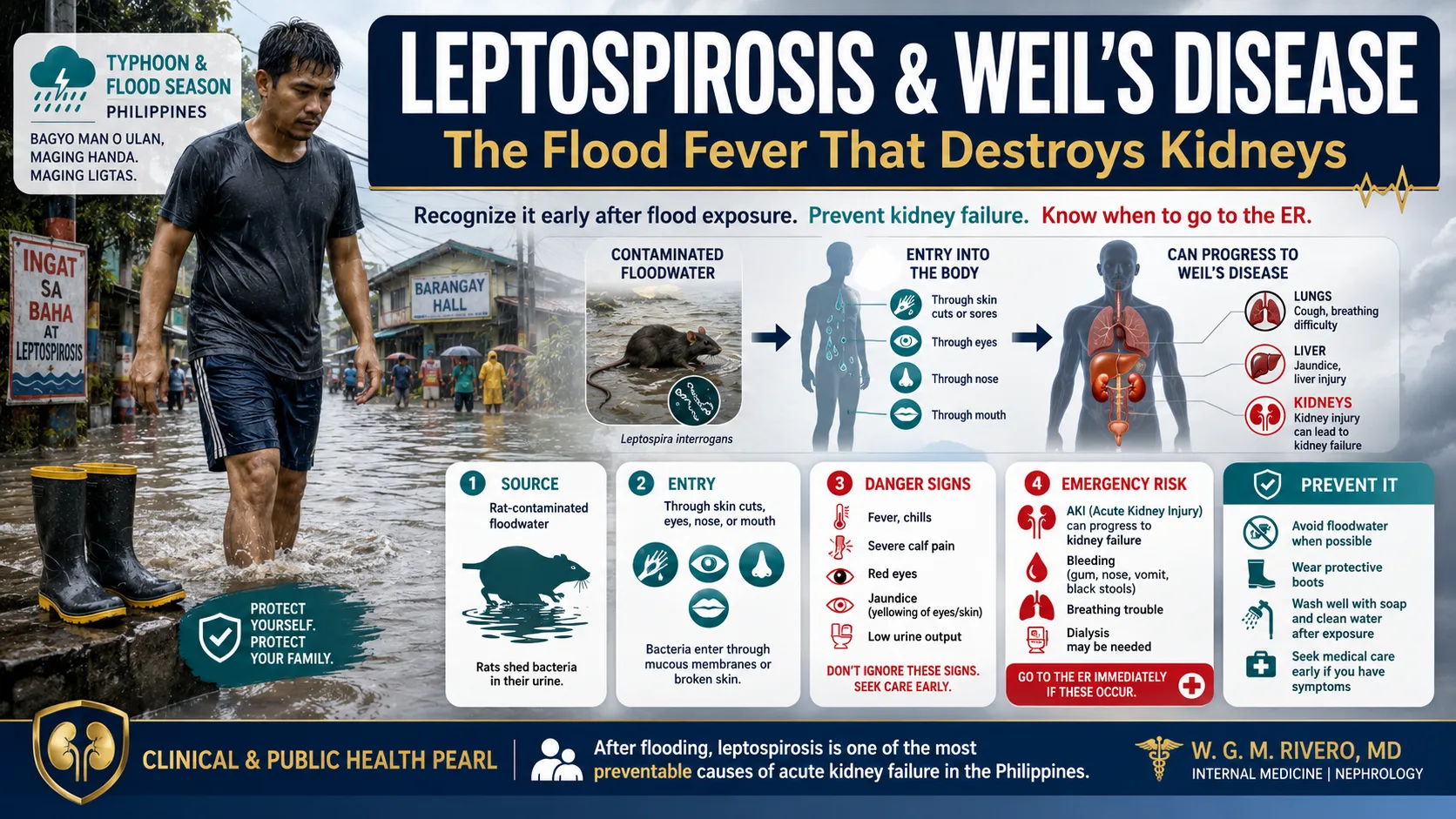 GuideLeptospirosis After Flood Exposure: Symptoms, Kidney Warning Signs & What To DoFloodwater exposure can lead to leptospirosis and acute kidney injury. Learn what to do after exposure, which symptoms need same-day care, emergency warning signs, testing, treatment, and recovery.
- CalculatorCreatinine Clearance — Cockcroft-Gault (drug dosing)Estimate creatinine clearance for drug dosing with the Cockcroft-Gault equation using age, sex, weight, and serum creatinine, with ideal/adjusted body-weight options. With indications, formula, evidence, and references.
References
- U.S. Food and Drug Administration. Doxycycline · Wellhouse Pharma, LLC [US FDA-approved label, version 1, July 24, 2026]. Via DailyMed/openFDA. https://dailymed.nlm.nih.gov/dailymed/drugInfo.cfm?setid=57f97f68-11fb-4900-9efb-ca3b00818d8e
- Food and Drug Administration Philippines. Verification portal (product registrations). https://verification.fda.gov.ph
- PNF Essential Medicines List, 8th ed. (as of November 2, 2022), DOH; https://www.philhealth.gov.ph/partners/providers/pdf/PNF-EML_11022022.pdf
- PhilHealth Circular No. 2026-0018, Expanding Access to Outpatient First-line Anti-TB Drugs through PhilHealth GAMOT, Annex A.i GAMOT List (81 molecules); https://www.philhealth.gov.ph/circulars/2026/PC-2026-0018.pdf
- PhilHealth Circular No. 2026-0018, Annex A.2 GAMOT Fixed Fee Schedule (249 preparations; fees otherwise unchanged from PC2025-0013); https://www.philhealth.gov.ph/circulars/2026/PC-2026-0018.pdf
- DOH Drug Price Reference Index (DPRI) 2021, 9th edition (as of September 17, 2021); https://caro.doh.gov.ph/wp-content/uploads/2021/09/2021DPRI-as-of-9-17-2021.pdf
- Wellhouse Pharma, LLC. (2026). Doxycycline (doxycycline monohydrate) oral [Prescribing information; US FDA-approved label, NDA050641, set ID 57f97f68-11fb-4900-9efb-ca3b00818d8e, version effective July 24, 2026]. DailyMed, U.S. National Library of Medicine. https://dailymed.nlm.nih.gov/dailymed/drugInfo.cfm?setid=57f97f68-11fb-4900-9efb-ca3b00818d8e
- Mayne Pharma Commercial LLC. (2025). DORYX (doxycycline hyclate delayed-release tablets) [Prescribing information; US FDA-approved label, NDA050795, set ID 99cf2de6-e0a3-42f2-9929-d33e107af948, version 11, effective April 3, 2025; section 7, Drug interactions]. DailyMed, U.S. National Library of Medicine. https://dailymed.nlm.nih.gov/dailymed/drugInfo.cfm?setid=99cf2de6-e0a3-42f2-9929-d33e107af948
renalcarematters.com content: Kidney and pediatric dosing: reviewed by William Gregory M. Rivero, MD, FPCP, DPSN on November 17, 2026. Dosing, interaction, adverse-effect and monitoring summary: reviewed by William Gregory M. Rivero, MD, FPCP, DPSN on November 17, 2026.
Last updated: .