WARNING: LACTIC ACIDOSIS
- Postmarketing cases of metformin-associated lactic acidosis have resulted in death, hypothermia, hypotension, and resistant bradyarrhythmias. The onset of metformin-associated lactic acidosis is often subtle, accompanied only by non‑specific symptoms such as malaise, myalgias, respiratory distress, somnolence, and abdominal pain. Metformin-associated lactic acidosis was characterized by elevated blood lactate levels (>5 mmol/L), anion gap acidosis (without evidence of ketonuria or ketonemia), an increased lactate/pyruvate ratio; and metformin plasma levels generally >5 mcg/mL [see Warnings and Precautions (5.1)].
- Risk factors for metformin-associated lactic acidosis include renal impairment, concomitant use of certain drugs (e.g., carbonic anhydrase inhibitors such as topiramate), age 65 years old or greater, having a radiological study with contrast, surgery and other procedures, hypoxic states (e.g., acute congestive heart failure), excessive alcohol intake, hepatic impairment and mitochondrial diseases [see Warnings and Precautions (5.1)].
- Steps to reduce the risk of and manage metformin-associated lactic acidosis in these high-risk groups are provided in the full prescribing information [see Dosage and Administration (2.1 and 2.4), Contraindications (4), Warnings and Precautions (5.1), Drug Interactions (7), and Use in Specific Populations (8.6, 8.7)].
- If metformin-associated lactic acidosis is suspected, immediately discontinue XIGDUO XR and institute general supportive measures in a hospital setting. Prompt hemodialysis is recommended [see Warnings and Precautions (5.1)]. WARNING: LACTIC ACIDOSIS See full prescribing information for complete boxed warning.
- Postmarketing cases of metformin-associated lactic acidosis have resulted in death, hypothermia, hypotension, and resistant bradyarrhythmias. Symptoms included malaise, myalgias, respiratory distress, somnolence, and abdominal pain. Laboratory abnormalities included elevated blood lactate levels, anion gap acidosis, increased lactate/pyruvate ratio; and metformin plasma levels generally >5 mcg/mL. (5.1)
- Risk factors include renal impairment, concomitant use of certain drugs, age >65 years old, radiological studies with contrast, surgery and other procedures, hypoxic states, excessive alcohol intake, hepatic impairment, and mitochondrial diseases. Steps to reduce the risk of and manage metformin-associated lactic acidosis in these high risk groups are provided in the Full Prescribing Information. (5.1)
- If lactic acidosis is suspected, discontinue XIGDUO XR and institute general supportive measures in a hospital setting. Prompt hemodialysis is recommended. (5.1)
Use: Labeled indications
- Sustained eGFR decline, end‑stage kidney disease, (CV) death, and hospitalization for heart failure in patients with chronic kidney disease at risk of progression.
- CV death, hospitalization for heart failure, and urgent heart failure visit in patients with heart failure.
- Hospitalization for heart failure in patients with type 2 diabetes mellitus and either established CV disease or multiple CV risk factors.
Full indications and usage US FDA label
1 INDICATIONS AND USAGE XIGDUO XR is a combination of dapagliflozin and metformin hydrochloride (HCl) extended-release, indicated as an adjunct to diet and exercise to improve glycemic control in adults and pediatric patients aged 10 years and older with type 2 diabetes mellitus. Dapagliflozin, when used as a component of XIGDUO XR, is indicated in adults with type 2 diabetes mellitus to reduce the risk of:
- Sustained eGFR decline, end‑stage kidney disease, (CV) death, and hospitalization for heart failure in patients with chronic kidney disease at risk of progression.
- CV death, hospitalization for heart failure, and urgent heart failure visit in patients with heart failure.
- Hospitalization for heart failure in patients with type 2 diabetes mellitus and either established CV disease or multiple CV risk factors. Limitations of Use
- XIGDUO XR is not recommended for use to improve glycemic control in patients with type 1 diabetes mellitus [see Warnings and Precautions (5.2)].
- Because of the metformin HCl component, the use of XIGDUO XR is limited to patients with type 2 diabetes mellitus for all indications.
- XIGDUO XR is not recommended for the treatment of chronic kidney disease in patients with polycystic kidney disease or patients requiring or with a recent history of immunosuppressive therapy for kidney disease. XIGDUO XR is not expected to be effective in these populations. XIGDUO XR is a combination of dapagliflozin, a sodium-glucose cotransporter 2 (SGLT2) inhibitor, and metformin hydrochloride (HCl), a biguanide, indicated as an adjunct to diet and exercise to improve glycemic control in adults and pediatric patients aged 10 years and older with type 2 diabetes mellitus. (1) Dapagliflozin when used as a component of XIGDUO XR, is indicated in adults with type 2 diabetes mellitus to reduce the risk of:
- Sustained eGFR decline, end-stage kidney disease, cardiovascular (CV) death, and hospitalization for heart failure in patients with chronic kidney disease at risk of progression. (1)
- CV death, hospitalization for heart failure, and urgent heart failure visit in patients with heart failure. (1)
- Hospitalization for heart failure in patients with type 2 diabetes mellitus and either established CV disease or multiple CV risk factors. (1) Limitations of use:
- Not recommended for use to improve glycemic control in patients with type 1 diabetes mellitus. (1)
- Because of the metformin HCl component, the use of XIGDUO XR is limited to patients with type 2 diabetes mellitus for all indications. (1)
- Not recommended for the treatment of chronic kidney disease in patients with polycystic kidney disease or patients requiring or with a recent history of immunosuppressive therapy for the treatment of kidney disease. XIGDUO XR is not expected to be effective in these populations. (1)
Contraindications
- eGFR below 30 mL/min/1.73 m2 or end-stage kidney disease
- Acute or chronic metabolic acidosis, including diabetic ketoacidosis
- Serious hypersensitivity to dapagliflozin or metformin
Contraindications (US label) US FDA label
4 CONTRAINDICATIONS XIGDUO XR is contraindicated in patients with:
- Severe renal impairment (eGFR below 30 mL/min/1.73 m²) or end-stage renal disease [see Warnings and Precautions (5.1)].
- History of a serious hypersensitivity reaction to dapagliflozin, metformin HCl, or any of the excipients in XIGDUO XR. Serious hypersensitivity reactions, including anaphylaxis and angioedema have been reported with dapagliflozin [see Adverse Reactions (6.1)].
- Acute or chronic metabolic acidosis, including diabetic ketoacidosis, with or without coma. Diabetic ketoacidosis should be treated with insulin [see Warnings and Precautions (5.1) and Warnings and Precautions (5.2)].
- Severe renal impairment (eGFR below 30 mL/min/1.73 m²) or end-stage renal disease. (4)
- History of serious hypersensitivity to dapagliflozin, metformin HCl, or any of the excipients in XIGDUO XR. (4)
- Metabolic acidosis, including diabetic ketoacidosis. (4)
Dosing: Adult
- Type 2 diabetes (US extended-release): Once daily in the morning with food; dapagliflozin 5 to 10 mg with metformin up to 2,000 mg/day
- Heart failure, CKD (adults): Dapagliflozin 10 mg once daily
- • Assess renal function prior to initiating and then as clinically indicated. (2.1)
- • Assess volume status and correct volume depletion before initiating. (2.1)
- • Individualize the starting dosage based on the patient’s current treatment. (2.3)
- • Administer orally once daily in the morning with food. (2.2)
- • To improve glycemic control, for patients aged 10 years and older not already taking dapagliflozin, the recommended starting dosage for dapagliflozin is 5 mg once daily. (2.3)
- • For indications in adults related to heart failure and chronic kidney disease the recommended dosage of dapagliflozin is 10 mg once daily. (2.3)
- • Do not exceed a daily dosage of 10 mg dapagliflozin/2,000 mg metformin HCl extended-release. (2.3)
- • See Full Prescribing Information for dosage recommendations in patients with renal impairment. (2.4)
- • XIGDUO XR may need to be discontinued at time of, or prior to, iodinated contrast imaging procedures. (2.5)
- • Withhold XIGDUO XR for at least 3 days, if possible, prior to surgery or procedures associated with prolonged fasting. (2.6)
2.1 Testing Prior to Initiation
2.1 Testing Prior to Initiation of XIGDUO XR
- Assess renal function prior to initiating XIGDUO XR and then as clinically indicated [see Warnings and Precautions (5.1, 5.3)].
- Assess volume status. In patients with volume depletion, correct this condition before initiating XIGDUO XR [see Warnings and Precautions (5.3) and Use in Specific Populations (8.5, 8.6)].
2.2 Recommended Administration
2.2 Recommended Administration
- Take XIGDUO XR orally once daily in the morning with food.
- Swallow XIGDUO XR tablets whole and never crush, cut, or chew.
2.3 Recommended Dosage
2.3 Recommended Dosage
- Individualize the starting dosage of XIGDUO XR based upon the patient’s current regimen. Patients taking an evening dosage of metformin HCl extended‑release should skip their last dose before starting XIGDUO XR.
- To improve glycemic control in adults and pediatric patients aged 10 years and older not already taking: ∘ Dapagliflozin: the recommended starting dosage of dapagliflozin in XIGDUO XR is 5 mg orally once daily. ∘ Metformin HCl extended‑release: the recommended starting dosage of metformin HCl extended‑release in XIGDUO XR is 500 mg orally once daily.
- For XIGDUO XR indications in adults related to heart failure and chronic kidney disease, the recommended dosage of dapagliflozin in XIGDUO XR is 10 mg orally once daily.
- For all XIGDUO XR indications, the dosage may be adjusted based on effectiveness and tolerability. The maximum recommended daily dosage of dapagliflozin is 10 mg and 2,000 mg of metformin HCl extended‑release, with gradual dosage escalation to reduce gastrointestinal adverse reactions with metformin HCl [see Adverse Reactions (6.1)].
2.4 Recommended Dosage in Patients with Renal Impairment
2.4 Recommended Dosage in Patients with Renal Impairment
- The recommended dosage of XIGDUO XR in patients with an estimated glomerular filtration rate (eGFR) greater than or equal to 45 mL/min/1.73 m² is the same as the recommended dosage in patients with normal renal function.
- Initiation of XIGDUO XR is not recommended in patients with an eGFR between 30 and 45 mL/min/1.73 m². Assess the benefit and risk of continuing therapy if eGFR falls persistently below this level. ∘ Dapagliflozin is likely to be ineffective to improve glycemic control in patients with eGFR less than 45 mL/min/1.73 m². ∘ Metformin HCl initiation is not recommended for patients with eGFR less than 45 mL/min/1.73 m².
- XIGDUO XR is contraindicated in patients with an eGFR below 30 mL/min/1.73 m2 and end‑stage renal disease due to the metformin HCl component [see Contraindications (4), Warnings and Precautions (5.1), and Use in Specific Populations (8.6)].
2.5 Discontinuation for Iodinated Contrast Imaging Procedures
2.5 Discontinuation for Iodinated Contrast Imaging Procedures Discontinue XIGDUO XR at the time of, or prior to, an iodinated contrast imaging procedure in patients with an eGFR less than 60 mL/min/1.73 m², in patients with a history of liver disease, alcoholism or heart failure; or in patients who will be administered intra-arterial iodinated contrast. Re-evaluate eGFR 48 hours after the imaging procedure; restart XIGDUO XR if renal function is stable [see Warnings and Precautions (5.1)].
2.6 Temporary Interruption for Surgery Withhold
2.6 Temporary Interruption for Surgery Withhold XIGDUO XR for at least 3 days, if possible, prior to surgery or procedures associated with prolonged fasting. Resume XIGDUO XR when the patient is clinically stable and has resumed oral intake [see Warnings and Precautions (5.2) and Clinical Pharmacology (12.2)].
2.7 Recommendations Regarding Missed Dose
2.7 Recommendations Regarding Missed Dose
- If a dose is missed, instruct patients to take the dose as soon as possible.
- Advise patients not to double up the next dose.
Dosing: Altered kidney function
This fixed combination pairs the sodium-glucose cotransporter-2 (SGLT2) inhibitor dapagliflozin with metformin. The US label (extended-release tablets) keeps the usual dose at an estimated glomerular filtration rate (eGFR) of 45 or more, does not recommend starting it at eGFR 30 to 45, and contraindicates it below 30 and in end-stage kidney disease because of metformin. Dapagliflozin alone can still be used for kidney and heart protection at lower eGFR (use the components separately).
Kidney function measure: Label uses eGFR (mL/min/1.73 m2).
Show full dosing details
- CrCl ≥60 mL/min
- Usual dose; maximum dapagliflozin 10 mg and metformin 2,000 mg per day. Check eGFR and volume status before starting (label).
- CrCl 30–59 mL/min
- eGFR 45–59: usual dose; consider a lower metformin dose if at risk of hypoperfusion or hypoxemia, and check eGFR every 3–6 months (ADA-KDIGO 2022). eGFR 30–44: do not start; if eGFR falls below 45, weigh benefit and risk of continuing (label). Dapagliflozin is unlikely to lower glucose below 45, but 10 mg once daily still treats CKD and heart failure: use the components separately if needed. If continued at eGFR 30–44, metformin should not exceed 1,000 mg/day (ADA-KDIGO 2022) and dapagliflozin not 10 mg/day: for example one 10 mg/1,000 mg tablet once daily, or the separate components.
- CrCl 15–29 mL/min
- Contraindicated below eGFR 30 (metformin; label). Use the components separately: dapagliflozin alone 10 mg once daily for CKD or heart failure (dapagliflozin label: may start at eGFR ≥25, continue below).
- CrCl <15 mL/min (not on dialysis)
- Contraindicated (eGFR <30 and end-stage kidney disease; label). Use the components separately: dapagliflozin alone may be continued if already started (dapagliflozin label).
- Hemodialysis (intermittent)
- Contraindicated in end-stage kidney disease (label). Dapagliflozin alone was not studied in dialysis (see dapagliflozin record).
- Peritoneal dialysis
- Contraindicated in end-stage kidney disease (label).
- CRRT
- Not appropriate: metformin contraindicated in severe kidney impairment; hold in acute illness (label).
- Dialyzable? Metformin: yes, clearance up to 170 mL/min. Dapagliflozin: removal by hemodialysis not studied (label 10).
- Monitoring eGFR and volume status before starting and as clinically indicated. Stop at or before iodinated contrast if eGFR <60, liver disease, alcoholism, heart failure or intra-arterial contrast; recheck eGFR at 48 hours. Withhold at least 3 days before surgery or prolonged fasting (ketoacidosis). Genital mycotic infections, urinary tract infection, vitamin B12.
Children (kidney dosing)
Show full dosing details
- eGFR ≥60
- Usual dose (label).
- eGFR 30–59
- eGFR 45–59: usual. eGFR 30–44: do not start (label applies to all patients).
- eGFR 15–29
- Contraindicated (eGFR <30).
- eGFR <15 (not on dialysis)
- Contraindicated (eGFR <30).
- Hemodialysis (intermittent)
- Contraindicated.
- Peritoneal dialysis
- Contraindicated.
- CRRT
- Not appropriate.
Pediatric eGFR: bedside Schwartz equation, 0.413 × height (cm) / serum creatinine (mg/dL). Weight-based doses should not exceed the adult maximum.
renalcarematters.com guidance, reviewed by William Gregory M. Rivero, MD, FPCP, DPSN on November 17, 2026. Sources are listed under References. Use with the product's package insert and the patient's current kidney function.
US label text: Renal impairment US FDA label
2.4 Recommended Dosage in Patients with Renal Impairment
- The recommended dosage of XIGDUO XR in patients with an estimated glomerular filtration rate (eGFR) greater than or equal to 45 mL/min/1.73 m² is the same as the recommended dosage in patients with normal renal function.
- Initiation of XIGDUO XR is not recommended in patients with an eGFR between 30 and 45 mL/min/1.73 m². Assess the benefit and risk of continuing therapy if eGFR falls persistently below this level. ∘ Dapagliflozin is likely to be ineffective to improve glycemic control in patients with eGFR less than 45 mL/min/1.73 m². ∘ Metformin HCl initiation is not recommended for patients with eGFR less than 45 mL/min/1.73 m².
- XIGDUO XR is contraindicated in patients with an eGFR below 30 mL/min/1.73 m2 and end‑stage renal disease due to the metformin HCl component [see Contraindications (4), Warnings and Precautions (5.1), and Use in Specific Populations (8.6)].
8.6 Renal Impairment Initiation of XIGDUO XR is not recommended in patients with an eGFR below 45 mL/min/1.73 m² and is contraindicated in patients with severe renal impairment (eGFR less than 30 mL/min/1.73 m²) or end‑stage renal disease [see Dosage and Administration (2.4), Contraindications (4) and Warnings and Precautions (5.1, 5.3)]. Dapagliflozin Dapagliflozin 10 mg was evaluated in 4304 adult patients with chronic kidney disease (eGFR 25 to 75 mL/min/1.73 m²) in the DAPA-CKD trial.
Dapagliflozin 10 mg was also evaluated in 1926 adult patients with an eGFR of 30 to 60 mL/min/1.73 m2 in the DAPA-HF trial. The safety profile of dapagliflozin across eGFR subgroups was consistent with the known safety profile [see Adverse Reactions (6.1) and Clinical Studies (14.4 and 14.5)]. Dapagliflozin 10 mg was evaluated in two glycemic control trials that included adult patients with moderate renal impairment (an eGFR of 45 to less than 60 mL/min/1.73 m², and an eGFR of 30 to less than 60 mL/min/1.73 m²) [see Clinical Studies (14.1)].
Patients with diabetes and renal impairment using dapagliflozin 10 mg are more likely to experience hypotension and may be at higher risk for acute kidney injury secondary to volume depletion. In the trial of adult patients with an eGFR 30 to less than 60 mL/min/1.73 m², 13 patients receiving dapagliflozin experienced bone fractures compared to none receiving placebo.
Use of dapagliflozin 10 mg for glycemic control in patients without established CV disease or CV risk factors is not recommended when eGFR is less than 45 mL/min/1.73 m² [see Dosage and Administration (2.4)]. Metformin HCl Metformin is substantially excreted by the kidney, and the risk of metformin accumulation and lactic acidosis increases with the degree of renal impairment.
XIGDUO XR is contraindicated in severe renal impairment, patients with an estimated glomerular filtration rate (eGFR) below 30 mL/min/1.73 m² [see Dosage and Administration (2.4), Contraindications (4), Warnings and Precautions (5.1), and Clinical Pharmacology (12.3)].
Patients with Renal Impairment Dapagliflozin At steady-state (20 mg once daily dapagliflozin for 7 days), adult patients with type 2 diabetes mellitus with mild, moderate, or severe renal impairment (as determined by eGFR) had geometric mean systemic exposures of dapagliflozin that were 45%, 100% and 200% higher, respectively, as compared to patients with type 2 diabetes mellitus with normal renal function. Higher systemic exposure of dapagliflozin in patients with type 2 diabetes mellitus with renal impairment did not result in a correspondingly higher 24-hour urinary glucose excretion.
The steady-state 24-hour urinary glucose excretion in patients with type 2 diabetes mellitus and mild, moderate, and severe renal impairment was 42%, 80%, and 90% lower, respectively, than in patients with type 2 diabetes mellitus with normal renal function. The impact of hemodialysis on dapagliflozin exposure is not known [see Dosage and Administration (2.4), Warnings and Precautions (5.3), Use in Specific Populations (8.6) and Clinical Studies (14)].
Metformin HCl In patients with decreased renal function, the plasma and blood half-life of metformin is prolonged and the renal clearance is decreased [see Contraindications (4) and Warnings and Precautions (5.1)].
Dosing: Hepatic impairment
8.7 Hepatic Impairment Use of metformin in patients with hepatic impairment has been associated with some cases of lactic acidosis. XIGDUO XR is not recommended in patients with hepatic impairment [see Warnings and Precautions (5.1)].
US FDA labelDosing: Pediatric
- Approved ages
- Type 2 diabetes, 10 years and older (label 8.4).
- Usual dose
- Dapagliflozin 5 mg once daily start (with metformin as tolerated); maximum dapagliflozin 10 mg and metformin 2,000 mg per day (label).
- Maximum dose
- Dapagliflozin 10 mg / metformin 2,000 mg per day.
Kidney dosing in children: see Dosing: Altered kidney function.
renalcarematters.com, reviewedPediatric use (US label) US FDA label
8.4 Pediatric Use The safety and effectiveness of XIGDUO XR as an adjunct to diet and exercise to improve glycemic control in type 2 diabetes mellitus have been established in pediatric patients aged 10 years and older. Use of XIGDUO XR for this indication is supported by a 26‑week placebo-controlled trial of dapagliflozin with a 26‑week extension in 157 pediatric patients aged 10 to 17 years with type 2 diabetes mellitus, pediatric pharmacokinetic data, and trials in adults with type 2 diabetes mellitus [see Clinical Pharmacology (12.3) and Clinical Studies (14.1, 14.2)].
The safety profile observed in the placebo-controlled trial of dapagliflozin in pediatric patients with type 2 diabetes mellitus was similar to that observed in adults [see Adverse Reactions (6.1)]. The use of XIGDUO XR for this indication is also supported by evidence from adequate and well-controlled trials of metformin HCl immediate-release tablets in adults with additional data from a controlled clinical trial using metformin HCl immediate-release tablets in pediatric patients 10 to 16 years old with type 2 diabetes mellitus [see Clinical Studies (14.1, 14.2)].
In the clinical trial with pediatric patients receiving metformin HCl immediate-release tablets, adverse reactions with metformin HCl immediate-release tablets were similar to those described in adults [see Adverse Reactions (6.1)]. The safety and effectiveness of XIGDUO XR for glycemic control in patients with type 2 diabetes mellitus have not been established in pediatric patients less than 10 years of age.
The safety and effectiveness of XIGDUO XR have not been established in pediatric patients to reduce the risk of [see Indications and Usage (1)]:
- sustained eGFR decline, end-stage kidney disease, CV death, and hospitalization for heart failure in patients with chronic kidney disease at risk of progression.
- CV death, hospitalization for heart failure, and urgent heart failure visit in patients with heart failure.
- hospitalization for heart failure in patients with type 2 diabetes mellitus and either established CV disease or multiple CV risk factors.
Dosing: Older adult
Geriatric use (US label) US FDA label
8.5 Geriatric Use XIGDUO XR No XIGDUO XR dosage change is recommended based on age. More frequent assessment of renal function is recommended in elderly patients. Dapagliflozin A total of 1424 (24%) of the 5936 dapagliflozin-treated patients were 65 years and older and 207 (3.5%) patients were 75 years and older in a pool of 21 double-blind, controlled, clinical trials assessing the efficacy of dapagliflozin in improving glycemic control.
After controlling for level of renal function (eGFR), efficacy was similar for patients under age 65 years and those 65 years and older. In patients ≥65 years of age, a higher proportion of patients treated with dapagliflozin for glycemic control had adverse reactions of hypotension [see Warnings and Precautions (5.3) and Adverse Reactions (6.1)].
In the DAPA-HF, DELIVER and DAPA-CKD trials, safety and efficacy were similar for patients aged 65 years and younger and those older than 65 in both the overall population and in the patients with type 2 diabetes mellitus. In the DAPA-HF trial, 2714 (57%) out of 4744 patients with heart failure with reduced ejection fraction (HFrEF) were older than 65 years.
Out of 2139 patients with HFrEF and type 2 diabetes mellitus, 1211 (57%) were older than 65 years. In the DELIVER trial, 4759 (76%) out of 6263 patients with heart failure (LVEF >40%) were older than 65 years. Out of 2806 patients with LVEF >40% and type 2 diabetes mellitus, 2072 (74%) were older than 65 years. In the DAPA-CKD trial, 1818 (42%) out of 4304 patients with chronic kidney disease were older than 65 years.
Out of 2906 patients with chronic kidney disease and type 2 diabetes mellitus, 1399 (48%) were older than 65 years. Metformin HCl Controlled clinical trials of metformin did not include sufficient numbers of elderly patients to determine whether they respond differently than younger patients. In general, dosage selection for an elderly patient should be cautious, usually starting at the low end of the dosing range, reflecting the greater frequency of decreased hepatic, renal, or cardiac function, and of concomitant disease or other drug therapy and the higher risk of lactic acidosis.
Assess renal function more frequently in elderly patients [see Warnings and Precautions (5.1)].
Administration
2.2 Recommended Administration • Take XIGDUO XR orally once daily in the morning with food. • Swallow XIGDUO XR tablets whole and never crush, cut, or chew.
US FDA labelDosage forms
Philippines
- Film-coated tablet: 5 mg/1 g, 5 mg/1000 mg, 5 mg/500 mg, 10 mg/1 g, 10 mg/1000 mg, 10 mg/500 mg, 500 mg/10 mg
- Extended-release tablet: 5 mg/1 g, 5 mg/500 mg, 10 mg/1 g, 10 mg/1000 mg, 10 mg/500 mg
- Extended-release film-coated tablet: 5 mg/500 mg, 10 mg/1 g, 10 mg/500 mg
- Tablet: 5 mg/500 mg
Registered products in the Philippines
67 products registered with the Food and Drug Administration (FDA) Philippines list Dapagliflozin + Metformin as the generic name (including products registered under a variant spelling). Registration status changes; confirm a product's current status on the FDA portal before relying on it.
Also registered under: apagliflozin (as propanediol monohydrate) + Metformin Hydrochloride (1 product). Products registered under these spellings are included in the table and marked.
All registered products67
| Package insert | |||||||
|---|---|---|---|---|---|---|---|
AdametDapagliflozin + Metformin (as Hydrochloride) | 10 mg/1 g Extended-Release TabletAlu/Alu Blister Pack x 10's (Box of 30's & 100's) | RxVAT-exempt | Hebei Tiancheng Pharmaceutical Co. Ltd.China | AMB HK Enterprises Inc. | DRP-17081 | Sep 23, 2030 | |
AdametDapagliflozin + Metformin (as Hydrochloride) | 10 mg/500 mg Extended-Release TabletAlu/Alu Blister Pack x 10's (Box of 30's & 100's) | RxVAT-exempt | Hebei Tiancheng Pharmaceutical Co. Ltd.China | AMB HK Enterprises Inc. | DRP-17082 | Sep 23, 2030 | |
Astiget DuoDapagliflozin (as propanediol monohydrate) + Metformin hydrochloride (in extended-release form) | 10mg / 1g Film-Coated TabletAlu/Alu Blister Pack x 15’s (Box of 30’s) | RxVAT-exempt | Exemed PharmaceuticalsIndia | Getz Pharma (Phils.), Inc.Importer: AMB HK Enterprises, Inc. | DRP-16257-11 | Jan 10, 2030 | |
Catania MaxDapagliflozin (as propanediol monohydrate) Metformin hydrochloride (in extended-release form) | 10mg/1g Film Coated TabletAlu/Alu Blister Pack x 15's (Box of 30's) | RxVAT-exempt | Exemed PharmaceuticalsIndia | Corbridge Group Phils.Inc.Importer: AMB HK Enterprises, Inc. | DRP-16257 | Jan 10, 2030 | |
Catania PlusDapagliflozin (as propanediol monohydrate) Metformin hydrochloride (in extended-release form) | 10mg/500mg Film Coated TabletAlu/Alu Blister Pack x 15's (Box of 30's) | RxVAT-exempt | Exemed PharmaceuticalsIndia | Corbridge Group Phils., Inc.Importer: AMB HK Enterprises, Inc. | DRP-16260 | Jan 13, 2030 | |
DafgludinDapagliflozin (as propanediol monohydrate) + Metformin Hydrochloride (in extended-release form) | 10 mg /1 g Film-Coated TabletAlu / Alu Blister Pack x 10's (Box of 30's and 100's) | RxVAT-exempt | Genom Biotech Pvt. Ltd.India | Medchoice Endocrine Group, Inc.Importer: Nelpa Lifesciences, Inc. | DRP-17524-07 | Jan 19, 2031 | |
DafgludinDapagliflozin (as propanediol monohydrate) + Metformin hydrochloride (in extended-release form) | 10mg/1 g Film-Coated TabletAlu/Alu Blister Pack x 15's (Box of 30's) | RxVAT-exempt | Exemed PharmaceuticalsIndia | Medchoice Endocrine Group, Inc.Importer: AMB HK Enterprises Inc. | DRP-16257-01 | Jan 10, 2030 | |
DameroqDapagliflozin (As Propanediol Monohydrate) + Metformin Hydrochloride (in extended-release form) | 10mg/1g Film-Coated TabletAlu/Alu Blister Pack x 10's (Box of 30's and 100's) | RxVAT-exempt | Ratnaris Pharmaceuticals Private LimitedIndia | AMB HK Enterprises, Inc. | DRP-18178 | May 21, 2031 | |
DameroqDapagliflozin (As Propanediol Monohydrate) + Metformin Hydrochloride (in extented release form) | 10mg/500mg Film-Coated TabletAlu/Alu Blister Pack x 10's (Box of 30's and 100's) | RxVAT-exempt | Ratnaris Pharmaceuticals Private LimitedIndia | AMB HK Enterprises, Inc. | DRP-18177 | May 21, 2031 | |
DAMETDapagliflozin (as Propanediol Monohydrate) + Metformin Hydrochloride (in extended-release form) | 5 mg/ 1g Film-Coated TabletAlu-Alu blister Pack x 10's (Box of 30's) | RxVAT-exempt | Base Medico Private LimitedIndia | AMB HK ENTERPRISES INC. | DRP-18829 | Sep 14, 2031 | |
DamezinDapagliflozin + Metformin (as hydrochloride) | 10 mg / 500 mg Extended-Release TabletAlu/Alu Blister Pack x 10's (Box of 30's & 100's) | RxVAT-exempt | Hebei Tiancheng Pharmaceutical Co., Ltd.China | PhilRx Pharma Inc.Importer: AMB HK Enterprises Inc. | DRP-17082-01 | Sep 23, 2030 | |
DamezinDapagliflozin + Metformin ( as Hydrochloride) | 10 mg /1 g Extended-Release TabletAlu/Alu Blister Pack x 10's (Box of 30's & 100's) | RxVAT-exempt | Hebei Tiancheng Pharmaceutical Co., Ltd.China | PhilRx Pharma Inc.Importer: AMB HK Enterprises Inc. | DRP-17081-01 | Sep 23, 2030 | |
Dapa Z PlusDapagliflozin (as propanediol monohydrate) + Metformin hydrochloride (in extended-release form) | 10 mg / 1g Film-Coated TabletAlu/Alu Blister Pack x 15’s (Box of 30's) | RxVAT-exempt | Exemed PharmaceuticalsIndia | Innogen Pharmaceuticals, Inc.Importer: AMB HK Enterprises Inc. | DRP-16257-05 | Jan 10, 2030 | |
Dapa Z PlusDapagliflozin (as propanediol monohydrate) + Metformin hydrochloride (in extended-release form) | 10 mg/ 500 mg Film-Coated TabletAlu/Alu Blister Pack x 15’s (Box of 30's) | RxVAT-exempt | Exemed PharmaceuticalsIndia | Innogen Pharmaceuticals, Inc.Importer: AMB HK Enterprises Inc. | DRP-16260-04 | Jan 13, 2030 | |
Dapa Z PlusDapagliflozin (as propanediol monohydrate) + Metformin Hydrochloride | 10 mg/1 g Extended-Release TabletAlu/Alu Blister Pack x 10’s (Box of 30’s) | RxVAT-exempt | Lloyd Laboratories, Inc.Philippines | Trader: Innogen Pharmaceuticals, Inc. | DRP-18697 | Aug 25, 2031 | |
Dapa Z PlusDapagliflozin + Metformin Hydrochloride | 10 mg/1 g Extended-Release TabletAlu/Alu Blister Pack x 10’s (Box of 30’s) | RxVAT-exempt | Lloyd Laboratories, Inc.Philippines | Trader: Innogen Pharmaceuticals, Inc. | DRP-18699 | Aug 25, 2031 | |
Dapa Z PlusDapagliflozin + Metformin Hydrochloride | 5 mg/ 500 mg Extended Release TabletAlu/Alu Blister Pack X 10'S (Box of 30's) | RxVAT-exempt | Lloyd Laboratories, Inc.Philippines | Trader: Innogen Pharmaceuticals, Inc. | DRP-18700 | Aug 25, 2031 | |
Dapa Z PlusDapagliflozin (as propanediol monohydrate) + Metformin Hydrochloride | 5 mg/500 mg Extended Release Film-Coated TabletAlu/Alu Blister Pack X 10'S (Box of 30's) | RxVAT-exempt | Lloyd Laboratories, Inc.Philippines | Trader: Innogen Pharmaceuticals, Inc. | DRP-18698 | Aug 25, 2031 | |
Dapacure MaxDapagliflozin (as propanediol monohydrate) + Metformin Hydrochloride (in extended-release form) | 10 mg/1 g Film-Coated TabletAlu/Alu Blister Pack x 10's (Box of 30’s) | RxVAT-exempt | Genom Biotech Pvt. Ltd.India | Pharma Hub CorporationImporter: Nelpa Lifesciences, Inc. | DRP-17524-05 | Jan 19, 2031 | |
Dapaduo XRDapagliflozin (as propanediol monohydrate) + Metformin Hydrochloride (in extended-release form) | 10 mg/1 g Film-Coated TabletAlu/Alu Blister Pack x 10's (Box of 30's) | RxVAT-exempt | Genom Biotech Pvt. Ltd.India | TGP Pharma Inc.Importer: Nelpa Lifesciences, Inc. | DRP-17524-03 | Jan 19, 2031 | |
Dapaglob-MTDapagliflozin (as propanediol monohydrate) + Metformin Hydrochloride | 10 mg/1 g Film Coated TabletAlu/Alu Blister Pack x 10’s (Box of 10’s) | RxVAT-exempt | Ratnatris Pharmaceuticals Pvt. Ltd.India | PhilRx Pharma Inc.Trader: N/A | DRP-18219 | Jun 2, 2031 | |
Dapaglob-MTDapagliflozin (as propanediol monohydrate) + Metformin Hydrochloride | 10mg/500mg Film Coated TabletAlu/Alu Blister Pack x 10’s (Box of 10’s) | RxVAT-exempt | Ratnatris Pharmaceuticals Pvt. Ltd.India | PhilRx Pharma Inc.Trader: N/A | DRP-18220 | Jun 2, 2031 | |
Dapamac M 10/1000Dapagliflozin + Metformin hydrochloride | 10 mg/1 g Extended-Release TabletAlu/Alu Blister Pack x 6's (Box of 5 blister packs x 6 tablets) | RxVAT-exempt | Macleods Pharmaceuticals LimitedIndia | Macleods Pharmaceuticals Philippines, Inc. | DR-XY49686 | Apr 8, 2031 | |
Dapamac M 10/500Dapagliflozin + Metformin hydrochloride | 10 mg/500 mg Extended-Release TabletAlu/Alu Blister Pack x 6's (Box of 5 blister packs x 6 tablets) | RxVAT-exempt | Macleods Pharmaceuticals LimitedIndia | Macleods Pharmaceuticals Philippines, Inc. | DR-XY49689 | Apr 8, 2031 | |
Dapamac M 5/1000Dapagliflozin + Metformin hydrochloride | 5 mg/1 g Extended-Release TabletAlu/Alu Blister Pack x 6's (Box of 5 blister packs x 6 tablets) | RxVAT-exempt | Macleods Pharmaceuticals LimitedIndia | Macleods Pharmaceuticals Philippines, Inc. | DR-XY49688 | Apr 8, 2031 | |
Dapamac M 5/500Dapagliflozin + Metformin hydrochloride | 5 mg/500 mg Extended-Release TabletAlu/Alu Blister Pack x 6's (Box of 5 blister packs x 6 tablets) | RxVAT-exempt | Macleods Pharmaceuticals LimitedIndia | Macleods Pharmaceuticals Philippines, Inc. | DR-XY49687 | Apr 8, 2031 | |
Dapazin MetDapagliflozin (as propanediol monohydrate) + Metformin hydrochloride (in extended-release form) | 10 mg / 500 mg Film-Coated TabletAlu/Alu Blister Pack x 15's (Box of 30's) | RxVAT-exempt | Exemed PharmaceuticalsIndia | Ajanta Pharma Philippines Inc.Importer: AMB HK Enterprises, Inc. | DRP-16260-03 | Jan 13, 2030 | |
Dapazin MetDapagliflozin + Metformin hydrochloride (as extended release) | 10 mg/1 g Extended Release Film-Coated TabletAlu/Alu blister pack x 10's (box of 30's) | RxVAT-exempt | Ajanta Pharma LimitedIndia | Ajanta Pharma Philippines Inc. | DR-XY49681 | Mar 26, 2031 | |
Dapazin MetDapagliflozin + Metformin hydrochloride ( as extended release) | 10 mg/500 mg Extended-Release Film-Coated TabletAlu/Alu blister pack x 10’s (box of 30’s) | RxVAT-exempt | Ajanta Pharma LimitedIndia | Ajanta Pharma Philippines Inc. | DR-XY49682 | Mar 26, 2031 | |
Dapazin MetDapagliflozin (as propanediol monohydrate) + Metformin hydrochloride (in extended-release form) | 10mg/1g Film-Coated TabletAlu/Alu Blister Pack x 15's (Box of 30's) | RxVAT-exempt | Exemed PharmaceuticalsIndia | Ajanta Pharma Philippines, Inc.Importer: AMB HK Enterprises, Inc. | DRP-16257-04 | Jan 10, 2030 | |
DapmetraDapagliflozin (as propanediol monohydrate) + Metformin Hydrochloride (in extended-release form) | 10 mg/1 g Film-Coated TabletAlu/Alu Blister Pack x 10's (Box of 30's) | RxVAT-exempt | Genom Biotech Pvt. Ltd.India | TGP Pharma Inc.Importer: Nelpa Lifesciences, Inc. | DRP-17524-06 | Jan 19, 2031 | |
Dapzin -M 10 ForteDapagliflozin + Metformin Hydrochloride (in extended- release form) | 10mg/1 g Film-Coated TabletAlu/Alu Blister Pack x 10's (Box of 30's) | RxVAT-exempt | Micro Labs LimitedIndia | Brown & Burk Phils., Inc. | DR-XY48599 | Feb 3, 2028 | |
Dapzin-M 10Dapagliflozin + Metformin Hydrochloride (in extended- release form) | 10 mg/500 mg Film-Coated TabletAlu/Alu Blister Pack x 10's (Box of 30's) | RxVAT-exempt | Micro Labs LimitedIndia | Brown & Burk Phils., Inc. | DR-XY48600 | Feb 3, 2028 | |
Dapzin-M 5Dapagliflozin + Metformin Hydrochloride (in extended- release form) | 5 mg /500 mg TabletAlu/Alu Blister Pack x 10's (Box of 30's) | RxVAT-exempt | Micro Labs LimitedIndia | Brown & Burk Phils., Inc. | DR-XY48602 | Feb 3, 2028 | |
Dapzin-M 5 ForteDapagliflozin + Metformin Hydrochloride (in extended- release form) | 5 mg/1 g Film-Coated TabletAlu/Alu Blister Pack x 10's (Box of 30's) | RxVAT-exempt | Micro Labs LimitedIndia | Brown & Burk Phils., Inc. | DR-XY48601 | Feb 3, 2028 | |
Diabitor PlusDapagliflozin (as propanediol monohydrate) + Metformin hydrochloride (in extended-release form) | 10 mg/1 g Film-Coated TabletAlu/Alu Blister Pack x 15’s (Box of 30’s) | RxVAT-exempt | Exemed PharmaceuticalsIndia | JustRight Healthcare Inc.Importer: AMB HK Enterprises, Inc. | DRP-16257-08 | Jan 10, 2030 | |
Diabitor PlusDapagliflozin (as propanediol monohydrate) + Metformin hydrochloride (in extended-release form) | 10 mg/500 mg Film-Coated TabletAlu/Alu Blister Pack x 15’s (Box of 30’s) | RxVAT-exempt | Exemed PharmaceuticalsIndia | JustRight Healthcare Inc.Importer: AMB HK Enterprises Inc. | DRP-16260-06 | Jan 13, 2030 | |
Diaduo-GEDapagliflozin (as propanediol monohydrate) Metformin Hydrochloride (in extended-release form) | 10mg/1g Film-Coated TableAlu/Alu Blister Pack x 10's (Box of 30's) | RxVAT-exempt | Genom Biotech Pvt. Ltd.india | Nelpa Lifesciences, Inc. | DRP-17524 | Jan 19, 2031 | |
Diaduo-GE510Dapagliflozin (as propanediol monohydrate) + Metformin Hydrochloride | 500 mg/10 mg Film-Coated TabletAlu/Alu Blister Pack x 10's (Box of 30's) | RxVAT-exempt | Genom Biotech Pvt. Ltd.India | Nelpa Lifesciences, Inc. | DRP-18507 | Jul 27, 2031 | |
Forfloz MDapagliflozin (as propanediol monohydrate) + Metformin hydrochloride (in extended-release form) | 10 mg/1 g Film-Coated TabletAlu/Alu Blister Pack x 15’s (Box of 30’s) | RxVAT-exempt | Exemed PharmaceuticalsIndia | The Cathay YSS Distributors Co., Inc.Importer: AMB HK Enterprises, Inc. | DRP-16257-07 | Jan 13, 2030 | |
Forzinorm PlusDapagliflozin (as propanediol monohydrate) + Metformin Hydrochloride (in extended-release form) | 10mg/1g Film-Coated TabletAlu/Alu Blister Pack x 10's (Box of 30’s) | RxVAT-exempt | Genom Biotech Pvt. Ltd.India | Ultramed Pharma, Inc.Importer: Nelpa Lifesciences, Inc. | DRP-17524-04 | Jan 19, 2031 | |
G-Dapa PlusDapagliflozin (as propanediol monohydrate) + Metformin hydrochloride (in extended-release form) | 10 mg/1 g Film-Coated TabletAlu/Alu Blister Pack x 15’s (Box of 30’s) | RxVAT-exempt | Exemed PharmaceuticalsIndia | GX International, Inc.Importer: AMB HK Enterprises Inc. | DRP-16257-10 | Jan 10, 2030 | |
Gliflomet 1000 + 10Dapagliflozin + Metformin Hydrochloride | 10mg/1g Film-Coated TabletAlu/Alu Blister Pack x 10's (Box of 30's) | RxVAT-exempt | Torrent Pharmaceuticals Ltd.India | Torrent Pharma Philippines, Inc. | DR-XY48631 | Feb 17, 2028 | |
Gliflomet 1000 + 5Dapagliflozin + Metformin Hydrochloride | 5mg/1g Film-Coated TabletAlu/Alu Blister Pack x 10's (Box of 30's) | RxVAT-exempt | Torrent Pharmaceuticals Ltd.India | Torrent Pharma Philippines, Inc. | DR-XY48633 | Feb 17, 2028 | |
Gliflomet 500 + 10Dapagliflozin + Metformin Hydrochloride | 10 mg/500mg Film-Coated TabletAlu/Alu Blister Pack x 10's (Box of 30's) | RxVAT-exempt | Torrent Pharmaceuticals Ltd.India | Torrent Pharma Philippines, Inc. | DR-XY48632 | Feb 17, 2028 | |
Gliflomet 500 + 5Dapagliflozin + Metformin Hydrochloride | 5mg/500mg Film-Coated TabletAlu/Alu Blister Pack x 10's (Box of 30's) | RxVAT-exempt | Torrent Pharmaceuticals Ltd.India | Torrent Pharma Philippines, Inc. | DR-XY48634 | Feb 17, 2028 | |
Glucardal PlusDapagliflozin (as propanediol monohydrate) + Metformin Hydrochloride (in extended-release form) | 10 mg/1 g Film-Coated TabletAlu/Alu Blister Pack x 10's (Box of 30's) | RxVAT-exempt | Genom Biotech Pvt. Ltd.India | D & G PharmaImporter: Nelpa Lifesciences, Inc. | DRP-17524-02 | Jan 19, 2031 | |
Glucovive MSRDapagliflozin (as propanediol monohydrate) + Metformin hydrochloride (in extended-release form) | 10 mg/500 mg Film-Coated TabletAlu/ Alu Blister Pack x 15’s (Box of 30’s) | RxVAT-exempt | Exemed PharmaceuticalsIndia | Healol Pharma CoprorationImporter: Amb Hk Enterprises Inc. | DRP-16260-01 | Jan 13, 2030 | |
GluverisDapagliflozin (as propanediol monohydrate) + Metformin hydrochloride (in extended-release form) | 10 mg /1 g Film-Coated TabletAlu / Alu Blister Pack x 15's (Box of 30's) | RxVAT-exempt | Exemed PharmaceuticalsIndia | Hira Pharmaceuticals Inc.Importer: AMB HK Enterprises, Inc. | DRP-16257-06 | Jan 10, 2030 | |
Lupizin PlusDapagliflozin (as propanediol monohydrate) + Metformin hydrochloride (in extended-release form) | 10 mg / 500 mg Film-Coated TabletAlu/Alu Blister Pack x 15's (Box of 30's) | RxVAT-exempt | Exemed PharmaceuticalsIndia | Multicare Pharmaceuticals Phils. Inc.Importer: AMB HK Enterprises, Inc. | DRP-16260-02 | Jan 13, 2030 | |
Lupizin PlusDapagliflozin (as propanediol monohydrate) + Metformin hydrochloride (in extended-release form) | 10 mg /1 g Film-Coated TabletAlu/Alu Blister Pack x 15's (Box of 30's) | RxVAT-exempt | Exemed PharmaceuticalsIndia | Multicare Pharmaceuticals Phils. Inc.Importer: AMB HK Enterprises, Inc. | DRP-16257-03 | Jan 10, 2030 | |
MetdalifeDapagliflozin (As Propanediol Monohydrate) + Metformin Hydrochloride | 10 mg/1000 mg Extended-Release TabletAlu/Alu Blister Pack of 10's (Box of 30's and 100's) | RxVAT-exempt | Galen Pharmaceuticals LimitedIndia | Speed Med Pharmaceuticals, Inc.Importer: Biophil Medical Equipment And Supplies Trading | DRP-18420 | Jul 7, 2031 | |
Metzin-MDapagliflozin (as Propanediol Monohydrate) + Metformin Hydrochloride (in extended-release form) | 10 mg/ 1 g Film-Coated TabletAlu/Alu Blister Pack x 10's (Box of 30's) | RxVAT-exempt | Base Medico Private LimitedIndia | AMB HK Enterprises, Inc. | DRP-18563 | Jul 30, 2031 | |
Metzin-MDapagliflozin (As Propanediol Monohydrate) + Metformin Hydrochloride (in extended-release form) | 10mg/500mg Film Coated TabletAlu-Alu Blister Pack X 10'S (Box of 30's) | RxVAT-exempt | Base Medico Private LimitedIndia | AMB HK Enterprises, Inc. | DRP-18564 | Jul 30, 2031 | |
NoneDapagliflozin (as propanediol monohydrate) + Metformin hydrochloride | 10 mg/ 1g Film-Coated Tablet (Extended Release)Alu/Alu Blister Pack x 15’s (Box of 30’s) | RxVAT-exempt | Exemed PharmaceuticalsIndia | Actimed, Inc.Importer: AMB HK Enterprises Inc. | DRP-16257-09 | Jan 10, 2030 | |
Premglyx PlusDapagliflozin (as propanediol monohydrate) + Metformin hydrochloride (in extended-release form) | 10 mg/1 g Film-Coated TabletAlu/Alu Blister Pack x 15's (Box of 30's) | RxVAT-exempt | Exemed PharmaceuticalsIndia | Premier Pharmaceuticals Marketing Corp.Importer: AMB HK Enterprises Inc. | DRP-16257-02 | Jan 10, 2030 | |
Solenza-XR 10/1000Dapagliflozin (as propanediol) + Metformin Hydrochloride (in extended-release form) | 10 mg/1 g (in extended release form) Extended-Release TabletAlu/Alu Blister Pack x 10's (Box of 30's) | RxVAT-exempt | Sun Pharmaceutical Industries LimitedIndia | Sun Pharma Philippines, Inc. | DRP-19001 | Oct 15, 2031 | |
Solenza-XR 10/500Dapagliflozin (as propanediol) + Metformin Hydrochloride (in extended-release form) | 10 mg/500 mg (in extended-release form) Film-Coated TabletAlu/Alu Blister PAck x 10's (Box of 30's) | RxVAT-exempt | Sun Pharmaceutical Industries LimitedIndia | Sun Pharma Philippines, Inc. | DRP-19002 | Oct 15, 2031 | |
Solenza-XR 5/1000Dapagliflozin (as propanediol) + Metformin Hydrochloride (in extended-release form) | 5 mg/1 g (in extended-release form) Film-Coated TabletAlu/Alu Blister Pack x 10's (Box of 30's) | RxVAT-exempt | Sun Pharmaceutical Industries LimitedIndia | Sun Pharma Philippines, Inc. | DRP-19000 | Oct 15, 2031 | |
XepagmetDapagliflozin (as propanediol monohydrate) + Metformin Hydrochloride (in extended-release form) | 10 mg/1 g Film-Coated TabletAlu/alu blister pack of 10's (Box of 30's) | RxVAT-exempt | Innovative HealthcareIndia | ECE Pharmaceuticals, Inc.Importer: Biophil Medical Equipment and Supplies Trading | DRP-18425 | Jul 8, 2031 | |
Xigduo XRDapagliflozin (as propanediol monohydrate) + Metformin Hydrochloride | 10 mg / 500 mg Film-Coated TabletAlu/Alu Blister Pack x 7's (Box of 28's) | RxVAT-exempt | AstraZeneca Pharmaceuticals LPUSA | Importer: AstraZeneca Pharmaceuticals (Phils.), Inc.Trader: AstraZeneca UK Ltd. | DRP-15818 | Jan 5, 2029 | |
10 mg/ 500 mg Film-Coated TabletAlu/Alu Blister Pack x 7's (Box of 28's) | Rx | AstraZeneca Pharmaceuticals LPU.S.A. | Importer: AstraZeneca Pharmaceuticals (Phils.), Inc,Trader: AsraZeneca UK Ltd. | DR-XY44972 | Mar 31, 2030 | ||
Xigduo XRDapagliflozin (as propanediol monohydrate) + Metformin Hydrochloride | 10 mg/1 g Film-Coated TabletAlu/Alu Blister Pack x 7's (Box of 28's) | RxVAT-exempt | AstraZeneca Pharmaceuticals LPU.S.A. | Importer: AstraZeneca Pharmaceuticals (Phils.), Inc,Trader: AsraZeneca UK Ltd. | DRP-15819 | Mar 31, 2030 | |
Xigduo XRDapagliflozin (as propanediol monohydrate) + Metformin Hydrochloride | 10 mg/1000 mg Film-Coated TabletAlu/Alu Blister Pack x 7's (Box of 28's) | RxVAT-exempt | AstraZeneca Pharmaceuticals LPU.S.A | Importer: AstraZeneca Pharmaceuticals (Phils.), Inc.Trader: AstraZeneca UK Ltd. | DR-XY44973 | Jan 5, 2029 | |
Xigduo XRDapagliflozin (as propanediol monohydrate) + Metformin Hydrochloride | 5 mg /1000 mg Film-Coated TabletAlu/Alu Blister Pack x 7's (Box of 28's) | RxVAT-exempt | AstraZeneca Pharmaceuticals LPUSA | Importer: AstraZeneca Pharmaceuticals (Phils.), Inc.Trader: AstraZeneca UK Ltd. | DRP-15816 | Jan 5, 2029 | |
Xigduo XRDapagliflozin (as propanediol monohydrate) + Metformin Hydrochloride | 5 mg/ 1g Film-Coated TabletAlu/Alu Blister Pack x 7's (Box of 28's) | RxVAT-exempt | AstraZeneca Pharmaceuticals LPU.S.A. | Importer: AstraZeneca Pharmaceuticals (Phils.), Inc,Trader: AsraZeneca UK Ltd. | DR-XY44971 | Mar 31, 2030 | |
Xigduo XRDapagliflozin (as propanediol monohydrate) + Metformin Hydrochloride | 5 mg/ 500 mg Film-Coated TabletAlu/Alu Blister Pack x 7's (Box of 28's) | RxVAT-exempt | straZeneca Pharmaceuticals LPU.S.A. | Importer: AstraZeneca Pharmaceuticals (Phils.), Inc,Trader: AstraZeneca UK Ltd. | DR-XY44970 | Mar 31, 2030 |
Source: FDA Philippines product registration database. "Valid until" is the registration validity date listed by the FDA; a past date may mean a renewal is pending. Package insert links point to files published by the FDA.
United States (label)
Dosage forms and strengths (US label) US FDA label
3 DOSAGE FORMS AND STRENGTHS XIGDUO XR (dapagliflozin and metformin HCl) extended-release tablets are available as follows: Table 1: Dosage Forms and Strengths for XIGDUO XR Dapagliflozin Strength Metformin HCl Strength Color/Shape Tablet Markings 2.5 mg 1,000 mg light brown to brown, biconvex, oval-shaped, and film-coated tablet "1074" and "2.5/1000" debossed on one side and plain on the reverse side 5 mg 500 mg orange, biconvex, capsule-shaped, and film-coated tablet "1070" and "5/500" debossed on one side and plain on the reverse side 5 mg 1,000 mg pink to dark pink, biconvex, oval-shaped, and film-coated tablet "1071" and "5/1000" debossed on one side and plain on the reverse side 10 mg 500 mg pink, biconvex, capsule-shaped, and film-coated tablet "1072" and "10/500" debossed on one side and plain on the reverse side 10 mg 1,000 mg yellow to dark yellow, biconvex, oval-shaped, and film-coated tablet "1073" and "10/1000" debossed on one side and plain on the reverse side
- 2.5 mg dapagliflozin/1,000 mg metformin HCl extended-release (3)
- 5 mg dapagliflozin/500 mg metformin HCl extended-release (3)
- 5 mg dapagliflozin/1,000 mg metformin HCl extended-release (3)
- 10 mg dapagliflozin/500 mg metformin HCl extended-release (3)
- 10 mg dapagliflozin/1,000 mg metformin HCl extended-release (3)
Warnings/Precautions
The boxed warning is shown at the top of this page.
- • Lactic Acidosis: See boxed warning. (5.1)
- • Diabetic Ketoacidosis in Patients with Type 1 Diabetes Mellitus and Other Ketoacidosis: Consider ketone monitoring in patients at risk for ketoacidosis, as indicated. Assess for ketoacidosis regardless of presenting blood glucose levels and discontinue XIGDUO XR if ketoacidosis is suspected. Monitor patients for resolution of ketoacidosis before restarting. (5.2)
- • Volume Depletion: Before initiating XIGDUO XR, assess and correct volume status in the elderly, patients with renal impairment or low systolic blood pressure, and in patients on diuretics. Monitor for signs and symptoms during therapy. (5.3)
- • Genitourinary Infections, including Urosepsis, Pyelonephritis, Necrotizing Fasciitis of the Perineum (Fournier's Gangrene), and Genital Mycotic Infections: Monitor patients for signs and symptoms of genitourinary infections and treat promptly, if indicated. Immediately evaluate patients presenting with pain or tenderness, erythema, or swelling in the genital or perineal area, along with fever or malaise, for necrotizing fasciitis and if suspected, discontinue XIGDUO XR, and promptly institute appropriate medical and/or surgical intervention. (5.4)
- • Hypoglycemia with Concomitant Use with Insulin or Insulin Secretagogues: Consider a lower dosage of insulin or an insulin secretagogue to reduce the risk of hypoglycemia when …
5.1 Lactic Acidosis
5.1 Lactic Acidosis There have been post-marketing cases of metformin-associated lactic acidosis, including fatal cases. These cases had a subtle onset and were accompanied by non‑specific symptoms such as malaise, myalgias, abdominal pain, respiratory distress, or increased somnolence; however, hypothermia, hypotension and resistant bradyarrhythmias have occurred with severe acidosis.
Metformin-associated lactic acidosis was characterized by elevated blood lactate concentrations (>5 mmol/L), anion gap acidosis (without evidence of ketonuria or ketonemia), and an increased lactate: pyruvate ratio; metformin plasma levels generally >5 mcg/mL. Metformin decreases liver uptake of lactate increasing lactate blood levels which may increase the risk of lactic acidosis, especially in patients at risk.
If metformin-associated lactic acidosis is suspected, general supportive measures should be instituted promptly in a hospital setting, along with immediate discontinuation of XIGDUO XR. In XIGDUO XR-treated patients with a diagnosis or strong suspicion of lactic acidosis, prompt hemodialysis is recommended to correct the acidosis and remove accumulated metformin (metformin HCl is dialyzable, with a clearance of up to 170 mL/min under good hemodynamic conditions).
Hemodialysis has often resulted in reversal of symptoms and recovery. Educate patients and their families about the symptoms of lactic acidosis and if these symptoms occur, instruct them to discontinue XIGDUO XR and report these symptoms to their healthcare provider. For each of the known and possible risk factors for metformin-associated lactic acidosis, recommendations to reduce the risk of and manage metformin-associated lactic acidosis are provided below: Renal Impairment: The postmarketing metformin-associated lactic acidosis cases primarily occurred in patients with significant renal impairment.
The risk of metformin accumulation and metformin-associated lactic acidosis increases with the severity of renal impairment because metformin is substantially excreted by the kidney. Clinical recommendations based upon the patient’s renal function include [see Dosage and Administration (2.1, 2.4) and Clinical Pharmacology (12.3)]:
- Before initiating XIGDUO XR, obtain an estimated glomerular filtration rate (eGFR).
- XIGDUO XR is contraindicated in patients with an eGFR less than 30 mL/min/1.73 m² [see Contraindications (4)].
- Obtain an eGFR at least annually in all patients taking XIGDUO XR. In patients at increased risk for the development of renal impairment (e.g., the elderly), renal function should be assessed more frequently. Drug Interactions: The concomitant use of XIGDUO XR with specific drugs may increase the risk of metformin-associated lactic acidosis: those that impair renal function, result in significant hemodynamic change, interfere with acid-base balance or increase metformin accumulation (e.g., cationic drugs) [see Drug Interactions (7)]. Therefore, consider more frequent monitoring of patients. Age 65 or Greater: The risk of metformin-associated lactic acidosis increases with the patient’s age because elderly patients have a greater likelihood of having hepatic, renal, or cardiac impairment than younger patients. Assess renal function more frequently in elderly patients [see Use in Specific Populations (8.5)]. Radiological Studies with Contrast: Administration of intravascular iodinated contrast agents in metformin-treated patients has led to an acute decrease in renal function and the occurrence of lactic acidosis. Stop XIGDUO XR at the time of, or prior to, an iodinated contrast imaging procedure in patients with a history of hepatic impairment, alcoholism, or heart failure; or in patients who will be administered intra-arterial iodinated contrast. Re-evaluate eGFR 48 hours after the imaging procedure, and restart XIGDUO XR if renal function is stable. Surgery and Other Procedures: Withholding of food and fluids during surgical or other procedures may increase the risk for volume depletion, hypotension and renal impairment. XIGDUO XR should be temporarily discontinued while patients have restricted food and fluid intake. Hypoxic States: Several of the postmarketing cases of metformin-associated lactic acidosis occurred in the setting of acute congestive heart failure (particularly when accompanied by hypoperfusion and hypoxemia). CV collapse (shock), acute myocardial infarction, sepsis, and other conditions associated with hypoxemia have been associated with lactic acidosis and may also cause prerenal azotemia. When such events occur, discontinue XIGDUO XR. Excessive Alcohol Intake: Alcohol potentiates the effect of metformin on lactate metabolism and this may increase the risk of metformin-associated lactic acidosis. Warn patients against excessive alcohol intake while receiving XIGDUO XR. Hepatic Impairment: Patients with hepatic impairment have developed cases of metformin-associated lactic acidosis. This may be due to impaired lactate clearance resulting in higher lactate blood levels. Therefore, avoid use of XIGDUO XR in patients with clinical or laboratory evidence of hepatic disease. Mitochondrial Diseases: Metformin may increase the risk of lactic acidosis in patients with mitochondrial diseases such as mitochondrial encephalomyopathy with lactic acidosis, and stroke-like episodes (MELAS) syndrome and maternally inherited diabetes and deafness (MIDD). XIGDUO XR is not recommended in patients with mitochondrial diseases such as MELAS syndrome and MIDD. If a patient taking XIGDUO XR develops elevated lactic acid levels (with or without accompanying neurologic signs and symptoms), discontinue XIGDUO XR. Depending on the clinical context, consider evaluating the patient for MELAS, MIDD, or other mitochondrial disease.
5.2 Diabetic Ketoacidosis in Patients with Type 1
5.2 Diabetic Ketoacidosis in Patients with Type 1 Diabetes Mellitus and Other Ketoacidosis In patients with type 1 diabetes mellitus, dapagliflozin, a component of XIGDUO XR, significantly increases the risk of diabetic ketoacidosis, a life-threatening event, beyond the background rate. In placebo-controlled trials of patients with type 1 diabetes mellitus, the risk of ketoacidosis was markedly increased in patients who received sodium-glucose cotransporter 2 (SGLT2) inhibitors compared to patients who received placebo.
XIGDUO XR is not indicated for glycemic control in patients with type 1 diabetes mellitus. Type 2 diabetes mellitus and pancreatic disorders (e.g., history of pancreatitis or pancreatic surgery) are also risk factors for ketoacidosis. There have been postmarketing reports of fatal events of ketoacidosis in patients with type 2 diabetes mellitus using SGLT2 inhibitors, including dapagliflozin.
Precipitating conditions for diabetic ketoacidosis or other ketoacidosis include under-insulinization due to insulin dose reduction or missed insulin doses, acute febrile illness, reduced caloric intake, ketogenic diet, surgery, volume depletion, and alcohol abuse. Signs and symptoms are consistent with dehydration and severe metabolic acidosis and include nausea, vomiting, abdominal pain, generalized malaise, and shortness of breath.
Blood glucose levels at presentation may be below those typically expected for diabetic ketoacidosis (e.g., less than 250 mg/dL). Ketoacidosis and glucosuria may persist longer than typically expected. Urinary glucose excretion persists for 3 days after discontinuing XIGDUO XR [see Clinical Pharmacology (12.2)]; however, there have been postmarketing reports of ketoacidosis and/or glucosuria lasting greater than 6 days and some up to 2 weeks after discontinuation of SGLT2 inhibitors.
Consider ketone monitoring in patients at risk for ketoacidosis if indicated by the clinical situation. Assess for ketoacidosis regardless of presenting blood glucose levels in patients who present with signs and symptoms consistent with severe metabolic acidosis. If ketoacidosis is suspected, discontinue XIGDUO XR, promptly evaluate, and treat ketoacidosis, if confirmed.
Monitor patients for resolution of ketoacidosis before restarting XIGDUO XR. Withhold XIGDUO XR, if possible, in temporary clinical situations that could predispose patients to ketoacidosis. Resume XIGDUO XR when the patient is clinically stable and has resumed oral intake [see Dosage and Administration (2.6)]. Educate all patients on the signs and symptoms of ketoacidosis and instruct patients to discontinue XIGDUO XR and seek medical attention immediately if signs and symptoms occur.
5.3 Volume Depletion
5.3 Volume Depletion Dapagliflozin can cause intravascular volume depletion which may sometimes manifest as symptomatic hypotension or acute transient changes in creatinine. There have been post-marketing reports of acute kidney injury, some requiring hospitalization and dialysis, in patients with type 2 diabetes mellitus receiving SGLT2 inhibitors, including dapagliflozin.
Patients with impaired renal function (eGFR less than 60 mL/min/1.73 m²), elderly patients, or patients on loop diuretics may be at increased risk for volume depletion or hypotension. Before initiating XIGDUO XR in patients with one or more of these characteristics, assess volume status and renal function. Monitor for signs and symptoms of hypotension and renal function after initiating therapy.
5.4 Genitourinary
5.4 Genitourinary Infections, including Urosepsis, Pyelonephritis, Necrotizing Fasciitis of the Perineum (Fournier’s Gangrene), and Genital Mycotic Infections XIGDUO XR increases urinary glucose excretion [see Clinical Pharmacology (12.2)] and increases the risk of genitourinary infections including urinary tract infections and genital mycotic infections in both male and female patients [see Adverse Reactions (6.1)]. Serious genitourinary infections, including urosepsis, pyelonephritis, and necrotizing fasciitis of the perineum (Fournier’s gangrene, a rare life-threatening infection requiring urgent surgical intervention), have occurred in patients receiving SGLT2 inhibitors, including XIGDUO XR [see Adverse Reactions (6.2)].
Cases have required hospitalization. In patients with Fournier’s gangrene, serious outcomes have included multiple surgeries and death. Patients with a history of genitourinary infections are more likely to develop genitourinary infections when using XIGDUO XR. Monitor patients for signs and symptoms of genitourinary infections and treat promptly, if indicated.
Immediately evaluate patients presenting with pain or tenderness, erythema, or swelling in the genital or perineal area, along with fever or malaise, for necrotizing fasciitis. If suspected, discontinue XIGDUO XR and promptly institute appropriate medical and/or surgical intervention.
5.5 Hypoglycemia with Concomitant Use with Insulin
5.5 Hypoglycemia with Concomitant Use with Insulin or Insulin Secretagogues Insulin and insulin secretagogues (e.g., sulfonylureas) are known to cause hypoglycemia. XIGDUO XR may increase the risk of hypoglycemia when combined with insulin and/or an insulin secretagogue [see Adverse Reactions (6.1)]. The risk of hypoglycemia may be lowered by a reduction in the dose of sulfonylurea (or other concomitantly administered insulin secretagogues) or insulin.
Inform patients using these concomitant medications of the risk of hypoglycemia and educate them on the signs and symptoms of hypoglycemia.
5.6 Vitamin B12 Deficiency
5.6 Vitamin B12 Deficiency In controlled clinical trials of metformin of 29-week duration, a decrease to subnormal levels of previously normal serum vitamin B12 levels, without clinical manifestations, was observed in approximately 7% of patients. Such decrease, possibly due to interference with B12 absorption from the B12 -intrinsic factor complex, may be associated with anemia but appears to be rapidly reversible with discontinuation of metformin or vitamin B12 supplementation.
Certain individuals (those with inadequate vitamin B12 or calcium intake or absorption) appear to be predisposed to developing subnormal vitamin B12 levels. Measure hematologic parameters on an annual basis and vitamin B12 at 2- to 3-year intervals in patients on XIGDUO XR and manage any abnormalities [see Adverse Reactions (6.1)].
Drug interactions
| Drug or class | Severity | Effect | What to do |
|---|---|---|---|
| Carbonic anhydrase inhibitors (topiramate, zonisamide, acetazolamide) | Adjust or monitor | Raise lactic acidosis risk (label). | Monitor more often. |
| Drugs that reduce metformin clearance (ranolazine, vandetanib, dolutegravir, cimetidine) | Adjust or monitor | Higher metformin exposure (label). | Weigh benefit and risk. |
| Insulin or insulin secretagogues (sulfonylureas) | Adjust or monitor | More hypoglycemia (label). | Consider lower insulin or sulfonylurea dose. |
| Iodinated contrast | Adjust or monitor | Contrast kidney injury can precipitate lactic acidosis (label). | Hold per label 2.5; recheck eGFR at 48 hours. |
| Alcohol (excess) | Adjust or monitor | Potentiates metformin effect on lactate (label). | Advise against excess alcohol. |
Severity scale (renalcarematters.com): Avoid: do not combine; Adjust or monitor: change the dose or monitor closely; Minor: usually no action.
renalcarematters.com, reviewedDrug interactions (US label) US FDA label
7 DRUG INTERACTIONS Table 6: Clinically Relevant Interactions with XIGDUO XR Carbonic Anhydrase Inhibitors Clinical Impact Topiramate or other carbonic anhydrase inhibitors (e.g., zonisamide, acetazolamide or dichlorphenamide) frequently causes a decrease in serum bicarbonate and induce non-anion gap, hyperchloremic metabolic acidosis. Concomitant use of these drugs with XIGDUO XR may increase the risk for lactic acidosis.
Intervention Consider more frequent monitoring of these patients. Drugs that Reduce Metformin Clearance Clinical Impact Concomitant use of drugs that interfere with common renal tubular transport systems involved in the renal elimination of metformin (e.g., organic cationic transporter-2 [OCT2]/multidrug and toxin extrusion [MATE] inhibitors, such as ranolazine, vandetanib, dolutegravir, and cimetidine) could increase systemic exposure to metformin and may increase the risk for lactic acidosis [see Clinical Pharmacology (12.3)].
Intervention Consider the benefits and risks of concomitant use. Alcohol Clinical Impact Alcohol is known to potentiate the effect of metformin on lactate metabolism. Intervention Warn patients against excessive alcohol intake while receiving XIGDUO XR. Insulin or Insulin Secretagogues Clinical Impact The risk of hypoglycemia may be increased when XIGDUO XR is used concomitantly with insulin or insulin secretagogues (e.g., sulfonylurea) [see Warnings and Precautions (5.5)].
Intervention Concomitant use may require lower doses of insulin or the insulin secretagogue to reduce the risk of hypoglycemia. Drugs Affecting Glycemic Control Clinical Impact Certain drugs tend to produce hyperglycemia and may lead to loss of glycemic control. These medications include thiazides and other diuretics, corticosteroids, phenothiazines, thyroid products, estrogens, oral contraceptives, phenytoin, nicotinic acid, sympathomimetics, calcium channel blocking drugs, and isoniazid.
Intervention When such drugs are administered to a patient receiving XIGDUO XR, observe the patient closely for loss of blood glucose control. When such drugs are withdrawn from a patient receiving XIGDUO XR, observe the patient closely for hypoglycemia. Lithium Clinical Impact Concomitant use of an SGLT2 inhibitor with lithium may decrease serum lithium concentrations.
Intervention Monitor serum lithium concentration more frequently during XIGDUO XR initiation and dosage changes. Positive Urine Glucose Test Clinical Impact SGLT2 inhibitors increase urinary glucose excretion and will lead to positive urine glucose tests. Intervention Monitoring glycemic control with urine glucose tests is not recommended in patients taking SGLT2 inhibitors.
Use alternative methods to monitor glycemic control. Interference with 1,5-anhydroglucitol (1,5-AG) Assay Clinical Impact Measurements of 1,5-AG are unreliable in assessing glycemic control in patients taking SGLT2 inhibitors. Intervention Monitoring glycemic control with 1,5-AG assay is not recommended. Use alternative methods to monitor glycemic control.
- Carbonic anhydrase inhibitors: May increase risk of lactic acidosis. Consider more frequent monitoring. (7)
- Drugs that reduce metformin clearance: May increase risk of lactic acidosis. Consider benefits and risks of concomitant use. (7)
- See full prescribing information for additional drug interactions and information on interference of XIGDUO XR with laboratory tests. (7)
Metabolism and transporters (CYP, P-gp, OATP; US label) US FDA label
Metabolism Dapagliflozin The metabolism of dapagliflozin is primarily mediated by UGT1A9;
In Vitro Assessment of Drug Interactions Dapagliflozin In in vitro studies, dapagliflozin and dapagliflozin 3-O-glucuronide neither inhibited CYP 1A2, 2C9, 2C19, 2D6, or 3A4, nor induced CYP 1A2, 2B6, or 3A4.
Dapagliflozin is a weak substrate of the P-glycoprotein (P‑gp) active transporter, and dapagliflozin 3-O-glucuronide is a substrate for the OAT3 active transporter.
Dapagliflozin or dapagliflozin 3-O-glucuronide did not meaningfully inhibit P-gp, OCT2, OAT1, or OAT3 active transporters.
Overall, dapagliflozin is unlikely to affect the pharmacokinetics of concurrently administered medications that are P-gp, OCT2, OAT1, or OAT3 substrates.
Drugs that Reduce Metformin Clearance Clinical Impact Concomitant use of drugs that interfere with common renal tubular transport systems involved in the renal elimination of metformin (e.g., organic cationic transporter-2 [OCT2]/multidrug and toxin extrusion [MATE] inhibitors, such as ranolazine, vandetanib, dolutegravir, and cimetidine) could increase systemic exposure to metformin and may increase the risk for lactic acidosis [see Clinical Pharmacology (12.3) ] .
Adverse reactions
Common
- Genital mycotic infections
- Nasopharyngitis, urinary tract infection
- Diarrhea, nausea, headache
Serious
- Lactic acidosis (boxed warning)
- Ketoacidosis (including euglycemic)
- Volume depletion and acute kidney injury
- Urosepsis, pyelonephritis
- Necrotizing fasciitis of the perineum (Fournier's gangrene)
- Hypoglycemia with insulin or sulfonylureas
- Vitamin B12 deficiency
- The following important adverse reactions are described below and elsewhere in the labeling: • Lactic Acidosis [see Boxed Warning and Warnings and Precautions (5.1)] • Diabetic Ketoacidosis in Patients with Type 1 Diabetes Mellitus and Other Ketoacidosis [see Warnings and Precautions (5.2)] • Volume Depletion [see Warnings and Precautions (5.3)] • Genitourinary Infections, including Urosepsis, Pyelonephritis, Necrotizing Fasciitis of the Perineum (Fournier’s Gangrene), and Genital Mycotic Infections [see Warnings and Precautions (5.4)] • Hypoglycemia with Concomitant Use with Insulin or Insulin Secretagogues [see Warnings and Precautions (5.5)] • Vitamin B12 Deficiency [see Warnings and Precautions (5.6)] • Adverse reactions reported in >5% of patients treated with XIGDUO XR were female genital mycotic infection, nasopharyngitis, urinary tract infection, diarrhea, and headache. (6.1)
- • Adverse reactions reported in >5% of patients treated with metformin extended-release are: diarrhea and nausea/vomiting. (6.1)
- To report SUSPECTED ADVERSE REACTIONS, contact AstraZeneca at 1-800-236-9933 or FDA at 1-800-FDA-1088 or www.fda.gov/medwatch.
6.1 Clinical Trials Experience
6.1 Clinical Trials Experience Because clinical trials are conducted under widely varying conditions, adverse reaction rates observed in the clinical trials of a drug cannot be directly compared to rates in the clinical trials of another drug and may not reflect the rates observed in clinical practice. Clinical Trials with Metformin HCl Extended-Release in Adults with Type 2 Diabetes Mellitus In placebo-controlled monotherapy trials of metformin HCl extended-release, diarrhea and nausea/vomiting were reported in >5% of metformin-treated patients and more commonly than in placebo-treated patients (9.6% versus 2.6% for diarrhea and 6.5% versus 1.5% for nausea/vomiting).
Diarrhea led to discontinuation of study medication in 0.6% of the patients treated with metformin HCl extended-release. Clinical Trials with Dapagliflozin in Adults Dapagliflozin Dapagliflozin has been evaluated in clinical trials in adult and pediatric patients 10 years of age and older with type 2 diabetes mellitus, in adult patients with heart failure, and in adult patients with chronic kidney disease.
The overall safety profile of dapagliflozin was consistent across the studied indications. No new adverse reactions were identified in the DAPA-HF, DELIVER and DAPA-CKD trials. Pools of Placebo-Controlled Clinical Trials for Glycemic Control in Adults Pool of 8 Placebo-Controlled Adult Trials for Dapagliflozin and Metformin HCl for Glycemic Control Data from a prespecified pool of adult patients from 8 short-term, placebo-controlled trials of dapagliflozin coadministered with metformin HCl immediate- or extended-release was used to evaluate safety.
This pool included several add-on trials (metformin HCl alone and in combination with a dipeptidyl peptidase-4 [DPP4] inhibitor and metformin HCl, or insulin and metformin HCl, 2 initial combination with metformin HCl trials, and 2 trials of patients with CVD and type 2 diabetes mellitus who received their usual treatment [with metformin HCl as background therapy]). For trials that included background therapy with and without metformin HCl, only patients who received metformin HCl were included in the 8-trial placebo-controlled pool.
Across these 8 trials, 983 patients were treated once daily with dapagliflozin 10 mg and metformin HCl, and 1185 were treated with placebo and metformin HCl. These 8 trials provide a mean duration of exposure of 23 weeks. The mean age of the population was 57 years and 2% were older than 75 years. Fifty-four percent (54%) of the population was male; 88% White, 6% Asian, and 3% Black or African American.
At baseline, the population had diabetes for an average of 8 years, mean hemoglobin A1c (HbA1c) was 8.4%, and renal function was normal or mildly impaired in 90% of patients and moderately impaired in 10% of patients. The overall incidence of adverse events for the 8-trial, short-term, placebo-controlled pool in adult patients treated with dapagliflozin 10 mg and metformin HCl was 60.3% compared to 58.2% for the placebo and metformin HCl group.
Discontinuation of therapy due to adverse events in patients who received dapagliflozin 10 mg and metformin HCl was 4% compared to 3.3% for the placebo and metformin HCl group. The most commonly reported events leading to discontinuation and reported in at least 3 patients treated with dapagliflozin 10 mg and metformin HCl were renal impairment (0.7%), increased blood creatinine (0.2%), decreased renal creatinine clearance (0.2%), and urinary tract infection (0.2%).
Table 2 shows common adverse reactions in adults associated with the use of dapagliflozin and metformin HCl. These adverse reactions were not present at baseline, occurred more commonly on dapagliflozin and metformin HCl than on placebo, and occurred in at least 2% of patients treated with either dapagliflozin 5 mg or dapagliflozin 10 mg.
Table 2: Adverse Reactions in Placebo-Controlled Trials Reported in ≥2% of Adult Patients Treated with Dapagliflozin and Metformin HCl Adverse Reaction % of Patients Pool of 8 Placebo-Controlled Trials Placebo and Metformin HCl N=1185 Dapagliflozin 5 mg and Metformin HCl N=410 Dapagliflozin 10 mg and Metformin HCl N=983 Female genital mycotic infections Genital mycotic infections include the following adverse reactions, listed in order of frequency reported for females: vulvovaginal mycotic infection, vaginal infection, genital infection, vulvovaginitis, fungal genital infection, vulvovaginal candidiasis, vulval abscess, genital candidiasis, and vaginitis bacterial. (N for females: Placebo and metformin HCl=534, dapagliflozin 5 mg and metformin HCl=223, dapagliflozin 10 mg and metformin HCl=430). 1.5 9.4 9.3 Nasopharyngitis 5.9 6.3 5.2 Urinary tract infections Urinary tract infections include the following adverse reactions, listed in order of frequency reported: urinary tract infection, cystitis, pyelonephritis, urethritis, and prostatitis. 3.6 6.1 5.5 Diarrhea 5.6 5.9 4.2 Headache 2.8 5.4 3.3 Male genital mycotic infections Genital mycotic infections include the following adverse reactions, listed in order of frequency reported for males: balanitis, fungal genital infection, balanitis candida, genital candidiasis, genital infection, posthitis, and balanoposthitis.
(N for males: Placebo and metformin HCl=651, dapagliflozin 5 mg and metformin HCl=187, dapagliflozin 10 mg and metformin HCl=553). 0 4.3 3.6 Influenza 2.4 4.1 2.6 Nausea 2.0 3.9 2.6 Back pain 3.2 3.4 2.5 Dizziness 2.2 3.2 1.8 Cough 1.9 3.2 1.4 Constipation 1.6 2.9 1.9 Dyslipidemia 1.4 2.7 1.5 Pharyngitis 1.1 2.7 1.5 Increased urination Increased urination includes the following adverse reactions, listed in order of frequency reported: pollakiuria, polyuria, and urine output increased. 1.4 2.4 2.6 Discomfort with urination 1.1 2.2 1.6 Pool of 12 Placebo-Controlled Adult Trials for Dapagliflozin 5 and 10 mg for Glycemic Control The data in Table 3 are derived from 12 glycemic control placebo-controlled trials in adults ranging from 12 to 24 weeks. In 4 trials dapagliflozin was used as monotherapy, and in 8 trials dapagliflozin was used as add-on to background antidiabetic therapy or as combination therapy with metformin HCl [see Clinical Studies (14.1)].
These data reflect exposure of 2338 adult patients to dapagliflozin with a mean exposure duration of 21 weeks. Patients received placebo (N=1393), dapagliflozin 5 mg (N=1145), or dapagliflozin 10 mg (N=1193) once daily. The mean age of the population was 55 years and 2% were older than 75 years of age. Fifty percent (50%) of the population were male; 81% were White, 14% were Asian, and 3% were Black or African American.
At baseline, the population had diabetes for an average of 6 years, had a mean HbA1c of 8.3%, and 21% had established microvascular complications of diabetes. Baseline renal function was normal or mildly impaired in 92% of patients and moderately impaired in 8% of patients (mean eGFR 86 mL/min/1.73 m²). Table 3 shows common adverse reactions in adults associated with the use of dapagliflozin.
These adverse reactions were not present at baseline, occurred more commonly on dapagliflozin than on placebo, and occurred in at least 2% of patients treated with either dapagliflozin 5 mg or dapagliflozin 10 mg. Table 3: Adverse Reactions in Placebo-Controlled Trials of Glycemic Control Reported in ≥2% of Adults Treated with Dapagliflozin Adverse Reaction % of Patients Pool of 12 Placebo-Controlled Trials Placebo N=1393 Dapagliflozin 5 mg N=1145 Dapagliflozin 10 mg N=1193 Female genital mycotic infections Genital mycotic infections include the following adverse reactions, listed in order of frequency reported for females: vulvovaginal mycotic infection, vaginal infection, vulvovaginal candidiasis, vulvovaginitis, genital infection, genital candidiasis, fungal genital infection, vulvitis, genitourinary tract infection, vulval abscess, and vaginitis bacterial.
(N for females: Placebo=677, dapagliflozin 5 mg=581, dapagliflozin 10 mg=598). 1.5 8.4
6.9 Nasopharyngitis 6
6.9 Nasopharyngitis 6.2 6.6
6.3 Urinary
6.3 Urinary tract infections Urinary tract infections include the following adverse reactions, listed in order of frequency reported: urinary tract infection, cystitis, Escherichia urinary tract infection, genitourinary tract infection, pyelonephritis, trigonitis, urethritis, kidney infection, and prostatitis. 3.7 5.7 4.3 Back pain 3.2 3.1 4.2 Increased urination Increased urination includes the following adverse reactions, listed in order of frequency reported: pollakiuria, polyuria, and urine output increased. 1.7 2.9 3.8 Male genital mycotic infections Genital mycotic infections include the following adverse reactions, listed in order of frequency reported for males: balanitis, fungal genital infection, balanitis candida, genital candidiasis, genital infection male, penile infection, balanoposthitis, balanoposthitis infective, genital infection, and posthitis. (N for males: Placebo=716, dapagliflozin 5 mg=564, dapagliflozin 10 mg=595). 0.3 2.8 2.7 Nausea 2.4 2.8 2.5 Influenza 2.3 2.7 2.3 Dyslipidemia 1.5 2.1 2.5 Constipation 1.5 2.2 1.9 Discomfort with urination 0.7 1.6 2.1 Pain in extremity 1.4 2.0 1.7 Pool of 13 Placebo-Controlled Adult Trials for Dapagliflozin 10 mg for Glycemic Control Dapagliflozin 10 mg was also evaluated in a larger glycemic control placebo-controlled trial pool in adult patients.
This pool combined 13 placebo-controlled trials, including 3 monotherapy trials, 9 add-on to background antidiabetic therapy trials, and an initial combination with metformin HCl trial. Across these 13 trials, 2360 patients were treated once daily with dapagliflozin 10 mg for a mean duration of exposure of 22 weeks. The mean age of the population was 59 years and 4% were older than 75 years.
Fifty-eight percent (58%) of the population were male; 84% were White, 9% were Asian, and 3% were Black or African American. At baseline, the population had diabetes for an average of 9 years, had a mean HbA1c of 8.2%, and 30% had established microvascular disease. Baseline renal function was normal or mildly impaired in 88% of patients and moderately impaired in 11% of patients (mean eGFR 82 mL/min/1.73 m²).
Other Adverse Reactions with Dapagliflozin in Adults with Type 2 Diabetes Mellitus Volume Depletion Dapagliflozin causes an osmotic diuresis, which may lead to a reduction in intravascular volume. Adverse reactions related to volume depletion (including reports of dehydration, hypovolemia, orthostatic hypotension, or hypotension) for the 12-trial and 13-trial, short-term, placebo-controlled pools and for the DECLARE trial are shown in Table 4 [see Warnings and Precautions (5.3)].
Table 4: Adverse Reactions Related to Volume Depletion Volume depletion includes reports of dehydration, hypovolemia, orthostatic hypotension, or hypotension. in Adult Clinical Trials with Dapagliflozin Pool of 12 Placebo-Controlled Trials Pool of 13 Placebo-Controlled Trials DECLARE Trial Placebo Dapagliflozin 5 mg Dapagliflozin 10 mg Placebo Dapagliflozin 10 mg Placebo Dapagliflozin 10 mg Overall population N (%) N=1393 5 (0.4%) N=1145 7 (0.6%) N=1193 9 (0.8%) N=2295 17 (0.7%) N=2360 27 (1.1%) N=8569 207 (2.4%) N=8574 213 (2.5%) Patient Subgroup n (%) Patients on loop diuretics n=55 1 (1.8%) n=40 0 n=31 3 (9.7%) n=267 4 (1.5%) n=236 6 (2.5%) n=934 57 (6.1%) n=866 57 (6.6%) Patients with moderate renal impairment with eGFR ≥30 and <60 mL/min/1.73 m² n=107 2 (1.9%) n=107 1 (0.9%) n=89 1 (1.1%) n=268 4 (1.5%) n=265 5 (1.9%) n=658 30 (4.6%) n=604 35 (5.8%) Patients ≥65 years of age n=276 1 (0.4%) n=216 1 (0.5%) n=204 3 (1.5%) n=711 6 (0.8%) n=665 11 (1.7%) n=3950 121 (3.1%) n=3948 117 (3.0%) Hypoglycemia The frequency of hypoglycemia in adult patients by trial [see Clinical Studies (14.1)] is shown in Table 5. Hypoglycemia was more frequent when dapagliflozin was added to sulfonylurea or insulin [see Warnings and Precautions (5.5)].
Table 5: Incidence of Severe Hypoglycemia Severe episodes of hypoglycemia were defined as episodes of severe impairment in consciousness or behavior, requiring external (third party) assistance, and with prompt recovery after intervention regardless of glucose level. and Hypoglycemia with Glucose < 54 mg/dL Episodes of hypoglycemia with glucose < 54 mg/dL (3 mmol/L) were defined as reported episodes of hypoglycemia meeting the glucose criteria that did not also qualify as a severe episode. in Controlled Glycemic Control Clinical Trials in Adults Placebo Dapagliflozin 5 mg Dapagliflozin 10 mg Add-on to Metformin HCl (24 weeks) N=137 N=137 N=135 Severe [n (%)] 0 0 0 Glucose < 54 mg/dL [n (%)] 0 0 0 Add-on to DPP4 inhibitor (with or without Metformin HCl) (24 weeks) N=226 – N=225 Severe [n (%)] 0 – 1 (0.4) Glucose < 54 mg/dL [n (%)] 1 (0.4) – 1 (0.4) Add-on to Insulin with or without other OADs OAD = oral antidiabetic therapy. (24 weeks) N=197 N=212 N=196 Severe [n (%)] 1 (0.5) 2 (0.9) 2 (1.0) Glucose < 54 mg/dL [n (%)] 43 (21.8) 55 (25.9) 45 (23.0) In the DECLARE trial [see Clinical Studies (14.3)], severe events of hypoglycemia were reported in 58 (0.7%) out of 8574 adult patients treated with dapagliflozin 10 mg and 83 (1.0%) out of 8569 adult patients treated with placebo.
Genital Mycotic Infections In the glycemic control trials in adults, genital mycotic infections were more frequent with dapagliflozin treatment. Genital mycotic infections were reported in 0.9% of patients on placebo, 5.7% on dapagliflozin 5 mg, and 4.8% on dapagliflozin 10 mg, in the 12-trial placebo-controlled pool. Discontinuation from trial due to genital infection occurred in 0% of placebo-treated patients and 0.2% of patients treated with dapagliflozin 10 mg.
Infections were more frequently reported in females than in males (see Table 3). The most frequently reported genital mycotic infections were vulvovaginal mycotic infections in females and balanitis in males. Patients with a history of genital mycotic infections were more likely to have a genital mycotic infection during the trial than those with no prior history (10.0%, 23.1%, and 25.0% versus 0.8%, 5.9%, and 5.0% on placebo, dapagliflozin 5 mg, and dapagliflozin 10 mg, respectively).
In the DECLARE trial [see Clinical Studies (14.3)], serious genital mycotic infections were reported in <0.1% of patients treated with dapagliflozin 10 mg and <0.1% of patients treated with placebo. Genital mycotic infections that caused trial drug discontinuation were reported in 0.9% of patients treated with dapagliflozin 10 mg and <0.1% of patients treated with placebo.
Hypersensitivity Reactions Hypersensitivity reactions (e.g., angioedema, urticaria, hypersensitivity) were reported with dapagliflozin treatment. In glycemic control trials in adults, serious anaphylactic reactions and severe cutaneous adverse reactions and angioedema were reported in 0.2% of comparator-treated patients and 0.3% of dapagliflozin-treated patients.
If hypersensitivity reactions occur, discontinue use of dapagliflozin; treat per standard of care and monitor until signs and symptoms resolve. Ketoacidosis In the DECLARE trial [see Clinical Studies (14.3)], events of diabetic ketoacidosis (DKA) were reported in 27 out of 8574 adult patients in the dapagliflozin-treated group and in 12 out of 8569 adult patients in the placebo group.
The events were evenly distributed over the trial period. Laboratory Tests in Adults with Type 2 Diabetes Mellitus treated with Dapagliflozin or Metformin HCl Dapagliflozin Increases in Serum Creatinine and Decreases in eGFR Initiation of SGLT2 inhibitors, including dapagliflozin, causes a small increase in serum creatinine and decrease in eGFR.
These changes in serum creatinine and eGFR generally occur within two weeks of starting therapy and then stabilize regardless of baseline kidney function. Changes that do not fit this pattern should prompt further evaluation to exclude the possibility of acute kidney injury [see Warnings and Precautions (5.3)]. In two trials that included adult patients with type 2 diabetes mellitus with moderate renal impairment, the acute effect on eGFR reversed after treatment discontinuation, suggesting acute hemodynamic changes may play a role in the renal function changes observed with dapagliflozin.
Increase in Hematocrit In the pool of 13 placebo-controlled trials of glycemic control, increases from baseline in mean hematocrit values were observed in dapagliflozin-treated adult patients starting at Week 1 and continuing up to Week 16, when the maximum mean difference from baseline was observed. At Week 24, the mean changes from baseline in hematocrit were -0.33% in the placebo group and 2.30% in the dapagliflozin 10 mg group.
By Week 24, hematocrit values >55% were reported in 0.4% of placebo-treated patients and 1.3% of dapagliflozin 10 mg‑treated patients. Increase in Low-Density Lipoprotein Cholesterol In the pool of 13 placebo-controlled trials of glycemic control, changes from baseline in mean lipid values were reported in dapagliflozin-treated adult patients compared to placebo-treated patients.
Mean percent changes from baseline at Week 24 were 0.0% versus 2.5% for total cholesterol, and -1.0% versus 2.9% for LDL cholesterol in the placebo and dapagliflozin 10 mg groups, respectively. In the DECLARE trial [see Clinical Studies (14.3)], mean changes from baseline after 4 years were 0.4 mg/dL versus ‑4.1 mg/dL for total cholesterol, and ‑2.5 mg/dL versus ‑4.4 mg/dL for LDL cholesterol, in dapagliflozin 10 mg‑treated and the placebo groups, respectively.
Decrease in Serum Bicarbonate In a trial of concomitant therapy of dapagliflozin 10 mg with exenatide extended release (on a background of metformin HCl) in adults, four patients (1.7%) on concomitant therapy had a serum bicarbonate value of less than or equal to 13 mEq/L compared to one each (0.4%) in the dapagliflozin and exenatide extended release treatment groups [see Warnings and Precautions (5.2)]. Metformin HCl Decrease in Vitamin B12 In metformin clinical trials of 29‑week duration, a decrease to subnormal levels of previously normal serum vitamin B12 levels was observed in approximately 7% of patients.
Clinical Trials in Pediatric Patients Aged 10 to 17 Years with Type 2 Diabetes Mellitus Dapagliflozin The dapagliflozin safety profile observed in the 26-week placebo-controlled clinical trial with a 26-week extension in 157 pediatric patients aged 10 years and older with type 2 diabetes mellitus was similar to that observed in adults [see Clinical Studies (14.2)]. Metformin HCl In clinical trials with metformin HCl immediate-release tablets in pediatric patients with type 2 diabetes mellitus, the profile of adverse reactions was similar to that observed in adults.
6.2 Postmarketing Experience
6.2 Postmarketing Experience Additional adverse reactions have been identified during post‑approval use of XIGDUO XR, dapagliflozin or metformin HCl. Because these reactions are reported voluntarily from a population of uncertain size, it is generally not possible to reliably estimate their frequency or establish a causal relationship to drug exposure.
Dapagliflozin Infections: Necrotizing fasciitis of the perineum (Fournier’s Gangrene), urosepsis and pyelonephritis Metabolism and Nutrition Disorders: Ketoacidosis Renal and Urinary Disorders: Acute kidney injury Skin and Subcutaneous Tissue Disorders: Rash Metformin HCl Hepatobiliary Disorders: Cholestatic, hepatocellular, and mixed hepatocellular liver injury
Adverse reaction frequency tables (US label) US FDA label
| Adverse Reaction | % of Patients | ||
|---|---|---|---|
| Pool of 8 Placebo-Controlled Trials | |||
| Placebo and Metformin HCl N=1185 | Dapagliflozin 5 mg and Metformin HCl N=410 | Dapagliflozin 10 mg and Metformin HCl N=983 | |
| Female genital mycotic infectionsGenital mycotic infections include the following adverse reactions, listed in order of frequency reported for females: vulvovaginal mycotic infection, vaginal infection, genital infection, vulvovaginitis, fungal genital infection, vulvovaginal candidiasis, vulval abscess, genital candidiasis, and vaginitis bacterial. (N for females: Placebo and metformin HCl=534, dapagliflozin 5 mg and metformin HCl=223, dapagliflozin 10 mg and metformin HCl=430). | 1.5 | 9.4 | 9.3 |
| Nasopharyngitis | 5.9 | 6.3 | 5.2 |
| Urinary tract infectionsUrinary tract infections include the following adverse reactions, listed in order of frequency reported: urinary tract infection, cystitis, pyelonephritis, urethritis, and prostatitis. | 3.6 | 6.1 | 5.5 |
| Diarrhea | 5.6 | 5.9 | 4.2 |
| Headache | 2.8 | 5.4 | 3.3 |
| Male genital mycotic infectionsGenital mycotic infections include the following adverse reactions, listed in order of frequency reported for males: balanitis, fungal genital infection, balanitis candida, genital candidiasis, genital infection, posthitis, and balanoposthitis. (N for males: Placebo and metformin HCl=651, dapagliflozin 5 mg and metformin HCl=187, dapagliflozin 10 mg and metformin HCl=553). | 0 | 4.3 | 3.6 |
| Influenza | 2.4 | 4.1 | 2.6 |
| Nausea | 2.0 | 3.9 | 2.6 |
| Back pain | 3.2 | 3.4 | 2.5 |
| Dizziness | 2.2 | 3.2 | 1.8 |
| Cough | 1.9 | 3.2 | 1.4 |
| Constipation | 1.6 | 2.9 | 1.9 |
| Dyslipidemia | 1.4 | 2.7 | 1.5 |
| Pharyngitis | 1.1 | 2.7 | 1.5 |
| Increased urinationIncreased urination includes the following adverse reactions, listed in order of frequency reported: pollakiuria, polyuria, and urine output increased. | 1.4 | 2.4 | 2.6 |
| Discomfort with urination | 1.1 | 2.2 | 1.6 |
| Adverse Reaction | % of Patients | ||
|---|---|---|---|
| Pool of 12 Placebo-Controlled Trials | |||
| Placebo N=1393 | Dapagliflozin 5 mg N=1145 | Dapagliflozin 10 mg N=1193 | |
| Female genital mycotic infectionsGenital mycotic infections include the following adverse reactions, listed in order of frequency reported for females: vulvovaginal mycotic infection, vaginal infection, vulvovaginal candidiasis, vulvovaginitis, genital infection, genital candidiasis, fungal genital infection, vulvitis, genitourinary tract infection, vulval abscess, and vaginitis bacterial. (N for females: Placebo=677, dapagliflozin 5 mg=581, dapagliflozin 10 mg=598). | 1.5 | 8.4 | 6.9 |
| Nasopharyngitis | 6.2 | 6.6 | 6.3 |
| Urinary tract infectionsUrinary tract infections include the following adverse reactions, listed in order of frequency reported: urinary tract infection, cystitis, Escherichia urinary tract infection, genitourinary tract infection, pyelonephritis, trigonitis, urethritis, kidney infection, and prostatitis. | 3.7 | 5.7 | 4.3 |
| Back pain | 3.2 | 3.1 | 4.2 |
| Increased urinationIncreased urination includes the following adverse reactions, listed in order of frequency reported: pollakiuria, polyuria, and urine output increased. | 1.7 | 2.9 | 3.8 |
| Male genital mycotic infectionsGenital mycotic infections include the following adverse reactions, listed in order of frequency reported for males: balanitis, fungal genital infection, balanitis candida, genital candidiasis, genital infection male, penile infection, balanoposthitis, balanoposthitis infective, genital infection, and posthitis. (N for males: Placebo=716, dapagliflozin 5 mg=564, dapagliflozin 10 mg=595). | 0.3 | 2.8 | 2.7 |
| Nausea | 2.4 | 2.8 | 2.5 |
| Influenza | 2.3 | 2.7 | 2.3 |
| Dyslipidemia | 1.5 | 2.1 | 2.5 |
| Constipation | 1.5 | 2.2 | 1.9 |
| Discomfort with urination | 0.7 | 1.6 | 2.1 |
| Pain in extremity | 1.4 | 2.0 | 1.7 |
| Pool of 12 Placebo-Controlled Trials | Pool of 13 Placebo-Controlled Trials | DECLARE Trial | |||||
| Placebo | Dapagliflozin5 mg | Dapagliflozin10 mg | Placebo | Dapagliflozin10 mg | Placebo | Dapagliflozin10 mg | |
| Overall populationN (%) | N=13935(0.4%) | N=11457(0.6%) | N=11939(0.8%) | N=229517(0.7%) | N=236027(1.1%) | N=8569207(2.4%) | N=8574213(2.5%) |
| Patient Subgroup n (%) | |||||||
| Patients on loop diuretics | n=551(1.8%) | n=400 | n=313(9.7%) | n=2674(1.5%) | n=2366(2.5%) | n=93457(6.1%) | n=86657(6.6%) |
| Patients with moderate renal impairment with eGFR ≥30 and <60 mL/min/1.73 m2 | n=1072(1.9%) | n=1071(0.9%) | n=891(1.1%) | n=2684(1.5%) | n=2655(1.9%) | n=65830(4.6%) | n=60435(5.8%) |
| Patients ≥65 years of age | n=2761(0.4%) | n=2161(0.5%) | n=2043(1.5%) | n=7116(0.8%) | n=66511(1.7%) | n=3950121(3.1%) | n=3948117(3.0%) |
| Placebo | Dapagliflozin5 mg | Dapagliflozin10 mg | |
| Add-on to Metformin HCl (24 weeks) | N=137 | N=137 | N=135 |
| Severe [n (%)] | 0 | 0 | 0 |
| Glucose < 54 mg/dL [n (%)] | 0 | 0 | 0 |
| Add-on to DPP4 inhibitor (with or without Metformin HCl) (24 weeks) | N=226 | – | N=225 |
| Severe [n (%)] | 0 | – | 1 (0.4) |
| Glucose < 54 mg/dL [n (%)] | 1 (0.4) | – | 1 (0.4) |
| Add-on to Insulin with or without other OADsOAD = oral antidiabetic therapy. (24 weeks) | N=197 | N=212 | N=196 |
| Severe [n (%)] | 1 (0.5) | 2 (0.9) | 2 (1.0) |
| Glucose < 54 mg/dL [n (%)] | 43 (21.8) | 55 (25.9) | 45 (23.0) |
Monitoring parameters
- eGFR and volume status before starting and as clinically indicated. Stop at or before iodinated contrast if eGFR <60, liver disease, alcoholism, heart failure or intra-arterial contrast; recheck eGFR at 48 hours. Withhold at least 3 days before surgery or prolonged fasting (ketoacidosis). Genital mycotic infections, urinary tract infection, vitamin B12. Kidney
- eGFR and volume status
- Hold for contrast and 3 days before surgery
- Ketones if unwell
- Vitamin B12
Pregnancy considerations
Pregnancy (US label) US FDA label
8.1 Pregnancy Risk Summary Based on animal data showing adverse renal effects, XIGDUO XR is not recommended during the second and third trimesters of pregnancy. Limited data with XIGDUO XR or dapagliflozin in pregnant women are not sufficient to determine drug‑associated risk for major birth defects or miscarriage. Published studies with metformin use during pregnancy have not reported a clear association with metformin and major birth defect or miscarriage risk (see Data).
There are risks to the mother and fetus associated with poorly controlled diabetes in pregnancy (see Clinical Considerations). In animal studies, adverse renal pelvic and tubule dilatations, that were not fully reversible, were observed in rats when dapagliflozin was administered during a period of renal development corresponding to the late second and third trimesters of human pregnancy, at all doses tested; the lowest of which provided an exposure 15-times the 10 mg clinical dose (see Data).
The estimated background risk of major birth defects is 6 to 10% in women with pre-gestational diabetes with a HbA1c greater than 7% and has been reported to be as high as 20 to 25% in women with HbA1c greater than 10%. The estimated background risk of miscarriage for the indicated population is unknown. In the U.S. general population, the estimated background risk of major birth defects and miscarriage in clinically recognized pregnancies is 2 to 4% and 15 to 20%, respectively.
Clinical Considerations Disease-associated maternal and/or embryofetal risk Poorly controlled diabetes in pregnancy increases the maternal risk for diabetic ketoacidosis, preeclampsia, spontaneous abortions, preterm delivery and delivery complications. Poorly controlled diabetes increases the fetal risk for major birth defects, stillbirth, and macrosomia related morbidity.
Data Human Data Published data from post-marketing studies have not reported a clear association with metformin and major birth defects, miscarriage, or adverse maternal or fetal outcomes when metformin was used during pregnancy. However, these studies cannot definitely establish the absence of any metformin-associated risk because of methodological limitations, including small sample size and inconsistent comparator groups.
Animal Data Dapagliflozin Dapagliflozin dosed directly to juvenile rats from postnatal day (PND) 21 until PND 90 at doses of 1, 15, or 75 mg/kg/day, increased kidney weights and increased the incidence of renal pelvic and tubular dilatations at all dose levels. Exposure at the lowest dose tested was 15-times the 10 mg clinical dose (based on AUC).
The renal pelvic and tubular dilatations observed in juvenile animals did not fully reverse within a 1-month recovery period. In a prenatal and postnatal development study, dapagliflozin was administered to maternal rats from gestation day 6 through lactation day 21 at doses of 1, 15, or 75 mg/kg/day, and pups were indirectly exposed in utero and throughout lactation.
Increased incidence or severity of renal pelvic dilatation was observed in 21-day-old pups offspring of treated dams at 75 mg/kg/day (maternal and pup dapagliflozin exposures were 1415-times and 137-times, respectively, the human values at the 10 mg clinical dose, based on AUC). Dose-related reductions in pup body weights were observed at greater or equal to 29-times the 10 mg clinical dose (based on AUC).
No adverse effects on developmental endpoints were noted at 1 mg/kg/day (19-times the 10 mg clinical dose, based on AUC). These outcomes occurred with drug exposure during periods of renal development in rats that corresponds to the late second and third trimester of human development. In embryofetal development studies in rats and rabbits, dapagliflozin was administered throughout organogenesis, corresponding to the first trimester of human pregnancy.
In rats, dapagliflozin was neither embryolethal nor teratogenic at doses up to 75 mg/kg/day (1441-times the 10 mg clinical dose, based on AUC). Dose‑related effects on the rat fetus (structural abnormalities and reduced body weight) occurred only at higher dosages, equal to or greater than 150 mg/kg (more than 2344-times the 10 mg clinical dose, based on AUC), which were associated with maternal toxicity.
No developmental toxicities were observed in rabbits at doses up to 180 mg/kg/day (1191-times the 10 mg clinical dose, based on AUC). Metformin HCl Metformin HCl did not cause adverse developmental effects when administered to pregnant Sprague Dawley rats and rabbits up to 600 mg/kg/day during the period of organogenesis.
This represents an exposure of about 2- and 6-times a 2,000 mg clinical dose based on body surface area (mg/m 2) for rats and rabbits, respectively. Determination of fetal concentrations demonstrated a partial placental barrier to metformin.
Mechanism of action
12.1 Mechanism of Action Dapagliflozin Sodium-glucose cotransporter 2 (SGLT2), expressed in the proximal renal tubules, is responsible for the majority of the reabsorption of filtered glucose from the tubular lumen. Dapagliflozin is an inhibitor of SGLT2. By inhibiting SGLT2, dapagliflozin reduces reabsorption of filtered glucose, and thereby promotes urinary glucose excretion.
Dapagliflozin also reduces sodium reabsorption and increases the delivery of sodium to the distal tubule. This may influence several physiological functions including, but not restricted to, lowering both pre- and afterload of the heart and downregulation of sympathetic activity, and decreased intraglomerular pressure which is believed to be mediated by increased tubuloglomerular feedback.
Metformin HCl Metformin is an antihyperglycemic agent which improves glucose tolerance in patients with type 2 diabetes mellitus, lowering both basal and postprandial plasma glucose. Metformin decreases hepatic glucose production, decreases intestinal absorption of glucose, and improves insulin sensitivity by increasing peripheral glucose uptake and utilization.
With metformin therapy, insulin secretion remains unchanged while fasting insulin levels and day-long plasma insulin response may decrease.
US FDA labelPharmacodynamics
Pharmacodynamics (US label) US FDA label
12.2 Pharmacodynamics General Dapagliflozin Increases in the amount of glucose excreted in the urine were observed in healthy subjects and in patients with type 2 diabetes mellitus following the administration of dapagliflozin (see Figure 1). Dapagliflozin doses of 5 or 10 mg per day in patients with type 2 diabetes mellitus for 12 weeks resulted in excretion of approximately 70 grams of glucose in the urine per day.
A near maximum glucose excretion was observed at the dapagliflozin daily dosage of 20 mg. This urinary glucose excretion with dapagliflozin also results in increases in urinary volume [see Adverse Reactions (6.1)]. After discontinuation of dapagliflozin, on average, the elevation in urinary glucose excretion approaches baseline by about 3 days for the 10 mg dosage.
Figure 1: Scatter Plot and Fitted Line of Change from Baseline in 24-Hour Urinary Glucose Amount versus Dapagliflozin Dose in Healthy Subjects and Subjects with Type 2 Diabetes Mellitus (T2DM) (Semi-Log Plot) Cardiac Electrophysiology Dapagliflozin was not associated with clinically meaningful prolongation of QTc interval at daily doses up to 150 mg (15-times the recommended maximum dose) in a study of healthy subjects. In addition, no clinically meaningful effect on QTc interval was observed following single doses of up to 500 mg (50-times the recommended maximum dose) of dapagliflozin in healthy subjects.
Figure 1
Pharmacokinetics
Key PK parameters
| Half-life | Dapagliflozin about 12.9 hours; metformin about 6 hours (plasma) |
|---|---|
| Protein binding | Dapagliflozin about 91%; metformin negligible |
| Metabolism (CYP, transporters) | Dapagliflozin: UGT1A9 to inactive glucuronide; metformin: not metabolized |
| Active metabolites | None |
| Renal excretion kidney | Dapagliflozin 75% of radioactivity in urine (under 2% unchanged); metformin about 90% unchanged in urine |
| Dialyzability kidney | Metformin yes; dapagliflozin not studied (label) |
Metformin HCl Intravenous single-dose studies in healthy subjects demonstrate that metformin is excreted unchanged in the urine and does not undergo hepatic metabolism (no metabolites have been identified in humans) or biliary excretion.
Following a single 50 mg dose of [ 14 C]-dapagliflozin, 75% and 21% total radioactivity is excreted in urine and feces, respectively.
In urine, less than 2% of the dose is excreted as parent drug.
In feces, approximately 15% of the dose is excreted as parent drug.
The mean plasma terminal half-life (t ½ ) for dapagliflozin is approximately 12.9 hours following a single oral dose of dapagliflozin 10 mg .
Pharmacokinetics (US label) US FDA label
12.3 Pharmacokinetics XIGDUO XR The administration of XIGDUO XR in healthy subjects after a standard meal compared to the fasted state resulted in the same extent of exposure for both dapagliflozin and metformin extended-release. Compared to the fasted state, the standard meal resulted in 35% reduction and a delay of 1 to 2 hours in the peak plasma concentrations of dapagliflozin.
This effect of food is not considered to be clinically meaningful. Food has no relevant effect on the pharmacokinetics of metformin when administered as XIGDUO XR combination tablets. Absorption Dapagliflozin Following oral administration of dapagliflozin, the maximum plasma concentration (C max) is usually attained within 2 hours under fasting state.
The C max and AUC values increase dose proportionally with increase in dapagliflozin dose in the therapeutic dose range. The absolute oral bioavailability of dapagliflozin following the administration of a 10 mg dose is 78%. Administration of dapagliflozin with a high-fat meal decreases its C max by up to 50% and prolongs T max by approximately 1 hour but does not alter AUC as compared with the fasted state.
These changes are not considered to be clinically meaningful and dapagliflozin can be administered with or without food. Metformin HCl Following a single oral dose of metformin HCl extended-release, C max is achieved with a median value of 7 hours and a range of 4 to 8 hours. The extent of metformin absorption (as measured by AUC) from the metformin HCl extended-release tablet increased by approximately 50% when given with food.
There was no effect of food on C max and T max of metformin. Metformin HCl extended-release tablets and metformin HCl immediate-release tablets have a similar extent of absorption (as measured by AUC), while peak plasma levels of metformin extended-release tablets are approximately 20% lower than those of metformin immediate-release tablets at the same dose.
Distribution Dapagliflozin Dapagliflozin is approximately 91% protein bound. Protein binding is not altered in patients with renal or hepatic impairment. Metformin HCl Distribution studies with extended-release metformin have not been conducted; however, the apparent volume of distribution (V/F) of metformin following single oral doses of immediate-release metformin 850 mg averaged 654 ± 358 L.
Metformin is negligibly bound to plasma proteins, in contrast to sulfonylureas, which are more than 90% protein bound. Metformin partitions into erythrocytes. Metabolism Dapagliflozin The metabolism of dapagliflozin is primarily mediated by UGT1A9; CYP-mediated metabolism is a minor clearance pathway in humans. Dapagliflozin is extensively metabolized, primarily to yield dapagliflozin 3-O-glucuronide, which is an inactive metabolite.
Dapagliflozin 3-O-glucuronide accounted for 61% of a 50 mg [14 C]-dapagliflozin dose and is the predominant drug-related component in human plasma. Metformin HCl Intravenous single-dose studies in healthy subjects demonstrate that metformin is excreted unchanged in the urine and does not undergo hepatic metabolism (no metabolites have been identified in humans) or biliary excretion.
Metabolism studies with extended-release metformin tablets have not been conducted. Elimination Dapagliflozin Dapagliflozin and related metabolites are primarily eliminated via the renal pathway. Following a single 50 mg dose of [14 C]-dapagliflozin, 75% and 21% total radioactivity is excreted in urine and feces, respectively.
In urine, less than 2% of the dose is excreted as parent drug. In feces, approximately 15% of the dose is excreted as parent drug. The mean plasma terminal half-life (t ½) for dapagliflozin is approximately 12.9 hours following a single oral dose of dapagliflozin 10 mg. Metformin HCl Renal clearance is approximately 3.5‑times greater than creatinine clearance, which indicates that tubular secretion is the major route of metformin elimination.
Following oral administration, approximately 90% of the absorbed drug is eliminated via the renal route within the first 24 hours, with a plasma elimination half-life of approximately 6.2 hours. In blood, the elimination half-life is approximately 17.6 hours, suggesting that the erythrocyte mass may be a compartment of distribution.
Specific Populations Geriatric Patients Dapagliflozin Based on a population pharmacokinetic analysis, age does not have a clinically meaningful effect on systemic exposures of dapagliflozin. Metformin HCl Limited data from controlled pharmacokinetic studies of metformin in healthy elderly subjects suggest that total plasma clearance of metformin is decreased, the half-life is prolonged, and C max is increased, compared to healthy young subjects.
From these data, it appears that the change in metformin pharmacokinetics with aging is primarily accounted for by a change in renal function. Pediatric Patients Dapagliflozin The pharmacokinetics and pharmacodynamics (glucosuria) of dapagliflozin in pediatric patients aged 10 to 17 years with type 2 diabetes mellitus were similar to those observed in adult patients with same renal function.
Metformin HCl After administration of a single oral metformin 500 mg tablet with food, geometric mean metformin C max and AUC differed less than 5% between pediatric type 2 diabetic patients (12-16 years of age) and gender- and weight-matched healthy adults (20-45 years of age), all with normal renal function. Male and Female Patients Dapagliflozin Based on a population pharmacokinetic analysis, gender does not have a clinically meaningful effect on systemic exposures of dapagliflozin.
Metformin HCl Metformin pharmacokinetic parameters did not differ significantly between healthy subjects and patients with type 2 diabetes mellitus when analyzed according to gender (males=19, females=16). Similarly, in controlled clinical studies in patients with type 2 diabetes mellitus, the antihyperglycemic effect of metformin was comparable in males and females.
Racial or Ethnic Groups Dapagliflozin Based on a population pharmacokinetic analysis, race (White, Black or African American, or Asian) does not have a clinically meaningful effect on systemic exposures of dapagliflozin. Metformin HCl No studies of metformin pharmacokinetic parameters according to race have been performed.
In controlled clinical studies of metformin in patients with type 2 diabetes mellitus, the antihyperglycemic effect was comparable in Whites (n=249), Black or African Americans (n=51), and Hispanic or Latino Ethnicity (n=24). Patients with Renal Impairment Dapagliflozin At steady-state (20 mg once daily dapagliflozin for 7 days), adult patients with type 2 diabetes mellitus with mild, moderate, or severe renal impairment (as determined by eGFR) had geometric mean systemic exposures of dapagliflozin that were 45%, 100% and 200% higher, respectively, as compared to patients with type 2 diabetes mellitus with normal renal function.
Higher systemic exposure of dapagliflozin in patients with type 2 diabetes mellitus with renal impairment did not result in a correspondingly higher 24-hour urinary glucose excretion. The steady-state 24-hour urinary glucose excretion in patients with type 2 diabetes mellitus and mild, moderate, and severe renal impairment was 42%, 80%, and 90% lower, respectively, than in patients with type 2 diabetes mellitus with normal renal function.
The impact of hemodialysis on dapagliflozin exposure is not known [see Dosage and Administration (2.4), Warnings and Precautions (5.3), Use in Specific Populations (8.6) and Clinical Studies (14)]. Metformin HCl In patients with decreased renal function, the plasma and blood half-life of metformin is prolonged and the renal clearance is decreased [see Contraindications (4) and Warnings and Precautions (5.1)].
Patients with Hepatic Impairment Dapagliflozin In adult patients with mild and moderate hepatic impairment (Child-Pugh classes A and B), mean C max and AUC of dapagliflozin were up to 12% and 36% higher, respectively, as compared to healthy matched control subjects following single-dose administration of 10 mg dapagliflozin. These differences were not considered to be clinically meaningful.
In adult patients with severe hepatic impairment (Child-Pugh class C), mean C max and AUC of dapagliflozin were up to 40% and 67% higher, respectively, as compared to healthy matched controls. Metformin HCl No pharmacokinetic studies of metformin have been conducted in patients with hepatic impairment [see Warnings and Precautions (5.1)].
Body Weight Dapagliflozin Based on a population pharmacokinetic analysis, body weight does not have a clinically meaningful effect on systemic exposures of dapagliflozin. Drug Interactions Specific pharmacokinetic drug interaction studies with XIGDUO XR have not been performed, although such studies have been conducted with the individual dapagliflozin and metformin components.
In Vitro Assessment of Drug Interactions Dapagliflozin In in vitro studies, dapagliflozin and dapagliflozin 3-O-glucuronide neither inhibited CYP 1A2, 2C9, 2C19, 2D6, or 3A4, nor induced CYP 1A2, 2B6, or 3A4. Dapagliflozin is a weak substrate of the P-glycoprotein (P‑gp) active transporter, and dapagliflozin 3-O-glucuronide is a substrate for the OAT3 active transporter.
Dapagliflozin or dapagliflozin 3-O-glucuronide did not meaningfully inhibit P-gp, OCT2, OAT1, or OAT3 active transporters. Overall, dapagliflozin is unlikely to affect the pharmacokinetics of concurrently administered medications that are P-gp, OCT2, OAT1, or OAT3 substrates. Effects of Other Drugs on Metformin Table 7 shows the effect of coadministered drugs on the pharmacokinetics of metformin in adults.
Table 7: Effect of Coadministered Drug on Plasma Metformin Systemic Exposure Coadministered Drug (Dose Regimen) All metformin and coadministered drugs were given as single doses. Metformin (Dose Regimen) Metformin Change Percent change (with/without coadministered drug and no change = 0%); ↑ and ↓ indicate the exposure increase and decrease, respectively. in AUC AUC = AUC(INF).
Change in C max No dosing adjustments required for the following: Glyburide (5 mg) 850 mg ↓9% Ratio of arithmetic means. ↓7% Furosemide (40 mg) 850 mg ↑15% ↑22% Nifedipine (10 mg) 850 mg ↑9% ↑20% Propranolol (40 mg) 850 mg ↓10% ↓6% Ibuprofen (400 mg) 850 mg ↑5% ↑7% Drugs eliminated by renal tubular secretion may increase the accumulation of metformin [see Drug Interactions (7)]. Cimetidine (400 mg) 850 mg ↑40% ↑60% Effects of Metformin on Other Drugs Table 8 shows the effect of metformin on the pharmacokinetics of coadministered drugs in adults.
Table 8: Effect of Metformin on Coadministered Drug Systemic Exposure Coadministered Drug (Dose Regimen) All metformin and coadministered drugs were given as single doses. Metformin (Dose Regimen) Coadministered Drug Change Percent change (with/without coadministered drug and no change = 0%); ↑ and ↓ indicate the exposure increase and decrease, respectively. in AUC AUC = AUC(INF) unless otherwise noted.
Change in C max No dosing adjustments required for the following: Glyburide (5 mg) 850 mg ↓22% Ratio of arithmetic means, p-value of difference <0.05. ↓37% Furosemide (40 mg) 850 mg ↓12% ↓31% Nifedipine (10 mg) 850 mg ↑10% AUC(0-24 hr) reported. ↑8% Propranolol (40 mg) 850 mg ↑1% ↑2% Ibuprofen (400 mg) 850 mg ↓3% Ratio of arithmetic means. ↑1% Cimetidine (400 mg) 850 mg ↓5% ↑1% Effects of Other Drugs on Dapagliflozin Table 9 shows the effect of coadministered drugs on the pharmacokinetics of dapagliflozin in adults. No dose adjustments are recommended for dapagliflozin.
Table 9: Effects of Coadministered Drugs on Dapagliflozin Systemic Exposure Coadministered Drug (Dose Regimen) Single dose unless otherwise noted. Dapagliflozin (Dose Regimen) Dapagliflozin Change Percent change (with/without coadministered drug and no change = 0%); ↑ and ↓ indicate the exposure increase and decrease, respectively. in AUC AUC = AUC(INF) for drugs given as single dose and AUC = AUC(TAU) for drugs given in multiple doses.
Change in C max No dosing adjustments required for the following: Oral Antidiabetic Agents Metformin (1,000 mg) 20 mg ↓1% ↓7% Pioglitazone (45 mg) 50 mg 0% ↑9% Sitagliptin (100 mg) 20 mg ↑8% ↓4% Glimepiride (4 mg) 20 mg ↓1% ↑1% Voglibose (0.2 mg three times daily) 10 mg ↑1% ↑4% Other Medications Hydrochlorothiazide (25 mg) 50 mg ↑7% ↓1% Bumetanide (1 mg) 10 mg once daily for 7 days ↑5% ↑8% Valsartan (320 mg) 20 mg ↑2% ↓12% Simvastatin (40 mg) 20 mg ↓1% ↓2% Anti-infective Agent Rifampin (600 mg once daily for 6 days) 10 mg ↓22% ↓7% Nonsteroidal Anti-inflammatory Agent Mefenamic Acid (loading dose of 500 mg followed by 14 doses of 250 mg every 6 hours) 10 mg ↑51% ↑13% Effects of Dapagliflozin on Other Drugs Table 10 shows the effect of dapagliflozin on other coadministered drugs in adults. Dapagliflozin did not meaningfully affect the pharmacokinetics of the coadministered drugs.
Table 10: Effects of Dapagliflozin on the Systemic Exposures of Coadministered Drugs Coadministered Drug (Dose Regimen) Single dose unless otherwise noted. Dapagliflozin (Dose Regimen) Coadministered Drug Change Percent change (with/without coadministered drug and no change = 0%); ↑ and ↓ indicate the exposure increase and decrease, respectively. in AUC AUC = AUC(INF) for drugs given as single dose and AUC = AUC(TAU) for drugs given in multiple doses.
Change in C max No dosing adjustments required for the following: Oral Antidiabetic Agents Metformin (1,000 mg) 20 mg 0% ↓5% Pioglitazone (45 mg) 50 mg 0% ↓7% Sitagliptin (100 mg) 20 mg ↑1% ↓11% Glimepiride (4 mg) 20 mg ↑13% ↑4% Other Medications Hydrochlorothiazide (25 mg) 50 mg ↓1% ↓5% Bumetanide (1 mg) 10 mg once daily for 7 days ↑13% ↑13% Valsartan (320 mg) 20 mg ↑5% ↓6% Simvastatin (40 mg) 20 mg ↑19% ↓6% Digoxin (0.25 mg) 20 mg loading dose then 10 mg once daily for 7 days 0% ↓1% Warfarin (25 mg) S-warfarin R-warfarin 20 mg loading dose then 10 mg once daily for 7 days ↑3% ↑6% ↑7% ↑8%
Formulary and pricing (Philippines)
Check availability
Prices and stock vary by branch; renalcarematters.com does not sell medicines or receive payment from pharmacies.
Related guides & calculators
Guides and calculators on renalcarematters.com for this medicine, for patients and clinicians.
 GuideGDM Nutrition & Meal Planning — A Nephrologist's PerspectiveGestational diabetes and kidney health — nutrition guidance for pregnant Filipino women to protect kidneys and reduce future CKD risk after gestational diabetes.
 GuideMetabolic Reprogramming in Diabetic Kidney Disease: From Fuel Selection to FerroptosisHow diabetic kidneys change fuel use, why lipid damage may injure tubules and podocytes, and which treatments have evidence for protecting kidney function.
 GuideBlood Sugar and Your Kidneys: Breaking the Glycemic-Renal CycleA dual-mode (patient + clinician) guide to glycemic management across the CKD spectrum. Why high sugar is 'syrup in the filter', your individualized HbA1c target, Filipino food and movement, and the SGLT2i/GLP-1RA medicines that protect sug
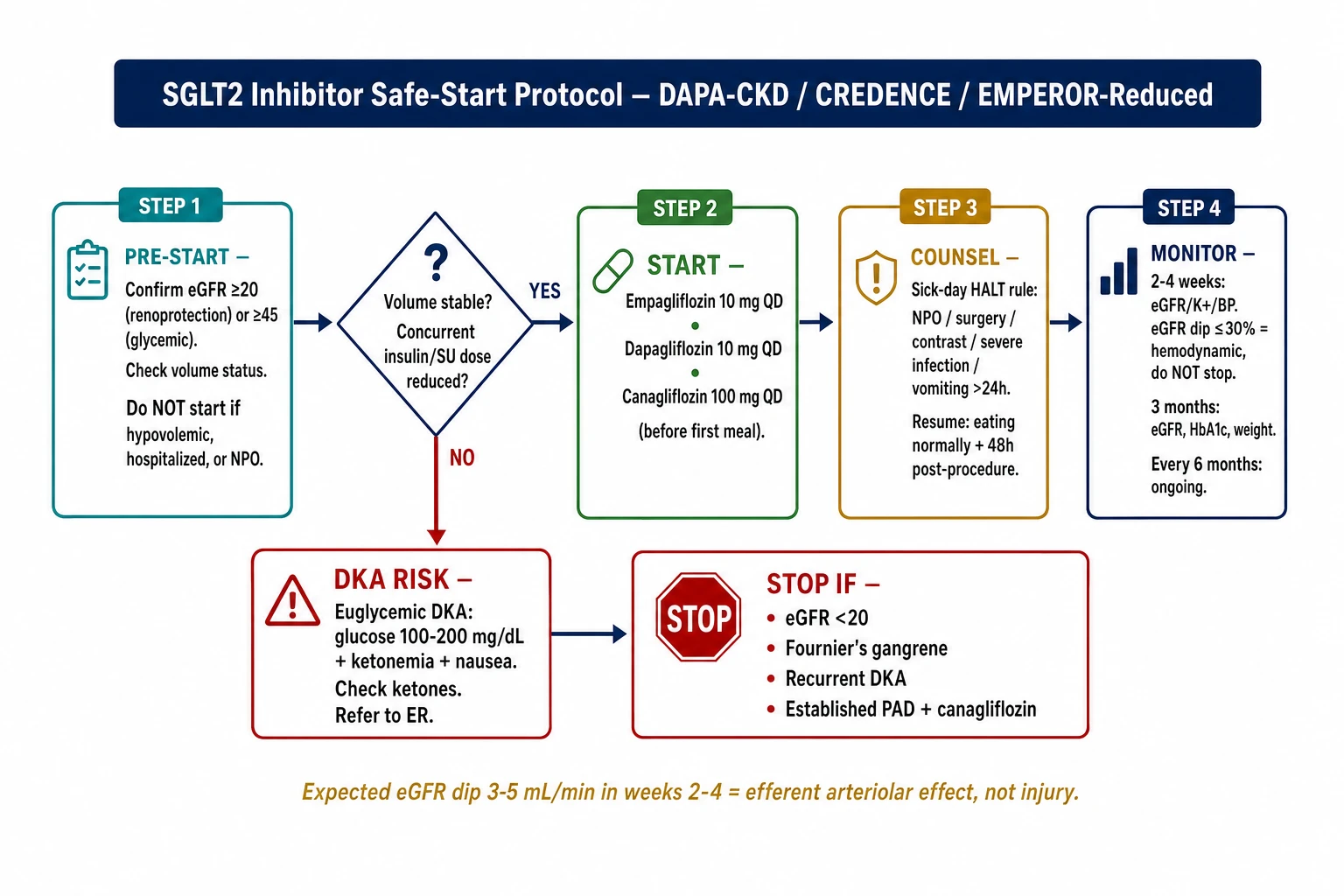 GuideThe CKD Prescriber's PlaybookClinician-focused operational guide: exactly how to start, titrate, and adjust SGLT2 inhibitors, ACEi/ARB, GLP-1 agonists, diuretics, phosphate binders, and ESAs in CKD and nephrology practice. KDIGO 2024 aligned.
- CalculatorMetformin Safety Checker in CKD (eGFR hold/continue)eGFR-based metformin hold, continue, or discontinue guidance in CKD per the 2023 ADA Standards of Care and the FDA label, with dose-capping advice, transient-hold triggers (contrast, acute illness, surgery), monitoring, and references.
- CalculatorSGLT2 Inhibitor Eligibility & Dose Check (CKD / HF / T2DM)Check SGLT2 inhibitor eligibility and starting dose for dapagliflozin and empagliflozin by eGFR and indication (CKD, heart failure, or type 2 diabetes), with dialysis and type 1 diabetes flags. With initiation thresholds, safety counseling,
- CalculatorCreatinine Clearance — Cockcroft-Gault (drug dosing)Estimate creatinine clearance for drug dosing with the Cockcroft-Gault equation using age, sex, weight, and serum creatinine, with ideal/adjusted body-weight options. With indications, formula, evidence, and references.
References
- U.S. Food and Drug Administration. XIGDUO XR · AstraZeneca Pharmaceuticals LP [US FDA-approved label, version 40, August 11, 2026]. Via DailyMed/openFDA. https://dailymed.nlm.nih.gov/dailymed/drugInfo.cfm?setid=ac8a0f7b-9f69-4495-abbc-3a47cd75a859
- Food and Drug Administration Philippines. Verification portal (product registrations). https://verification.fda.gov.ph
- AstraZeneca Pharmaceuticals LP. (2026). XIGDUO XR (dapagliflozin and metformin HCl extended-release) tablets [Prescribing information; US FDA-approved label, NDA205649, set ID ac8a0f7b-9f69-4495-abbc-3a47cd75a859, version effective August 11, 2026]. DailyMed, U.S. National Library of Medicine. https://dailymed.nlm.nih.gov/dailymed/drugInfo.cfm?setid=ac8a0f7b-9f69-4495-abbc-3a47cd75a859
- de Boer, I. H., Khunti, K., Sadusky, T., Tuttle, K. R., Neumiller, J. J., Rhee, C. M., Rosas, S. E., Rossing, P., & Bakris, G. (2022). Diabetes management in chronic kidney disease: A consensus report by the American Diabetes Association (ADA) and Kidney Disease: Improving Global Outcomes (KDIGO). Diabetes Care, 45(12), 3075–3090. https://doi.org/10.2337/dci22-0027
renalcarematters.com content: Kidney and pediatric dosing: reviewed by William Gregory M. Rivero, MD, FPCP, DPSN on November 17, 2026. Dosing, interaction, adverse-effect and monitoring summary: reviewed by William Gregory M. Rivero, MD, FPCP, DPSN on November 17, 2026.
Last updated: .