Use: Labeled indications
- Prophylaxis and treatment of gout flares in adults
- Familial Mediterranean fever (FMF) in adults and children 4 years or older
Full indications and usage US FDA label
1 INDICATIONS AND USAGE COLCRYS (colchicine, USP) tablets are an alkaloid indicated for:
- Prophylaxis and treatment of gout flares in adults (1.1).
- Familial Mediterranean fever (FMF) in adults and children 4 years or older (1.2). COLCRYS is not an analgesic medication and should not be used to treat pain from other causes. 1.1 Gout Flares COLCRYS (colchicine, USP) tablets are indicated for prophylaxis and the treatment of acute gout flares.
- Prophylaxis of Gout Flares: COLCRYS is indicated for prophylaxis of gout flares.
- Treatment of Gout Flares: COLCRYS tablets are indicated for treatment of acute gout flares when taken at the first sign of a flare. 1.2 Familial Mediterranean Fever (FMF) COLCRYS (colchicine, USP) tablets are indicated in adults and children 4 years or older for treatment of familial Mediterranean fever (FMF).
Contraindications
- Kidney or hepatic impairment together with a P-gp or strong CYP3A4 inhibitor
Contraindications (US label) US FDA label
4 CONTRAINDICATIONS Patients with renal or hepatic impairment should not be given COLCRYS in conjunction with P-gp or strong CYP3A4 inhibitors (this includes all protease inhibitors except fosamprenavir). In these patients, life-threatening and fatal colchicine toxicity has been reported with colchicine taken in therapeutic doses. Patients with renal or hepatic impairment should not be given COLCRYS in conjunction with P-gp or strong CYP3A4 inhibitors (5.3). In these patients, life-threatening and fatal colchicine toxicity has been reported with colchicine taken in therapeutic doses (7).
Dosing: Adult
- Gout flare prophylaxis: 0.6 mg once or twice daily; maximum 1.2 mg/day
- Gout flare treatment: 1.2 mg at the first sign of a flare, then 0.6 mg one hour later
- Familial Mediterranean fever (adults): 1.2 to 2.4 mg/day in 1 or 2 doses
The long-term use of colchicine is established for FMF and the prophylaxis of gout flares, but the safety and efficacy of repeat treatment for gout flares has not been evaluated. The dosing regimens for COLCRYS are different for each indication and must be individualized. The recommended dosage of COLCRYS depends on the patient's age, renal function, hepatic function and use of coadministered drugs [see Dose Modification for Coadministration of Interacting Drugs (2.4)].
COLCRYS tablets are administered orally without regard to meals. COLCRYS is not an analgesic medication and should not be used to treat pain from other causes.
- Gout Flares: Prophylaxis of Gout Flares: 0.6 mg once or twice daily in adults and adolescents older than 16 years of age (2.1). Maximum dose 1.2 mg/day. Treatment of Gout Flares: 1.2 mg (two tablets) at the first sign of a gout flare followed by 0.6 mg (one tablet) one hour later (2.1).
- FMF: Adults and children older than 12 years 1.2 – 2.4 mg; children 6 to 12 years 0.9 – 1.8 mg; children 4 to 6 years 0.3 – 1.8 mg (2.2, 2.3). o Give total daily dose in one or two divided doses (2.2). o Increase or decrease the dose as indicated and as tolerated in increments of 0.3 mg/day, not to exceed the maximum recommended daily dose (2.2). Colchicine tablets are administered orally without regard to meals. See full prescribing information for dose …
2.1 Gout Flares Prophylaxis of Gout
2.1 Gout Flares Prophylaxis of Gout Flares The recommended dosage of COLCRYS for prophylaxis of gout flares for adults and adolescents older than 16 years of age is 0.6 mg once or twice daily. The maximum recommended dose for prophylaxis of gout flares is 1.2 mg/day. An increase in gout flares may occur after initiation of uric acid-lowering therapy, including pegloticase, febuxostat and allopurinol, due to changing serum uric acid levels resulting in mobilization of urate from tissue deposits.
COLCRYS is recommended upon initiation of gout flare prophylaxis with uric acid-lowering therapy. Prophylactic therapy may be beneficial for at least the first six months of uric acid-lowering therapy. Treatment of Gout Flares The recommended dose of COLCRYS for treatment of a gout flare is 1.2 mg (two tablets) at the first sign of the flare followed by 0.6 mg (one tablet) one hour later.
Higher doses have not been found to be more effective. The maximum recommended dose for treatment of gout flares is 1.8 mg over a one hour period. COLCRYS may be administered for treatment of a gout flare during prophylaxis at doses not to exceed 1.2 mg (two tablets) at the first sign of the flare followed by 0.6 mg (one tablet) one hour later.
Wait 12 hours and then resume the prophylactic dose.
2.2 FMF
2.2 FMF The recommended dosage of COLCRYS for FMF in adults is 1.2 mg to 2.4 mg daily. COLCRYS should be increased as needed to control disease and as tolerated in increments of 0.3 mg/day to a maximum recommended daily dose. If intolerable side effects develop, the dose should be decreased in increments of 0.3 mg/day. The total daily COLCRYS dose may be administered in one to two divided doses.
2.3 Recommended Pediatric Dosage Prophylaxis and Treatment of Gout Flares
2.3 Recommended Pediatric Dosage Prophylaxis and Treatment of Gout Flares COLCRYS is not recommended for pediatric use in prophylaxis or treatment of gout flares. FMF The recommended dosage of COLCRYS for FMF in pediatric patients 4 years of age and older is based on age. The following daily doses may be given as a single or divided dose twice daily:
- Children 4 to 6 years: 0.3 mg to 1.8 mg daily
- Children 6 to 12 years: 0.9 mg to 1.8 mg daily
- Adolescents older than 12 years: 1.2 mg to 2.4 mg daily
2.4 Dose Modification for Coadministration of Interacting Drugs Concomitant Therapy
2.4 Dose Modification for Coadministration of Interacting Drugs Concomitant Therapy Coadministration of COLCRYS with drugs known to inhibit CYP3A4 and/or P-glycoprotein (P-gp) increases the risk of colchicine-induced toxic effects (Table 1). If patients are taking or have recently completed treatment with drugs listed in Table 1 within the prior 14 days, the dose adjustments are as shown in the table below [see Drug Interactions (7)].
Table 1 COLCRYS Dose Adjustment for Coadministration with Interacting Drugs if no Alternative Available For magnitude of effect on colchicine plasma concentrations [see Pharmacokinetics (12.3)] Strong CYP3A4 Inhibitors 2 Drug Noted or Anticipated Outcome Gout Flares FMF Prophylaxis of Gout Flares Treatment of Gout Flares Original Intended Dosage Adjusted Dose Original Intended Dosage Adjusted Dose Original Intended Dosage Adjusted Dose Atazanavir Clarithromycin Darunavir/ Ritonavir When used in combination with Ritonavir, see dosing recommendations for strong CYP3A4 inhibitors [see Contraindications (4)] Indinavir Itraconazole Ketoconazole Lopinavir/ Ritonavir Nefazodone Nelfinavir Ritonavir Saquinavir Telithromycin Tipranavir/ Ritonavir Significant increase in colchicine plasma levels; fatal colchicine toxicity has been reported with clarithromycin, a strong CYP3A4 inhibitor. Similarly, significant increase in colchicine plasma levels is anticipated with other strong CYP3A4 inhibitors. 0.6 mg twice a day 0.6 mg once a day 0.3 mg once a day 0.3 mg once every other day 1.2 mg (2 tablets) followed by 0.6 mg (1 tablet) 1 hour later.
Dose to be repeated no earlier than 3 days. 0.6 mg (1 tablet) × 1 dose, followed by 0.3 mg (1/2 tablet) 1 hour later. Dose to be repeated no earlier than 3 days. Maximum daily dose of 1.2 – 2.4 mg Maximum daily dose of 0.6 mg (may be given as 0.3 mg twice a day) Moderate CYP3A4 Inhibitors Drug Noted or Anticipated Outcome Gout Flares FMF Prophylaxis of Gout Flares Treatment of Gout Flares Original Intended Dosage Adjusted Dose Original Intended Dosage Adjusted Dose Original Intended Dosage Adjusted Dose Amprenavir Aprepitant Diltiazem Erythromycin Fluconazole Fosamprenavir (pro-drug of Amprenavir) Grapefruit juice Verapamil Significant increase in colchicine plasma concentration is anticipated.
Neuromuscular toxicity has been reported with diltiazem and verapamil interactions. 0.6 mg twice a day 0.6 mg once a day 0.3 mg twice a day or 0.6 mg once a day 0.3 mg once a day 1.2 mg (2 tablets) followed by 0.6 mg (1 tablet) 1 hour later. Dose to be repeated no earlier than 3 days. 1.2 mg (2 tablets) × 1 dose. Dose to be repeated no earlier than 3 days.
Maximum daily dose of 1.2 – 2.4 mg. Maximum daily dose of 1.2 mg (may be given as 0.6 mg twice a day) P-gp Inhibitors Patients with renal or hepatic impairment should not be given COLCRYS in conjunction with strong CYP3A4 or P-gp inhibitors [see Contraindications (4)] Drug Noted or Anticipated Outcome Gout Flares FMF Prophylaxis of Gout Flares Treatment of Gout Flares Original Intended Dosage Adjusted Dose Original Intended Dosage Adjusted Dose Original Intended Dosage Adjusted Dose Cyclosporine Ranolazine Significant increase in colchicine plasma levels; fatal colchicine toxicity has been reported with cyclosporine, a P-gp inhibitor.
Similarly, significant increase in colchicine plasma levels is anticipated with other P-gp inhibitors. 0.6 mg twice a day 0.6 mg once a day 0.3 mg once a day 0.3 mg once every other day 1.2 mg (2 tablets) followed by 0.6 mg (1 tablet) 1 hour later. Dose to be repeated no earlier than 3 days. 0.6 mg (1 tablet) × 1 dose. Dose to be repeated no earlier than 3 days.
Maximum daily dose of 1.2 – 2.4 mg Maximum daily dose of 0.6 mg (may be given as 0.3 mg twice a day) Table 2 COLCRYS Dose Adjustment for Coadministration with Protease Inhibitors Protease Inhibitor Clinical Comment w/Colchicine - Prophylaxis of Gout Flares w/Colchicine - Treatment of Gout Flares w/Colchicine - Treatment of FMF Atazanavir sulfate (Reyataz) Patients with renal or hepatic impairment should not be given colchicine with Reyataz. Original dose Adjusted dose 0.6 mg (1 tablet) × 1 dose, followed by 0.3 mg (1/2 tablet) 1 hour later.
Dose to be repeated no earlier than 3 days. Maximum daily dose of 0.6 mg (may be given as 0.3 mg twice a day) 0.6 mg twice a day 0.6 mg once a day 0.3 mg once a day 0.3 mg once every other day Darunavir (Prezista) Patients with renal or hepatic impairment should not be given colchicine with Prezista/ritonavir. Original dose Adjusted dose 0.6 mg (1 tablet) × 1 dose, followed by 0.3 mg (1/2 tablet) 1 hour later.
Dose to be repeated no earlier than 3 days. Maximum daily dose of 0.6 mg (may be given as 0.3 mg twice a day) 0.6 mg twice a day 0.6 mg once a day 0.3 mg once a day 0.3 mg once every other day Fosamprenavir (Lexiva) with Ritonavir Patients with renal or hepatic impairment should not be given colchicine with Lexiva/ritonavir.
Original dose Adjusted dose 0.6 mg (1 tablet) × 1 dose, followed by 0.3 mg (1/2 tablet) 1 hour later. Dose to be repeated no earlier than 3 days. Maximum daily dose of 0.6 mg (may be given as 0.3 mg twice a day) 0.6 mg twice a day 0.6 mg once a day 0.3 mg once a day 0.3 mg once every other day Fosamprenavir (Lexiva) Patients with renal or hepatic impairment should not be given colchicine with Lexiva/ritonavir.
Original dose Adjusted dose 1.2 mg (2 tablets) × 1 dose. Dose to be repeated no earlier than 3 days. Maximum daily dose of 1.2 mg (may be given as 0.6 mg twice a day) 0.6 mg twice a day 0.6 mg once a day 0.3 mg twice a day or 0.6 mg once a day 0.3 mg once a day Indinavir (Crixivan) Patients with renal or hepatic impairment should not be given colchicine with Crixivan.
Original dose Adjusted dose 0.6 mg (1 tablet) × 1 dose, followed by 0.3 mg (1/2 tablet) 1 hour later. Dose to be repeated no earlier than 3 days. Maximum daily dose of 0.6 mg (may be given as 0.3 mg twice a day) 0.6 mg twice a day 0.6 mg once a day 0.3 mg once a day 0.3 mg once every other day Lopinavir/Ritonavir (Kaletra) Patients with renal or hepatic impairment should not be given colchicine with Kaletra.
Original dose Adjusted dose 0.6 mg (1 tablet) × 1 dose, followed by 0.3 mg (1/2 tablet) 1 hour later. Dose to be repeated no earlier than 3 days. Maximum daily dose of 0.6 mg (may be given as 0.3 mg twice a day) 0.6 mg twice a day 0.6 mg once a day 0.3 mg once a day 0.3 mg once every other day Nelfinavir mesylate (Viracept) Patients with renal or hepatic impairment should not be given colchicine with Viracept.
Original dose Adjusted dose 0.6 mg (1 tablet) × 1 dose, followed by 0.3 mg (1/2 tablet) 1 hour later. Dose to be repeated no earlier than 3 days. Maximum daily dose of 0.6 mg (may be given as 0.3 mg twice a day) 0.6 mg twice a day 0.6 mg once a day 0.3 mg once a day 0.3 mg once every other day Ritonavir (Norvir) Patients with renal or hepatic impairment should not be given colchicine with Norvir.
Original dose Adjusted dose 0.6 mg (1 tablet) × 1 dose, followed by 0.3 mg (1/2 tablet) 1 hour later. Dose to be repeated no earlier than 3 days. Maximum daily dose of 0.6 mg (may be given as 0.3 mg twice a day) 0.6 mg twice a day 0.6 mg once a day 0.3 mg once a day 0.3 mg once every other day Saquinavir mesylate (Invirase) Patients with renal or hepatic impairment should not be given colchicine with Invirase/ritonavir.
Original dose Adjusted dose 0.6 mg (1 tablet) × 1 dose, followed by 0.3 mg (1/2 tablet) 1 hour later. Dose to be repeated no earlier than 3 days. Maximum daily dose of 0.6 mg (may be given as 0.3 mg twice a day) 0.6 mg twice a day 0.6 mg once a day 0.3 mg once a day 0.3 mg once every other day Tipranavir (Aptivus) Patients with renal or hepatic impairment should not be given colchicine with Aptivus/ritonavir.
Original dose Adjusted dose 0.6 mg (1 tablet) × 1 dose, followed by 0.3 mg (1/2 tablet) 1 hour later. Dose to be repeated no earlier than 3 days. Maximum daily dose of 0.6 mg (may be given as 0.3 mg twice a day) 0.6 mg twice a day 0.6 mg once a day 0.3 mg once a day 0.3 mg once every other day Treatment of gout flares with COLCRYS is not recommended in patients receiving prophylactic dose of COLCRYS and CYP3A4 inhibitors.
2.5 Dose Modification in Renal Impairment
2.5 Dose Modification in Renal Impairment Colchicine dosing must be individualized according to the patient's renal function [see Renal Impairment (8.6)]. Cl cr in mL/minute may be estimated from serum creatinine (mg/dL) determination using the following formula: [140-age (years) × weight (kg)] Cl cr = --------------------------------------- × 0.85 for female patients 72 × serum creatinine (mg/dL) Gout Flares Prophylaxis of Gout Flares For prophylaxis of gout flares in patients with mild (estimated creatinine clearance [Cl cr] 50 to 80 mL/min) to moderate (Cl cr 30 to 50 mL/min) renal function impairment, adjustment of the recommended dose is not required, but patients should be monitored closely for adverse effects of colchicine.
However, in patients with severe impairment, the starting dose should be 0.3 mg/day and any increase in dose should be done with close monitoring. For the prophylaxis of gout flares in patients undergoing dialysis, the starting doses should be 0.3 mg given twice a week with close monitoring [see Clinical Pharmacology (12.3) and Renal Impairment (8.6)].
Treatment of Gout Flares For treatment of gout flares in patients with mild (Cl cr 50 to 80 mL/min) to moderate (Cl cr 30 to 50 mL/min) renal function impairment, adjustment of the recommended dose is not required, but patients should be monitored closely for adverse effects of colchicine. However, in patients with severe impairment, while the dose does not need to be adjusted for the treatment of gout flares, a treatment course should be repeated no more than once every two weeks.
For patients with gout flares requiring repeated courses, consideration should be given to alternate therapy. For patients undergoing dialysis, the total recommended dose for the treatment of gout flares should be reduced to a single dose of 0.6 mg (one tablet). For these patients, the treatment course should not be repeated more than once every two weeks [see Clinical Pharmacology (12.3) and Renal Impairment (8.6)].
Treatment of gout flares with COLCRYS is not recommended in patients with renal impairment who are receiving COLCRYS for prophylaxis. FMF Caution should be taken in dosing patients with moderate and severe renal impairment and in patients undergoing dialysis. For these patients, the dosage should be reduced [see Clinical Pharmacology (12.3)].
Patients with mild (Cl cr 50 to 80 mL/min) and moderate (Cl cr 30 to 50 mL/min) renal impairment should be monitored closely for adverse effects of COLCRYS. Dose reduction may be necessary. For patients with severe renal failure (Cl cr less than 30 mL/min), start with 0.3 mg/day; any increase in dose should be done with adequate monitoring of the patient for adverse effects of colchicine [see Renal Impairment (8.6)].
For patients undergoing dialysis, the total recommended starting dose should be 0.3 mg (half tablet) per day. Dosing can be increased with close monitoring. Any increase in dose should be done with adequate monitoring of the patient for adverse effects of colchicine [see Clinical Pharmacology (12.3) and Renal Impairment (8.6)].
2.6 Dose Modification in Hepatic Impairment Gout Flares Prophylaxis of Gout
2.6 Dose Modification in Hepatic Impairment Gout Flares Prophylaxis of Gout Flares For prophylaxis of gout flares in patients with mild to moderate hepatic function impairment, adjustment of the recommended dose is not required, but patients should be monitored closely for adverse effects of colchicine. Dose reduction should be considered for the prophylaxis of gout flares in patients with severe hepatic impairment [see Hepatic Impairment (8.7)].
Treatment of Gout Flares For treatment of gout flares in patients with mild to moderate hepatic function impairment, adjustment of the recommended dose is not required, but patients should be monitored closely for adverse effects of colchicine. However, for the treatment of gout flares in patients with severe impairment, while the dose does not need to be adjusted, a treatment course should be repeated no more than once every two weeks.
For these patients, requiring repeated courses for the treatment of gout flares, consideration should be given to alternate therapy [see Hepatic Impairment (8.7)]. Treatment of gout flares with COLCRYS is not recommended in patients with hepatic impairment who are receiving COLCRYS for prophylaxis. FMF Patients with mild to moderate hepatic impairment should be monitored closely for adverse effects of colchicine.
Dose reduction should be considered in patients with severe hepatic impairment [see Hepatic Impairment (8.7)].
Dosing: Altered kidney function
Colchicine clearance falls in kidney impairment and drops by about 75% in end-stage kidney disease on dialysis; it is not removed by hemodialysis. The US label lowers starting doses below creatinine clearance (CrCl) 30 mL/min and in dialysis, and limits repeat flare courses.
Kidney function measure: Label uses creatinine clearance (CrCl, mL/min; Cockcroft–Gault). Doses translated from the US 0.6 mg tablet to Philippine 0.5 mg tablets by rounding down.
Show full dosing details
- CrCl ≥60 mL/min
- Usual dosing; at CrCl 50 to 80 no adjustment but monitor for adverse effects (label).
- CrCl 30–59 mL/min
- Gout prophylaxis and flare treatment: no adjustment, monitor closely (label: CrCl 30 to 50). Familial Mediterranean fever (FMF): dose reduction may be needed.
- CrCl 15–29 mL/min
- Gout prophylaxis: start 0.3 mg/day, increase with close monitoring. Flare treatment: no dose change, but repeat a course no more than once every 2 weeks. FMF: start 0.3 mg/day (label). Philippine tablets are 0.5 mg or 1 mg (the US label doses use 0.6 mg tablets): 0.3 mg corresponds to half a 0.5 mg tablet (0.25 mg); do not round up.
- CrCl <15 mL/min (not on dialysis)
- As for CrCl <30 (label 'severe' impairment): prophylaxis 0.3 mg/day start; flare courses no more than every 2 weeks. Philippine tablets are 0.5 mg or 1 mg (the US label doses use 0.6 mg tablets): 0.3 mg corresponds to half a 0.5 mg tablet (0.25 mg); do not round up.
- Hemodialysis (intermittent)
- Gout prophylaxis: start 0.3 mg twice a week (US label; with Philippine 0.5 mg tablets, half a tablet = 0.25 mg twice a week; do not round up), with close monitoring. Flare treatment: single 0.6 mg dose in the US label (one 0.5 mg tablet with Philippine products); do not repeat more than once every 2 weeks. Not removed by hemodialysis (label).
- Peritoneal dialysis
- Label 'dialysis' wording does not specify modality; same starting doses with close monitoring. Specialist input.
- CRRT
- No data in label. Insufficient data: specialist input.
- Dialyzable? No: not removed by hemodialysis (label).
- Monitoring Myotoxicity, neuromyopathy, blood counts, GI toxicity. Avoid flare treatment in kidney impairment if already on prophylaxis. Check CYP3A4/P-glycoprotein inhibitor interactions, including moderate inhibitors (verapamil, diltiazem, fluconazole) (label).
Children (kidney dosing)
Show full dosing details
- eGFR ≥60
- Normal kidney function: usual pediatric dosing (familial Mediterranean fever, 4 years and older; label).
- eGFR 30–59
- No pediatric kidney-dosing data in the US label; specialist (pediatric nephrology) input.
- eGFR 15–29
- No pediatric kidney-dosing data in the US label; specialist (pediatric nephrology) input.
- eGFR <15 (not on dialysis)
- No pediatric kidney-dosing data in the US label; specialist (pediatric nephrology) input.
- Hemodialysis (intermittent)
- No pediatric data; specialist input.
- Peritoneal dialysis
- No pediatric data.
- CRRT
- No pediatric data.
Pediatric eGFR: bedside Schwartz equation, 0.413 × height (cm) / serum creatinine (mg/dL). Weight-based doses should not exceed the adult maximum.
renalcarematters.com guidance, reviewed by William Gregory M. Rivero, MD, FPCP, DPSN on November 17, 2026. Sources are listed under References. Use with the product's package insert and the patient's current kidney function.
US label text: Renal impairment US FDA label
2.5 Dose Modification in Renal Impairment Colchicine dosing must be individualized according to the patient's renal function [see Renal Impairment (8.6)]. Cl cr in mL/minute may be estimated from serum creatinine (mg/dL) determination using the following formula: [140-age (years) × weight (kg)] Cl cr = --------------------------------------- × 0.85 for female patients 72 × serum creatinine (mg/dL) Gout Flares Prophylaxis of Gout Flares For prophylaxis of gout flares in patients with mild (estimated creatinine clearance [Cl cr] 50 to 80 mL/min) to moderate (Cl cr 30 to 50 mL/min) renal function impairment, adjustment of the recommended dose is not required, but patients should be monitored closely for adverse effects of colchicine.
However, in patients with severe impairment, the starting dose should be 0.3 mg/day and any increase in dose should be done with close monitoring. For the prophylaxis of gout flares in patients undergoing dialysis, the starting doses should be 0.3 mg given twice a week with close monitoring [see Clinical Pharmacology (12.3) and Renal Impairment (8.6)].
Treatment of Gout Flares For treatment of gout flares in patients with mild (Cl cr 50 to 80 mL/min) to moderate (Cl cr 30 to 50 mL/min) renal function impairment, adjustment of the recommended dose is not required, but patients should be monitored closely for adverse effects of colchicine. However, in patients with severe impairment, while the dose does not need to be adjusted for the treatment of gout flares, a treatment course should be repeated no more than once every two weeks.
For patients with gout flares requiring repeated courses, consideration should be given to alternate therapy. For patients undergoing dialysis, the total recommended dose for the treatment of gout flares should be reduced to a single dose of 0.6 mg (one tablet). For these patients, the treatment course should not be repeated more than once every two weeks [see Clinical Pharmacology (12.3) and Renal Impairment (8.6)].
Treatment of gout flares with COLCRYS is not recommended in patients with renal impairment who are receiving COLCRYS for prophylaxis. FMF Caution should be taken in dosing patients with moderate and severe renal impairment and in patients undergoing dialysis. For these patients, the dosage should be reduced [see Clinical Pharmacology (12.3)].
Patients with mild (Cl cr 50 to 80 mL/min) and moderate (Cl cr 30 to 50 mL/min) renal impairment should be monitored closely for adverse effects of COLCRYS. Dose reduction may be necessary. For patients with severe renal failure (Cl cr less than 30 mL/min), start with 0.3 mg/day; any increase in dose should be done with adequate monitoring of the patient for adverse effects of colchicine [see Renal Impairment (8.6)].
For patients undergoing dialysis, the total recommended starting dose should be 0.3 mg (half tablet) per day. Dosing can be increased with close monitoring. Any increase in dose should be done with adequate monitoring of the patient for adverse effects of colchicine [see Clinical Pharmacology (12.3) and Renal Impairment (8.6)].
8.6 Renal Impairment Colchicine is significantly excreted in urine in healthy subjects. Clearance of colchicine is decreased in patients with impaired renal function. Total body clearance of colchicine was reduced by 75% in patients with end-stage renal disease undergoing dialysis. Prophylaxis of Gout Flares For prophylaxis of gout flares in patients with mild (estimated creatinine clearance Cl cr 50 to 80 mL/min) to moderate (Cl cr 30 to 50 mL/min) renal function impairment, adjustment of the recommended dose is not required, but patients should be monitored closely for adverse effects of colchicine.
However, in patients with severe impairment, the starting dose should be 0.3 mg per day and any increase in dose should be done with close monitoring. For the prophylaxis of gout flares in patients undergoing dialysis, the starting doses should be 0.3 mg given twice a week with close monitoring [see Dose Modification in Renal Impairment (2.5)].
Treatment of Gout Flares For treatment of gout flares in patients with mild (Cl cr 50 to 80 mL/min) to moderate (Cl cr 30 to 50 mL/min) renal function impairment, adjustment of the recommended dose is not required, but patients should be monitored closely for adverse effects of COLCRYS. However, in patients with severe impairment, while the dose does not need to be adjusted for the treatment of gout flares, a treatment course should be repeated no more than once every two weeks.
For patients with gout flares requiring repeated courses, consideration should be given to alternate therapy. For patients undergoing dialysis, the total recommended dose for the treatment of gout flares should be reduced to a single dose of 0.6 mg (one tablet). For these patients, the treatment course should not be repeated more than once every two weeks [see Dose Modification in Renal Impairment (2.5)].
FMF Although, pharmacokinetics of colchicine in patients with mild (Cl cr 50 to 80 mL/min) and moderate (Cl cr 30 to 50 mL/min) renal impairment is not known, these patients should be monitored closely for adverse effects of colchicine. Dose reduction may be necessary. In patients with severe renal failure (Cl cr less than 30 mL/min) and end-stage renal disease requiring dialysis, COLCRYS may be started at the dose of 0.3 mg/day.
Any increase in dose should be done with adequate monitoring of the patient for adverse effects of COLCRYS [see Pharmacokinetics (12.3) and Dose Modification in Renal Impairment (2.5)].
Renal Impairment: Pharmacokinetics of colchicine in patients with mild and moderate renal impairment is not known. A published report described the disposition of colchicine (1 mg) in young adult men and women with FMF who had normal renal function or end-stage renal disease requiring dialysis.
Dosing: Hepatic impairment
8.7 Hepatic Impairment The clearance of colchicine may be significantly reduced and plasma half-life prolonged in patients with chronic hepatic impairment compared to healthy subjects [see Pharmacokinetics (12.3)]. Prophylaxis of Gout Flares For prophylaxis of gout flares in patients with mild to moderate hepatic function impairment, adjustment of the recommended dose is not required, but patients should be monitored closely for adverse effects of colchicine.
Dose reduction should be considered for the prophylaxis of gout flares in patients with severe hepatic impairment [see Dose Modification in Hepatic Impairment (2.6)]. Treatment of Gout Flares For treatment of gout flares in patients with mild to moderate hepatic function impairment, adjustment of the recommended COLCRYS dose is not required, but patients should be monitored closely for adverse effects of COLCRYS.
However, for the treatment of gout flares in patients with severe impairment, while the dose does not need to be adjusted, the treatment course should be repeated no more than once every two weeks. For these patients, requiring repeated courses for the treatment of gout flares, consideration should be given to alternate therapy [see Dose Modification in Hepatic Impairment (2.6)].
FMF In patients with severe hepatic disease, dose reduction should be considered with careful monitoring [see Pharmacokinetics (12.3) and Dose Modification in Hepatic Impairment (2.6)].
2.6 Dose Modification in Hepatic Impairment Gout Flares Prophylaxis of Gout Flares For prophylaxis of gout flares in patients with mild to moderate hepatic function impairment, adjustment of the recommended dose is not required, but patients should be monitored closely for adverse effects of colchicine. Dose reduction should be considered for the prophylaxis of gout flares in patients with severe hepatic impairment [see Hepatic Impairment (8.7)].
Treatment of Gout Flares For treatment of gout flares in patients with mild to moderate hepatic function impairment, adjustment of the recommended dose is not required, but patients should be monitored closely for adverse effects of colchicine. However, for the treatment of gout flares in patients with severe impairment, while the dose does not need to be adjusted, a treatment course should be repeated no more than once every two weeks.
For these patients, requiring repeated courses for the treatment of gout flares, consideration should be given to alternate therapy [see Hepatic Impairment (8.7)]. Treatment of gout flares with COLCRYS is not recommended in patients with hepatic impairment who are receiving COLCRYS for prophylaxis. FMF Patients with mild to moderate hepatic impairment should be monitored closely for adverse effects of colchicine.
Dose reduction should be considered in patients with severe hepatic impairment [see Hepatic Impairment (8.7)].
US FDA labelDosing: Pediatric
- Approved ages
- FMF: 4 years and older. Gout: not established; not recommended in children (label).
- Usual dose
- FMF (label gives age-based fixed doses, not mg/kg): 4 to 6 years 0.3 to 1.8 mg/day; 6 to 12 years 0.9 to 1.8 mg/day; over 12 years 1.2 to 2.4 mg/day, once or in 2 divided doses.
- Maximum dose
- 2.4 mg/day (over 12 years, label).
- Neonates
- Neonates: not established.
Kidney dosing in children: see Dosing: Altered kidney function.
renalcarematters.com, reviewedPediatric use (US label) US FDA label
8.4 Pediatric Use The safety and efficacy of colchicine in children of all ages with FMF has been evaluated in uncontrolled studies. There does not appear to be an adverse effect on growth in children with FMF treated long-term with colchicine. Gout is rare in pediatric patients; safety and effectiveness of colchicine in pediatric patients has not been established.
Dosing: Older adult
Geriatric use (US label) US FDA label
8.5 Geriatric Use Clinical studies with colchicine for prophylaxis and treatment of gout flares and for treatment of FMF did not include sufficient numbers of patients aged 65 years and older to determine whether they respond differently from younger patients. In general, dose selection for an elderly patient with gout should be cautious, reflecting the greater frequency of decreased renal function, concomitant disease or other drug therapy [see Dose Modification for Coadministration of Interacting Drugs (2.4) and Pharmacokinetics (12.3)].
Administration
2.4 Dose Modification for Coadministration of Interacting Drugs Concomitant Therapy Coadministration of COLCRYS with drugs known to inhibit CYP3A4 and/or P-glycoprotein (P-gp) increases the risk of colchicine-induced toxic effects ( Table 1 ). If patients are taking or have recently completed treatment with drugs listed in Table 1 within the prior 14 days, the dose adjustments are as shown in the table below [ see Drug Interactions (7) ]. Table 1 COLCRYS Dose Adjustment for Coadministration with Interacting Drugs if no Alternative Available For magnitude of effect on colchicine plasma concentrations [ see Pharmacokinetics (12.3) ] Strong CYP3A4 Inhibitors 2 Drug Noted or Anticipated Outcome Gout Flares FMF Prophylaxis of Gout Flares Treatment of Gout Flares Original Intended Dosage Adjusted Dose Original Intended Dosage Adjusted Dose Original Intended Dosage Adjusted Dose Atazanavir Clarithromycin Darunavir/ Ritonavir When used in combination with Ritonavir, see dosing recommendations for strong CYP3A4 inhibitors [ see Contraindications (4) ] Indinavir Itraconazole Ketoconazole Lopinavir/ Ritonavir Nefazodone Nelfinavir Ritonavir Saquinavir Telithromycin Tipranavir/ Ritonavir Significant increase in colchicine plasma levels ; fatal colchicine toxicity has been reported with clarithromycin, a strong CYP3A4 inhibitor. Similarly, significant increase in colchicine plasma levels is anticipated with other strong CYP3A4 inhibitors. 0.6 mg twice a day 0.6 mg once a day 0.3 mg once a day 0.3 mg once every other day 1.2 mg (2 tablets) followed by 0.6 mg (1 tablet) 1 hour later. Dose to be repeated no earlier than 3 days. 0.6 mg (1 tablet) × 1 dose, followed by 0.3 mg (1/2 tablet) 1 hour later. Dose to be repeated no earlier than 3 days. Maximum daily dose of 1.2 – 2.4 mg Maximum daily dose of 0.6 mg (may be given as 0.3 mg twice a day) Moderate CYP3A4 Inhibitors Drug Noted or Anticipated Outcome Gout Flares FMF Prophylaxis of Gout Flares Treatment of Gout Flares Original Intended Dosage Adjusted Dose Original Intended Dosage Adjusted Dose Original Intended Dosage Adjusted Dose Amprenavir Aprepitant Diltiazem Erythromycin Fluconazole Fosamprenavir (pro-drug of Amprenavir) Grapefruit juice Verapamil Significant increase in colchicine plasma concentration is anticipated. Neuromuscular toxicity has been reported with diltiazem and verapamil interactions. 0.6 mg twice a day 0.6 mg once a day 0.3 mg twice a day or 0.6 mg once a day 0.3 mg once a day 1.2 mg (2 tablets) followed by 0.6 mg (1 tablet) 1 hour later. Dose to be repeated no earlier than 3 days. 1.2 mg (2 tablets) × 1 dose. Dose to be repeated no earlier than 3 days. Maximum daily dose of 1.2 – 2.4 mg. Maximum daily dose of 1.2 mg (may be given as 0.6 mg twice a day) P-gp Inhibitors Patients with renal or hepatic impairment should not be given COLCRYS in conjunction with strong CYP3A4 or P-gp inhibitors [ see Contraindications (4) ] Drug Noted or Anticipated Outcome Gout Flares FMF Prophylaxis of Gout Flares Treatment of Gout Flares Original Intended Dosage Adjusted Dose Original Intended Dosage Adjusted Dose Original Intended Dosage Adjusted Dose Cyclosporine Ranolazine Significant increase in colchicine plasma levels ; fatal colchicine toxicity has been reported with cyclosporine, a P-gp inhibitor. Similarly, significant increase in colchicine plasma levels is anticipated with other P-gp inhibitors. 0.6 mg twice a day 0.6 mg once a day 0.3 mg once a day 0.3 mg once every other day 1.2 mg (2 tablets) followed by 0.6 mg (1 tablet) 1 hour later. Dose to be repeated no earlier than 3 days. 0.6 mg (1 tablet) × 1 dose. Dose to be repeated no earlier than 3 days. Maximum daily dose of 1.2 – 2.4 mg Maximum daily dose of 0.6 mg (may be given as 0.3 mg twice a day) Table 2 COLCRYS Dose Adjustment for Coadministration with Protease Inhibitors Protease Inhibitor Clinical Comment w/Colchicine - Prophylaxis of Gout Flares w/Colchicine - Treatment of Gout Flares w/Colchicine - Treatment of FMF Atazanavir sulfate (Reyataz) Patients with renal or hepatic impairment should not be given colchicine with Reyataz. Original dose Adjusted dose 0.6 mg (1 tablet) × 1 dose, followed by 0.3 mg (1/2 tablet) 1 hour later. Dose to be repeated no earlier than 3 days. Maximum daily dose of 0.6 mg (may be given as 0.3 mg twice a day) 0.6 mg twice a day 0.6 mg once a day 0.3 mg once a day 0.3 mg once every other day Darunavir (Prezista) Patients with renal or hepatic impairment should not be given colchicine with Prezista/ritonavir. Original dose Adjusted dose 0.6 mg (1 tablet) × 1 dose, followed by 0.3 mg (1/2 tablet) 1 hour later. Dose to be repeated no earlier than 3 days. Maximum daily dose of 0.6 mg (may be given as 0.3 mg twice a day) 0.6 mg twice a day 0.6 mg once a day 0.3 mg once a day 0.3 mg once every other day Fosamprenavir (Lexiva) with Ritonavir Patients with renal or hepatic impairment should not be given colchicine with Lexiva/ritonavir. Original dose Adjusted dose 0.6 mg (1 tablet) × 1 dose, followed by 0.3 mg (1/2 tablet) 1 hour later. Dose to be repeated no earlier than 3 days. Maximum daily dose of 0.6 mg (may be given as 0.3 mg twice a day) 0.6 mg twice a day 0.6 mg once a day 0.3 mg once a day 0.3 mg once every other day Fosamprenavir (Lexiva) Patients with renal or hepatic impairment should not be given colchicine with Lexiva/ritonavir. Original dose Adjusted dose 1.2 mg (2 tablets) × 1 dose. Dose to be repeated no earlier than 3 days. Maximum daily dose of 1.2 mg (may be given as 0.6 mg twice a day) 0.6 mg twice a day 0.6 mg once a day 0.3 mg twice a day or 0.6 mg once a day 0.3 mg once a day Indinavir (Crixivan) Patients with renal or hepatic impairment should not be given colchicine with Crixivan. Original dose Adjusted dose 0.6 mg (1 tablet) × 1 dose, followed by 0.3 mg (1/2 tablet) 1 hour later. Dose to be repeated no earlier than 3 days. Maximum daily dose of 0.6 mg (may be given as 0.3 mg twice a day) 0.6 mg twice a day 0.6 mg once a day 0.3 mg once a day 0.3 mg once every other day Lopinavir/Ritonavir (Kaletra) Patients with renal or hepatic impairment should not be given colchicine with Kaletra. Original dose Adjusted dose 0.6 mg (1 tablet) × 1 dose, followed by 0.3 mg (1/2 tablet) 1 hour later. Dose to be repeated no earlier than 3 days. Maximum daily dose of 0.6 mg (may be given as 0.3 mg twice a day) 0.6 mg twice a day 0.6 mg once a day 0.3 mg once a day 0.3 mg once every other day Nelfinavir mesylate (Viracept) Patients with renal or hepatic impairment should not be given colchicine with Viracept. Original dose Adjusted dose 0.6 mg (1 tablet) × 1 dose, followed by 0.3 mg (1/2 tablet) 1 hour later. Dose to be repeated no earlier than 3 days. Maximum daily dose of 0.6 mg (may be given as 0.3 mg twice a day) 0.6 mg twice a day 0.6 mg once a day 0.3 mg once a day 0.3 mg once every other day Ritonavir (Norvir) Patients with renal or hepatic impairment should not be given colchicine with Norvir. Original dose Adjusted dose 0.6 mg (1 tablet) × 1 dose, followed by 0.3 mg (1/2 tablet) 1 hour later. Dose to be repeated no earlier than 3 days. Maximum daily dose of 0.6 mg (may be given as 0.3 mg twice a day) 0.6 mg twice a day 0.6 mg once a day 0.3 mg once a day 0.3 mg once every other day Saquinavir mesylate (Invirase) Patients with renal or hepatic impairment should not be given colchicine with Invirase/ritonavir. Original dose Adjusted dose 0.6 mg (1 tablet) × 1 dose, followed by 0.3 mg (1/2 tablet) 1 hour later. Dose to be repeated no earlier than 3 days. Maximum daily dose of 0.6 mg (may be given as 0.3 mg twice a day) 0.6 mg twice a day 0.6 mg once a day 0.3 mg once a day 0.3 mg once every other day Tipranavir (Aptivus) Patients with renal or hepatic impairment should not be given colchicine with Aptivus/ritonavir. Original dose Adjusted dose 0.6 mg (1 tablet) × 1 dose, followed by 0.3 mg (1/2 tablet) 1 hour later. Dose to be repeated no earlier than 3 days. Maximum daily dose of 0.6 mg (may be given as 0.3 mg twice a day) 0.6 mg twice a day 0.6 mg once a day 0.3 mg once a day 0.3 mg once every other day Treatment of gout flares with COLCRYS is not recommended in patients receiving prophylactic dose of COLCRYS and CYP3A4 inhibitors.
US FDA labelDosage forms
Philippines
- Tablet: 1 mg, 500 mcg, 500 mg
Registered products in the Philippines
36 products registered with the Food and Drug Administration (FDA) Philippines list Colchicine as the generic name. Registration status changes; confirm a product's current status on the FDA portal before relying on it.
All registered products36
| Package insert | |||||||
|---|---|---|---|---|---|---|---|
AcugoutColchicine | 500 mcg TabletAlu-Clear PVC Blister Pack x 10's (Box of 100's) | Rx | Flamingo Pharmaceuticals Ltd.India | Trumed PharmaceuticalsImporter: Hexagon Pharmaceuticals | DRP-10372-01 | Nov 26, 2027 | |
Atrosaph-IColchicine | 500 mcg TabletAlu/PVC Amber Blister Pack x 10's and 25's (Box of 25's & 100's) | Rx | Innova Captab Ltd.India | Nelpa Lifesciences, Inc. | DRP-18268 | Jun 9, 2031 | |
BeragoutColchicine | 500 mcg TabletAlu/PVC Blister Pack x 10’s (Box of 20's) | Rx | Inga Laboratories P. Ltd.India | Beracah Pharma Phils., Inc.Importer: Ambica International Corporation | DRP-2992-04 | Aug 2, 2029 | |
CociloneColchicine | 1 mg TabletAlu/Alu Blister Pack x 10’s (Box of 10’s) | Rx | Brawn Laboratories LimitedIndia | Ambica International Corporation | DRP-4927 | Nov 14, 2028 | |
Cocilone-0.5Colchicine | 500 mcg TabletAlu/Alu Blister Pack x 10's Box of 10's and 100's | Rx | Brawn Laboratories LimitedIndia | Virrod Inc.Importer: Ambica International Corporation | DRP-4385 | Apr 25, 2028 | |
ColchicareColchicine | 500 mcg TabletAlu/Alu Blister Pack x 10's (Box of 10's) | Rx | Brawn Laboratories LimitedIndia | Qualicare Pharma, Inc.Importer: Ambica International Corporation | DRP-4385-06 | Apr 25, 2028 | |
ColchimedColchicine | 500 mcg TabletHDPE Plastic Bottle with LDPE plastic cap x 100's | Rx | Lloyd Laboratories, Inc.Philippines | Trader: Westfield Pharmaceuticals, Inc. | DR-XY39822 | Jul 26, 2031 | |
ColchiredColchicine | 500 mcg TabletAlu/Clear PVC Blister Pack x 10's (Box of 20’s and 100's)); Alu/Clear PVC Blister Pack x 25's (Box of 100’s) | Rx | Sapphire Lifesciences Pvt. Ltd.India | 777 Red Pharma Inc.Importer: Nelpa Lifesciences, Inc. | DRP-7344-02 | Sep 14, 2027 | |
ColchizetColchicine | 500 mcg TabletAlu / Amber colored PVC Blister Pack x 10’s (Box of 20’s and 100's) | Rx | Sai Parenterals Ltd.India | Roymed PharmaceuticalImporter: Nelpa Lifesciences, Inc. | DRP-7344-03 | Mar 17, 2031 | |
ColcifarColchicine | 500 mcg TabletAlu/Alu Blister Pack of 10's (Box of 30's) | Rx | Magbro Healthcare Pvt. Ltd.India | Pharmakon Biotec Inc. | DRP-15452 | Jul 11, 2029 | |
CurelColchicine | 500 mcg TabletAlu/Alu blister Pack x 10's (Box of 100's) | Rx | Fredun Pharmaceuticals LimitedIndia | Amb Hk Enterprises Inc.Importer: AMB HK Enterprises Inc. | DRP-14500 | Sep 14, 2028 | |
CuselColchicine | 500 mcg TabletAlu/Alu Blister Pack X 10's (Box of 30's and 100's) | Rx | Jiangxi Xierkangtai Pharmaceuticals Co. Ltd.China | Philrx Pharma Inc. | DRP-18918 | Sep 30, 2031 | |
GOUCINEColchicine | 500 mcg TabletAlu/PVC Blister Pack x 10’s Box of 20’s And 100’s | Rx | Inga Laboratories P. Ltd.India | TGP PHARMA INC.Importer: Ambica International Corporation | DRP-2992-01 | Aug 2, 2029 | |
GoucitabColchicine | 500 mcg TabletAlu/Alu Blister Pack x 10's Box of 10's and 100's | Rx | Brawn Laboratories LimitedIndia | Diafarm Inc.Importer: Ambica International Corporation | DRP-4385-05 | Apr 25, 2028 | |
GoutabColchicine | 1 mg TabletAlu/Alu Blister Pack x 10's (Box of 10's) | Rx | Brawn Laboratories LimitedIndia | Ambica International Corporation | DRP-6698 | May 24, 2031 | |
GouterColchicine | 500 mcg TabletAlu/PVC Blister Pack x 10's (Box of 100's) | Rx | Unicure Remedies Pvt. Ltd.India | Bell-Kenz Pharma Inc.Importer: Ambica International Corporation | DRP-4673 | Sep 4, 2028 | |
GoutlessColchicine | 500 mcg TabletAlu/Alu Blister Pack x 10's Box of 10's | Rx | Brawn Laboratories LimitedIndia | Corbridge Group Phils., Inc.Importer: Ambica International Corporation | DRP-4385-01 | Apr 25, 2028 | |
GoutnilColchicine | 500 mcg TabletAlu/PVC Blister Pack x 10’s (Box of 20's) | Rx | Inga Laboratories P. LTD.India | Ambica International Corporation | DRP-2992 | Aug 2, 2029 | |
GoutreliefColchicine | 500 mcg TabletAlu/PVC Blister Pack x 10's (Box of 100's) | Rx | XL Laboratories Pvt. Ltd.India | Ambica International Corporation | DRP-4454 | Jun 6, 2028 | |
GoutsaphColchicine | 500 mcg TabletAlu/Clear PVC Blister Pack x 10's Box of 20's and 100's | Rx | SAPPHIRE LIFESCIENCES PVT. LTDIndia | NELPA LIFESCIENCES, INC. | DRP-7344 | Sep 14, 2027 | |
LesirheuColchicine | 500 mcg TabletAlu-Clear PVC Blister Pack x 10's Box of 100's | Rx | Flamingo Pharmaceuticals Ltd.India | Hexagon Pharmaceuticals | DRP-10372 | Nov 26, 2027 | |
NoneColchicine | 500 mcg TabletAmber glass bottle x 100's | Rx | Surepharm Services Ltd.United Kingdom | Philusa Corp.Trader: Halewood Chemical Ltd. | DR-X2619 | Jul 1, 2031 | |
NoneColchicine | 500 mcg TabletHDPE Plastic Bottle with LDPE Plastic Cap x 100's (Box of 1's) | Rx | Lloyd Laboratories, Inc.Philippines | Trader: Dyna Drug Corporation | DRP-11112 | Jul 26, 2031 | |
NoneColchicine | 500 mcg TabletAlu/PVC Blister Pack x 10’s (Box of 20's and 100's) | Rx | Inga Laboratories P. Ltd.India | Ritemed Phils., Inc.Importer: Ambica International Corporation | DRP-2992-05 | Aug 2, 2029 | |
NoneColchicine | 500 mcg TabletAlu/PVC Blister Pack x 10’s (Box of 100's) | Rx | Inga Laboratories P. Ltd.India | ROSE PHARMACY,INCORPORATEDImporter: Ambica International Corporation | DRP-2992-06 | Aug 2, 2029 | |
NoneColchicine | 500 mcg TabletAlu/Alu Blister Pack x 10's (Box of 10's) | Rx | Brawn Laboratories LimitedIndia | AGB Pharmaceutical Trading and Consultancy CorporationImporter: Ambica International Corporation | DRP-4385-02 | Apr 25, 2028 | |
NoneColchicine | 500 mcg TabletAlu/Alu Blister Pack x 10's (Box of 10's) | Rx | Brawn Laboratories LimitedIndia | Ambicare Pharmaceuticals Inc.Importer: Ambica International Corporation | DRP-4385-03 | Apr 25, 2028 | |
NoneColchicine | 500 mcg TabletAlu/Alu Blister Pack x 10's Box of 10's | Rx | Brawn Laboratories LimitedIndia | Ambitech Biopharmaceuticals Inc.Importer: Ambica International Corporation | DRP-4385-04 | Apr 25, 2028 | |
NoneColchicine | 500 mcg TabletAlu/Alu Blister Pack x 10's (Box of 100’s) | Rx | Brawn Laboratories LimitedIndia | Reta DrugImporter: Ambica International Corporation | DRP-4385-07 | Apr 25, 2028 | |
NoneColchicine | 500 mcg TabletAlu/PVC Blister Pack x 10's (Box of 100's) | Rx | XL Laboratories Pvt. Ltd.India | RiteMed Phils., Inc.Importer: Ambica International Corporation | DRP-4454-01 | Jun 6, 2028 | |
NoneColchicine | 500 mcg TabletAlu/Red PVC Blister Pack x 25's (Box of 100's) | Rx | Vonwelt Inc.Philippines | — | DRP-7805 | Sep 9, 2030 | |
PrimegoutColchicine | 500 mcg TabletAlu/PVC Blister Pack x 10's (Box of 100's) | Rx | Unicure Remedies Pvt. Ltd.India | Ambicare Pharmaceuticals Inc.Importer: Ambica International Corporation | DRP-4673-01 | Sep 4, 2028 | |
UnbrandedColchicine | 500 mcg TabletAlu/PVC Blister Pack x 10’s Box of 20’s and 100’s | Rx | Inga Laboratories P. Ltd.India | ACTIMED, INC.Importer: Ambica International Corporation | DRP-2992-02 | Aug 2, 2029 | |
UnbrandedColchicine | 500 mcg TabletAlu/Alu Blister Pack x 10's (Box of 10's) | Rx | Brawn Laboratories LimitedIndia | Ambica International Corporation | DRP-6478 | May 27, 2031 | |
(no brand name)Colchicine | 500 mcg Tablet30 mm White opaque round High Density Polyethylene (HDPE) bottle with 28 mm neck and 28 mm Polypropylene CR closure with white opaque outer cap, translucent inner cap and liner x 100's (Box of 100's) | Rx | Renata LimitedBangladesh | Firmlink Pharma Phils. Co. | DR-XY49385 | Sep 24, 2030 | |
(no brand name)Colchicine | 500 mg TabletAlu/Amber PVC Blister Pack x 20's (Box of 100's) | Rx | Diamond Laboratories Inc.Philippines | — | DRP-16790 | Jul 11, 2030 |
Source: FDA Philippines product registration database. "Valid until" is the registration validity date listed by the FDA; a past date may mean a renewal is pending. Package insert links point to files published by the FDA.
United States (label)
Dosage forms and strengths (US label) US FDA label
3 DOSAGE FORMS AND STRENGTHS 0.6 mg tablets — purple capsule-shaped, film-coated with “AR 374” debossed on one side and scored on the other side. • 0.6 mg tablets (3).
Warnings/Precautions
- Fatal overdoses have been reported with colchicine in adults and children. Keep COLCRYS out of the reach of children (5.1, 10).
- Blood dyscrasias: myelosuppression, leukopenia, granulocytopenia, thrombocytopenia and aplastic anemia have been reported (5.2).
- Monitor for toxicity and if present consider temporary interruption or discontinuation of colchicine (5.2, 5.3, 5.4, 6, 10).
- Drug interaction P-gp and/or CYP3A4 inhibitors: Coadministration of colchicine with P-gp and/or strong CYP3A4 inhibitors has resulted in life-threatening interactions and death (5.3, 7).
- Neuromuscular toxicity: Myotoxicity including rhabdomyolysis may occur, especially in combination with other drugs known to cause this effect. Consider temporary interruption or discontinuation of COLCRYS (5.4, 7).
5.1 Fatal Overdose
5.1 Fatal Overdose Fatal overdoses, both accidental and intentional, have been reported in adults and children who have ingested colchicine [see Overdosage (10)]. COLCRYS should be kept out of the reach of children.
5.2 Blood Dyscrasias
5.2 Blood Dyscrasias Myelosuppression, leukopenia, granulocytopenia, thrombocytopenia, pancytopenia and aplastic anemia have been reported with colchicine used in therapeutic doses.
5.3 Drug Interactions
5.3 Drug Interactions Colchicine is a P-gp and CYP3A4 substrate. Life-threatening and fatal drug interactions have been reported in patients treated with colchicine given with P-gp and strong CYP3A4 inhibitors. If treatment with a P-gp or strong CYP3A4 inhibitor is required in patients with normal renal and hepatic function, the patient's dose of colchicine may need to be reduced or interrupted [see Drug Interactions (7)].
Use of COLCRYS in conjunction with P-gp or strong CYP3A4 inhibitors (this includes all protease inhibitors except fosamprenavir) is contraindicated in patients with renal or hepatic impairment [see Contraindications (4)].
5.4 Neuromuscular Toxicity
5.4 Neuromuscular Toxicity Colchicine-induced neuromuscular toxicity and rhabdomyolysis have been reported with chronic treatment in therapeutic doses. Patients with renal dysfunction and elderly patients, even those with normal renal and hepatic function, are at increased risk. Concomitant use of atorvastatin, simvastatin, pravastatin, fluvastatin, lovastatin, gemfibrozil, fenofibrate, fenofibric acid or benzafibrate (themselves associated with myotoxicity) or cyclosporine with COLCRYS may potentiate the development of myopathy [see Drug Interactions (7)].
Once colchicine is stopped, the symptoms generally resolve within one week to several months.
Drug interactions
| Drug or class | Severity | Effect | What to do |
|---|---|---|---|
| Strong CYP3A4 inhibitors or P-gp inhibitors (e.g., clarithromycin, cyclosporine, protease inhibitors) | Avoid | Higher colchicine levels; life-threatening and fatal toxicity. | Contraindicated in kidney or hepatic impairment. Otherwise reduce the colchicine dose per label Table 1. |
| Moderate CYP3A4 inhibitors (diltiazem, verapamil, fluconazole, erythromycin, aprepitant, grapefruit juice) | Adjust or monitor | Higher colchicine levels; neuromuscular toxicity reported with diltiazem and verapamil. | Reduce dose per label Table 1 (e.g., prophylaxis 0.3 mg twice daily or 0.6 mg once daily; flare 1.2 mg once, not repeated within 3 days). In kidney impairment prefer avoiding the combination or use the lowest dose with close monitoring. |
| Statins (atorvastatin, simvastatin, others), fibrates, gemfibrozil, digoxin | Adjust or monitor | Myopathy and rhabdomyolysis, including a fatality. | Weigh benefit and risk; monitor for muscle pain, tenderness or weakness, especially early. |
Severity scale (renalcarematters.com): Avoid: do not combine; Adjust or monitor: change the dose or monitor closely; Minor: usually no action.
renalcarematters.com, reviewedDrug interactions (US label) US FDA label
7 DRUG INTERACTIONS COLCRYS (colchicine) is a substrate of the efflux transporter P-glycoprotein (P-gp). Of the cytochrome P450 enzymes tested, CYP3A4 was mainly involved in the metabolism of colchicine. If COLCRYS is administered with drugs that inhibit P-gp, most of which also inhibit CYP3A4, increased concentrations of colchicine are likely.
Fatal drug interactions have been reported. Physicians should ensure that patients are suitable candidates for treatment with COLCRYS and remain alert for signs and symptoms of toxicities related to increased colchicine exposure as a result of a drug interaction. Signs and symptoms of COLCRYS toxicity should be evaluated promptly and, if toxicity is suspected, COLCRYS should be discontinued immediately.
Table 4 provides recommendations as a result of other potentially significant drug interactions. Table 1 provides recommendations for strong and moderate CYP3A4 inhibitors and P-gp inhibitors. Table 4 Other Potentially Significant Drug Interactions Concomitant Drug Class or Food Noted or Anticipated Outcome Clinical Comment HMG-Co A Reductase Inhibitors: atorvastatin, fluvastatin, lovastatin, pravastatin, simvastatin Pharmacokinetic and/or pharmacodynamic interaction: the addition of one drug to a stable long-term regimen of the other has resulted in myopathy and rhabdomyolysis (including a fatality) P-gp substrate; rhabdomyolysis has been reported Weigh the potential benefits and risks and carefully monitor patients for any signs or symptoms of muscle pain, tenderness, or weakness, particularly during initial therapy; monitoring CPK (creatine phosphokinase) will not necessarily prevent the occurrence of severe myopathy.
Other Lipid-Lowering Drugs: fibrates, gemfibrozil Digitalis Glycosides: digoxin Coadministration of P-gp and/or CYP3A4 inhibitors (e.g.,clarithromycin or cyclosporine) have been demonstrated to alter the concentration of colchicine. The potential for drug-drug interactions must be considered prior to and during therapy.
See full prescribing information for a complete list of reported and potential interactions (2.4, 5.3, 7).
Metabolism and transporters (CYP, P-gp, OATP; US label) US FDA label
Colchicine crosses the placenta (plasma levels in the fetus are reported to be approximately 15% of the maternal concentration).
Colchicine also distributes into breast milk at concentrations similar to those found in the maternal serum [see Pregnancy (8.1) and Nursing Mothers (8.3) ] .
In vitro studies using human liver microsomes have shown that CYP3A4 is involved in the metabolism of colchicine to 2- and 3-DMC.
Colchicine is a substrate of P-gp.
Drug Interactions In Vitro Drug Interactions: In vitro studies in human liver microsomes have shown that colchicine is not an inhibitor or inducer of CYP1A2, CYP2A6, CYP2B6, CYP2C8, CYP2C9, CYP2C19, CYP2D6, CYP2E1 or CYP3A4 activity.
7 DRUG INTERACTIONS COLCRYS (colchicine) is a substrate of the efflux transporter P-glycoprotein (P-gp).
Of the cytochrome P450 enzymes tested, CYP3A4 was mainly involved in the metabolism of colchicine.
If COLCRYS is administered with drugs that inhibit P-gp, most of which also inhibit CYP3A4, increased concentrations of colchicine are likely.
Adverse reactions
Common
- Gout flare treatment: diarrhea (23%), pharyngolaryngeal pain (3%)
- Gout prophylaxis: diarrhea (most common)
- FMF: abdominal pain, diarrhea, nausea, vomiting (up to 20%)
Serious
- Fatal overdose (accidental or intentional)
- Blood dyscrasias (myelosuppression, leukopenia, thrombocytopenia, aplastic anemia)
- Fatal drug interactions with P-gp or CYP3A4 inhibitors
- Neuromuscular toxicity and rhabdomyolysis
Prophylaxis of Gout Flares: The most commonly reported adverse reaction in clinical trials for the prophylaxis of gout was diarrhea. Treatment of Gout Flares: The most common adverse reactions reported in the clinical trial for gout were diarrhea (23%) and pharyngolaryngeal pain (3%). FMF: Most common adverse reactions (up to 20%) are abdominal pain, diarrhea, nausea and vomiting.
These effects are usually mild, transient and reversible upon lowering the dose (6). To report SUSPECTED ADVERSE REACTIONS, contact Takeda Pharmaceuticals America, Inc. at 1-877-825-3327 or FDA at 1-800-FDA-1088 or www.fda.gov/medwatch. Prophylaxis of Gout Flares The most commonly reported adverse reaction in clinical trials of colchicine for the prophylaxis of gout was diarrhea.
Treatment of Gout Flares The most common adverse reactions reported in the clinical trial with COLCRYS for treatment of gout flares were diarrhea (23%) and pharyngolaryngeal pain (3%). FMF Gastrointestinal tract adverse effects are the most frequent side effects in patients initiating COLCRYS, usually presenting within 24 hours, and occurring in up to 20% of patients given therapeutic doses.
Typical symptoms include cramping, nausea, diarrhea, abdominal pain and vomiting. These events should be viewed as dose-limiting if severe, as they can herald the onset of more significant toxicity.
6.1 Clinical Trials Experience in Gout
6.1 Clinical Trials Experience in Gout Because clinical studies are conducted under widely varying and controlled conditions, adverse reaction rates observed in clinical studies of a drug cannot be directly compared to rates in the clinical studies of another drug and may not predict the rates observed in a broader patient population in clinical practice. In a randomized, double-blind, placebo-controlled trial in patients with a gout flare, gastrointestinal adverse reactions occurred in 26% of patients using the recommended dose (1.8 mg over one hour) of COLCRYS compared to 77% of patients taking a nonrecommended high dose (4.8 mg over six hours) of colchicine and 20% of patients taking placebo.
Diarrhea was the most commonly reported drug-related gastrointestinal adverse event. As shown in Table 3, diarrhea is associated with COLCRYS treatment. Diarrhea was more likely to occur in patients taking the high-dose regimen than the low-dose regimen. Severe diarrhea occurred in 19% and vomiting occurred in 17% of patients taking the nonrecommended high-dose colchicine regimen but did not occur in the recommended low-dose COLCRYS regimen.
Table 3 Number (%) of Patients with at Least One Drug-Related Treatment-Emergent Adverse Event with an Incidence of ≥ 2% of Patients in Any Treatment Group MedDRA System Organ Class MedDRA Preferred Term COLCRYS Dose Placebo (N=59) n (%) High (N=52) n (%) Low (N=74) n (%) Number of Patients with at Least One Drug-Related TEAE 40 (77) 27 (37) 16 (27) Gastrointestinal Disorders 40 (77) 19 (26) 12 (20) Diarrhea 40 (77) 17 (23) 8 (14) Nausea 9 (17) 3 (4) 3 (5) Vomiting 9 (17) 0 0 Abdominal Discomfort 0 0 2 (3) General Disorders and Administration Site Conditions 4 (8) 1 (1) 1 (2) Fatigue 2 (4) 1 (1) 1 (2) Metabolic and Nutrition Disorders 0 3 (4) 2 (3) Gout 0 3 (4) 1 (2) Nervous System Disorders 1 (2) 1 (1.4) 2 (3) Headache 1 (2) 1 (1) 2 (3) Respiratory Thoracic Mediastinal Disorders 1 (2) 2 (3) 0 Pharyngolaryngeal Pain 1 (2) 2 (3) 0
6.2 Postmarketing Experience
6.2 Postmarketing Experience Serious toxic manifestations associated with colchicine include myelosuppression, disseminated intravascular coagulation and injury to cells in the renal, hepatic, circulatory and central nervous systems. These most often occur with excessive accumulation or overdosage [see Overdosage (10)].
The following adverse reactions have been reported with colchicine. These have been generally reversible upon temporarily interrupting treatment or lowering the dose of colchicine. Neurological: sensory motor neuropathy Dermatological: alopecia, maculopapular rash, purpura, rash Digestive: abdominal cramping, abdominal pain, diarrhea, lactose intolerance, nausea, vomiting Hematological: leukopenia, granulocytopenia, thrombocytopenia, pancytopenia, aplastic anemia Hepatobiliary: elevated AST, elevated ALT Musculoskeletal: myopathy, elevated CPK, myotonia, muscle weakness, muscle pain, rhabdomyolysis Reproductive: azoospermia, oligospermia
Adverse reaction frequency tables (US label) US FDA label
| MedDRA System Organ ClassMedDRA Preferred Term | COLCRYS Dose | Placebo (N=59) n (%) | |
| High (N=52) n (%) | Low (N=74) n (%) | ||
| Number of Patients with at Least One Drug-Related TEAE | 40 (77) | 27 (37) | 16 (27) |
| Gastrointestinal Disorders | 40 (77) | 19 (26) | 12 (20) |
| Diarrhea | 40 (77) | 17 (23) | 8 (14) |
| Nausea | 9 (17) | 3 (4) | 3 (5) |
| Vomiting | 9 (17) | 0 | 0 |
| Abdominal Discomfort | 0 | 0 | 2 (3) |
| General Disorders and Administration Site Conditions | 4 (8) | 1 (1) | 1 (2) |
| Fatigue | 2 (4) | 1 (1) | 1 (2) |
| Metabolic and Nutrition Disorders | 0 | 3 (4) | 2 (3) |
| Gout | 0 | 3 (4) | 1 (2) |
| Nervous System Disorders | 1 (2) | 1 (1.4) | 2 (3) |
| Headache | 1 (2) | 1 (1) | 2 (3) |
| Respiratory Thoracic Mediastinal Disorders | 1 (2) | 2 (3) | 0 |
| Pharyngolaryngeal Pain | 1 (2) | 2 (3) | 0 |
Monitoring parameters
- Myotoxicity, neuromyopathy, blood counts, GI toxicity. Avoid flare treatment in kidney impairment if already on prophylaxis. Check CYP3A4/P-glycoprotein inhibitor interactions, including moderate inhibitors (verapamil, diltiazem, fluconazole) (label). Kidney
- Signs of toxicity (gastrointestinal upset, muscle weakness); stop promptly if suspected
- Blood counts in long-term use
- Kidney function and interacting drugs before each course
Pregnancy considerations
Pregnancy (US label) US FDA label
8.1 Pregnancy Pregnancy Category C. There are no adequate and well-controlled studies with colchicine in pregnant women. Colchicine crosses the human placenta. While not studied in the treatment of gout flares, data from a limited number of published studies found no evidence of an increased risk of miscarriage, stillbirth or teratogenic effects among pregnant women using colchicine to treat familial Mediterranean fever (FMF).
Although animal reproductive and developmental studies were not conducted with COLCRYS, published animal reproduction and development studies indicate that colchicine causes embryofetal toxicity, teratogenicity and altered postnatal development at exposures within or above the clinical therapeutic range. COLCRYS should be used during pregnancy only if the potential benefit justifies the potential risk to the fetus.
Breastfeeding considerations
Lactation (US label) US FDA label
8.3 Nursing Mothers Colchicine is excreted into human milk. Limited information suggests that exclusively breastfed infants receive less than 10 percent of the maternal weight-adjusted dose. While there are no published reports of adverse effects in breastfeeding infants of mothers taking colchicine, colchicine can affect gastrointestinal cell renewal and permeability. Caution should be exercised, and breastfeeding infants should be observed for adverse effects when COLCRYS is administered to a nursing woman.
Mechanism of action
12.1 Mechanism of Action The mechanism by which COLCRYS exerts its beneficial effect in patients with FMF has not been fully elucidated; however, evidence suggests that colchicine may interfere with the intracellular assembly of the inflammasome complex present in neutrophils and monocytes that mediates activation of interleukin-1β. Additionally, colchicine disrupts cytoskeletal functions through inhibition of β-tubulin polymerization into microtubules and consequently prevents the activation, degranulation and migration of neutrophils thought to mediate some gout symptoms.
US FDA labelPharmacokinetics
Key PK parameters
| Bioavailability | About 45% |
|---|---|
| Time to peak | 1 to 2 hours (range 0.5 to 3) |
| Half-life | 26.6 to 31.2 hours with repeated dosing (healthy young adults) |
| Half-life in kidney failure (ESKD) kidney | 18.8 hours vs 4.4 hours in FMF patients with normal kidney function (single 1 mg dose; clearance 75% lower; label) |
| Volume of distribution | About 5 to 8 L/kg |
| Protein binding | 39% ± 5% (albumin) |
| Metabolism (CYP, transporters) | CYP3A4 demethylation to 2- and 3-demethylcolchicine (under 5% of parent); P-gp substrate |
| Renal excretion kidney | 40% to 65% unchanged in urine (1 mg dose) |
| Dialyzability kidney | No: not removed by hemodialysis (label). |
Elimination/Excretion In healthy volunteers (n=12), 40% to 65% of 1 mg orally administered colchicine was recovered unchanged in urine.
Enterohepatic recirculation and biliary excretion are also postulated to play a role in colchicine elimination.
T max (hr) 1.38 ± 0.42 and 1.25 ± 0.43; apparent elimination half-life (hr) 24.92 ± 5.34 and 30.06 ± 10.78; and clearance (mL/min) 0.0321 ± 0.0091 and 0.0292 ± 0.0071.
Patients with end-stage renal disease had 75% lower colchicine clearance (0.17 vs. 0.73 L/hr/kg) and prolonged plasma elimination half-life (18.8 hours vs. 4.4 hours) as compared to subjects with FMF and normal renal function [see Dose Modification in Renal Impairment (2.5) and Renal Impairment (8.6) ] .
In some subjects with mild to moderate cirrhosis, the clearance of colchicine is significantly reduced and plasma half-life prolonged compared to healthy subjects.
Pharmacokinetics (US label) US FDA label
12.3 Pharmacokinetics Absorption In healthy adults, COLCRYS is absorbed when given orally, reaching a mean C max of 2.5 ng/mL (range 1.1 to 4.4 ng/mL) in one to two hours (range 0.5 to three hours) after a single dose administered under fasting conditions. Following oral administration of COLCRYS given as 1.8 mg colchicine over one hour to healthy, young adults under fasting conditions, colchicine appears to be readily absorbed, reaching mean maximum plasma concentrations of 6.2 ng/mL at a median 1.81 hours (range: 1.0 to 2.5 hours).
Following administration of the nonrecommended high-dose regimen (4.8 mg over six hours), mean maximal plasma concentrations were 6.8 ng/mL, at a median 4.47 hours (range: 3.1 to 7.5 hours). After 10 days on a regimen of 0.6 mg twice daily, peak concentrations are 3.1 to 3.6 ng/mL (range 1.6 to 6.0 ng/mL), occurring 1.3 to 1.4 hours postdose (range 0.5 to 3.0 hours).
Mean pharmacokinetic parameter values in healthy adults are shown in Table 5. Table 5 Mean (%CV) Pharmacokinetic Parameters in Healthy Adults Given COLCRYS C max (Colchicine ng/mL) T max* (h) Vd/F (L) CL/F (L/hr) t 1/2 (h) COLCRYS 0.6 mg Single Dose (N=13) 2.5 (28.7) 1.5 (1.0 – 3.0) 341.5 (54.4) 54.1 (31.0) -- COLCRYS 0.6 mg Twice Daily × 10 Days (N=13) 3.6 (23.7) 1.3 (0.5 – 3.0) 1150 (18.7) 30.3 (19.0) 26.6 (16.3) *T max mean (range) CL = Dose/AUC 0-t (calculated from mean values) Vd = CL/Ke (calculated from mean values) In some subjects, secondary colchicine peaks are seen, occurring between three and 36 hours postdose and ranging from 39% to 155% of the height of the initial peak.
These observations are attributed to intestinal secretion and reabsorption and/or biliary recirculation. Absolute bioavailability is reported to be approximately 45%. Administration of COLCRYS with food has no effect on the rate of colchicine absorption but does decrease the extent of colchicine by approximately 15%. This is without clinical significance.
Distribution The mean apparent volume of distribution in healthy young volunteers is approximately 5 to 8 L/kg. Colchicine binding to serum protein is low, 39 ± 5%, primarily to albumin regardless of concentration. Colchicine crosses the placenta (plasma levels in the fetus are reported to be approximately 15% of the maternal concentration).
Colchicine also distributes into breast milk at concentrations similar to those found in the maternal serum [see Pregnancy (8.1) and Nursing Mothers (8.3)]. Metabolism Colchicine is demethylated to two primary metabolites, 2-O-demethylcolchicine and 3-O-demethylcolchicine (2- and 3-DMC, respectively) and one minor metabolite, 10-O-demethylcolchicine (also known as colchiceine).
In vitro studies using human liver microsomes have shown that CYP3A4 is involved in the metabolism of colchicine to 2- and 3-DMC. Plasma levels of these metabolites are minimal (less than 5% of parent drug). Elimination/Excretion In healthy volunteers (n=12), 40% to 65% of 1 mg orally administered colchicine was recovered unchanged in urine.
Enterohepatic recirculation and biliary excretion are also postulated to play a role in colchicine elimination. Following multiple oral doses (0.6 mg twice daily), the mean elimination half-lives in young healthy volunteers (mean age 25 to 28 years of age) is 26.6 to 31.2 hours. Colchicine is a substrate of P-gp. Extracorporeal Elimination Colchicine is not removed by hemodialysis.
Special Populations There is no difference between men and women in the pharmacokinetic disposition of colchicine. Pediatric Patients: Pharmacokinetics of colchicine was not evaluated in pediatric patients. Elderly: A published report described the pharmacokinetics of 1 mg oral colchicine tablet in four elderly women compared to six young healthy males.
The mean age of the four elderly women was 83 years (range 75 to 93), mean weight was 47 kg (38 to 61 kg) and mean creatinine clearance was 46 mL/min (range 25 to 75 mL/min). Mean peak plasma levels and AUC of colchicine were two times higher in elderly subjects compared to young healthy males. A pharmacokinetic study using a single oral dose of one 0.6 mg colchicine tablet was conducted in young healthy subjects (n=20) between the ages of 18 and 30 years and elderly subjects (n=18) between the ages of 60 and 70 years.
Elderly subjects in this study had a median age of 62 years and a mean (±SD) age of 62.83 ± 2.83 years. A statistically significant difference in creatinine clearance (mean ± SD) was found between the two age groups (132.56 ± 23.16 mL/min for young vs. 87.02 ± 17.92 mL/min for elderly subjects, respectively). The following pharmacokinetic parameter values (mean ± SD) were observed for colchicine in the young and elderly subjects, respectively: AUC 0-inf (ng/hr/mL) 22.39 ± 6.95 and 25.01 ± 6.92; C max (ng/mL) 2.61 ± 0.71 and 2.56 ± 0.97; T max (hr) 1.38 ± 0.42 and 1.25 ± 0.43; apparent elimination half-life (hr) 24.92 ± 5.34 and 30.06 ± 10.78; and clearance (mL/min) 0.0321 ± 0.0091 and 0.0292 ± 0.0071.
Clinical studies with colchicine for prophylaxis and treatment of gout flares and for treatment of FMF did not include sufficient numbers of patients aged 65 years and older to determine whether they respond differently than younger patients. In general, dose selection for an elderly patient with gout should be cautious, reflecting the greater frequency of decreased renal function, concomitant disease or other drug therapy [see Dose Modification for Coadministration of Interacting Drugs (2.4) and Geriatric Use (8.5)].
Renal Impairment: Pharmacokinetics of colchicine in patients with mild and moderate renal impairment is not known. A published report described the disposition of colchicine (1 mg) in young adult men and women with FMF who had normal renal function or end-stage renal disease requiring dialysis. Patients with end-stage renal disease had 75% lower colchicine clearance (0.17 vs. 0.73 L/hr/kg) and prolonged plasma elimination half-life (18.8 hours vs. 4.4 hours) as compared to subjects with FMF and normal renal function [see Dose Modification in Renal Impairment (2.5) and Renal Impairment (8.6)].
Hepatic Impairment: Published reports on the pharmacokinetics of IV colchicine in patients with severe chronic liver disease, as well as those with alcoholic or primary biliary cirrhosis and normal renal function suggest wide interpatient variability. In some subjects with mild to moderate cirrhosis, the clearance of colchicine is significantly reduced and plasma half-life prolonged compared to healthy subjects.
In subjects with primary biliary cirrhosis, no consistent trends were noted [see Dose Modification in Hepatic Impairment (2.6) and Hepatic Impairment (8.7)]. No pharmacokinetic data are available for patients with severe hepatic impairment (Child-Pugh C). Drug Interactions In Vitro Drug Interactions: In vitro studies in human liver microsomes have shown that colchicine is not an inhibitor or inducer of CYP1A2, CYP2A6, CYP2B6, CYP2C8, CYP2C9, CYP2C19, CYP2D6, CYP2E1 or CYP3A4 activity.
In Vivo Drug Interactions: The effects of coadministration of other drugs with COLCRYS on C max, AUC and C min are summarized in Table 6 (effect of other drugs on colchicine) and Table 7 (effect of colchicine on other drugs). For information regarding clinical recommendations, see Table 1 in Dose Modification for Coadministration of Interacting Drugs [see Dose Modification for Coadministration of Interacting Drugs (2.4)].
Table 6 Drug Interactions: Pharmacokinetic Parameters for COLCRYS (Colchicine, USP) Tablets in the Presence of the Coadministered Drug Coadministered Drug Dose of Coadministered Drug (mg) Dose of COLCRYS (mg) N % Change in Colchicine Concentrations from Baseline (Range: Min - Max) C max AUC 0-t Cyclosporine 100 mg single dose 0.6 mg single dose 23 270.0 (62.0 to 606.9) 259.0 (75.8 to 511.9) Clarithromycin 250 mg twice daily, 7 days 0.6 mg single dose 23 227.2 (65.7 to 591.1) 281.5 (88.7 to 851.6) Ketoconazole 200 mg twice daily, 5 days 0.6 mg single dose 24 101.7 (19.6 to 219.0) 212.2 (76.7 to 419.6) Ritonavir 100 mg twice daily, 5 days 0.6 mg single dose 18 184.4 (79.2 to 447.4) 296.0 (53.8 to 924.4) Verapamil 240 mg daily, 5 days 0.6 mg single dose 24 40.1 (-47.1 to 149.5) 103.3 (-9.8 to 217.2) Diltiazem 240 mg daily, 7 days 0.6 mg single dose 20 44.2 (-46.0 to 318.3) 93.4 (-30.2 to 338.6) Azithromycin 500 mg × 1 day, then 250 mg × 4 days 0.6 mg single dose 21 21.6 (-41.7 to 222.0) 57.1 (-24.3 to 241.1) Grapefruit juice 240 mL twice daily, 4 days 0.6 mg single dose 21 -2.55 (-53.4 to 55.0) -2.36 (-46.4 to 62.2) Estrogen-containing oral contraceptives: In healthy female volunteers given ethinyl estradiol and norethindrone (Ortho-Novum 1/35) coadministered with COLCRYS (0.6 mg twice daily × 14 days), hormone concentrations are not affected. In healthy volunteers given theophylline coadministered with COLCRYS (0.6 mg twice daily × 14 days), theophylline concentrations were not affected.
Table 7 Drug Interactions: Pharmacokinetic Parameters for Coadministration of Drug in the Presence of COLCRYS (Colchicine, USP) Tablets Coadministered Drug Dose of Coadministered Drug (mg) Dose of COLCRYS (mg) N % Change in Coadministered Drug Concentrations from Baseline (Range: Min - Max) C max AUC 0-t Theophylline 300 mg (elixir) single dose 0.6 mg twice daily × 14 days 27 1.6 (-30.4 to 23.1) 1.6 (-28.5 to 27.1) Ethinyl Estradiol (Ortho-Novum 1/35) 21-day cycle (active treatment) + 7-day placebo 0.6 mg twice daily × 14 days 27 Conducted in healthy adult females -6.7 (-40.3 to 44.7) -3.0 AUCτ (-25.3 to 24.9) Norethindrone (Ortho-Novum 1/35) 0.94 (-37.3 to 59.4) -1.6 (-32.0 to 33.7)
Formulary and pricing (Philippines)
Government price references
| Preparation | Price (PHP) | Unit | Type |
|---|---|---|---|
| Colchicine 500 mcg Tablet | ₱1.25–₱2.75Reference ₱2.10 | per tablet | DPRI procurement range |
| 500 mcg tablet | ₱3.25 | per tablet | PhilHealth GAMOT fixed fee |
PhilHealth GAMOT fixed fee paid to the accredited GAMOT pharmacy per unit dispensed Range = lowest-highest procurement price (highest usable only in GIDA areas); reference_price = 2021 DPRI ceiling (median)
These are government procurement and reimbursement references, not retail prices. Sources:
- DOH Drug Price Reference Index (DPRI) 2021, 9th edition (as of September 17, 2021); https://caro.doh.gov.ph/wp-content/uploads/2021/09/2021DPRI-as-of-9-17-2021.pdf, as of September 17, 2021
- PhilHealth Circular No. 2026-0018, Annex A.2 GAMOT Fixed Fee Schedule (249 preparations; fees otherwise unchanged from PC2025-0013); https://www.philhealth.gov.ph/circulars/2026/PC-2026-0018.pdf, as of October 13, 2026
Formulary and coverage
| Philippine National Formulary | Listed as Colchicine |
| PNF listing | Oral: 500 microgram tablet |
| PhilHealth GAMOT | Yes (listed since July 28, 2025) |
Sources:
- PNF Essential Medicines List, 8th ed. (as of November 2, 2022), DOH; https://www.philhealth.gov.ph/partners/providers/pdf/PNF-EML_11022022.pdf, as of November 2, 2022
- PhilHealth Circular No. 2026-0018, Expanding Access to Outpatient First-line Anti-TB Drugs through PhilHealth GAMOT, Annex A.i GAMOT List (81 molecules); https://www.philhealth.gov.ph/circulars/2026/PC-2026-0018.pdf
Check availability
Prices and stock vary by branch; renalcarematters.com does not sell medicines or receive payment from pharmacies.
Related guides & calculators
Guides and calculators on renalcarematters.com for this medicine, for patients and clinicians.
 GuideInflammation in Dialysis: From Biology to Bedside DecisionsA patient and clinician guide to inflammation in hemodialysis and peritoneal dialysis: what a high CRP means, where inflammation comes from, why IL-1 and IL-6 drugs lowered biomarkers but not events (ZEUS), what PISCES fish oil and high-vol
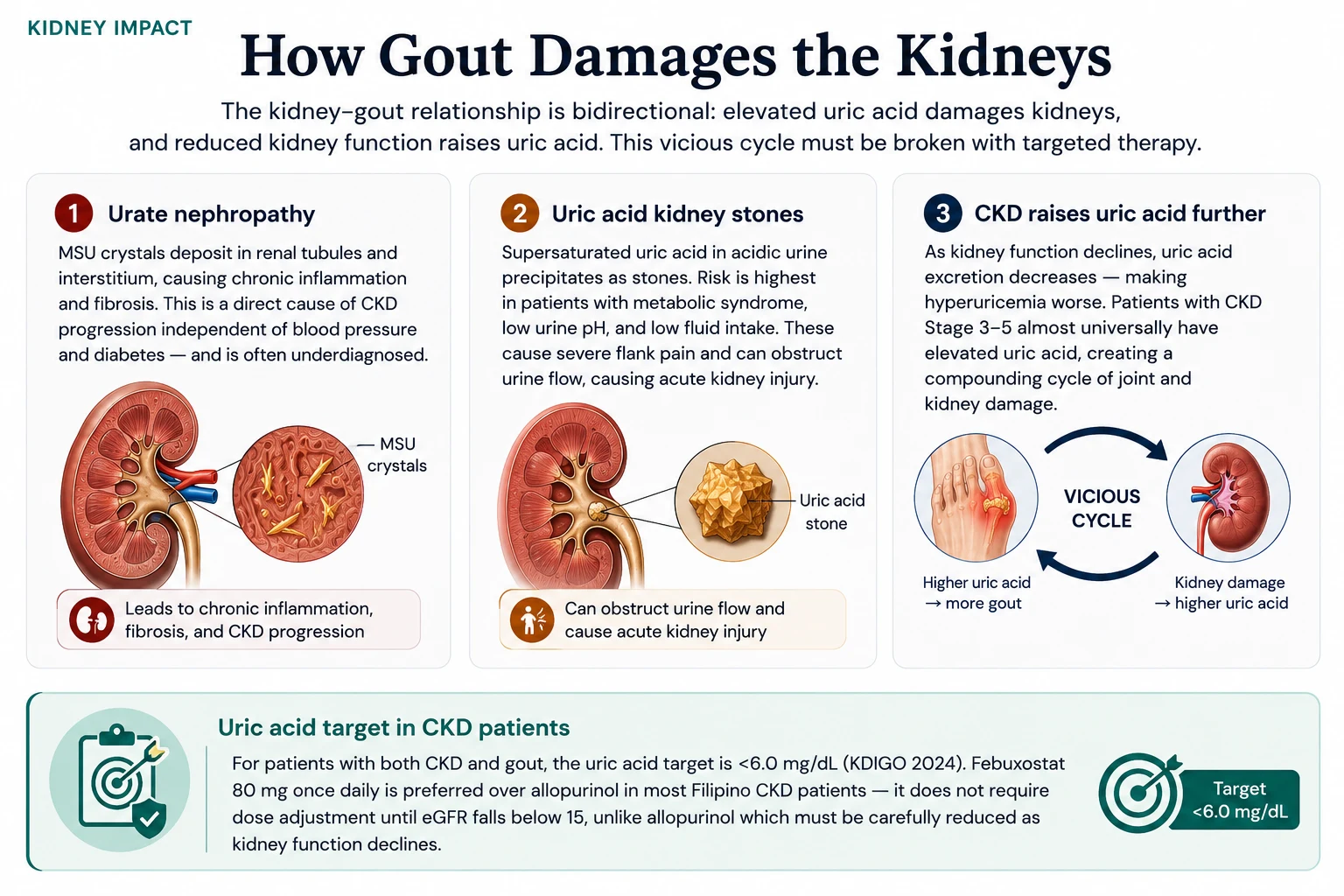 GuideGout — The Crystal Disease You Can Actually ConquerWhy uric acid builds up, how it damages joints and kidneys, gout flare prevention, low-purine Filipino foods, and allopurinol use in kidney disease patients.
 GuideWhen Creatinine Rises After FenofibrateFenofibrate commonly raises serum creatinine soon after starting, but the change is often reversible and is frequently not structural kidney injury. Understand the physiology, the ACCORD and FIELD evidence, the unsettled mechanism, renal do
- CalculatorRenal Dosing: Nerve Pain & Gout Medicines — Dose Adjustment by CrClLook up renally-adjusted doses for gabapentin, pregabalin, allopurinol, tramadol, and colchicine by Cockcroft–Gault creatinine clearance. Built-in CrCl calculator plus auditable, label/guideline-referenced dose bands with avoid/reduce/stand
- CalculatorCreatinine Clearance — Cockcroft-Gault (drug dosing)Estimate creatinine clearance for drug dosing with the Cockcroft-Gault equation using age, sex, weight, and serum creatinine, with ideal/adjusted body-weight options. With indications, formula, evidence, and references.
References
- U.S. Food and Drug Administration. Colcrys · Proficient Rx LP [US FDA-approved label, version 4, October 1, 2022]. Via DailyMed/openFDA. https://dailymed.nlm.nih.gov/dailymed/drugInfo.cfm?setid=d6adc880-5499-4691-93f3-27c87902d5fc
- Food and Drug Administration Philippines. Verification portal (product registrations). https://verification.fda.gov.ph
- PNF Essential Medicines List, 8th ed. (as of November 2, 2022), DOH; https://www.philhealth.gov.ph/partners/providers/pdf/PNF-EML_11022022.pdf
- PhilHealth Circular No. 2026-0018, Expanding Access to Outpatient First-line Anti-TB Drugs through PhilHealth GAMOT, Annex A.i GAMOT List (81 molecules); https://www.philhealth.gov.ph/circulars/2026/PC-2026-0018.pdf
- PhilHealth Circular No. 2026-0018, Annex A.2 GAMOT Fixed Fee Schedule (249 preparations; fees otherwise unchanged from PC2025-0013); https://www.philhealth.gov.ph/circulars/2026/PC-2026-0018.pdf
- DOH Drug Price Reference Index (DPRI) 2021, 9th edition (as of September 17, 2021); https://caro.doh.gov.ph/wp-content/uploads/2021/09/2021DPRI-as-of-9-17-2021.pdf
- Proficient Rx LP. (2022). Colcrys (colchicine) [Prescribing information; US FDA-approved label, NDA022352, set ID d6adc880-5499-4691-93f3-27c87902d5fc, version effective October 1, 2022]. DailyMed, U.S. National Library of Medicine. https://dailymed.nlm.nih.gov/dailymed/drugInfo.cfm?setid=d6adc880-5499-4691-93f3-27c87902d5fc
- Schwartz, G. J., Muñoz, A., Schneider, M. F., Mak, R. H., Kaskel, F., Warady, B. A., & Furth, S. L. (2009). New equations to estimate GFR in children with CKD. Journal of the American Society of Nephrology, 20(3), 629–637. https://doi.org/10.1681/ASN.2008030287
renalcarematters.com content: Kidney and pediatric dosing: reviewed by William Gregory M. Rivero, MD, FPCP, DPSN on November 17, 2026. Dosing, interaction, adverse-effect and monitoring summary: reviewed by William Gregory M. Rivero, MD, FPCP, DPSN on November 16, 2026.
Last updated: .