After this module you should be able to
- Explain how calcineurin inhibitors, antimetabolites, corticosteroids and costimulation blockers interrupt T-cell activation.
- Relate each drug class to the adverse effects and monitoring a nurse must watch for.
- Time and document a tacrolimus trough correctly, and explain why a mistimed level misleads.
- Identify common interactions that raise or lower tacrolimus levels, including those common in the Philippines.
- Respond within scope to missed or vomited doses, stock-outs and formulation switches, and teach a safe response.
Three switches on the same alarm
Think of rejection as an alarm that needs three switches turned before it sounds. A T lymphocyte that meets donor human leukocyte antigen (HLA) must receive three signals before it multiplies and attacks. Signal 1 is recognition: its receptor sees the foreign antigen. Signal 2 is a confirming handshake, a costimulatory contact with the antigen-presenting cell. Signal 3 is growth: interleukin-2 (IL-2) and other cytokines tell the activated cell to divide.
Maintenance immunosuppression blocks different switches with different drugs. Each drug can then be given at a lower, safer dose. That is the logic of triple therapy.
The weakness of the analogy is that the immune system is not just T cells. B cells and antibodies cause antibody-mediated rejection (Module 7), and the same drugs that quiet rejection also weaken defense against viruses and cancer (Modules 8 and 9). Immunosuppression is a balance point, not a dial turned to maximum.
What each drug class does, and what to watch
| Class and examples | Mechanism | What the nurse watches |
|---|---|---|
| Calcineurin inhibitors (CNI): tacrolimus, cyclosporine | Block calcineurin, so the transcription factor NFAT cannot switch on IL-2; blocks signal 1 downstream | Trough levels; rising creatinine (afferent vasoconstriction, chronic toxicity); tremor, headache; high potassium, low magnesium; new diabetes; hypertension; rarely confusion or seizures |
| Antimetabolites: mycophenolate (MMF, enteric-coated mycophenolic acid), azathioprine | Mycophenolic acid (MPA) inhibits inosine monophosphate dehydrogenase; lymphocytes depend on this route to make purines, so they cannot multiply | Diarrhea, nausea, abdominal pain; low white cells and platelets; serious birth defects and miscarriage risk |
| Corticosteroids: prednisone, methylprednisolone | Broad suppression of cytokine genes and inflammatory cell traffic | Glucose, blood pressure, mood and sleep, bone health, weight, wound healing, infection |
| Costimulation blocker: belatacept | Blocks the CD80/86-CD28 handshake (signal 2); monthly infusion | Infusion schedule adherence; infection; post-transplant lymphoproliferative disorder (PTLD) risk in Epstein-Barr virus-negative recipients |
| mTOR inhibitors: sirolimus, everolimus | Block signal 3 growth signaling | Mouth ulcers, edema, high lipids, proteinuria, slow wound healing |
| Induction: basiliximab, anti-thymocyte globulin (ATG) | Intense, short-term T-cell suppression around surgery, per protocol | Infusion reactions, fever, low white cells and platelets with ATG |
Why tacrolimus is the backbone. In the ELITE-Symphony trial of 1,645 recipients, low-dose tacrolimus with mycophenolate and steroids produced the lowest biopsy-proven acute rejection rate at one year (12.3 percent versus 24.0 to 37.2 percent with cyclosporine or sirolimus regimens), the best kidney function and the best graft survival (94.2 percent).1 Most centers have used tacrolimus-based triple therapy since.
Three weeks after transplant, Mr. Tan says his hands shake when he holds a cup, and he has been thirsty and passing urine at night. His fasting glucose today is 176 mg/dL (9.8 mmol/L). He has never had diabetes.
You recognize two classic calcineurin inhibitor effects. You check today's tacrolimus level and its timing, record the tremor and the glucose, and route both to the transplant nephrologist. You also tell Mr. Tan that these effects are known and that the team can act on them, so that he does not quietly stop his tablets.
What this shows. Knowing each drug's signature side effects lets you connect a new symptom to the right medicine, and report it before the patient stops taking it.
Belatacept as an alternative. In the seven-year follow-up of the BENEFIT trial, belatacept-based regimens reduced the combined risk of death or graft loss by 43 percent compared with cyclosporine (hazard ratio 0.57), with rising rather than falling estimated glomerular filtration rate (eGFR); early acute rejection was more frequent with belatacept.2 Its use depends on availability, cost and the recipient's Epstein-Barr virus status.
Tacrolimus levels: timing is the test
Tacrolimus has a narrow therapeutic window. Too low and rejection follows; too high and the kidney, nerves and pancreas suffer. Absorption varies widely between people and within one person, so doses are adjusted to whole-blood levels. The standard is the trough (C0): the lowest level, just before the next dose.
- Twice-daily immediate-release: trough about 12 hours after the evening dose, drawn just before the morning dose.
- Once-daily extended-release: trough about 24 hours after the last dose, drawn just before the next one.
A sample drawn two hours after the morning dose is near the peak and can read two or three times higher than the true trough. If the team reads it as a trough, they may cut a dose that was correct and expose the kidney to rejection. Your documentation is part of the test: record the actual time of the last dose, the actual collection time, and when the next dose is due. If the timing was wrong, say so on the request and in the chart, so the result is interpreted correctly.
Your clinic draws tacrolimus levels from 7 to 9 a.m. Mrs. Natividad is in line. You ask the question you ask every recipient in that line: "Have you taken this morning's tacrolimus?" She has not. Her evening dose was at 7:30 p.m. You write both times on the request.
Behind her, Mr. Uy took his dose at 6:30 a.m. "so I wouldn't forget." You write that on his request too, and flag it: this sample will not be a trough.
What this shows. One question at the laboratory window turns a number into an interpretable result.
Two more ways to read levels. The concentration-to-dose (C/D) ratio divides the trough by the total daily dose. In a German cohort of 248 recipients, patients with a low C/D ratio ("fast metabolizers," who need high doses to reach target) had lower eGFR over two years and more biopsies showing CNI toxicity and BK polyomavirus nephropathy.3 Intrapatient variability (IPV) measures how much one person's troughs swing on an unchanged dose, usually as a coefficient of variation. High IPV is consistently associated with rejection, donor-specific antibodies and graft loss, and nonadherence is a major cause.4 Both are observational markers: they flag patients for closer attention (adherence, interactions, formulation) rather than dictating a dose. The Tacrolimus Level Check calculator computes timing validity, C/D ratio and IPV from your entries.

A level drawn after the morning dose sits near the peak and reads higher than the true trough, which is why the sample is drawn just before the dose.
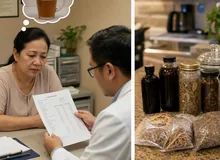
Drugs, foods and herbs that move tacrolimus
Tacrolimus is broken down by cytochrome P450 3A (CYP3A) enzymes in the gut wall and liver and pumped back into the gut by P-glycoprotein. Anything that blocks these raises levels; anything that induces them lowers levels, sometimes dramatically.
Rifampicin deserves a special warning in the Philippines. It induces CYP3A so strongly that tacrolimus levels can fall to near zero within days, and the effect persists for a week or more after rifampicin stops. A recipient started on standard tuberculosis treatment by a provincial clinic, without the transplant team knowing, is at high risk of rejection. Teach recipients to tell every prescriber that they have a transplant and to call the program before starting any new medicine.
Nanay Fe, 18 months after her transplant, calls about a routine refill. Almost as an afterthought, she says the health center started her on "the six-month cough medicine" last week, four tablets a day.
You ask her to read the label. It is a fixed-dose tuberculosis combination containing rifampicin. You call the transplant nephrologist that afternoon, and an urgent tacrolimus level is drawn. It has fallen from 7.1 to 2.3 ng/mL.
What this shows. Patients rarely think of tuberculosis tablets as "new medicines." Ask by name, ask about health-center treatment, and route it the same day.
The Drug Interaction Checker helps you screen, but verification with the transplant pharmacist or team is the standard before any new drug is started.
Reconciliation, formulations, missed doses and supply
Reconcile against two sources. Compare what the patient actually takes (bring the bottles) with the current verified order. Check drug, exact formulation and brand, strength, dose, route, timing, and recent changes. Immediate-release twice-daily tacrolimus and once-daily extended-release products are not interchangeable milligram for milligram. A switch between them, or between brands or generics, can change exposure and needs a team-directed plan and a follow-up level.
Missed or vomited doses. Document what was missed or vomited and when, contact the designated team, and teach the individualized instruction they give. Do not invent a rule; programs differ. A recipient with repeated vomiting or diarrhea may not be absorbing tacrolimus (or may be absorbing more, since diarrhea can raise levels), and needs prompt review.
Supply gaps are emergencies in slow motion. Running out of tacrolimus for even a few days can trigger rejection. When a patient says supply will run out, confirm the remaining count and the schedule, contact the team and pharmacy the same day, arrange an authorized continuity plan, and confirm the plan with the patient. Benefits staff can check post-transplant package coverage (Module 10).
On a Saturday, Allan texts the clinic number: "Nurse, the pharmacy has no Prograf until next Friday. I have 5 capsules left. Can I take one a day so it lasts?"
You do not answer the dosing question. You reply that he must not stretch his doses, and that someone from the team will call him within the hour. Then you call the on-call transplant physician and the pharmacy. By evening there is an authorized plan: a supply from the center's pharmacy and a level next week. You call Allan back, have him repeat the plan, and document it.
What this shows. Supply gaps are handled the same day, by the team, and confirmed with the patient. Stretching doses is never the nurse's call.
Nonadherence is common and predictable. A meta-analysis across organs found immunosuppressant nonadherence was highest among kidney recipients, about 36 cases per 100 patients per year.5 Among recipients who developed de novo donor-specific antibodies, nonadherence was the strongest predictor of later graft failure (hazard ratio 6.5).6 Ask without judgment: "Many people miss a dose now and then. In the last month, how many times has that happened to you?" A structured tool such as the Basel scale in the transplant patient-reported outcome measure (PROM) suite makes the question routine.
Pregnancy and mycophenolate. Mycophenolate causes serious birth defects and miscarriage. Ask about pregnancy intentions and contraception early and at every review, and route a possible pregnancy on mycophenolate to the team urgently, the same day. Planned pregnancy is possible after transplant with a regimen change made in advance (Module 11).
Case: The level drawn after breakfast
Friday, 11:30 a.m., transplant clinic. Ms. Reyes, 34, is three months after a living-related transplant. She takes twice-daily tacrolimus, mycophenolate and prednisone. Her tacrolimus result today is 14.8 ng/mL. Her usual troughs are 7 to 8.
You ask about timing. She took her morning tacrolimus at 7:00 a.m. with breakfast, "because the line is long and I get hungry," and had blood drawn at 9:30 a.m. She feels fine apart from a cough.
Before she leaves, she shows you a prescription from a provincial clinic: clarithromycin 500 mg twice daily for seven days, for the cough. She plans to buy it on the way home and start tonight. She also mentions, unprompted, that she and her husband "might try for a baby next year."
Before reading on, decide what you would assess, whom you would contact and what you would say, what you would teach, and what would make you escalate. Then compare with the debrief below.
Assess
Communicate
Teach
Escalate
The nurse in the story wrote three times on the result: last dose 7:00 a.m., blood drawn 9:30 a.m., next dose 7:00 p.m. She flagged it to the team as "not a trough", so the dose would not be cut on a misleading number.
She asked Ms. Reyes not to start the clarithromycin until the team had seen it, and called the transplant pharmacist, who explained that clarithromycin can raise tacrolimus levels sharply. Dr. Santos reviewed the cough that afternoon, chose a different antibiotic, and ordered a correctly timed level for Monday.
The nurse also passed on the pregnancy plan, because mycophenolate must be changed well before conception. Ms. Reyes left with a written trough routine she had explained back in her own words: "Bring the capsules, take them after the blood is drawn."
Submit: A two-source reconciliation, a safe routing plan to the team and pharmacist, and a timed sampling teach-back.
Check your understanding
Each visit draws 5 questions at random from this module’s 15-question bank, in a shuffled order. Choose the single best answer for each, then select Check answers; a rationale appears under every option. Select New set of questions for a different mix. Nothing you select is sent anywhere; scoring happens in your browser and records self-study only.
What this module builds
| Code | The learner can | Course evidence |
|---|---|---|
| K4 | Reconcile immunosuppression and manage monitoring and supply gaps within nursing scope. | Two-source medication reconciliation and teach-back |
Performance evidence for this module: Medication reconciliation and teach-back.
With your preceptor
With the transplant pharmacist and your preceptor. These are prompts for supervised learning, not a procedure. Use your center’s own protocols, contacts and forms; your preceptor observes and signs off each item on the facility’s competency record.
- Complete a two-source reconciliation for a recipient, including formulation and brand.
- Document a tacrolimus trough with last-dose, collection and next-dose times.
- Screen a synthetic medicine list for CYP3A interactions and route findings to the pharmacist.
- Teach the trough routine and missed-dose instructions using teach-back.
- Locate your program's procedure for stock-outs and formulation switches.
Read next on this site
- Understanding Kidney TransplantPatient overview of transplant medicines.
- Herbal NephropathyHerbal products and kidney harm.
- When a Kidney Transplant FailsHow rejection and nonadherence lead to graft loss.
Back to the Transplant Nurse subtrack home · the Nephrology Nursing course · the entry lesson, Nephrology Nursing Module 11.