After this module you should be able to
- Describe how peritoneal dialysis (PD) works in plain words
- Prepare your home and helpers for training
- Explain why only supervised training makes you ready
Suggested earlier modules: C01, C03, C04, C07, C08, C12. You may read any module in any order; the suggestion only helps the lessons build on each other.
The everyday picture

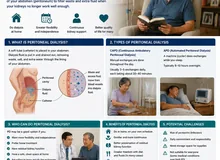
How peritoneal dialysis works. Fill: sterile fluid flows into the belly through the catheter. Dwell: waste and water move from tiny vessels in the peritoneum into the fluid, and sugar in the fluid draws out water. Drain: used fluid flows into a drain bag. continuous ambulatory peritoneal dialysis (CAPD) exchanges happen by day; automated peritoneal dialysis (APD) uses a cycler at night. Only supervised training makes you ready.
Learn what your pathway involves
PD is usually done at home. In continuous ambulatory PD (CAPD), you do several manual exchanges during the day. In automated PD (APD), a machine called a cycler does exchanges while you sleep. Both use a PD catheter placed in the abdomen by a surgeon or nephrologist, usually a few weeks before training. Your team will decide which form and equipment suit you. This lesson introduces PD; it does not teach you to perform exchanges.
Prepare the learning setting
Before training, think about your home: a clean, well-lit area for exchanges, a dry place off the floor for boxes of fluid, and a way to keep pets and dust away during connections. Tell the trainer about your eyesight, hand strength, memory, language and who will help you. PD can work well even in small homes and for people with limited help, but the trainer needs to know your situation to plan.
Practice with your trainer
A trained PD nurse teaches the exact steps for your equipment, watches you practice repeatedly and decides when you are ready. Training usually takes several days. Ask how to reach the PD team after hours, when your technique will be checked again, and who to call if a supply or machine problem happens. Watching a video or another patient is helpful background, but it is never a substitute for supervised practice.
Learning from a cousin's video
Bong, 38, a jeepney dispatcher, is scheduled for PD training next week. His cousin, also on PD, sends him videos and offers to teach him at home so he can "skip the training."
Before reading on: what would you do, and whom would you call?
How sure are we? Moderate evidence
International PD training guidance (ISPD, 2025 position paper on teaching PD, abstract reviewed) emphasizes trainer preparation, hands-on practice, assessment and retraining. The ISPD 2022 peritonitis guideline also includes recommendations on PD training and reassessment as part of preventing infection.1,2,3,4
Questions to ask your team
- Which type of PD is best for me, CAPD or APD?
- What should I prepare at home before training?
- How will you decide that I am ready, and when will you recheck my technique?
Try it, then say it in your own words
Practice. On W15, complete a home-learning discussion checklist without making treatment changes; take questions to the PD trainer. Worksheet W15: My home training readiness discussion is ready to print. Use invented details when practicing; keep your real health information on paper, not online.
Three quick questions
Choose the best answer for each, then select Check answers. An explanation appears under the best answer. Try again as often as you like. Questions marked Safety question (1 here) must be answered correctly before the module counts as complete; the explanation shows you why. Nothing you select is sent anywhere.
Read next on this site
- Peritoneal Dialysis: Your Complete GuidePeritoneal dialysis, in depth.
Choose your own path on the course home. Last checked November 29, 2026.
Module 20 of 4020 modules to go