After this module you should be able to
- Explain why many patients are exhausted, slow or confused after dialysis, and adjust how you speak and move with them.
- Protect privacy at a shared station: screens, voices, papers, phones and photos.
- Answer patients’ and relatives’ questions without giving clinical information that is not yours to give.
- Report an observation using Stop, Tell, Stay: what you saw, where, when, and that you will wait.
- Recognize the warning signs that must reach the nurse immediately.
Twelve hours a week in a borrowed chair
Imagine spending half a day, three times a week, in the same reclining chair in a room full of strangers, with two needles in your arm and a machine beside you. You cannot get up when you like. Everyone who walks by can see you. Nurses and aides talk across you. On the way home you feel washed out, sometimes for the rest of the day. This is the ordinary week of most people you will meet in the unit, and many have lived it for years.
Seen that way, small things matter a great deal: being greeted by name, a screen pulled across when a blanket slips, a voice lowered when a relative asks about a lab result, a chair cleaned before you sit in it. These are not extras. For a person whose body is exposed and dependent three times a week, they are what dignity is made of.
Why patients are tired, slow or irritable
When the kidneys fail, waste builds up in the blood between sessions, along with salt, water, potassium and acid. Dialysis removes them in about four hours, a job healthy kidneys spread over two days. The body feels that speed. Water moves out of the blood faster than it can refill from the tissues, so blood pressure can fall, muscles can cramp, and the brain can feel foggy. Many patients also have anemia (too few red blood cells), poor sleep and heart disease.
The result is that after treatment many patients feel weak, dizzy, slow to understand and quick to anger. This is a body reaction, not rudeness. Some patients also have hearing or vision loss, or memory problems from age, diabetes or stroke.
| What you may see | A likely body reason | What helps |
|---|---|---|
| Walks slowly, holds the wall | Low blood pressure after fluid removal; weak muscles | Offer a wheelchair through the nurse; never rush; clear the route |
| Does not answer, or answers oddly | Fatigue, hearing loss, or a brain that is not getting enough blood | Face the person, speak slowly; if this is new, tell the nurse now |
| Snaps at you | Exhaustion, cramps, pain, fear, long waits | Stay calm, do not argue, acknowledge, tell the nurse if it continues |
| Cold, shivering | Room temperature, low blood pressure, sometimes infection | Offer a blanket if allowed; tell the nurse, especially if new |
The picture has a limit. Most tiredness after dialysis is expected, but some of the same signs, such as new confusion, a pale sweaty face, or shivering with fever, can mean a serious problem. You are not expected to tell the difference. You are expected to tell the nurse.

Tiredness after dialysis is common; a sudden change is a warning sign to report at once.
Privacy at a shared station
Patients’ names, diagnoses, hepatitis status, schedules, addresses and photos are personal and sensitive information. The Data Privacy Act of 2012 requires that such information be handled only for legitimate purposes and only as much as needed.1 The National Privacy Commission (NPC) has reminded the public that sharing photos or videos that show identifiable people needs a lawful basis.2 In practice this means a few firm habits.
- Do not photograph or film patients, charts, screens, whiteboards, or the station list, even for “before and after” cleaning pictures. If your supervisor wants photo evidence of cleaning, use the unit’s approved method, with no patients or papers in view.
- Do not post anything about patients or the unit on social media or group chats, including kind messages such as “pray for Lolo at Station 5.”
- Do not read charts, screens or papers left on tables. If papers are left behind on a station you are cleaning, do not throw them away and do not read them: hand them to the nurse.
- Keep your voice down and talk about patients only with staff who need to know, away from other patients.
- Hepatitis and isolation status is especially sensitive. Never tell a patient or relative why another patient is in the isolation area.
A woman approaches you while you mop near the entrance. “Kuya, is my neighbor Mang Toto here today? What time does he finish? His family asked me to check.”
You smile and say, “I’m sorry, I can’t share who is here. The nurse at the desk can help you.” You do not confirm or deny that Mang Toto is a patient.
What this shows. Even saying “yes, he is here” is sharing health information. Redirect politely, every time.
Dignity, the Filipino way
Respectful Filipino speech already gives you good tools. Use po and opo. Use the name the patient prefers: “Lola Remy,” “Sir Ben,” “Ma’am Cora.” Introduce yourself and your role: “Good morning po, I’m Jun from housekeeping. I’ll be cleaning near you.” Explain before you move anything around a patient, and ask before you touch belongings.
Patients often come with a bantay, a family member who waits, carries bags and helps at home. Relatives are partners, but they are not the patient. Be warm with them, keep them out of clean-supply areas and cleaning zones, and send their clinical questions to the nurse.
- Pull the privacy screen when a patient is uncovered, being changed, or upset.
- Knock or speak before entering a curtained area or isolation room.
- Never discuss a patient’s smell, weight, skin or body in their hearing, or anywhere.
- Never joke about a patient’s illness, poverty, religion or family.
- Treat belongings, slippers, food and prayer items carefully; ask before moving them, and never throw them away.
Reporting what you see: Stop, Tell, Stay
You walk the whole unit every hour. You see things that a nurse focused on one patient may miss: a patient slumped in a chair, blood on a sleeve, a puddle under a machine, a confused man walking toward the exit. Your report can be the first warning. Make it short and complete.
- StopPause your task. If someone may be in danger, keep them safe without doing clinical work: help them sit, stay beside them, keep the area clear.
- TellTell the nurse directly, by name if you can: what you saw, where, and when. “Nurse Jessa, Station 12, Sir Ben looks pale and sweaty and isn’t answering me. Just now.”
- StayWait until the nurse acknowledges or takes over. If nobody comes and the person looks worse, call louder or press the call bell.
Structured handoff tools such as SBAR (Situation, Background, Assessment, Recommendation) are widely used by nurses and doctors. Stop, Tell, Stay is a shorter version written for this track; it is a teaching tool, not a tested instrument, and its value is simple: it makes you say where and what, and it stops you walking away before anyone has heard.
| Tell the nurse immediately (call loudly if needed) | Tell the nurse soon |
|---|---|
| Not responding, slumped, fainting or a fall Trouble breathing, chest pain, blue lips Blood soaking a bandage, dripping or spurting A needle or line that looks pulled out Seizure or sudden confusion Vomiting while lying down | Shivering or says they feel feverish Says they feel dizzy or crampy Unhappy or upset, wants to talk to someone Asks a clinical question Has not been picked up long after treatment |

Stop, Tell, Stay: pause and keep the person safe, tell the nurse what, where and when, and wait until someone takes over.
When patients or relatives are angry
Waiting is long, transport is expensive, and illness is frightening. Anger will sometimes land on you because you are there. Stay calm, keep a safe distance, and do not argue or take sides. Say what you can do: “I hear you po. I will call the nurse in charge.” Then do it. If anyone threatens, pushes or blocks you, move away and call your supervisor or security. You do not have to accept abuse, and you should report it.
Some patients are frightened of dying, of needles, or of being a burden. If a patient tells you they want to stop dialysis, or that they feel hopeless, do not try to counsel them. Listen briefly, say that the nurse and doctor need to hear this, and tell the nurse the same day.
Case: The quiet man at Station 12
Thursday, 2:35 p.m., near the end of the second shift. Liza, an environmental service (EVS) aide for six months, is wiping the handrails along the side of the unit. At Station 12, Sir Ben, 66, a retired teacher who usually jokes with her, is staring ahead. His face is pale and shiny with sweat. She greets him; he does not answer. His machine is quiet. His wife has stepped out to buy merienda.
The nurse assigned to that side, Nurse Paolo, is at Station 16 helping a patient whose needle site is bleeding. Two relatives in the waiting area are taking selfies with the unit in the background.
Before reading on, decide what you would notice, whom you would tell and what you would say, what you would do within your role, and what would make you call for help at once. Then compare with the debrief below.
Notice
Communicate
Do
Escalate
Liza called Paolo by name. He looked up, told the patient at Station 16 to press on the gauze, and came over. Sir Ben’s blood pressure was low; Paolo laid the chair back and adjusted the treatment. Within ten minutes Sir Ben was talking again.
Afterward Paolo said, “You saw it before the machine did.” Liza told the receptionist about the photos; the receptionist asked the relatives to delete pictures that showed other patients.
Submit: Two sentences you would say to her that are kind, truthful about what you saw, and redirect clinical questions to the nurse.
Check your understanding
Each visit draws 5 questions at random from this module’s 15-question bank, in a shuffled order. Choose the single best answer for each, then select Check answers; a rationale appears under every option. Select New set of questions for a different mix. Nothing you select is sent anywhere; scoring happens in your browser and records self-study only.
What this module builds
| Code | The learner can | Course evidence |
|---|---|---|
| S2 | Protect dignity and privacy and report an observation clearly with Stop, Tell, Stay. | Observed handoff; transport station |
Performance evidence for this module: Observed Stop, Tell, Stay report in a role-play; privacy teach-back naming five protected habits.
With your preceptor
Use role-play with colleagues; never practice on real patients’ information. These are prompts for supervised learning, not a procedure. Use your center’s own protocols, contacts and forms; your preceptor observes and signs off each item on the facility’s competency record.
- Introduce yourself and your role to a “patient” in English and in Filipino, using po and the patient’s preferred name.
- Role-play three Stop, Tell, Stay reports: a pale, sweaty patient; blood on a sleeve; a patient walking toward the exit confused.
- Show where the privacy screens are and use one correctly.
- Answer five clinical questions from a “relative” by redirecting each to the nurse.
- Find your unit’s policy on photos and phones, and the name of its privacy officer.
Read next on this site
- Post-Dialysis Fatigue: Why You're Exhausted After Dialysis (And What to Do About It)Why patients feel washed out after treatment, explained for patients and families.
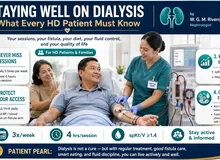
- Staying Well on Dialysis — What Every hemodialysis (HD) Patient Must KnowDaily life on dialysis from the patient’s side.
Back to the Support Staff course home · the Nephrology Nursing course · the infection prevention lesson nurses study, Nephrology Nursing Module 7.