After this module you should be able to
- Trace a session from delivery to cash and find where claims leak.
- Run an exceptions log that fixes causes, not numbers.
- Manage returned and denied claims within the filing rules.
- Draw the line between lawful correction and claims that must never be made.
The big picture, in plain words
The picture has a limit. In a relay, you can blame the runner who dropped the baton. In a unit, a dropped claim usually points to a system: a form designed badly, a step nobody owns, a deadline nobody watches. Fix the system and the drops stop.
Figure 1 · Key terms for this module
Your work is to know your leakage, fix its causes, and make sure that every claim the unit files is true.
Case: Thirty-eight and thirty-one
At a unit in Bacolod, the monthly report shows 38 sessions delivered to new patients in October but only 31 claimed. The claims officer says seven agreement forms were unsigned or incomplete. The manager suggests asking the patients to sign the forms now and dating them to the session days.
Before reading on, decide:
- What is wrong with the manager’s suggestion?
- What is the right correction?
- How do you stop it happening again?
Keep your answers in mind. The lesson gives you what you need, and the case review near the end shows one sound response.
Session to cash

Follow every session through five counts: delivered, fully documented, claimed, accepted, and paid. Each count should equal the one before it. Where a count drops, there is a reason: a missing signature, a patient not yet in the PhilHealth Dialysis Database, a late filing, an eligibility problem, a returned claim.1,2
Ask for this reconciliation monthly, as five numbers and a list of reasons. The gap between delivered and paid is your leakage, and every peso of it is a session the unit gave and was not paid for.
Fix the cause, not the number
Keep an exceptions log: each session that did not move cleanly, why, who fixed it, and how. Then look for patterns. If agreement forms go unsigned on the evening shift, the fix is a step in the evening workflow, not a lecture. If new patients are not in the database before their first session, the fix is in intake.
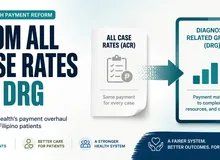
Filing periods and rules change; PhilHealth has issued circulars on filing deadlines and extensions after disasters.2,3 Assign someone to watch them. PhilHealth is also piloting shadow billing by diagnosis-related group (DRG) for hospital care; that pilot does not by itself change the hemodialysis package.4
Returned and denied claims
A returned claim can usually be corrected and refiled within the period the rules allow. A denied claim needs a reason and a decision: appeal with evidence, correct and resubmit where allowed, or write it off and fix the cause. Track the age of every open claim, because a claim not followed up becomes a claim lost.
Days to collect is an owner’s number. It decides how much working capital the unit needs (Module 17).
The integrity line

Correcting a claim means completing true documentation of what happened, within the rules, and refiling on time. It never means creating documentation after the fact that implies something happened when it did not, changing a date or a diagnosis to fit a rule, claiming a session not delivered, or charging a patient for what the package covers.
A form signed today and dated to a past session is a false record, even if the session happened. The honest correction is a late signature dated today, with a note explaining why, if the rules allow it, or an accepted loss and a fixed workflow if they do not.
Back to the case: Thirty-eight and thirty-one
The suggestion. Backdating signatures creates false records. It must not happen.
The right correction. Check what the rules allow for late completion. If allowed, obtain signatures dated today with an explanatory note and refile within the period. If not, accept the loss.
Prevention. Find where the forms went unsigned, add a step at the end of each session to check the form, and track the exception rate monthly.
Skills checklist: Session-to-cash reconciliation and claims exception log
Reconcile one fictional month of sessions from delivery to payment and build an exceptions log. Your preceptor rates each step as satisfactory, needs practice, or not observed. Steps marked Critical must all be satisfactory before sign-off. This checklist supports supervised learning; your unit’s own procedure and competency form are the authority. A printable version of every checklist is on the trainer page.
- Reports delivered, documented, claimed, accepted, and paid counts.
- Lists the cause of each exception and the system fix.
- Tracks the age and owner of every open claim.
- CriticalRefuses to backdate a signature or change a record to fit a rule.
- CriticalRefuses to claim an undelivered session.
- Reports days to collect to the board.
Check your understanding
Each visit draws 5 questions at random from this module’s 6-question bank. Choose the single best answer for each, then select Check answers; an explanation appears under the best answer. Select New set of questions for a different mix. A good target is 4 of 5 on two different sets. Nothing you select is sent anywhere; scoring happens in your browser.
Read next on this site
- From All Case Rates to DRG — What PhilHealth's Payment Overhaul Means for Filipino PatientsHow PhilHealth payment is changing.