After this module you should be able to
- Document observations in the correct record at the actual time, with units and who was told.
- Correct an error with the unit’s audit-preserving process, and refuse to invent, copy or backdate.
- Explain why a mislabeled specimen is dangerous, and stop at any mismatch.
- Carry sealed specimens, documents and other items with identity checks and a handover, never changing the contents.
- Route Philippine Health Insurance Corporation (PhilHealth) and payment questions to trained staff without promising coverage or approving charges.
A record is a sworn statement
Imagine every entry you write is a statement you would sign under oath. “At 10:40, I weighed Mrs. Lim on the standing scale; 61.2 kilograms.” Anyone reading it later, a nurse tomorrow, a physician next month, an auditor next year, must be able to trust that it happened exactly that way.
The picture has a limit. A sworn statement is made once. A clinical record is built all day by many hands, and mistakes happen. Honest records are not records without errors; they are records where errors are corrected openly, so that the history of the correction is visible.
Records that match what happened
| Do | Never |
|---|---|
| Enter in the correct patient record, confirmed with two identifiers | Write in a record you have not confirmed |
| Record the actual time, or label a late entry as late, per policy | Backdate, or make a late entry look on-time |
| Write units, device and limits (“patient moving”) | Write bare numbers, or “stable” |
| Record who was told and when, where required | Assume the registered nurse (RN) saw it |
| Correct errors with the approved method that keeps the original visible | Erase, white out or overwrite |
| Use only your own login and signature | Use someone else’s login, or sign for care you did not see |
| Record “not obtained” and the reason | Copy a previous value or invent a plausible one |
PhilHealth’s quality standards for maintenance hemodialysis treat complete, timely records as part of quality care, and the hemodialysis benefit depends on accurate documentation of sessions that actually took place.1,2 A false entry is never a paperwork shortcut. It can harm the patient, and it can expose you and the unit to fraud findings.

An honest record states what was measured, when, how and whom you told, or that it was not obtained; a number you did not take is a false record.
Why a label error is so dangerous
A blood sample in the wrong patient’s tube is called “wrong blood in tube.” Its results then guide another patient’s care. In blood transfusion, it can lead to an incompatible transfusion. A multicenter study found an adjusted wrong-blood-in-tube rate of 1 in 3,046 samples where patients were identified manually, and 1 in 14,606 where electronic identification was used. Among samples rejected for minor labeling errors, the adjusted rate was 1 in 28.3 In other words, a sample with a small label mistake is far more likely to contain the wrong patient’s blood. That is why laboratories reject mislabeled samples, and why you never “fix” a label.
- MatchLabel and request: two identifiers, test, date, time, the collector’s initials as required.
- CheckSealed, upright, no leak, the right bag and conditions (for example, on ice if required).
- CarryDirectly, without delay, without opening anything.
- Hand overTo a named receiver, who checks it; record the handover if required.

Wrong-blood-in-tube errors occurred in about 1 in 3,046 manually identified samples and about 1 in 28 samples rejected for minor label errors; never fix a label, return it.

Carry a specimen by matching it to the request, checking the seal, carrying it directly and handing it to a named receiver; never open or relabel it.
Carrying is not giving
Some units ask assistants to carry medicines or blood products between departments. That is a conditional task that needs a local written authorization and a chain-of-custody procedure. Carrying a medicine is not giving it. Carrying blood is not transfusing it. You never open, prepare, hand over to the patient or administer what you carry.
Stock follows the same honesty. Check identity, expiry, storage and lot traceability when you restock; report shortages, damage and cold-chain breaks before patient care is affected (Module 6).
Helping with benefits without promising
Patients worry about money. PhilHealth’s hemodialysis package was expanded in 2024 to cover up to 156 sessions a year for eligible members, under conditions set in the circular.2 Rules, rates and requirements change, so you do not quote them from memory.
| You can | You cannot |
|---|---|
| Direct the patient to the PhilHealth officer or billing staff | Promise that a claim will be approved |
| Use the unit’s approved checklist to show which documents are missing | Collect fees that are not authorized |
| Record and report a patient’s concern about a charge | Claim or record a session that did not happen |
Case: Just write a normal reading
Thursday, 4:30 p.m. The day’s charts are being checked before claims are prepared. Mr. Benjamin Torres’s chart from the morning has no post-dialysis blood pressure. He left at 11:15. A clerk tells Bea: “Just write 130 over 80, he’s always around there. Otherwise the claim gets returned and everyone gets scolded.” Bea remembers helping him to the door but did not take his pressure.
Before reading on, decide what you would notice, whom you would tell and what you would say, what you would do within your role, and what would make you call for help at once. Then compare with the debrief below.
Notice
Communicate
Do
Escalate
The RN checked: no one had taken the post-dialysis pressure. She documented the omission, called Mr. Torres, who was well at home, and recorded the call. The head nurse added a post-dialysis check to the departure handover so it cannot be skipped. The claim was processed with the honest record.
Submit: What you say and do; what you must not do.
Check your understanding
Each visit draws 5 questions at random from this module’s 10-question bank, in a shuffled order with shuffled options. Choose the single best answer for each, then select Check answers; a reason appears under every option. The target is 4 of 5 with every question marked safety-critical answered correctly (3 of the 10 are). Select New set of questions for a different mix. Nothing you select is sent anywhere; scoring happens in your browser and records self-study only. It never shows that you are competent at work.
What this module builds
| Code | The learner can | Course evidence |
|---|---|---|
| P11 | Keep truthful records, carry sealed specimens with identity checks, and route benefits questions without promises. | Factual entry and mismatch response |
Performance evidence for this module: Factual entries with units and notification; an approved error correction; a specimen mismatch stopped and returned; a benefits question routed correctly.
With your preceptor
Practice with fictional records and mock specimens. These are prompts for supervised learning, not a procedure. Use your center’s own procedures, device instructions, contacts and forms; your preceptor observes and signs off each item on the facility’s competency record. Proposed evidence: at least three satisfactory observations across two shifts for each workplace skill that applies to you.
- Write three factual entries with units, time and who was told.
- Correct a planted error using the approved method.
- Match a mock specimen to its request and stop at a planted mismatch.
- Hand over a sealed specimen to a named receiver with the required check.
- Route a patient’s PhilHealth question to the right staff member.
Read next on this site
Cross-track and patient-guide reading is background, not practical training for the assistant role.
- "Zero Balance" Doesn't Mean Zero WorriesHow PhilHealth coverage works for patients.
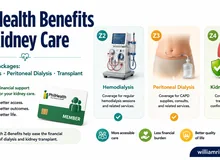
- National Health Insurance Benefits for Dialysis and TransplantPhilHealth benefit packages in kidney care.
Back to the Nurse Assistant / Patient Care Assistant (PCA) course home · the Nephrology Nursing course, where nurses learn the clinical reasoning behind the care you support.